Albert Maysles’s final film takes viewers on a journey across the heart and soul of America
IN TRANSIT (Albert Maysles, Lynn True, Nelson Walker, David Usui, and Ben Wu, 2015)
Metrograph, 7 Ludlow St. between Canal & Hester Sts., 212-660-0312
Maysles Documentary Center, 343 Lenox Ave./Malcolm X Blvd., between 127th & 128th Sts., 212-537-6843
Opens Friday, June 23
www.maysles.org
 “There’s something about a train that’s magic,” Richie Havens sang in a series of 1980s Amtrak commercials. Master documentarian Albert Maysles goes in search of that magic in his final film, In Transit. In 2014-15, Maysles, who passed away in 2015 at the age of eighty-eight, and his team took several trips on Amtrak’s Empire Builder, described as “America’s busiest long-distance train route,” which carries passengers between Chicago and the Pacific Northwest over the course of three days, following much of the route that explorers Lewis and Clark mapped out in the early nineteenth century. Maysles, Nelson Walker, David Usui, and Ben Wu focus handheld cameras on men, women, and children of all ages and ethnicities as they talk with other passengers about transitions they’re going through. One pregnant woman is past her due date, hoping she makes it to Minnesota to give birth with members of her family. She makes friends with a man who is photographing everywhere they go. A young man has suddenly quit his job to try to make a new life with his high school sweetheart in Indiana. A Native American talks about how he is riding the train to think about his relationship with his partner, which is on the ropes. An abused woman is returning from seeing her daughter for the first time in nearly half a century. Sometimes they’re speaking directly with Maysles, and other times the filmmakers are like flies on the wall, picking up snippets of conversations as the passengers share their hopes and dreams, along with their struggles and fears, in true cinéma vérité fashion. Everyone is open and free, including the conductors. “This is the only job I’ve ever wanted,” one of the trainmen explains.
Early on, a young woman says, “My friend CJ is always like, ‘How do you do it? How do you go to these places? How do you do these things? How do you just pack up and go? Aren’t you scared?’ Like, yeah, of course you’re scared. And it’s like at the same time you know what’s scarier? Staying exactly where you were, doing exactly what you always have done.” To which a young man adds, “Sometimes you just gotta do it. You know, what have you really to lose?” The Empire Builder has a viewing carriage, a car with a row of comfortable seats that face the window, offering passengers beautiful views of an America that not everyone sees, an America in which they are trying to start anew. It’s a calm, slow-moving film that doesn’t identify anyone by name, seventy-six minutes that share a narrow but candid look at who we are, and where we’re going. “I don’t really want to get off the train,” a single mother of four admits. It might not be one of Maysles’s best — his legacy consists of such seminal works as Salesman, Gimme Shelter, Grey Gardens, and What’s Happening! The Beatles in the U.S.A., made with his brother, David — but In Transit is a fitting end to his journey. “I wanted to make a film about trains, but really about the unity of humankind,” he said shortly before his death. In Transit opens June 23 at Metrograph on the Lower East Side and the Maysles Documentary Center in Harlem; the 7:00 Metrograph screening on June 23 will be introduced by True and will be followed by a Q&A with True, Usui, and casting director Martha Wollner, while MDC will host Q&As with True and supervising producer Erika Dilday at the 7:00 show on June 24, with True at the 5:00 show on June 25 and the 7:30 show on June 27, and with True and Walker at the 7:30 show on June 29, with more to be announced.

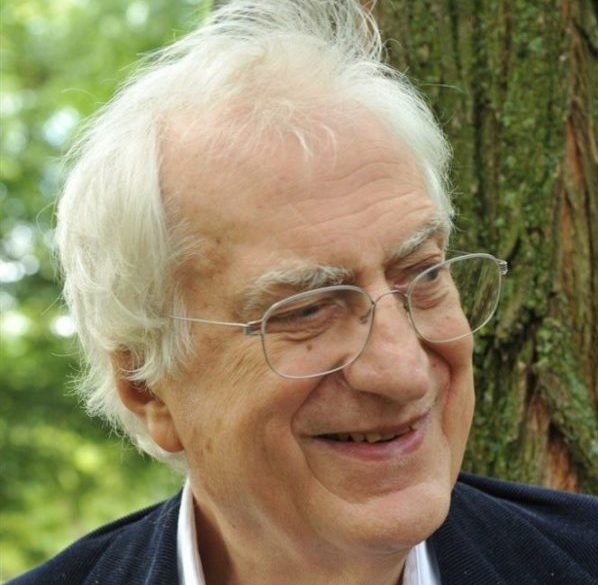
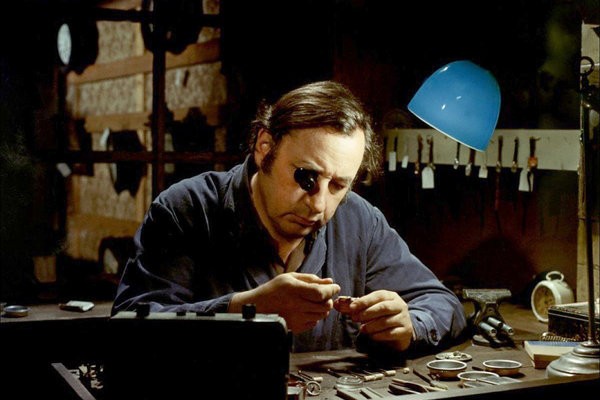
 “Film and Nothing But: Bertrand Tavernier” begins June 20 with Life and Nothing But, In the Electric Mist, and Tavernier’s first feature-length work, The Clockmaker. Based on Georges Simenon’s novel L’horloger de Saint-Paul, his debut is a quiet, introspective triumph from start to finish. Philippe Noiret stars as the title character, Michel Descombes, a widowed clockmaker who is told by a police inspector (Jean Rochefort) that his son, Antoine (Jacques Denis), has killed a man and is on the run with a woman named Liliane (Christine Pascal). A despondent Michel struggles to understand what led his son to commit such a crime, examining deep inside himself in the process. The many scenes that center on the clockmaker and the inspector discussing life in general terms are simply wonderful, except when the cop talks about the movies, which takes the audience out of the film, especially when they mention

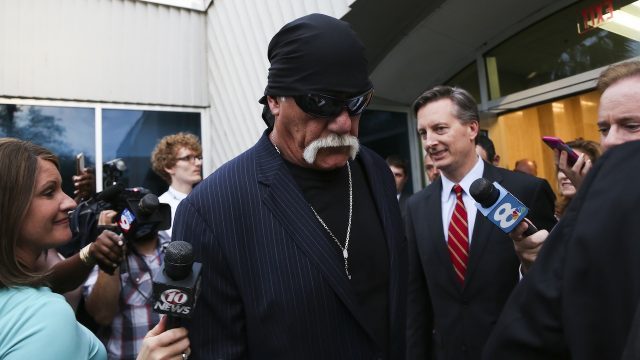
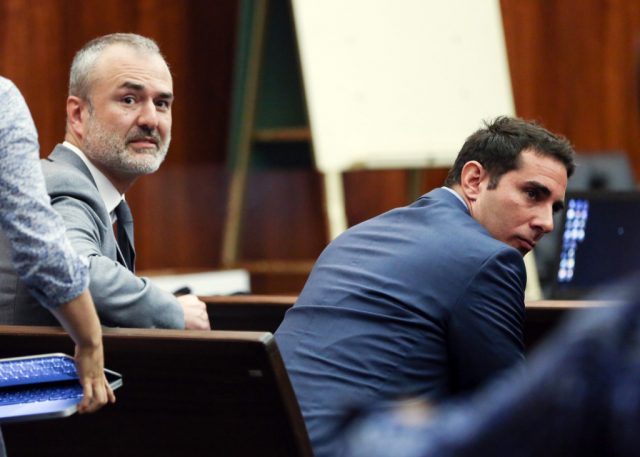
 The 2017 Human Rights Watch Film Festival comes to a close June 18 with the New York premiere of Brian Knappenberger’s Nobody Speak: Trials of the Free Press, a deeply troubling Netflix original that looks into the growing battle between billionaires and the fourth estate, between a person’s right to privacy and freedom of the press. Knappenberger begins by exploring the landmark Bollea v. Gawker case, in which Hulk Hogan, whose real name is Terry Gene Bollea, sued online media outlet Gawker for posting nine seconds of a tape depicting Bollea having sex with Heather Clem, the wife of his then-best friend, Todd Alan Clem, better known as radio personality Bubba the Love Sponge. The jury awarded Bollea $140 million, bankrupting Gawker, but Knappenberger reveals that the case was about a lot more than invasion of privacy — it was really about control of the media by the extremely wealthy. And Hogan/Bollea is not that wealthy. “Don’t be fooled into thinking that just because this case is so sleazy and rests on sex that it’s not important; this is one of the most important First Amendment cases in American history,” says Leslie Savan, who blogs on politics and the media for The Nation. “We’re talking about the very notion of truth,” she later adds. Knappenberger speaks extensively with Gawker cofounder Nick Denton, who defends what the company did as well as its overall journalistic ethics, covering stories that others wouldn’t; Knappenberger also meets with Gawker cofounder Elizabeth Spiers; former editor in chief A. J. Daulerio, who posted the Hogan story and sees himself as a patsy; former deputy editor James Wright; Hogan lawyers David Houston and Charles Harder; and former Gawker executive editor John Cook, who is boldly outspoken about Gawker’s purpose. “I wanted to write true things about bad people, and that’s what Gawker gave us all the freedom to do,” he says. First Amendment lawyer Floyd Abrams notes, “The reason to save Gawker was not because Gawker is worth saving. The reason to save it is that we don’t pick and choose what sort of publications are permissible, because once we do, it empowers the government to limit speech in a way that ought to be impermissible.” Among the other talking heads offering compelling insight are Politico media writer Peter Sterne, associate professor of journalism Jay Rosen, Buzzfeed business reporter Will Alden, NPR media correspondent David Folkenflik, and former New York Times columnist David Carr. The story takes a strange turn when it is discovered that there were potential improprieties involving Judge Pamela Campbell and that the lawsuit is being funded by billionaire venture capitalist Peter Thiel, who was outed by Gawker in 2007 and is now exacting a dangerous kind of revenge.