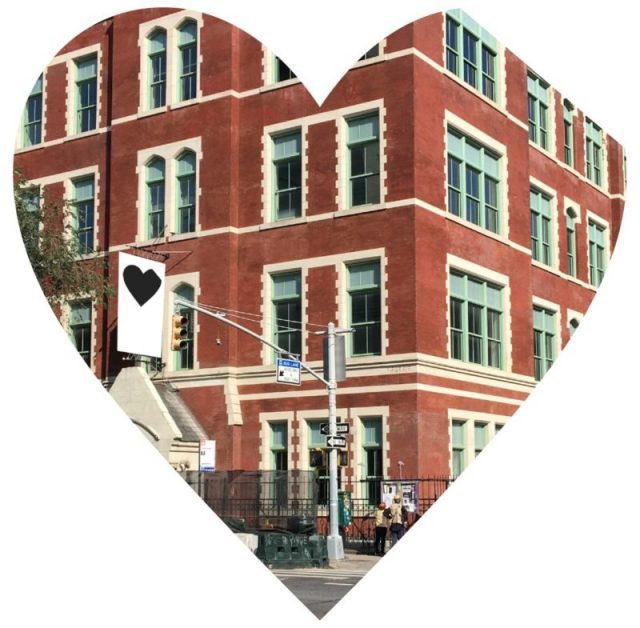
Sara D. Roosevelt Park and other locations
East Houston St. between Forsythe & Chrystie Sts.
February 16-25
www.betterchinatown.com
www.explorechinatown.com
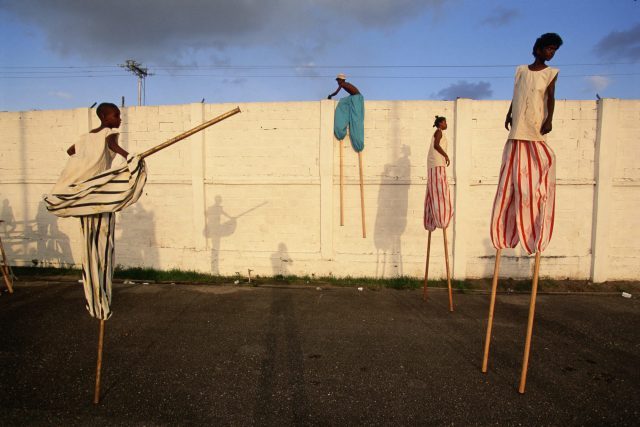
Gōng xǐ fā cái! New York City is ready to celebrate the Year of the Dog, or, more specifically, the Earth Dog, this month with special events all over town. People born in the Year of the Dog are honest, loyal, reliable, and responsible. Below are some of the highlights happening here in the five boroughs during the next several weeks of Chinese New Year.
Friday, February 16
Lunar New Year for Kids, with storytelling, crafts, snacks, games, and a Chinese acrobat, China Institute, 40 Rector St., 10:00 am – 4:00 pm
New Year’s Day Firecracker Ceremony & Cultural Festival, Sara D. Roosevelt Park, Grand Street at Chrystie St., free, 11:00 am – 3:30 pm
Saturday, February 17
Lunar New Year Family Festival, with “The Mane Event: A Lion Dance Performance” by the Nai-Ni Chen Dance Company, “Sounds of the New Year” featuring the pipa and the gong, “Whirling, Twirling Ribbons: A Ribbon Dance Workshop” with Mei-Yin Ng, folk arts, food sampling, storytelling, a gallery hunt, lion mask and paper dog workshops, and more, Museum of Chinese in America, 215 Centre St., $12, 11:00 am – 4:00 pm
Lunar New Year Celebration, with family-friendly arts and crafts, a lion dance, a paper-cutting workshop, zodiac face painting (for an additional fee), a taekwondo demonstration, a plant sale, and live performances, Queens Botanical Garden, 43-50 Main St., free, 12 noon – 4:00
Lunar New Year, with a lion dance, Shaolin Kung Fu demonstrations, Chinese drumming, Chinese acrobatics, traditional Chinese music and dance, and master of ceremonies Cary Chow, New York Chinese Cultural Center at Arts Brookfield, 230 Vesey St., free, 2:00 – 3:15
Tuesday, February 20
Lunar New Year Concert, with the New York Philharmonic performing works by Li Huanzhi, Andy Akiho, Beethoven, and more, with Ping-Pong players Ariel Hsing and Michael Landers, Elizabeth Zeltser on violin, David Cossin on percussion, Serena Wang on piano, Alex Rosen on bass, sopranos Heather Phillips and Vanessa Vasquez, mezzo-soprano Sarah Mesko, tenors Marco Cammarota and Chad Johnson, and the Farmers’ Chorus of the Yunnan Province, conducted by Long Yu, David Geffen Hall, 10 Lincoln Center Plaza, $35-$110, 7:30
Saturday, February 24
Lunar New Year Celebration 4716: Year of the Dog, with costume contest, riddles, martial arts, live music and dance, arts and crafts, games, and more, P.S.310, 942 62nd St., free, 11:00 am – 2:30
Lunar New Year Festival: Year of the Dog, featuring a Japanese shakuhachi soloist, Balinese music by Gamelan Dharma Swara, the Met Quartet in Residence: Aizuri Quartet playing “Japan Across the World,” fan painting, “Put Your Stamp on It” with Kam Mak, “Double Dog Dare You!,” a fire-breathing dragon mask, good luck puzzles, Wayang: Indonesian shadow puppet making, zodiac puppets, a hand drum and fan dance workshop, Wu-Wo tea ceremony and bubble tea gatherings, a hand-pulled noodle demonstration, a “What Your Nose Knows” scent tour, “My Chinatown” with Kam Mak, and more, Metropolitan Museum of Art, 1000 Fifth Ave. at 82nd St., free with suggested museum admission, 11:00 am – 5:00 pm
Sunday, February 25
Chinese New Year Family Festival, with workshops, dumpling making, storytelling, lion dance, live music, a puppet show, and more, workshops $5-$20, party and performance $10-$20, China Institute, 40 Rector St., 11:00 am – 3:00 pm
Nineteenth annual New York City Lunar New Year Parade & Festival, with cultural booths in the park and a parade with floats, antique cars, live performances, and much more from China, Korea, Japan, Vietnam, Taiwan, Malaysia, Singapore, and other nations, Chinatown, Sara D. Roosevelt Park, and Columbus Park, free, 1:00
Lunar New Year Celebration, with live performance and paper-cutting workshop sponsored by the New York Chinese Cultural Center, Staten Island Children’s Museum, 1000 Richmond Terr., $8, 2:00 – 4:00
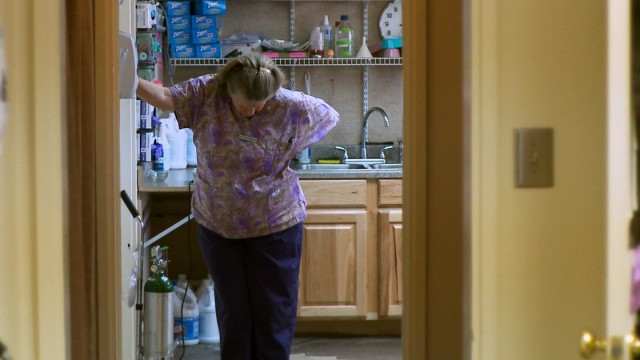
 BAMcinématek celebrates the tenth anniversary of Oscilloscope Laboratories, the independent studio founded by Beastie Boy Adam Yauch in 2008, with five days of films that are representative of its dedication to quality and diversity, screening February 19-22. The series begins on February 19 at 7:00 with After Tiller, in which directors and producers Martha Shane and Lana Wilson manage to humanize one of the most contentious, controversial, and complicated issues of our age: late abortion. In May 2009, Dr. George Tiller, who specialized in third-trimester abortions, was assassinated in front of his clinic in Wichita, Kansas. That left only four doctors in the United States who performed late abortions, each of whom had either trained or worked with Dr. Tiller. “It was absolutely no question in any of our minds that we were going to keep on doing his work,” one of those four doctors, Susan Robinson, says in the film. As After Tiller begins, Dr. Robinson works with Dr. Shelley Sella at Southwestern Women’s Options in Albuquerque, New Mexico, Dr. LeRoy Carhart is a former U.S. Air Force colonel who operates the Abortion & Contraception Clinic of Nebraska, and Dr. Warren Hern is director of the Boulder Abortion Clinic in Colorado. Shane and Wilson follow these four dedicated doctors who continue doing their work despite the personal danger associated with their profession, including harassment, murder, assault, and bombings. “When I walk out the door, I expect to be assassinated,” Dr. Hern says. The filmmakers show the doctors in their offices, meeting with women who are requesting late abortions for various reasons; Shane and Wilson also follow the abortion providers into their homes as they go on with their daily lives, offering an intimate portrait of these men and women who are so often called monsters but are firm in their belief that what they are doing is important and absolutely necessary, performing their jobs with care and understanding. However, Dr. Hern wonders if he should stop providing late abortions and just settle down peacefully with his new wife and adopted son, while Dr. Carhart and his wife opt to move out of Nebraska after a law change and meet resistance as they try to move their clinic to Maryland or Virginia.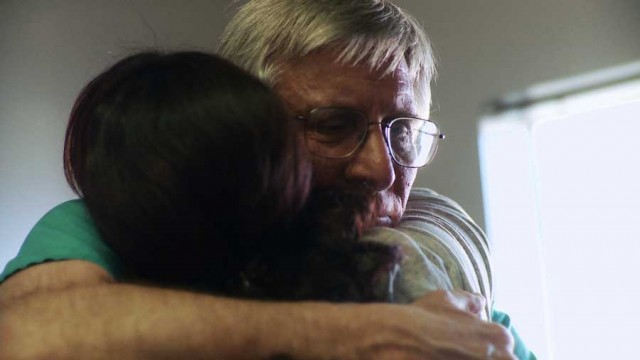
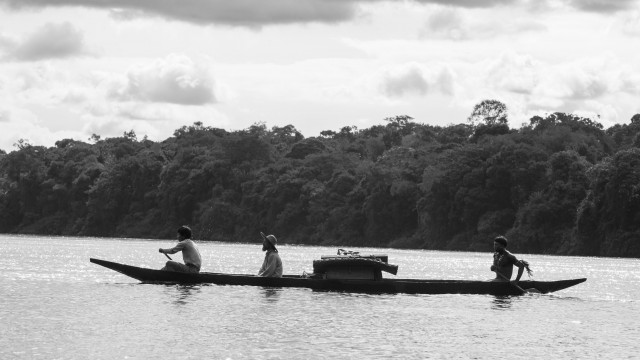
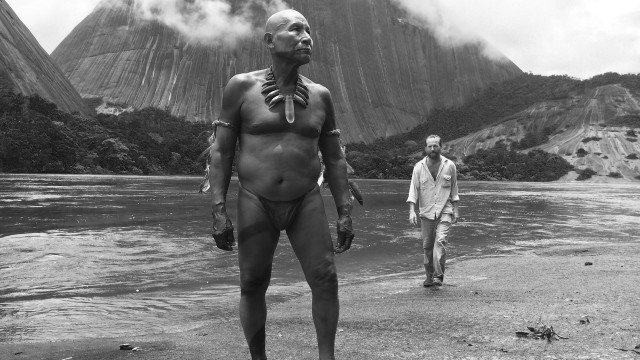
 Colombian writer-director Ciro Guerra takes viewers on a spectacular journey through time and space and deep into the heart of darkness in the extraordinary Embrace of the Serpent. Guerra’s Oscar-nominated film, the first to be shot in the Colombian Amazon in thirty years, opens with a 1909 quote from explorer Theodor Koch-Grünberg: “It is not possible for me to know if the infinite jungle has started on me the process that has taken many others to complete and irremediable insanity.” Inspired by the real-life journals of Koch-Grünberg and botanist and explorer Richard Evans Schultes, Guerra poetically shifts back and forth between two similar trips down the Vaupés River, both led by the same Amazonian shaman, each time guiding a white scientist on a perilous expedition in a long, narrow canoe. Shortly after the turn of the twentieth century, ailing white ethnologist Theo (Jan Bijvoet) and his native aid, Manduca (Yauenkü Migue), seek the help of Karamakate (Nilbio Torres), a shaman wholly suspicious of whites and who believes he is the last of his tribe. However, Theo claims he knows where remnants of Karamakate’s people live and will show him in return for helping him find the magical and mysterious hallucinogenic Yakruna plant that Theo thinks can cure his illness. Forty years later, white botanist Evan (Brionne Davis) enlists Karamakate (Antonio Bolívar Salvador) to locate what is thought to be the last surviving Yakruna plant, which he hopes will finally allow him to dream in order to heal his soul. Evoking such films as Werner Herzog’s Fitzcarraldo and Aguirre, the Wrath of God and Francis Ford Coppola’s Apocalypse Now, Embrace of the Serpent makes the rainforest itself a character, shot in glorious black-and-white by David Gallego (Cecilia, Violencia) in a sparkling palette reminiscent of the work of Brazilian photographer