this week in lectures, signings, panel discussions, workshops, and Q&As

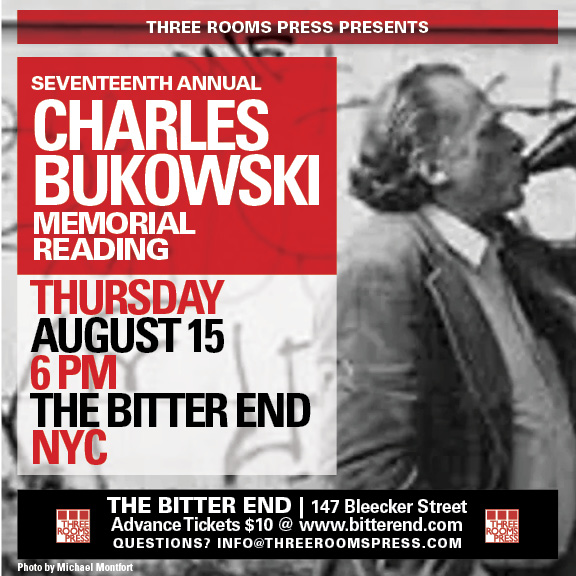
THE 17th ANNUAL CHARLES BUKOWSKI MEMORIAL READING

Who: Kat Georges, Peter Carlaftes, Jennifer Blowdryer, Puma Perl, Michael Puzzo, Danny Shot, Richard Vetere, George Wallace, more
What: Annual tribute to Charles Bukowski
Where: The Bitter End, 147 Bleecker St. between Thompson & La Guardia
When: Thursday, August 15, $10, 6:00
Why: “What sort of cultural hangover keeps Charles Bukowski in print and popular more than twenty years after his death?” S. A. Griffin asks in his Three Rooms Press essay “Charles Bukowski: Dean of Another Academy.” “In light of the fact that a good portion of what has been published since his passing in 1994 may not be the man’s best work, along with some heavy editing at times, why does Charles Bukowski remain relevant well into the 21st century?”

The seventeenth annual Charles Bukowski Memorial Reading takes place August 15 at 6:00 at the Bitter End in Greenwich Village in honor of what would have been the 104th birthday of the author of such books as Pulp, Factotum, Post Office, On Cats, and Love Is a Dog from Hell, with tribute readings by performance artist Penny Arcade, musician and storyteller Jennifer Blowdryer, poets Puma Perl, Danny Shot, and George Wallace, and playwrights Richard Vetere and Michael Puzzo, hosted by Kat Georges and Peter Carlaftes of Three Rooms Press. Bukowski, who died in 1994 at the age of seventy-three, will be celebrated through poetry, oral history, rare videos, and live performances, with a special look at what he might have thought about the 2024 elections, presidential immunity, nonalcoholic beer, AI, and other contemporary issues. As a bonus, various prizes will be given away.

[Mark Rifkin is a Brooklyn-born, Manhattan-based writer and editor; you can follow him on Substack here.]
FREE SECOND SUNDAYS: WHITNEY BIENNIAL

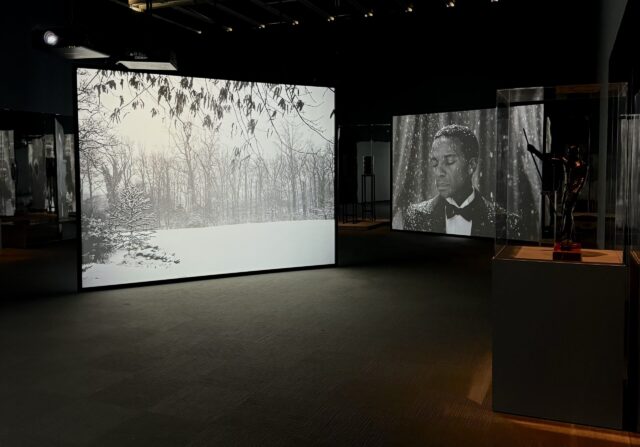
Isaac Julien, detail, Once Again . . . (Statues Never Die), 2022 (photo by Ashley Reese), a highlight of the 2024 Whitney Biennial

WHITNEY BIENNIAL: EVEN BETTER THAN THE REAL THING
Whitney Museum of American Art
99 Gansevoort St.
Sunday, August 11, free with timed tickets, 10:30 am – 6:00 pm
212-570-3600
whitney.org

According to Ligia Lewis, the eighty-first Whitney Biennial is “a dissonant chorus”; that’s an apt description of the exhibition, which features more than seventy artists contributing painting, sculpture, video, live performances, and sound and visual installations. Organized by Chrissie Iles and Meg Onli with Min Sun Jeon and Beatriz Cifuentes, this edition is themed “Even Better Than the Real Thing,” with works that delve into the sociopolitical aspects of AI, personal identity, and marginalization.

The biennial comes to a close on August 11 with a free day of special programming as part of the Second Sundays initiative, including tours, workshops, and storytelling. Navigating the biennial can be a daunting task; below are ten recommended highlights, followed by the scheduled programs.

Nikita Gale, Tempo Rubato (Stolen Time): The keys of a seemingly haunted player piano are not connected to wires, so the sound made is just that of the pressing of the wood. Lights dim as the visitor contemplates whether what they are hearing is music and what constitutes an original composition.

Isaac Julien, Iolaus/In the Life (Once Again . . . Statues Never Die): British filmmaker Isaac Julien invites museumgoers to wander around multiple screens hung at different angles and sculptures by African American artists Richmond Barthé and Matthew Angelo Harrison as a film depicts conversations with Alain Locke (André Holland), the influential Harlem Renaissance writer, philosopher, educator, and first Black Rhodes scholar, and white chemist and art collector Albert C. Barnes (Danny Huston).

Seba Calfuqueo, Tray Tray Ko: Chilean artist Seba Calfuqueo makes her way through the sacred landscape where the Mapuche people live, walking amid trees, rocks, and a river, draping herself in a long train of electric blue fabric.

Carolyn Lazard, Toilette: A mazelike conglomeration of mirrored medicine cabinets filled with Vaseline, a by-product of oil and gas production, brings up thoughts of the price of self-care and caregiving as the corporatization of the health-care industry and the decimation of the rainforest get stronger.

Julia Phillips, Mediator: Hamburg-born, Chicago-based Julia Phillips examines pregnancy and motherhood in a piece composed of two chest casts with partial faces separated by a microphone, evoking a spinning game one might find in a public playground.

P. Staff, Afferent Nerves and A Travers Le Mal: A long room bathed in an ominous yellow contains an abstract self-portrait of the UK-born, LA-based artist, with a live electrical net hovering overhead, inviting visitors into what P. Staff calls “a particular trans mode of being that exists in the tension between dissociation and hypervigilance.”

Kiyan Williams, Ruins of Empire II or The Earth Swallows the Master’s House: A reflective aluminum statue of Black trans activist Marsha P. Johnson, holding a sign that declares, “Power to the People,” watches as the north facade of the White House, topped with an upside-down American flag, sinks into the earth in this outdoor installation. Viewers are encouraged to walk through and look closely at the impending death of a once-powerful building constructed by enslaved laborers.

Constantina Zavitsanos, All the time and Call to Post (Violet): Take a seat on the carpeted ramp and get lost in the blue-violet light as captions projected on the wall share such thoughts as “The universe is made of abundance” as you feel the infrasonics of modulated speech reverberating underneath you.

Holland Andrews, Air I Breathe: Radio / Hyperacusis Version 1: Sleeping Bag: Brooklyn-based composer and performer Holland Andrews has created two pieces for the biennial, Air I Breathe: Radio in the stairwell and Hyperacusis Version 1: Sleeping Bag, located in the elevator, works that incorporate music and found sound — in the latter, some made by the elevator itself — that offer a respite from visual overload.

Sunday, August 11
15-Minute Tours: Highlights of the Exhibition, multiple times

Artmaking: Magnetic Mosaic, 11:00 am – 3:00 pm

Artmaking with Eamon Ore-Giron, 11:00 am – 4:00 pm

Story Time with NYPL in the Gallery, 11:00 am, 1:00 pm, 3:00 pm

Double Take: Guided Close-Looking through Intergenerational Dialogue, for teens, 1:00

Recorridos Familiares, 2:30

Recorridos de 15 minutos, 3:00

[Mark Rifkin is a Brooklyn-born, Manhattan-based writer and editor; you can follow him on Substack here.]
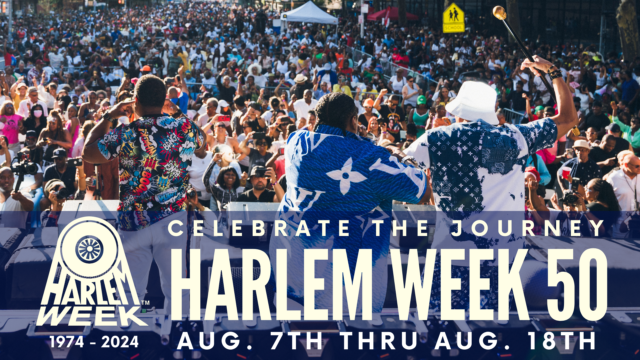
HARLEM WEEK 50: CELEBRATE THE JOURNEY

HARLEM WEEK
Multiple locations in Harlem
August 7-18, free
harlemweek.com

Fifty years ago, actor and activist Ossie Davis cut a ribbon at 138th St. and the newly renamed Adam Clayton Powell Jr. Blvd. (formerly Seventh Ave.), opening what was supposed to be a one-day, one-time-only event known as Harlem Day; Davis called it “the beginning of the second Harlem Renaissance.” Among the cofounders were Davis, his wife, Ruby Dee, Maya Angelou, James Baldwin, Harry Belafonte, Ornette Coleman, Lloyd E. Dickens, David Dinkins, Basil Paterson, Tito Puente, Charles Rangel, Max Roach, Vivian Robinson, “Sugar Ray” Robinson, Hope R. Stevens, Bill Tatum, Barbara Ann Teer, and Rev. Wyatt T. Walker.

The festival has blossomed over the last half century into the annual favorite Harlem Week, a summer gathering packed full of live performances, film screenings, local vendors, panel discussions, a job fair, fashion shows, health screenings, exhibits, and more. This year’s theme is “Celebrate the Journey”; among the highlights are the Uptown Night Market, the Percy Sutton Harlem 5K Run & Health Walk, Great Jazz on the Great Hill, Harlem on My Mind Conversations, a Jobs & Career Fair, the Children’s Festival, the Concert Under the Stars, and the centerpiece, “A Great Day in Harlem.” Below is the full schedule; everything is free.

Wednesday, August 7
Climate Change Conference, Adam Clayton Powell Jr. State Office Building, West 125th St., 6:00

Thursday, August 8
Uptown Night Market, 133rd St. & 12th Ave., 4:00 – 10:00

Harlem Summerstage, Adam Clayton Powell Jr. State Office Building, 5:30

HW 50 Indoor/Outdoor Film Festival, 7:00

Friday, August 9
Senior Citizens Day, with health demonstrations and testing, live performances, exhibits, panel discussions, the Senior Hat Fashion Show, and more, Adam Clayton Powell Jr. State Office Building, 10:00 am – 3:00 pm

Saturday, August 10
NYC Summer Streets Celebrating Harlem Week’s 50th Anniversary, 7:00 am – 3:00 pm

The Percy Sutton Harlem 5K Run & Health Walk, West 135th St., 8:00 am

Choose Healthy Life Service of Renewal and Healing, noon

Great Jazz on the Great Hill, Central Park Great Hill, 4:00

Harlem Week/Imagenation Outdoor Film Festival: Black Nativity (Kasi Lemmons, 2013), 7:00

Sunday, August 11
A Great Day in Harlem, with Artz, Rootz & Rhythm, the Gospel Caravan, AFRIBEMBE, and Concert Under the Stars featuring the Harlem Music Festival All-Star Band, music director to the stars Ray Chew, and special guests, General Grant National Memorial, Riverside Dr., noon – 7:00

Monday, August 12
Youth Conference & Hackathon, 10:00 am – 3:00 pm

Children’s Corner — Books on the Move: “Mommy Moment,” 10:00 am

Tuesday, August 13
Economic Development Day, noon – 3:00

Arts & Culture/Broadway Summit, 3:00

Harlem on My Mind Conversations, 7:30

Wednesday, August 14
NYC Jobs & Career Fair, CCNY, 160 Convent Ave., 10:00 am – 4:00 pm

Harlem on My Mind Conversations, 7:00

Thursday, August 15
Black Health Matters/HARLEM WEEK Summer Health Summit & Expo, with free health screenings, prizes, breakfast, and lunch, the Alhambra Ballroom, 2116 Adam Clayton Powell Jr. Blvd., 9:00 am – 3:00 pm

Harlem Summerstage, Adam Clayton Powell Jr. State Office Building Plaza, 5:00

Banking & Finance for Small Business & Entrepreneurs, Chase Community Banking Center, 55 West 125th St., 6:00 – 9:45

Harlem on My Mind Conversations, 8:45

Saturday, August 17
NYC Summer Streets Celebrating HARLEM WEEK’s 50th Anniversary, 109th St. & Park Ave. – 125th St. & Adam Clayton Powell Jr. Blvd., 7:00 am – 3:00 pm

NYC Children’s Festival, with storytelling, live performances, dance, hip hop, theater, poetry, arts & crafts, double dutch competitions, face painting, technology information, health services, and more, Howard Bennett Playground, West 135th St., noon – 5:00

Summer in the City, with live performances, fashion shows, and more, West 135th St., 1:00 – 6:00

Alex Trebek Harlem Children’s Spelling Bee, Schomburg Center for Research in Black Culture, 515 Malcolm X Blvd., 2:00

Harlem Week/Imagenation Outdoor Film Festival, Great Lawn at St. Nicholas Park, West 135th St. 6:00

Sunday, August 18
NYC Health Fair, West 135th St., noon – 5:00

NYC Children’s Festival, with storytelling, live performances, dance, hip hop, theater, poetry, arts & crafts, double dutch competitions, face painting, technology information, health services, and more, Howard Bennett Playground, West 135th St., noon – 5:00

Harlem Day, with live performances, food vendors, arts & crafts, jewelry, hats, sculptors, corporate exhibitors, games, a tribute to Harry Belafonte, and more, West 135th St., 1:00 – 7:00

[Mark Rifkin is a Brooklyn-born, Manhattan-based writer and editor; you can follow him on Substack here.]
PHILIPPE PETIT: TOWERING!!

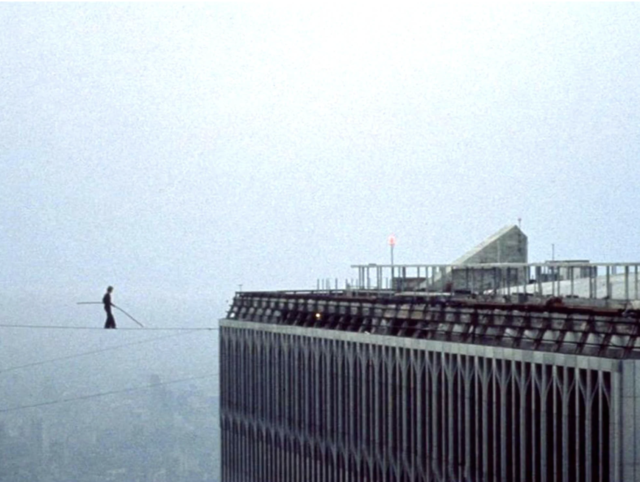
Philippe Petit will look back at his historic walk between the Twin Towers at special events at St. John the Divine (photo courtesy Man on Wire)

Who: Philippe Petit, Sting, Anat Cohen, Molly Lewis, Sophie Auster, Tim Guinee, Lorenzo Pisoni, Evelyne Crochet, Shawn Conley, James Marsh, Michael Miles, and students of Ballet Tech
What: Live performances celebrating fiftieth anniversary of Twin Towers high-wire walk
Where: The Cathedral Church of St. John the Divine, 1047 Amsterdam Ave. at 112th St.
When: Wednesday, August 7, and Thursday, August 8, $50-$500 (VIP $1800), 8:30
Why: It was an unforgettable moment in my childhood. On August 7, 1974, French tightrope artist Philippe Petit, six days shy of his twenty-fifth birthday, pulled off what he called “le coup”: After six years of secret planning, he snuck up to the top of the South Tower of the recently built World Trade Center and walked on a 131-foot-long wire he had strung to the other, 1,350 feet aboveground, traversing it eight times over forty-five minutes using a balancing pole. The crossing was completely unauthorized; spectators and security officers alike were stunned. It was a spectacular achievement that went viral well before there was anything like social media. It was all over the news, on television and in the papers, and it was all anyone was talking about.

“This is probably the end of my life to step on that wire,” Petit says in James Marsh’s 2008 documentary, Man on Wire. “Death is very close.”

The Twin Towers opened on April 4, 1973, and were destroyed on September 11, 2001.

Petit has also walked the high wire at the Sydney Harbour Bridge, the Louisiana Superdome, the Centre Georges Pompidou, the Paris Opera, the Museum of the City of New York, the Eiffel Tower, and locations in Jerusalem, Tokyo, Vienna, Frankfurt, Belgium, Switzerland, and numerous US cities. In 1982, 1992, and 1996, he performed the feat at the Cathedral Church of St. John the Divine, where he has been an artist in residence for more than four decades.

On August 7 and 8, in honor of the fiftieth anniversary of his World Trade Center walk, called the “artistic crime of the century,” Petit has conceived and directed “Towering!!,” a special two-night multidisciplinary happening consisting of nineteen scenes at the cathedral, where he will be joined by clarinetist Anat Cohen, musical whistler Molly Lewis, singer-songwriter Sophie Auster, actors Tim Guinee and Lorenzo Pisoni, classical pianist Evelyne Crochet, bassist and composer Shawn Conley, musician, author, and educator Michael Miles, and students from Ballet Tech dance school.

Petit, who turns seventy-five on August 13, will walk the high wire and share stories about his WTC adventure. In addition, his good friend Sting will play three songs, including “Let the Great World Spin,” which was written specifically for this event, and Marsh will debut a short film about Petit.

Limited tickets are still available for several sections as well as VIP seating, which comes with Champagne and dessert with Petit after the performance. Part of the proceeds support programs at the cathedral and the preservation of Petit’s archives.

[Mark Rifkin is a Brooklyn-born, Manhattan-based writer and editor; you can follow him on Substack here.]
BROOKLYN MUSEUM FIRST SATURDAY: SOL/SOLEY/SOLO

Takashi Murakami adds unique characters to many of his Hiroshige re-creations in Brooklyn Museum exhibit (photo by twi-ny/mdr)

SOL/SOLEY/SOLO
Brooklyn Museum
200 Eastern Parkway at Washington St.
Saturday, August 3, free, 5:00 – 10:00
212-864-5400
www.brooklynmuseum.org

The Brooklyn Museum honors Caribbean culture with its free August First Saturday program, “Sol/Soley/Solo,” featuring live performances by Metro Steel Orchestra, RAGGA NYC DJs Oscar Nñ and Byrell the Great, Dada Cozmic, and Lulada Club; storytelling with Janet Morrison and Deborah C. Mortimer; a pop-up Caribbean market; pop-up poetry with Roberto Carlos Garcia, Omotara James, Anesia Alfred, and Christina Olivares; a hands-on art workshop in which participants will make Caribbean-inspired fans; and screenings of Ben DiGiacomo and Dutty Vannier’s 2023 documentary Bad Like Brooklyn Dancehall, followed by a talkback with Pat McKay, Screechy Dan, and Red Fox, moderated by Lauren Zelaya, and Eché Janga’s 2020 drama, Buladó. In addition, the galleries will be open late so you can check out “Nico Williams: Aaniin, I See Your Light,” “Paul McCartney Photographs 1963–64: Eyes of the Storm,” “Brooklyn Abstraction: Four Artists, Four Walls,” “The Brooklyn Della Robbia,” “The Dinner Party by Judy Chicago,” and more.

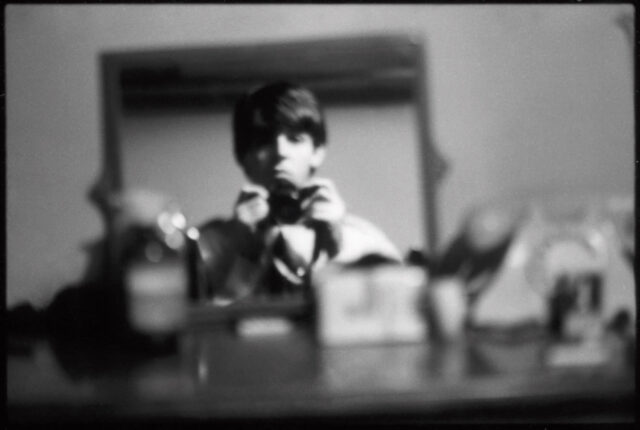
Paul McCartney, Self-portrait, London, 1963, large graphic reproduction (courtesy MPL Communications Ltd.)

It’s also your last chance to catch the must-see exhibition “Hiroshige’s 100 Famous Views of Edo (feat. Takashi Murakami),” which closes August 4. For the first time in more than two decades, the Brooklyn Museum is displaying its rare complete set of Utagawa Hiroshige’s “100 Famous Views of Edo,” an 1856–58 collection of woodblock prints of Edo, later to become Tokyo. Hiroshige, who died in 1858 at the age of sixty-one, captured everyday life in the gorgeous works, from flora and fauna to stunning landscapes to fish, cats, people, and weather patterns, including Nihonbashi, Clearing After Snow; Ryogoku Ekoin and Moto-Yanagibashi Bridge; Cotton-Goods Lane, Odenma-cho; Yatsukoji, Inside Sujikai Gate; Shitaya Hirokoji; Night View of the Matsuchiyama and Sam’ya Canal; View of Nihonbashi Tori-itchome; Sudden Shower over Shin-Ohashi Bridge and Atake; and Bamboo Yards, Kyobashi Bridge.

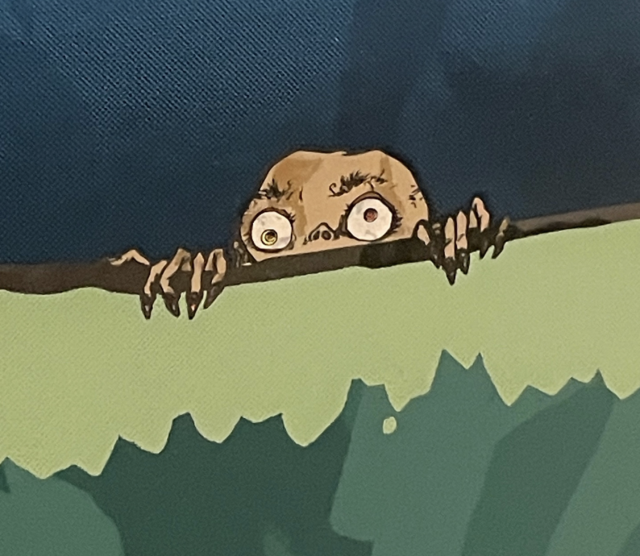
The show is supplemented with related objects, contemporary photographs of the locations by Álex Falcón Bueno, and, most spectacularly, Takashi Murakami’s re-creations of each view of Edo, many with gold or platinum leafing. Dozens of smaller 14 1/2 × 9 7/16 inch acrylics on canvas are arranged in three rows on the walls, as well as 39 3/8 × 25 9/16 inch works in two rows, but it’s the large-scale 137 13/16 × 89 9/16 inch pieces that demand intense scrutiny, as Murakami has added classic miniature characters from his oeuvre, hiding them in trees, behind bushes, on rooftops, and in other hard-to-find locations, in the same gallery space where “© Murakami” dazzled visitors in 2008.

[Mark Rifkin is a Brooklyn-born, Manhattan-based writer and editor; you can follow him on Substack here.]

LEGENDS & LEGACIES: ELEVENTH ANNUAL STooPS BED-STUY ART CRAWL AND BLOCK PARTY

STooPS 2024 SUMMER FESTIVAL
Stuyvesant Ave. & Decatur St., Brooklyn
Saturday, July 27, free (advance registration recommended), 1:00 – 7:00
www.stoopsbedstuy.org
www.eventbrite.com

The eleventh annual STooPS Arts Crawl and Block Party takes place July 27 from 1:00 to 7:00, with live music and dance, spoken word, workshops, theater, and visual art on the stoops and shared spaces of Bedford–Stuyvesant. This year’s theme is “Legends & Legacies,” honoring the history of the community. Among the legacies participants are textile artist Aaliyah Maya, singer-songwriters Amma Whatt and YahZarah, poets Carmin Wong, Kai Diata Giovanni, and Keys Will, storyteller Christine Sloan Stoddard, musicians BSTFRND, DJ Toni B, and Zardon Za’, dancer-choreographer Kendra J. Bostock, healer Renee Kimberly Smith, and artists Ladie Ovila Lemon (Mūt’ Sun) and Shanna Sabio. Representing the legends are Black Girl Magic Row; Monique Greenwood of Akwaaba Mansion; Sincerely, Tommy founders Kai Avent-deLeon, Mama Jelani deLeon, and Ms. Doreen deLeon; Chief Baba Neil Clarke; Ms. Cathy Suarez of the Decatur St. Block Association; and organizer and educator Lumumba Akinwole-Bandele of the East.

“STooPS is a living legacy — the bridge that connects the artists, movements, organizations, and neighbors who transformed Bed-Stuy into a Black Cultural Hub with the new artists, residents, and visitors in order to forge the future of this neighborhood and Black culture,” STooPS founding director Bostock said in a statement. “For our 2024 annual summer festival we honor the national and hyperlocal hero/sheros and imagine and inspire their posterity with our theme, Bed-Stuy: Legends and Legacies.“

The festivities begin at 1:00 with a block party lasting all afternoon, including a Kiddie Korner; there will be art crawls at 1:30 and 4:30, led by playwright and poet Wong. All events are free but advance registration is recommended.

[Mark Rifkin is a Brooklyn-born, Manhattan-based writer and editor; you can follow him on Substack here.]
MODERNISM, INC.: THE ELIOT NOYES DESIGN STORY

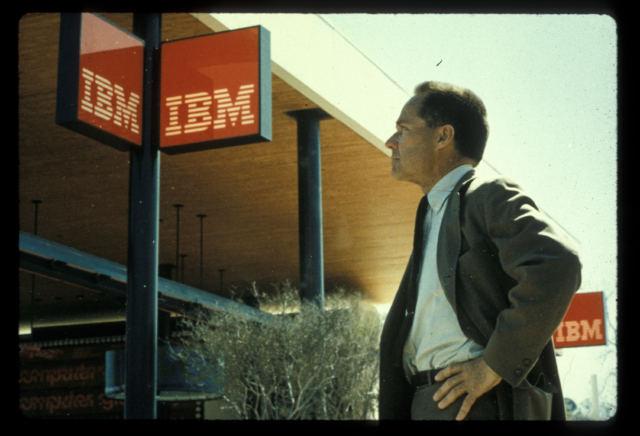
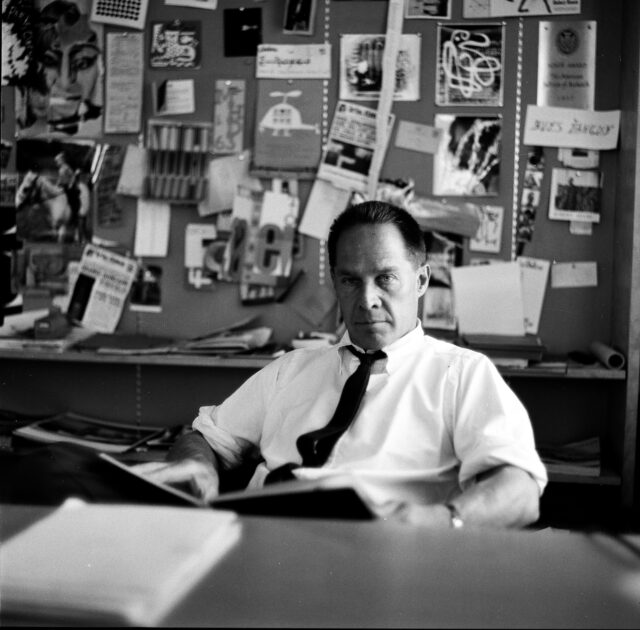
Modernism, Inc. subject Eliot Noyes is hard at work in his New Canaan office (courtesy of the Pedro Guerrero Estate)

MODERNISM, INC. (Jason Cohn, 2023)
IFC Center
323 Sixth Ave. at West Third St.
Opens Friday, July 19
212-924-7771
www.ifccenter.com

“Good design is good business” was the mantra employed by architect Eliot Noyes, who, with IBM CEO Tom Watson Jr., helped rebrand the company through its public image from top to bottom, from its logo to the look of its products, creating a legacy that is still in evidence today.

Noyes’s career is detailed in Jason Cohn’s documentary Modernism, Inc., opening July 19 at IFC Center, with Cohn on hand for Q&As on Friday and Saturday night at the 6:50 screening.

The eighty-minute film skips over Noyes’s childhood, beginning with his disgruntlement with the old-fashioned ideas taught at Harvard in the 1930s. In 1937, he started studying with German American architect and Bauhaus founder Walter Gropius and never looked back. Noyes wanted to incorporate the reality of modern life, including social and economic problems, into his work. “Gropius pushed Noyes to see the continuity between art, architecture, and the design of everyday objects, what Gropius called the total theory of design,” narrator and French actor Sebastian Roché explains.

In 1939, Noyes, who was born in Boston in 1910, was hired as the first director of industrial design at the Museum of Modern Art, where he staged the important 1941 exhibition “Organic Design in Home Furnishings.” He enlisted in the Army Air Force during WWII, exploring the efficacy of using gliders in battle. He espoused his theory of design on the television program Omnibus. From 1947 to 1960, he wrote an influential column for Consumer Reports called “The Shape of Things.”

In 1956, one of his colleagues on the Pentagon’s glider project, Watson, brought him over to IBM to remake its corporate culture; Noyes refused to become a full-time employee, instead accepting the position of consultant director of design, working from his home in New Canaan, Connecticut, where he and his wife, Molly Weed, who contributed to many of his designs, raised four children: Eli, Fred, Meridee, and Derry. New Canaan became a hub for designers, as Marcel Breuer, Philip Johnson, Joe Johansen, and others soon moved into the exclusive suburb.

Eliot Noyes was IBM’s consultant director of design from 1954 to 1977 (courtesy of the Eliot Noyes Family)

“Eliot Noyes had quite a curious view of Modernism, a deep-seated belief that design could be at the core of building a future society,” design historian Alice Twemlow says in the film. Noyes’s designs, from the conversation chair, IBM Selectric, and large computers to logos for such companies as IBM, Mobil, Westinghouse, Pan Am, and Xerox to his unique houses, felt as new as free jazz and abstract expressionism, interweaving form and function. He collaborated with such industry luminaries as Charles Eames and Paul Rand, known as “Matisse on Madison Ave.” Not everything was successful; one notable failure was his bubble house.

Describing what went into constructing a house for her family in 1978, Lyn Chivvis, interviewed in her Noyes-designed kitchen with her husband, Arthur, tells Cohn, “El was able to talk to his clients, my parents and us, and find out, what do you need for your daily life? El developed the open-shelving idea. He actually measured the shelves for me. It doesn’t fit you. It doesn’t fit you, it doesn’t fit anyone else but me.”

Cohn also speaks with IBM design head Katrina Alcorn, Noyes biographer Gordon Bruce, IBM chief archivist Jamie Martin, University of Toronto architecture professor and historian John Harwood, IBM design manager Tom Hardy, design historian Thomas Hine, and Noyes’s children, integrating archival footage, home movies, industrial films, and old advertisements (the film was edited by Kevin Jones), accompanied by a sensitive score by Steven Emerson/Ever Studio.

Noyes’s career trajectory took a turn at the 1970 International Design Conference Aspen, which he headed, when the theme of design fusing with the environment was seized upon by counterculture activists to protest against corporate greed, the Vietnam War, and the misuse of natural resources by design firms. The conference was filmed by his son Eli and director Claudia Weil, who captured intense moments. “I’m not a political guy. I’m interested in making my points through my work,” the elder Noyes tells Oscar-winning graphic designer Saul Bass. (Eli, who died this past March at the age of eighty-one, had been nominated for an Oscar for his 1964 claymation short Clay or the Origin of Species.)

“The designers who were at Aspen, their consciousness was good design can change things. I think Eliot Noyes would profess this,” Chip Lord, the cofounder of the alternative architecture collective Ant Farm and a conference attendee, explains. “Good design makes a good product or a good branding. It is a form of change. But our critique was beyond that because it didn’t matter how well you designed a gigantic SUV if it’s just guzzling fuel.”

The conference changed Noyes; he resigned from the IDCA and spent more time with his family. His children note that they really didn’t get to know their father until his later years, including a particularly memorable trip together.

Noyes died in 1977 at the age of sixty-six; he may not be a household name, but his impact on the visual and architectural history of twentieth-century American culture is still unmistakable in corporations and households around the world.

[Mark Rifkin is a Brooklyn-born, Manhattan-based writer and editor; you can follow him on Substack here.]