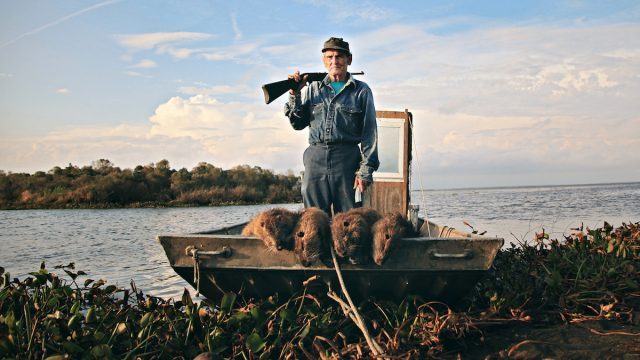
Master nutria hunter Thomas Gonzales shows off his catch in Rodents of Unusual Size
RODENTS OF UNUSUAL SIZE (Chris Metzler, Jeff Springer & Quinn Costello, 2017)
IFC Center
323 Sixth Ave. at Third St.
Tuesday, October 23, 7:30
212-924-7771
www.ifccenter.com
www.rodentsofunusualsize.tv
 And you thought the rat problem in New York City was bad. “I wanna tell you all a tale that’s crazier than hell,” Louisiana native and Treme star Wendell Pierce says at the beginning of Rodents of Unusual Size, Chris Metzler, Jeff Springer, and Quinn Costello’s eye-opening documentary about the nutria, the twenty-pound web-footed, orange-toothed South American creature that was introduced to Louisiana in the 1930s to boost the fur trade and has wreaked havoc ever since. The rodents multiply like tribbles and destroy so much vegetation that the resulting erosion affects storm surge protection, leading the government to encourage the mass murder of the beast by offering a five-dollar bounty for each tail. The filmmakers visit Delacroix and the Ninth Ward in New Orleans, talking to such nutria hunters as Larry Aucoin, Darrell Aucoin, Liz LeCompte, and Trey Hover, who is killing the swamp rat to help pay for his college education. LeCompte is doing it to protect the environment. “If the land’s gone, then me and my family don’t have a future,” she says, explaining that “Cajun women, they not afraid to get their hands dirty.” Nutria control specialist Michael Beran, who patrols the canal banks and uncovers nutria-built subterranean labyrinths that can also endanger bridges, notes that the nutria is an “invasive species [that] has to be deleted.” Nutria tail assessor John Siemion gets right to the point: “It offers these guys money when there is none,” he says. “This is their income for the year.”
Fashion designer Cree McCree, the founder of Righteous Fur, believes that using nutria pelts for vests, hats, leg warmers, ties, and other clothing should be supported by organizations such as PETA. “I like to think of Righteous Fur as a giant recycling project,” she says. Some restaurants are serving nutria on their menu. James Beard Award-winning chef Susan Spicer of Bayona Restaurant insists, “If you approach it with an open mind, you’ll find it doesn’t have a really bad, swampy taste.” Rebirth Brass Band cofounder and trumpeter Kermit Ruffins barbecues nutria. “It’s definitely like tasting Louisiana. Delicious!” he declares. The filmmakers also speak with Edmond Mouton of the Louisiana Dept. of Wildlife & Fisheries, fur wholesaler Tab Pitre (who skins a few nutria on camera), Bimbo Phillips of the Atakapa-Ishak tribe, Chateau Estates resident Paul Klein (who feeds the buggers), Rick Atkinson of the Audubon Zoo, Chateau Golf & Country Club maintenance manager Brooks Mosley, Louisiana Fur & Wildlife Festival organizer David LaPierre, Fur Queen Beauty Pageant winner Julian Devillier, and Eric Dement, who has a pet nutria. But it’s fisherman and philosopher Thomas Gonzales who the filmmakers keep coming back to. “Never kill something unless you make something with it,” the old man says, later adding, “I’m born to die, so I’m gonna get all the gusto out of this little body that I got.” In Delacroix, a sign reads, “End of the World.” It seems like not even Captain Kirk could cure Louisiana’s nutria dilemma. Rodents of Unusual Size, which also has a fab soundtrack by the Lost Bayou Ramblers, is screening October 23 at 7:30 at IFC, concluding the fall “Stranger Than Fiction” series, and will be followed by a Q&A with codirector and cinematographer Springer.
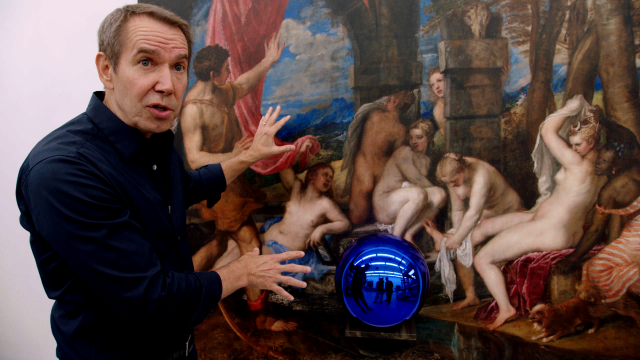
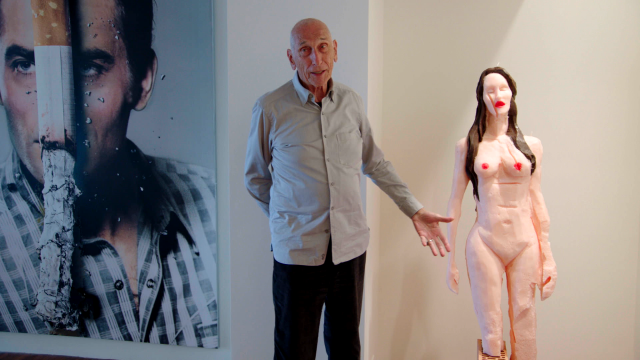
 On October 4, a framed painting titled “Girl with Balloon” by British street artist and provocateur Banksy began shredding itself upon being sold for $1.4 million at a Sotheby’s auction, shocking and delighting the art world. Was Banksy, whose very name evokes cold, hard cash, making a sly comment on the art market, on auctions, on the intrinsic value of a work of art? In the immediate aftermath, there was general confusion about just what the buyer had purchased and whether she had to keep it at all. In many ways that stunt exemplifies what Nathaniel Kahn’s highly artistic documentary, The Price of Everything, is all about. Kahn, who was nominated for Oscars for his 2003 film, My Architect: A Son’s Journey, which explored the legacy of his father, Louis Kahn, and his 2006 short, Two Hands, about pianist Leon Fleisher, this time trains his camera on the volatile global art market. “Art and money have always gone hand in hand,” superstar auctioneer Simon de Pury says. “It’s very important for good art to be expensive. You only protect things that are valuable. If something has no financial value, people don’t care. They will not give it the necessary protection. The only way to make sure that cultural artifacts survive is for them to have a commercial value.”

 Alexandria Bombach’s On Her Shoulders is an extraordinary film about an extraordinary human being. In August 2014, the Yazidis of Northern Iraq were attacked by ISIS, who raped and killed thousands of Yazidis in what amounted to a genocide, turning countless women into sex slaves. Twenty-one-year-old Nadia Murad survived and later escaped the horror and has been on a mission ever since, traveling around the world to share her story in order to save and protect this ethno-religious minority, who have been scattered throughout refugee camps. “What must be done so a woman will not be a victim of war?” she demands. For a year, Bombach followed Nadia and Murad Ismael, executive director of Yazda, a global organization dedicated to supporting the Yazidis and other vulnerable groups, as Nadia met with media and politicians while hoping to be able to address the UN General Assembly. They go to Canada, Germany, Greece, and America, occasionally joined by human rights lawyer Amal Clooney, Yazda deputy executive director Ahmed Khudida Burjus, and former International Criminal Court prosecutor Luis Moreno Ocampo, as she makes her case to anyone who will listen.
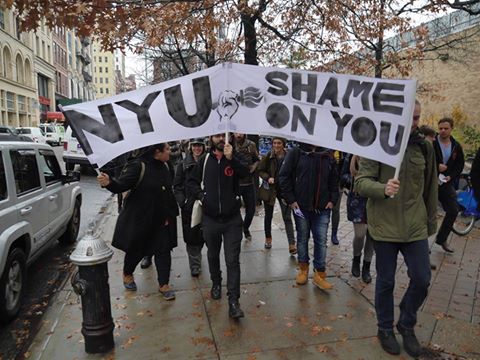
 Roger Paradiso’s The Lost Village takes on a subject near and dear to many a New Yorker’s heart: the gentrification and corporatization of the city, which is replacing affordable housing and mom-and-pop shops with luxury buildings and fancy boutiques. However, the film provides no new insight into the dilemma; in fact, Paradiso even hurts his cause by speaking with a fairly random assortment of people, including some fringe, less-than-objective, not very articulate figures, and demonstrating little skill with a camera. “People came to the Village because it was different,” he explains, stating the obvious. “They’re trying to change the character of the Village, trying to make it a hipster’s suburban mall version of what was once a great Village of artists and working-class families. It’s enough to make a Villager puke.” The film begins as a screed against NYU’s massive expansion into real estate, pointing out that many women students have become sex workers in order to afford their tuition. Mark Crispin Miller, NYU professor of Media, Culture, and Communication, shows a radical 1960s spirit in arguing against the university’s policies, but the rest of the film is scattershot and hackneyed as Paradiso, who previously wrote and directed the movie version of Tony n’ Tina’s Wedding, marches in a handful of economists, brokers, journalists, and activists who give meandering lectures that sound like “Voice of the People” letters in the Daily News. And it doesn’t help that the film looks like a 1970s relic in dire need of restoration. There’s an important story buried somewhere here; perhaps the series of talks accompanying numerous screenings at Cinema Village will shed more light on this critical topic. [Full disclosure: I’m an NYU graduate with a degree in Cinema Studies.]