Alyssa Bolsey’s Beyond the Bolex explores a family legacy and the history of early film
BEYOND THE BOLEX (Alyssa Bolsey, 2018)
Cinepolis Chelsea
260 West 23rd St. between Seventh & Eighth Aves.
Thursday, November 8, 9:15
Festival runs November 8-15 www.docnyc.net www.jacquesbolseyproject.com
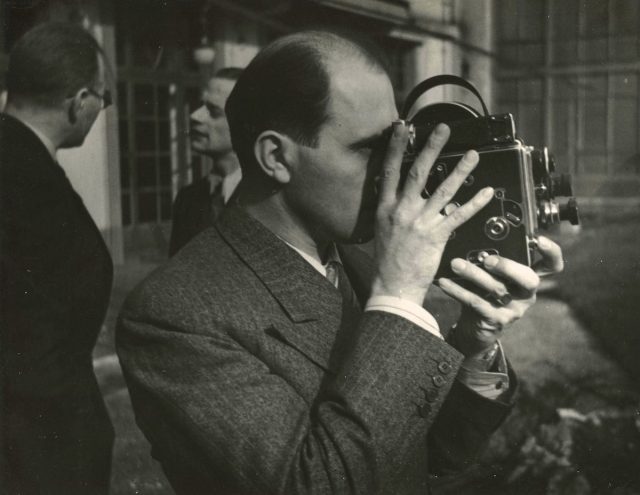
The ninth annual DOC NYC festival, a celebration of nonfiction film, is bigger than ever, this year consisting of more than three hundred shorts and features and with an all-star collection of celebrity-driven works from November 8 to 15. But often it’s the small documentaries that offer the most surprises. One such film, screening at Cinepolis Chelsea on opening night, is Alyssa Bolsey’s Beyond the Bolex. Bolsey made her first movie when she was twelve, but following the death of her paternal grandfather, she found out that filmmaking was truly in her blood: Her great-grandfather was Jacques Bolsey, the inventor of the Bolex and an influential experimental filmmaker. “I had no idea that there was a long-lost family legacy waiting to be uncovered, a treasure trove going all the way back to the early days of film,” she says. But while speaking with such directors and cinematographers as Wim Wenders, Bruce Brown, Dave Alex Riddett, Jonas Mekas, and Barbara Hammer, she also discovers details about her family history she never knew during a twelve-year investigation into Jacques’s life and career. The world premiere screening will be followed by a Q&A with Alyssa Bolsey and producer Camilo Lara Jr.
Zero Mostel and Gene Wilder can only do so much to battle fascism and conformity in Rhinoceros
RHINOCEROS (Tom O’Horgan, 1974)
Museum of the Moving Image, Redstone Theater
35th Ave. at 36th St., Astoria
Sunday, November 4, $15, 6:30
718-777-6800 www.movingimage.us
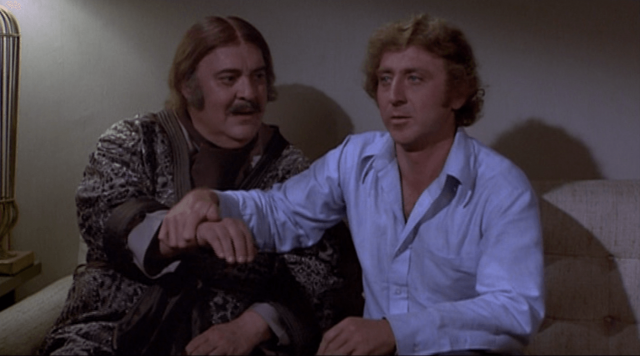
Seven years after striking comedy gold in Mel Brooks’s The Producers, Zero Mostel and Gene Wilder teamed up again in the misguided, misbegotten Rhinoceros, Tom O’Horgan’s completely mishandled cinematic adaptation of Eugène Ionesco’s 1959 Theatre of the Absurd classic. Mostel reprises the role of bon vivant John (Jean), which earned him a Tony, while Wilder is his downstairs neighbor Stanley (Bérenger), a schlemiel of an accountant. Stanley is in love with his coworker Daisy (Karen Black), which coincidentally is the same name as the sheep Wilder’s character falls hard for in Woody Allen’s 1972 Everything You Always Wanted to Know About Sex *But Were Afraid to Ask. But this time the animal problem involves the rhinoceros, some species of which in the twenty-first century are endangered because they are illegally hunted for their horns and by big-gamers filling their trophy cases. The plot deals with individuality and fascism as humanity threatens to become extinct as the strong-skinned rhino starts taking over the streets, even though we never see them. Meta and metaphors abound in the wacky, way-too-over-the-top slapstick farce, which never gains traction; even the 1970s score is utterly absurd, and not in a good way. I’ve seen a terrific production of the play in French and a disappointing one in Yiddish, but the movie is in its own oddball category.
Rhinoceros is screening November 4 at 6:30 at the Museum of the Moving Image as part of the “Science on Screen” series, with political scientist Ester Fuchs, author of Mayors and Money: Fiscal Policy in New York and Chicago and director of WhosOnTheBallot.org, and Theresa Rebeck, writer of such current shows as Bernhardt/Hamlet and Downstairs — and who wrote her own adaptation of Rhinoceros in 1996 — attempting to examine the film within the context of the decline of civilization today, particularly under President Donald Trump, whose sons are trophy hunters themselves.
Selma tells the heartbreaking story of her family during the Armenian genocide in Distant Constellation
DISTANT CONSTELLATION (Shevaun Mizrahi, 2018)
Metrograph
7 Ludlow St. between Canal & Hester Sts.
Opens Friday, November 2
212-660-0312 metrograph.com grasshopperfilm.com
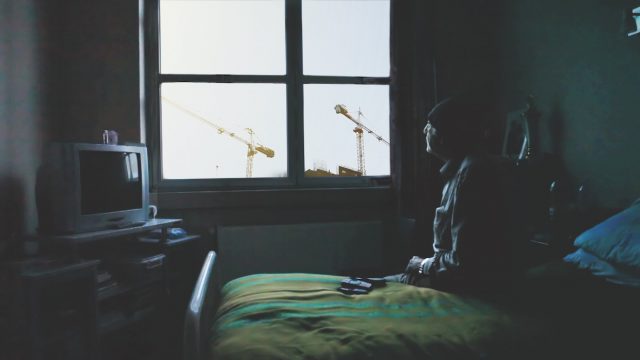
Shevaun Mizrahi’s debut feature, Distant Constellation, is a lovely, intimate portrait of a group of residents at an old age home in Istanbul who just go about their business or share deeply personal stories while major construction outside tears down the past to build a future the senior citizens will not be a part of. Two men spend much of their day going up and down in the elevator, making fun of each other, talking about aliens, and not wanting to be bothered by anyone else. A man is delighted to bring in halvah. A photographer who now can barely see repeats words and phrases as he tries to fix his flash. A man sleeps in a coffinlike bed, coughing, gasping, and singing as the wind whistles through the window. A woman tells the heart-wrenching tale of what she and her family went through during the Armenian genocide of 1915. And another man talks about his unending passion for sex and eroticism, reading passages from Vladimir Nabokov’s Lolita. There’s a lot of napping and sitting, staring into nothingness and watching television. Snow falls lightly from the sky. A flock of birds fly near giant cranes.
Life goes on at Turkish retirement home, inside and outside, in Distant Constellation
A still photographer who studied filmmaking at NYU and apprenticed with Oscar-nominated cinematographer Ed Lachman (Far from Heaven, Carol), Mizrahi regularly travels to Turkey to visit her father. (Her mother is an American.) Back in 2009, she started spending time at a retirement home for the elderly in her father’s hometown and, using a basic DSLR camera, began filming the very old men and women. Encouraged by film-school friends Shelly Grizim and Deniz Buga and inspired by Chris Marker’s Sans Soleil, Pedro Costa’s Colossal Youth, and Wallace Stevens’s “Final Soliloquy of the Interior Paramour,” Mizrahi decided to make a full-length film. She focuses her camera, which almost never moves, directly on her subjects, many of whom speak in their bedrooms, the construction often visible outside. Mizrahi shoots Selma, the genocide survivor, in extreme close-up, every moment of her life seemingly right there on her face. The people are not identified in the film by their full names, there is no voiceover narration, no doctors or nurses are interviewed, and no ages or background information is supplied other than what they choose to tell Mizrahi.
At one point Mizrahi, who served as director, cinematographer, editor, and sound designer — Grizim and Buga ultimately became her producers and worked with her on the sound, with Grizim also contributing to the editing and visual effects — shows two old alarm clocks side-by-side, with slightly different times, a wry comment on time itself, something that the residents do not experience the same as the construction workers, who expect to be part of the future they are building. Mizrahi even humanizes them, not casting them as villains eliminating the past. It’s quite a group of elderly characters she’s assembled, members of minorities who speak in Turkish, English, Armenian, French, Greek, and Kurdish. “Light the first light of evening, as in a room / In which we rest and, for small reason, think / The world imagined is the ultimate good,” Stevens wrote in “Final Soliloquy of the Interior Paramour.” But as someone says in Distant Constellation, “So is life.” The genuinely poetic film opens November 2 at Metrograph, with Mizrahi appearing at Q&As at the 7:00 show Friday, moderated by Eric Hynes, and at the 7:45 show on Saturday.
FIRST SATURDAYS
Brooklyn Museum
200 Eastern Parkway at Washington St.
Saturday, November 3, free (some events require advance tickets), 5:00 – 11:00
212-864-5400 www.brooklynmuseum.org
The Brooklyn Museum explores art and Black Power in the November edition of its free First Saturday program. There will be live performances by Antoine Drye, Shelley Nicole’s blaKbüshe, and the Brooklyn Dance Festival; an Art & Dialogue discussion with curators Valerie Cassel Oliver and Catherine Morris; a hands-on workshop in which participants can create miniature paintings inspired by jazz and the work of Alma Thomas, William T. Williams, and others; a curator tour of “Soul of a Nation: Art in the Age of Black Power” with Ashley James; original poetry and music by Jaime Lee Lewis, Jennifer Falu, Joekenneth Museau, Asante Amin, Frank Malloy, and Terry Lovette in addition to excerpts from the 1968 collection Black Fire: An Anthology of Afro-American Writing; pop-up poetry with Sean DesVignes, Joel Dias-Porter, and Omotara James of Cave Canem; an “Archives as Raw History” tour with archivist Molly Seegers; and the community talk “Black Art Futures Fund.” In addition, the galleries will be open late so you can check out “Soul of a Nation: Art in the Age of Black Power,” “Syria, Then and Now: Stories from Refugees a Century Apart,” “One: Do Ho Suh,” “Half the Picture: A Feminist Look at the Collection,” “Something to Say: Brooklyn Hi-Art! Machine, Deborah Kass, Kameelah Janan Rasheed, and Hank Willis Thomas,” “Cecilia Vicuña: Disappeared Quipu,” “Rob Wynne: FLOAT,” “Infinite Blue,” “A Woman’s Afterlife: Gender Transformation in Ancient Egypt,” and more.
Terrence McNally looks back at his life and career, as well as considering his future, in Every Act of Life
DOCUMENTARY FEATURE: EVERY ACT OF LIFE (Jeff Kaufman, 2018)
SVA Theatre
333 West 23rd St. between Seventh & Eighth Aves.
Monday, October 29, 6:00
Festival runs October 24-30
212-592-2980 everyactoflifedocumentary.com newfest.org
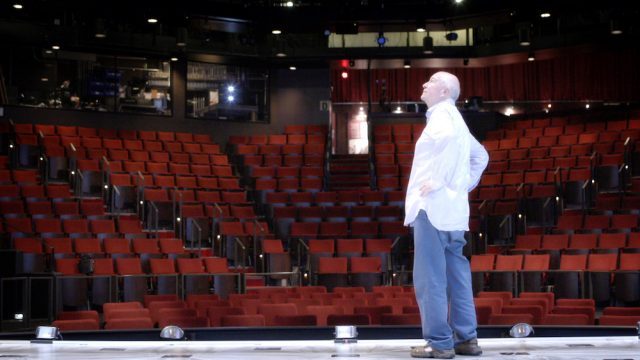
Screening at NewFest on October 29, Jeff Kaufman’s Every Act of Life is a lovely and loving look at playwright and activist Terrence McNally, a compelling film about chasing one’s hopes and dreams, refusing to back down, and fighting for what’s right personally and professionally, onstage and off. Director, producer, and writer Kaufman speaks extensively with McNally, who is forthcoming about his career and his sexuality, which included relationships with Edward Albee and Wendy Wasserstein and several men who died during the height of the AIDS crisis. “Terrence is able to get to the core of the human condition in so many different ways. I defy you to name another playwright who can do this,” six-time Tony winner Audra McDonald says. Kaufman traces the life of four-time Tony winner McNally, from his dysfunctional childhood in Florida and Texas and his world travels as tutor to John Steinbeck’s children (“Don’t write for the theater; it will break your heart,” Steinbeck told him) to his first Broadway flop, his alcoholism, his championing of same-sex marriage, his battle against lung cancer, and the success of such (often controversial) shows as The Ritz; Corpus Christi; Master Class; A Perfect Ganesh; Frankie and Johnny in the Clair de Lune; Kiss of the Spiderwoman; Lips Together, Teeth Apart; and Love! Valour! Compassion!
The film includes wonderful clips from many productions in addition to scenes of pairs of actors talking about McNally, most entertainingly Edie Falco with F. Murray Abraham and McNally himself with Larry Kramer. McNally also goes through some old scrapbooks with his husband, Tom Kirdahy; they were previously featured in Kaufman’s The State of Marriage. “Terrence was way ahead of his time,” Abraham posits. Among the many other theater stalwarts offering their carefully considered thoughts on McNally are Angela Lansbury, Bryan Cranston, Rita Moreno, Nathan Lane, Meryl Streep, Patrick Wilson, Marin Mazzie, Jon Robin Baitz, Zoe Caldwell, Billy Porter, Chita Rivera, John Kander, Lynn Ahrens, and Stephen Flaherty, along with behind-the-scenes footage, theater memorabilia, archival photographs, and a lot of fascinating memories. “I’d have no career if it wasn’t for Terrence McNally,” Lane says. On the film’s KickStarter page, Kaufman (The Savoy King: Chick Webb and the Music That Changed America, Brush with Life: The Art of Being Edward Biberman) and producer Marcia Ross explain about McNally, “We thought, ‘Why hasn’t anyone done a documentary about this man?’ Then we said, ‘Well, we should.’” It’s simply grand that they did, and such a fine documentary to boot. Every Act of Life is screening at 6:00 on October 29 at the SVA Theatre and will be followed by a Q&A with McNally, who is still at work on several new plays as his eightieth birthday approaches.
Making Montgomery Clift makes a compelling case for a new interpretation of the actor’s life and career
CLOSING NIGHT GALA: MAKING MONTGOMERY CLIFT (Robert Clift & Hillary Demmon, 2018)
SVA Theatre
333 West 23rd St. between Seventh & Eighth Aves.
Tuesday, October 30, 7:30 newfest.org www.facebook.com/montyfilm
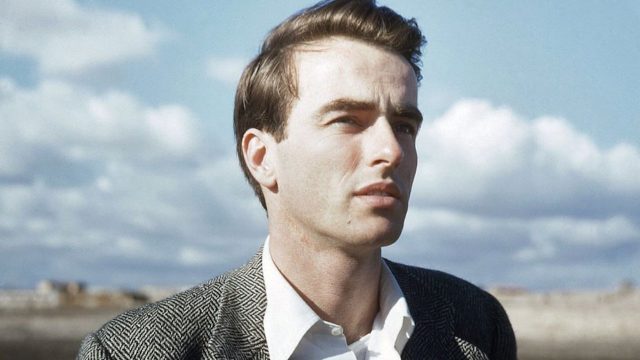
At the beginning of Making Montgomery Clift, Robert Clift, Montgomery Clift’s youngest nephew, explains, “This isn’t really a story about a man. It’s about what his life was allowed to mean. Remember that.” What is revealed will be hard to forget, even with Robert later admitting, “The idea of Monty’s brokenness has persisted all these years, and I don’t know if it could ever change.” But with the documentary, making its New York premiere on October 30 as the closing-night selection of the thirtieth annual NewFest, Robert strives to set the record straight about the uncle he never met, a four-time Oscar nominee who is perhaps best known as a drug-addicted, self-destructive drunk unable to deal with his homosexuality and whose career went downhill following a car accident that marred his beautiful face. Directed, produced, and written by Robert Clift and Hillary Demmon and photographed by Clift, Making Montgomery Clift instead shows the actor to be a man dedicated to his craft, from his teenage years in the theater to his ascent to Hollywood stardom, as well as a caring human being who did not suffer deeply because of his sexuality. “He was really not that closeted!” Clift’s companion, Lorenzo James, declares. “He didn’t hate himself!”
Robert is continuing his father’s legacy; Brooks Clift, Montgomery’s brother, spent many years trying to correct the public misunderstandings and damaging lies about his sibling, pointing out the critical errors in major biographies by Patricia Bosworth and Robert LaGuardia — Bosworth herself is featured prominently in the film — as well as newspaper and magazine articles and news reports that focused on supposed scandals. It turns out that Brooks, an information gatherer during WWII, was a persistent audio taper, recording every conversation he possibly could, giving his son a treasure trove of material to sift through and now share alongside film clips, archival media footage, home movies, and yet more tapes, secretly recorded by Montgomery himself. Together they give Robert, who also interviews his brothers Eddie and Woody, Jimmy Olsen portrayer and producer Jack Larson, and other friends, colleagues, and relatives, compelling evidence that many of the gossip-heavy stories about Montgomery are sensationalistic if not outright fabricated. “I guess I always felt he was a little bit like Sisyphus battling the myth-making apparatus” of the media, Eddie says.
The film follows Montgomery’s career trajectory, including his decision-making process when it came to choosing roles, turning down East of Eden and On the Watefront while accepting Red River, I Confess, From Here to Eternity, and Judgment at Nuremberg. It also explores his penchant for rewriting scripts, his refusal to become part of the studio system, and his problems working with John Huston on Freud: The Secret Passion. Montgomery Clift died in 1966 at the age of forty-five; his nephew Robert has done a terrific job of resurrecting his uncle’s influential legacy, taking it back from the tabloids and redefining it for generations to come. The screening will be followed by a Q&A with the filmmakers and an after-party at Plunge Rooftop Lounge. NewFest continues through October 30 with such other films as Ondi Timoner’s Mapplethorpe, Jonah Greenstein’s Daddy, Michael Fisher’s Cherry Grove Stories, and a twentieth anniversary screening of Lisa Cholodenko’s High Art.
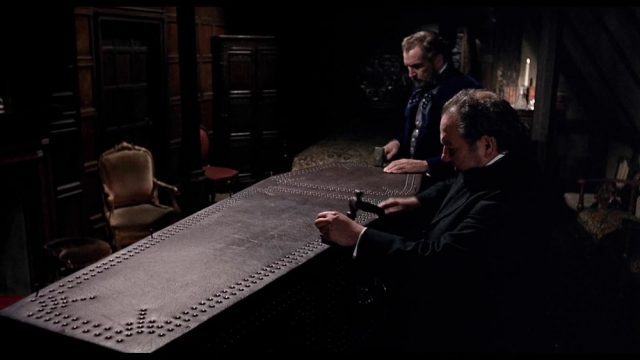
Vincent Price (back) nails his brother into a coffin in Edgar Allan Poe film The Oblong Box
THE OBLONG BOX (Gordon Hessler, 1969)
Quad Cinema
34 West 13th St. between Fifth & Sixth Aves.
Wednesday, October 24, 6:45, and Thursday, October 25, 5:00
212-255-2243 quadcinema.com
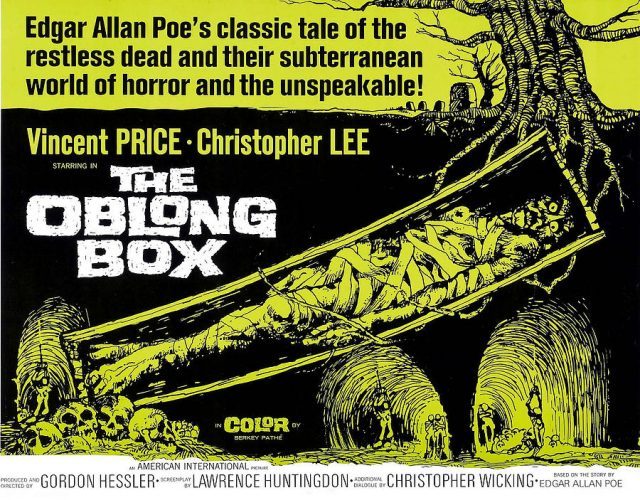
Vincent Price made more than 125 films in his long career, including a slew of horror classics and cult favorites, highlighted by seven Edgar Allan Poe collaborations with Roger Corman and key roles in such other great works as Laura, The Ten Commandments, and Edward Scissorhands. So it’s extremely curious that for “Victoria Price presents: Vincent Price x 3,” Price’s daughter has selected three of his lesser-known frightflicks, Michael Reeves’s Witchfinder General) (aka The Conqueror Worm), based on the Poe short story), Jim Clark’s 1974 Madhouse, and Gordon Hessler’s debut, The Oblong Box. Paying tribute to the twenty-fifth anniversary of his death — Price died on October 25, 1993, at the age of eighty-two — Victoria will be at the Quad for screenings of the first two but not the third, leaving it completely up to the audience to figure out just what the heck is going on in this crazy film. Price stars as Sir Julian Markham, a wealthy British man who sees his brother, Sir Edward (played by Alister Williamson and voiced by an unidentified actor), crucified and his face disfigured by a vengeful African tribe. The brothers return to England, where Edward is locked in an upstairs room because, his mind gone, he is a danger to himself and others. He ultimately gets out, setting off on a bloody trail of murder as he meticulously chooses his victims, his face hidden behind a crimson hood.
The American International Pictures production, which is set in 1865, also features Rupert Davies as Kemp, a friend of Julian’s; Uta Levka as Heidi, an unfortunate prostitute; Sally Geeson as Sally, a maid who takes a liking to Edward; Peter Arne as Trench, Julian’s duplicitous solicitor; Hilary Dwyer as Elizabeth, Julian’s fiancée; Harry Baird as N’Galo, a local witch doctor; and the great Christopher Lee as Dr. Newhartt, the first time Price and Lee ever worked together on camera. The Oblong Box bears little resemblance to the Poe story; the movie is a messy mélange of body snatching, throat cutting, voodoo (with a racist depiction of most of the black characters), and mistaken identity, lacking in elements central to Poe’s style. Hessler would go on to make Cry of the Banshee and Scream and Scream Again with Price, in addition to Kiss Meets the Phantom of the Park and Murders in the Rue Morgue. With Halloween around the corner, “Victoria Price presents: Vincent Price x 3,” which runs October 24-25, should get you in the proper mood; Vincent Price has a way of doing that, even in his lesser films.
Long Time Coming: A 1955 Baseball Story reunites players from first integrated Little League World Series
LONG TIME COMING: A 1955 BASEBALL STORY (Jon Strong, 2018)
SVA Theatre
333 West Twenty-Third St. between Eighth & Ninth Aves.
Tuesday, October 23, $10-$15, 7:00 www.longtimecoming.film
To most baseball fans, 1955 was the year the Brooklyn Dodgers finally reached nirvana, winning their first and only World Series, defeating their archrival, the New York Yankees, in seven games. The Dodgers’ roster included three African Americans, future Hall of Famers Jackie Robinson and Roy Campanella and four-time All Star Don Newcombe. But there was another baseball matchup that year that had an impact on the legacy of segregation in the United States: Florida’s Little League State Championship, pitting the all-black Pensacola Jaycees (Rev. Freddie Augustine, Cleveland Dailey, Admiral “Spider” LeRoy, Will Preyer, Willie V. Robinson, Willie Stromas, others) against the all-white Orlando Kiwanis (Jerry Cowart, Gary Fleming, Stewart Hall, Ron Homan, Bill Hudson, John Lane, Danny Rivenbark, more). Jon Strong looks back at the seminal event in his new documentary, Long Time Coming: A 1955 Baseball Story, which features interviews with several members of each team in addition to such baseball legends and civil rights leaders as Hank Aaron, Cal Ripken Jr., Gary Sheffield, Davey Johnson, and Andrew Young.
“I wanted to dig into the uncomfortable, real stories that many find difficult to share,” Strong said in a statement. “Black and white children who grew up in the South, now grown men in their seventies — how can we see them, know them, and most importantly, what can we learn from them for our own lives? Through conversation, I wanted to learn the histories, experiences, and truths in their lives.” The film, which includes music by Keb’ Mo’ and the Brilliance, is making its theatrical premiere at the SVA Theatre on October 23 at 7:00 — the same night the Major League Baseball championship begins, with the Los Angeles Dodgers taking on the Boston Red Sox — followed by a Q&A with the filmmakers and some of the players who participated in this first integrated Little League World Series.

 Shevaun Mizrahi’s debut feature, Distant Constellation, is a lovely, intimate portrait of a group of residents at an old age home in Istanbul who just go about their business or share deeply personal stories while major construction outside tears down the past to build a future the senior citizens will not be a part of. Two men spend much of their day going up and down in the elevator, making fun of each other, talking about aliens, and not wanting to be bothered by anyone else. A man is delighted to bring in halvah. A photographer who now can barely see repeats words and phrases as he tries to fix his flash. A man sleeps in a coffinlike bed, coughing, gasping, and singing as the wind whistles through the window. A woman tells the heart-wrenching tale of what she and her family went through during the Armenian genocide of 1915. And another man talks about his unending passion for sex and eroticism, reading passages from Vladimir Nabokov’s Lolita. There’s a lot of napping and sitting, staring into nothingness and watching television. Snow falls lightly from the sky. A flock of birds fly near giant cranes.