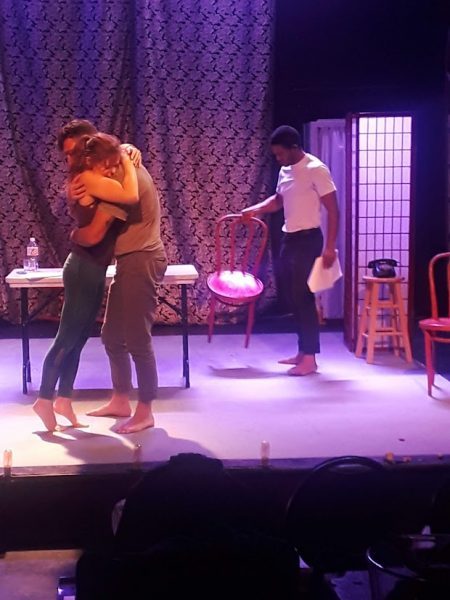
Director Reid Farrington, writer Sara Farrington, and performer/choreographer Laura K. Nicoll will present work-in-progress Brando/Capote at Art House Productions
Art House Productions, Inc.
262 17th St., Jersey City
February 21 – March 3, $20-$30
201-918-6019
www.arthouseproductions.org
www.ladyfarrington.com
www.reidfarrington.com
In 2011, we called The Passion Project “a breathtaking tour de force for both creator and director Reid Farrington and performer Laura K. Nicoll.” Farrington and Nicoll are bringing back the show, a mesmerizing and intimate multimedia reimagining of Carl Th. Dreyer’s 1928 silent film The Passion of Joan of Arc, for eight performances February 21 – March 3 as part of a special repertory program at Art House Productions in Jersey City. On March 1, 2, and 3, Reid and his wife and collaborator, writer Sara Farrington, will also be presenting the work-in-progress BrandoCapote, inspired by Truman Capote’s 1957 New Yorker profile of Marlon Brando while the star was making Sayonara in Tokyo. The piece is performed by Roger Casey, Sean Donovan, Lynn R. Guerra, Gabriel Hernandez, and Nicoll, who also serves as choreographer. The audience is encouraged to stay after the show and offer feedback.
“Though Brando is not a teetotaller, his appetite is more frugal when it comes to alcohol,” Capote writes in the article. “While we were awaiting the dinner, which was to be served to us in the room, he supplied me with a large vodka on the rocks and poured himself the merest courtesy sip. Resuming his position on the floor, he lolled his head against a pillow, drooped his eyelids, then shut them. It was as though he’d dozed off into a disturbing dream; his eyelids twitched, and when he spoke, his voice — an unemotional voice, in a way cultivated and genteel, yet surprisingly adolescent, a voice with a probing, asking, boyish quality — seemed to come from sleepy distances. ‘The last eight, nine years of my life have been a mess,’ he said.”
In addition, on February 27 at 7:00, Art House Productions will host a rough cut of a 3D movie of Reid’s 2014 multimedia work Tyson vs. Ali, a dream match-up pitting Mike Tyson against Muhammad Ali, using live actors, a boxing ring, and movable screens. Admission is pay what you can, and the film will be followed by an informal gathering with the cast and crew. (Tickets for The Passion Project and Brando/Capote are $20 each or $30 for both.)
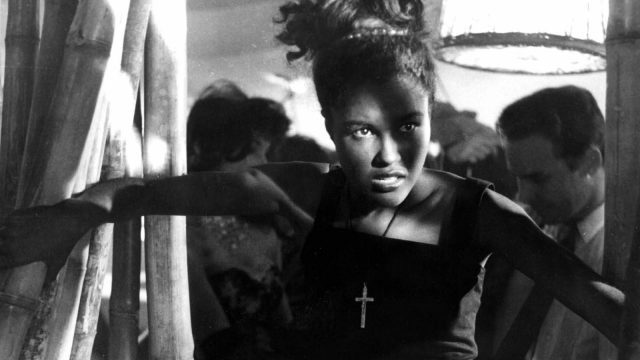
 The Revivals section of last year’s New York Film Festival included a rare screening of Mikhail Kalatozov’s 1964 political epic, I Am Cuba, in a 4K restoration from Milestone. It’s now back for a one-week run beginning at Film Forum on February 15. In the early 1960s, the Soviet Union wanted to cement its hold on Cuba and celebrate its new Communist regime by making a propaganda film celebrating the Cuban Revolution and the end of Fulgencio Batista’s dictatorial reign. The Soviets actually disowned the result, considering it too arty and inaccessible for their needs. But it’s quite a film, a lavishly photographed black-and-white gem that was championed by Martin Scorsese and Francis Ford Coppola when it was resurrected at the Telluride Film Festival in 1992.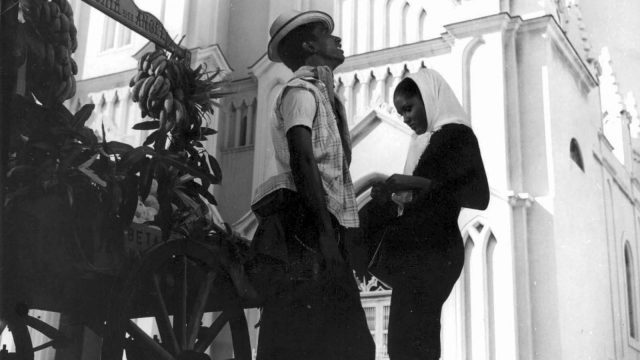
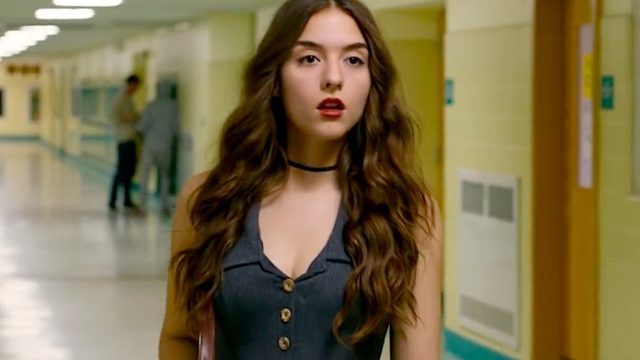
 Last summer, MoMA presented “The Future Is Female,” a week of independent features and shorts written, directed, and starring women, dealing with important issues of inclusivity and gender. The series is back for its second iteration, running February 14-21 and beginning with a recent head spinner. Twenty-two-year-old