this week in lectures, signings, panel discussions, workshops, and Q&As

HANNAH ARENDT AND THE HISTORY OF THOUGHT: A TWI-NY TALK WITH JENNY LYN BADER

Jenny Lyn Bader’s Mrs. Stern Wanders the Prussian State Library explores a little-known part of the life of Hannah Arendt, portrayed by Ella Dershowitz (photo by Valerie Terranova)

MRS. STERN WANDERS THE PRUSSIAN STATE LIBRARY
59E59 Theaters
59 East 59th St. between Park & Madison Aves.
Through November 10, $44
212-279-4200
www.59e59.org

“Personally I think that is the first big mistake in the history of thought — that truth comes at the end. I think truth comes at the beginning of a thought,” the title character says in response to a prison guard’s question about hidden truth in Jenny Lyn Bader’s outstanding drama Mrs. Stern Wanders the Prussian State Library, which opened Thursday night at 59E59 for a limited run through November 10.

The show takes place in 1933 Berlin, where twenty-six-year-old burgeoning historian, philosopher, and author Hannah Arendt — her married name at the time was Stern; she and her first husband, Günther Anders Stern, would divorce in 1937 — has been arrested by the Gestapo and is being held in a dank cell. She is visited several times a day by Karl, an inquisitive guard who appears to be just as interested in her philosophy as in the identities of her dissident, Zionist friends; he also gives her updates on how her mother, who is in a different cell, is doing, although sharing such information is against the rules. The terrific cast features Ella Dershowitz as Hannah, Brett Temple as Karl, and Drew Hirshfield as a lawyer; the play, which resonates with the rise of antisemitism in today’s world, is beautifully directed by Ari Laura Kreith, with an immersive set by Lauren Helpern. Coincidentally, the load-in for the production was done on what would have been Arendt’s 118th birthday, on October 14.

A prolific award-winning playwright who graduated from Dalton and Harvard, Bader (The Whole Megillah: A Purim Spiel for Grown-Ups, None of the Above, Manhattan Casanova, In Flight) has written more than thirty full-length and short works, including ten virtual presentations, in addition to numerous essays and the web serial drama Watercooler. She and her husband, author and educator Roger Berkowitz, are raising two children on the Upper West Side.

Berkowitz and Bader will team up for a talkback following the 7:15 performance of Mrs. Stern Wanders the Prussian State Library on November 3; there will also be talkbacks with Mark Schonwetter, Ann Arnold, and Isabella Fiske on October 29 (7:15), Bader on October 30 (2:15) and November 7 (2:15), and Bader and Dawn Tripp on October 30 (7:15).

I recently spoke over Zoom with Bader, who is a friend of mine and my wife’s, discussing Hannah Arendt, misquotations, the playwriting process, and the search for the truth.

“I have a pandemic cat. She’s absolutely wonderful. It was my daughter who insisted on getting the cat, and now I’ve become obsessed with her. That’s what happens,” Bader explains about Terry, who is half Abyssinian and half Bengal (photo courtesy Jenny Lyn Bader)

twi-ny: What was the genesis of the project?

jenny lyn bader: I was at a meeting at the League of Professional Theatre Women. We used to have something called the Think Tank. I was at a Think Tank meeting and my friend Cindy Cooper said to me that she was curating an evening called “More Jewish Women You Should Know” at the Anne Frank Center because she had done an evening called “Jewish Women You Should Know,” and it had been so popular that the center asked her to bring “More Jewish Women” there.

She asked me if I was writing anything about a Jewish woman, and I said, Yes, I was working on something about some obscure housewives who had been part of the antinuclear protest movement. And she said, No, they can’t be obscure. It has to be a woman with an image and a name and do you have anything like that? And I said I don’t, and that could have been the end of the conversation, but I said, But I could write something for the occasion. And this was interesting because everybody else was doing an excerpt of a project they were already working on, and here I was, I had nothing. And she said, Okay, who? And I suggested a couple of people, and I think the third person I suggested was Hannah Arendt. I said, I have a lot of her research materials and a lot of books written by her and about her in my home.

I’ve also attended an alarming number of conferences inspired by Hannah Arendt. I’m an adviser to the Hannah Arendt Center and have been involved with it and been there a lot even before joining the board of advisers because my husband, Roger Berkowitz, founded the Hannah Arendt Center for Politics and Humanities at Bard College. So I am very steeped in her thinking all the time. Roger has a weekly reading group, and people come from all over the world, from different countries, time zones, to discuss reading Arendt. I’m often on that Zoom meeting, but I also can sometimes hear the meeting in my apartment even if I’m not signed on. So I’m very submerged in the world of Hannah Arendt, by osmosis and more proactively depending on the time of day.

I suggested Hannah Arendt. She said, Okay, Hannah Arendt, I like that. The next time I saw her, she handed me a flyer and said, Oh, here’s the flyer for our event. And it said, “More Jewish Women You Should Know: Readings of Excerpts of New Plays at the Anne Frank Center.” And there were these photographs of four important historical women: Emma Goldman, Emma Lazarus, Gisa Konopka, Hannah Arendt. And it had the names of four playwrights and these four historical women — and it was in six weeks. I’ve had this happen before, where the brochure preexists the script, but that usually happens in a situation where I know the exact goal of the script or if it’s a commission, what it’s supposed to be about.

Here I only had a character, but I didn’t know if I was writing about her when she was old or young or what was happening. I had a subject, but I didn’t have the subject. So now I had to figure out what the play was about. I was going to see another show of mine in Boston with my husband, and we were taking the Acela, so we had a few hours and I said to him, I’ve got this flyer, this thing is happening. Everyone else has a full-length play. I’ve got nothing. What do you think is the most dramatic thing that ever happened to Hannah Arendt? And it can’t be the [Adolph] Eichmann controversy; there’s already a movie about that. And it can’t be the [Martin] Heidegger relationship, because there’s already a play about that.

And Roger said, Huh, I think it’s probably her experience with Jewish Cultural Reconstruction, Inc., this committee after the war that decided what happened to all of the Judaica and where everything went. So it was a very emotional experience for her. She returned to Germany after the war and sat on this committee and had to decide whether to see Heidegger while she was there and decide where things went and heard more about what had happened to her friends. It was a lot.

Roger starts telling me about this for a couple of hours and I’m taking all these notes, and then, as the train pulls into the station, he says, There was that time she was arrested. That week I started to try to write the Cultural Reconstruction play, but I wasn’t finding my way into it. I couldn’t figure out whether it started on the airplane or back in Germany or in a conversation with which characters. I just couldn’t find the shape of the play. The play was not writing itself, it was not doing that for me. And I believe that a really good idea writes itself.

Hannah Arendt was born in Germany in 1906 and died in New York City in 1975

twi-ny: Did you feel, at that point, that you were on the right track even though it wasn’t writing itself?

jlb: No. After a couple of hours I kind of gave up on this play and I thought, Well, I have to find another subject. What is this thing about her being arrested? I’ve never heard of it. I know Hannah Arendt scholars, I know people who knew Hannah Arendt. I’ve talked to a lot of people about her. I’ve been to many conferences at the Arendt Center, not necessarily about her work but inspired by her work in some way. I’ve been in the orbit of Hannah Arendt for a while, but I did not know that she was arrested when I began this project. And one reason I didn’t know was that it was not something she talked about a lot. She really didn’t mention it during most of her life because after the war, people didn’t really talk about their stories. Gruesome things happened to people and they didn’t want to talk about that.

And then less gruesome things happened and those people didn’t want to tell their story because it wasn’t as gruesome. They felt it wasn’t significant. In fact, she says in the interview she gives where she finally does tell the story, “What actually led me out of Germany I never told since it’s so inconsequential.”

Miraculously, I immediately picked up and found the one book where she mentions this, and it was in this 1964 interview with Günter Gaus, which you can watch online now, but you couldn’t at that time.

[ed. note: You can also watch Arendt’s last interview, in 1973 with Roger Errera, here.]

twi-ny: I looked at some of it. It was amazing to be able to see her talk, casually smoke her cigarette.

jlb: Yes! So I read this interview, and in the interview she says she was arrested by a young man with a decent, open face who had been working for the criminal police, had just got promoted to the political police, doesn’t really know what to do with her and has to figure out how to charge her. This is so different from his last job. And a little more, but I don’t want to say too much for those who haven’t seen it, about exactly what happened. And I thought, Well, there’s your play.

twi-ny: There it is.

jlb: Yeah. And I started writing it. That first version just had two characters, and I brought it into my writers group, the Playwrights Gallery, and two actors read it. I asked those two actors to do the reading at the Anne Frank Center that was coming up the following week. And then the actress dropped out the night before; she got a better-paying job that conflicted.

So I ended up being in that first reading myself. I had this two-character short play that some people thought was an excerpt. This is like the downtown Manhattan version of Hamilton at the White House story, right? They had a song and they said it was from a musical, but there was no musical. I had this scene that I told people was from a play, but I didn’t have the play; I didn’t know what the play was yet. I only knew what that scene was.

So I ended up doing it that night. People would say, This is a really interesting premise; you should expand this play! But I couldn’t figure out how to expand it because a short play doesn’t always turn into a long play. And also it was hard for me to evaluate the short play because after that first performance, people kept inviting me to perform it myself, with a guy playing the officer. So I never saw it because I was always in it. I was always performing it. And then one day there was a festival about Jewish women from history at the Museum of Jewish Heritage, and one of the organizers asked me, Could we do your Hannah Arendt piece? I said, Yes, but I’m going to be out of town. And they said, Oh, that’s okay. We don’t want any playwrights acting in their own pieces in this festival. And I said, Fine. They actually cast Kate Hamill.

twi-ny: Wow!

jlb: Kimberly Eaton directed that version, and she cast Kate Hamill, who also has a play coming up at 59E59 Theaters this season [The Light and the Dark (the life and times of Artemisia Gentileschi), starting November 2]. She’s an absolutely wonderful actress. She did the scene and I saw her, she was a very tiny, tiny Kate Hamill on my Zoom screen, where I was watching from out of town; I participated in the Zoom rehearsal, and then I came back into town and there was some kind of miracle where there was a blizzard on the day of the festival and it was entirely postponed. So I thought I was going to miss it, but I actually saw it because it happened three days later and I got to see Kate Hamill do the scene and I watched it and I thought, Oh my gosh, I know how to turn this into a full-length play.

There’s a third character, and I know who he is, and he’s mentioned twice in that original interview, but not in the way I’m going to dramatize it. There are two references to attorneys in that interview, but I’ve hit upon a way of adding the attorney that changes the shape of the play.

Jenny Lyn Bader starred in her solo play Equally Divine: The Real Story of the Mona Lisa in 2019 at Theatre Row

twi-ny: Yes, it does. What’s that feeling like?

jlb: Oh, I mean, it’s absolutely wonderful. I’m a big believer in the unconscious mind and in the subconscious mind. Sometimes I’ll go to sleep thinking about a problem and I’ll wake up and I’ll have dreamt the answer. I believe we need to court our subconscious, bring lattes to our subconscious, whatever you need to do just to be tapped into that. Playwriting is a really unusual kind of writing because so much of it has to do with reading aloud and being in a role. And so I find if I participate in a developmental reading of a play of mine and I play a role, I mainly get insight on how to develop that role, how to develop that character, what they would say, what they would not say, what are the emotional transitions, are they logical, or are they emotionally justified. But I don’t necessarily get an insight into the whole.

It helps to watch different people in the roles, although sometimes the best ideas come when you’re not watching, you’re just thinking about something else or going somewhere. I find sometimes just changing locations is really important when you’re trying to spur on the creative process. The first play that I wrote that was produced in New York I got the idea for on the crosstown bus; just being in motion or going to a new place. When you’re stuck, it can be good to leave your office and go out in the world.

twi-ny: Prior to your knowing Roger, were you already a Hannah Arendt fan? Did you know a lot about her or was it through your relationship with him?

jlb: Prior to knowing Roger, I think I had only read Eichmann in Jerusalem, but I was familiar with her in general, what people said about her. I’d seen a lot of stuff about her. Now there are five documentaries, a couple of plays, a biopic. I was aware of her in the cultural imagination, and I had read about The Origins of Totalitarianism. I don’t think I had attempted to read it — it’s a very intense book — yet it’s become, in recent years, a bestseller in the United States, years after she wrote it. [The book was published in 1951.]

It’s just full of wisdom for us today. I should mention that there’s a quotation that has gone viral recently on the internet, and it had at one point more than fifty thousand downloads just on one of the social media sites, and it’s a misquotation. Roger actually wrote a piece about how it was a misquotation.

Shortly after that, I saw it misquoted again, this time with a photo of someone who is not her. I thought, What is this? Why are people doing this? Why do we want her to have written with less complexity and nuance than she did? And why do we want her to look different than she did? What is this strange way that she’s getting refashioned by social media?

twi-ny: I read that piece; it’s the quote about constantly lying.

jlb: The other day I noticed it was Eugene O’Neill’s birthday and I wanted to post something about it. I looked for a quotation, and there were so many things that he did not say attributed to him.

twi-ny: There are sites dedicated to things Abraham Lincoln, Albert Einstein, Mark Twain, Benjamin Franklin never said. Has the play changed in the five years since it premiered at Luna?

jlb: Yes. Yes, it has. I mean, it’s the same, but as you work on a play, you make more discoveries, especially when you’re working with a director like Ari Laura Kreith, who does very deep exploration. We had a wonderful rehearsal process. The play at Luna was five scenes, and this version is six scenes. So one of the scenes has been broken up in a way that I think is more effective for the dramatic arc. And then there were still a couple of lines in there that were holdovers from the short piece, which sort of gave too much away early. So there’s been a little bit of tweaking and restructuring, I would say.

But I was very proud of the version that was at Luna. I was considering sending it out to publishers, but I always try not to do that until two, possibly three productions in, because you always make changes. I always say, look at Sam Shepard. He won the Pulitzer, and seventeen years later he totally rewrote Buried Child. You never know what it’s going to be. Plays are living; they are alive.

twi-ny: Ella is a tremendous Hannah Arendt. What was the casting like?

jlb: Brett did the play in New Jersey, so he was a real find in 2019. So that was set; we didn’t have auditions for his role. This time around we only auditioned potential Hannahs and potential Erichs. It was very exciting when Ella came into the room.

twi-ny: It clicked right from the start.

jlb: I am a big crossword puzzle fan, so when I saw that she was a crossword constructor in her spare time — some people wait tables, she constructs crosswords for the New York Times, Wall Street Journal, and Los Angeles Times. Also on her resume it said she had studied philosophy and psychology at Yale, which is not the kind of thing that usually gets you an acting job, but in this case I found it really impressive. And she’s just a transformational actress.

So I was very excited about the audition, but I was also nervous. I really thought this was cool that she was a crossword constructor, but was I biased toward her? She was blonde at the time. Was the blonde hair going to be an issue? Everybody knows what Hannah Arendt looked like. I said to the casting director, What are the rules about that? What is the proper way to ask her if she would be willing to dye her hair? The rules were explained to me. But then the next time Ella walked into the room, five minutes later before she left she said, By the way, I’m willing to dye my hair. So she removed the final obstacle, but I don’t know, she’s just a really special, vulnerable, riveting actress.

twi-ny: Definitely.

jlb: And Drew, playing the attorney, that’s a really hard scene actually. Drew makes it look easy, but he just walked in and gave one of the best auditions I’ve ever seen. He has a few minutes to establish the main conflict of the play, the main dilemma. A lot of the burden of the play’s climax rests on his performance. And of course, Brett is just extraordinary in portraying the inner conflict of the police officer, with some kind of humanity.

twi-ny: Which is not how we think of Nazi prison guards.

jlb: It’s funny. A lot of people come up to me after the play and say, Oh, I really like the Nazi. But he’s not technically a Nazi. He was a member of the criminal police; the Gestapo had just started that week and had not been fully “Nazified” yet, so we still have him in last week’s uniform.

twi-ny: There is no swastika on it.

Mrs. Stern made its Luna Stage debut in 2019, with Brett Temple as Karl Frick and Giuliana Carr as Hannah Arendt (photo by Mike Peters / Montclair State)

jlb: In the 2019 production, we did have a swastika, and it was not historically accurate, but the design team felt it would give people the right vibe. The play now looks like it’s set in a Gestapo cellar, which is, I think, where she would’ve been. In the 2019 production, they made it a jail with bars. They thought that conveyed the sense of being imprisoned. So there were certain dramatic liberties taken in the design.

What’s interesting about this period is there isn’t yet a swastika on everything. There’s about to be. We’re in the last vestiges of the old Germany. But I think the audience sees the swastika even if it’s not there.

twi-ny: And the swastika is mentioned in the dialogue. Speaking of libraries, another part of the play that works so well is how relevant it is to what’s happening today, with banned books and parents and schools deciding what all kids can and can’t read. That’s always a bad cultural sign. Was that consciously done in the writing?

jlb: I feel that suppression of thought leads to suppression of people, and that leads to violence. I think that is at the core of this story and of what happens to her. I was thinking about trying to send this play to a festival that said “no Holocaust plays.” And I said to myself, Well, this is not actually a Holocaust play. Maybe I can send it. Right? This is pre-Holocaust. Nobody’s being put in a gas chamber. Someone is being questioned, but this play has some comedic elements, and maybe this festival that doesn’t want Holocaust plays would read it.

But then the play was featured in a source book called Women, Theater, and the Holocaust, and someone suggested that the play be listed in it, and it now is. So it’s both not a Holocaust play and a Holocaust play in the sense that this is the kind of thing that leads to much darker things.

When you start saying what people can read and you make it illegal for them to distribute materials about antisemitism and hate, and you make it illegal for them to do that the day after they already did it, it’s very scary.

twi-ny: Fifteen or twenty years ago, I don’t think Arendt would’ve been as well known as she is today. So even for people who think they know her through books and movies and other plays, what do you think they will learn from yours?

jlb: Well, I think that often there is a tendency to talk about women through men and through their relationships with men and what they have said about men. And part of that is the problem of sexism and misogyny in general; who wants a story about a woman? Oh, there’s a man in it. Okay. So it was interesting that at our first talkback, there was a question about Heidegger, who had nothing to do with the play. It torpedoed the conversation momentarily. In our second one, there was a question about Eichmann.

I’ve written about neither of those people. It could be argued that there are references or connections in the play to both of those people, but they are not characters in the play. The play is not about them. The play is about a woman, and a woman who was extremely courageous and who was very perceptive about what was going on in her time and who was really able to talk to anybody, even her prison guard. And she’s this incredible human being who has written some controversial things.

She managed to write thirty books and to have a huge number of insights, very, very wide-ranging ideas, and she’s multidisciplinary. She doesn’t just stick to one field. She’s taught today in philosophy programs, in politics programs and literature and genocide studies and Jewish studies. You can find her work across humanities disciplines, and you can find people in different walks of life who are deeply influenced by her work. I’ve met doctors, lawyers, scientists, psychologists who say that Arendt has been a big influence on them.

What I do is I show her when she’s twenty-six years old, when she already has a kind of ethical and moral backbone that is extraordinary and the social gifts and the wit that are legendary. She hasn’t written all thirty books yet, but what I decided at a certain point is that she’s already thinking about them. She’s already starting to figure them out. So I decided it’s all there. In some ways, this situation is giving her ideas for more books.

Hannah Arendt (Ella Dershowitz) is visited by a lawyer (Drew Hirshfield) in gripping play by Jenny Lyn Bader (photo by Stephanie Gamba)

twi-ny: In addition, the thing that is key for her, even more important than herself, is her mother, who’s also imprisoned. She’s more concerned about her mother’s safety and well-being than her own. And not everybody’s going to feel that way when they’re locked up in a dungeon.

jlb: When you write a play that’s about a [fictional] brilliant woman, a random, brilliant, strong woman, you’re going to get a lot of feedback. Like, Oh, did this person really do that? Can’t you make this character more soft or whatever. Whereas if you write about a real person, you don’t get these sexist critiques of the brilliant woman. She really did exist. So there’s something especially exciting about this story, this story that’s centered on a woman, but it’s not about being a woman. It’s not about having a relationship with a man. It’s about a person who is a human being who understands what it means to be a human being and understands our common humanity.

This connects back to what you asked me earlier about getting ideas. And that actually happens in the play. You watch her getting ideas and you see her coming up with ideas and realizing she may be executed before she gets to write them.

twi-ny: Right. And even though you know that she isn’t going to get executed, you still have this fear, this tension.

jlb: There’s several weird things about this play, Mark. One weird thing I learned was at the first public reading of the play, at Urban Stages. I had no idea how suspenseful the play would be. There were a whole bunch of people there who were on the board of the Arendt Center, or went to conferences regularly at the center, who knew full well that Hannah Arendt was not executed for treason, but they were on the edge of their seats, worried about her; because, sitting in the audience, we know she survived, but we don’t know exactly how.

And there’s just the suspension of disbelief when you go into the world of the play. Even people who absolutely know better were taken into that suspense. So that was a surprise to me. And then another surprise was how we live in a very politically polarized world, and Hannah Arendt is one of those thinkers who asks us how we can all talk to each other, how we can talk across ideological divides, how we can find common ground with those who disagree with us. And that’s a very important thing that people are talking about now who are influenced by her work.

You asked if I had intended it being a story about the suppression of thought and all of the censorship that’s happening today. And yes, I did intend those things. What I didn’t intend was that I would somehow hit upon the common ground between left and right that people keep talking about in this country. There’s no common ground. Well, people who are leftist activists and conservative activists have both embraced this play.

twi-ny: There’s hope for our future.

jlb: I feel like they now have something in common, and now we can begin a conversation.

[Mark Rifkin is a Brooklyn-born, Manhattan-based writer and editor; you can follow him on Substack here.]

SPEAKING OUT ABOUT THE TRUTH: THE BLACK BOX DIARIES OF SHIORI ITO

Shiori Ito (left) shares her heart-wrenching story in tense and gripping new documentary, Black Box Diaries

BLACK BOX DIARIES (Shiori Ito, 2024)
Film Forum
209 West Houston St.
Opens Friday, October 25
212-727-8110
filmforum.org

“All I want to do is talk about the truth,” journalist and rape survivor Shiori Ito says in her shocking, heart-wrenching documentary, Black Box Diaries.

Talking about the truth of sexual violence has become one of the most urgent themes in the twenty-first century. Whether in Hollywood’s “#metoo” movement, the outcry over highly publicized rapes in Indian cities, or stories from the battlefields, women in almost every culture have been driven to make their voices heard, and movies have been a big part of that communication to the world.

For example, in her 2018 film On Her Shoulders, director Alexandria Bombach follows twenty-one-year-old Nadia Murad, one of countless Yazidis who suffered sexual violence at the hands of ISIS in Northern Iraq. Refusing to remain silent, Murad traveled around the globe, sharing her story in order to effect change. “As a girl, I wish I didn’t have to tell the people this happened to me. I mean, I wish it hadn’t happened to me so I wouldn’t have to talk about it,” she explains. “I wish people knew me as an excellent seamstress, as an excellent athlete, as an excellent makeup artist, as an excellent farmer. I didn’t want people to know me as a victim of ISIS terrorism.”

In Black Box Diaries, Ito joins the ranks of women worldwide who take matters into her own hands, making public her claim of rape by Noriyuki Yamaguchi, a leading journalist with close ties to Prime Minister Shinzo Abe. Tokyo police and the Japanese government turn their back on her reports, but that doesn’t stop Ito.

“Many people already witnessed what kind of negative reaction I’ve got, and that’s not okay,” Ito says. “I have to be speaking up. I shouldn’t stop speaking, because I don’t want to let people know this made me shut up. No.”

On May 29, 2017, Ito held a press conference in which she boldly described having been sexually assaulted by Yamaguchi at a hotel in 2015 and how, despite DNA evidence, surveillance footage, and an arrest warrant, the case was eventually dropped by prosecutors. Ito, who initially had only limited recall of the details of the attack, went on a mission to expose Japan’s outdated laws concerning sexual violence and to make Yamaguchi pay for his crime, but she is thwarted — and threatened — again and again.

A police investigator believes her but is unwilling to risk his job and help her after he is removed from the case. When Ito points out to an official at the Office for Violence Against Women that only four percent of rape victims file police reports, he answers, “I think [the police] should act according to the appropriate guidelines in place.” Ito adds that there are guidelines that the police do not follow, but the official uncomfortably replies, “We need to continue making efforts to fill in the weak spots. Please excuse my abstract answer.” Representative Michiyoshi Yunoki tries to get Parliament to do something but is ignored by a wall of stone faces that rejects his efforts. And Ito’s own family want her to give up, fearful of the shame it brings them.

Ito records nearly all her interactions with the police, lawyers, government representatives, fellow journalists, and potential witnesses, sometimes secretly. She also makes deeply personal videos on her iPhone in which she discusses her plans and talks openly about how the horrific situation is impacting her daily life and her psyche. With elections coming up and Yamaguchi about to publish an authorized hagiography of his longtime friend Abe, Ito decides to write her own book, even if that results in legal action against her, although she does not want to put any of her supporters or her family in jeopardy. “Bring it on,” she declares as she initiates the #metoo movement in Japan.

Like Murad, who was awarded the Nobel Peace Prize in 2018, Ito was not a born activist; instead, she took what happened to her as an opportunity to fight the status quo, to let people know the truth, and to make things better for other girls and women, through the legal system, police enforcement, and public perception. For example, she is surprised when some women chastise her for telling her story.

As she pursues justice, it is clear how conflicted she is, that none of this comes easy for her as she slowly remembers more about what Yamaguchi did to her that night. Even when she rolls around playfully with her lawyer and a friend, trying to find bits of happiness, she is uncomfortable, knowing that each day leads to new challenges. In her videos, she stares down into the camera, both vulnerable and defiant, confessing what’s in her soul. In a particularly poignant and moving scene, a tear trickles down her cheek, resting on the tip of her nose; she calmly, almost unconsciously brushes it away, a simple but powerful gesture that captures the essence of who she is.

Ito also includes poetic interludes that feature shots of nature accompanied by handwritten text with pertinent facts and such messages as “I keep running, running, can’t stop. I don’t want to face myself.” and “Everyone has a monster in them, but mine didn’t kill me.” Mark degli Antoni’s beautiful piano-based score underlines the tense drama.

Meanwhile, the strength she exhibits in public is intoxicating and inspirational. Her dedication and determination amid all the risks turn the film — which she directed, produced, and partly photographed — into a gripping thriller that never provides any easy answers but displays what the human spirit is capable of.

“I pushed myself to the limit in shooting this documentary. Upon revisiting the hotel where I was raped, I felt the damage I was doing to myself might be too much. But at the same time, my desire to change society and tell this story kept me alive,” she writes in her director’s statement. “Now . . . I can with more objectivity watch the scenes of my breaking down, passing moments of joy and normalcy, and absurd comedy in my novice investigator techniques — and to conceive how they can come together to form our film.”

A must-see documentary whose impact should spread far beyond Japan, Black Box Diaries opens October 25 at Film Forum, with Ito participating in Q&As at the 7:00 screenings on Friday and Saturday.

[Mark Rifkin is a Brooklyn-born, Manhattan-based writer and editor; you can follow him on Substack here.]
NYFF62 HOT PICKS

Ivan (Mark Eydelshteyn) and Ani (Mikey Madison) set off on a frenetic romance in Anora

MAIN SLATE: ANORA (Sean Baker, 2024)
Film at Lincoln Center
Saturday, September 28, 6:15
Sunday, September 29, noon
www.filmlinc.org

The sixty-second edition of the New York Film Festival is under way, and the first standout is Sean Baker’s Anora.

Winner of the Palme d’Or at Cannes, Anora is a nonstop wild ride through the frenetic, unpredictable relationship between a stripper and the scion of a Russian oligarch. It starts out luridly but quickly morphs into a touching and surprisingly human tale.

Mikey Madison, who starred in the 2022 Scream sequel, shows off her mighty pipes in the film, making a career breakthrough as Ani, a stripper living in a Brighton Beach railroad apartment who catches the eye of Ivan Zakharov (Mark Eydelshteyn), who buys her for a week, lighting up the nights in a cavalcade of sex and drugs while developing what appears to be turning into a real relationship. But when his parents, Nikolai (Aleksei Serebryakov) and Galina (Darya Ekamasova), find out about it, they sic their guard dogs, Igor (Yura Borisov), Toros (Karren Karagulian), and Garnick (Vache Tovmasyan), on them, leading to hilariously violent scenes as Ani sets out to prove that she is not a hooker and is not ashamed of being a sex worker.

Written, edited, and directed by Baker, whose previous work includes Take Out, Tangerine, The Florida Project, and Red Rocket, Anora is an aggressive, in-your-face trip that races from Coney Island to Las Vegas, with lush cinematography by Drew Daniels, a pulsating score by Matthew Hearon-Smith, and fanciful costumes by Jocelyn Pierce.

Madison, a regular on Better Things and Lady in the Lake, is fearless as Ani, a determined young woman who knows what she wants and is not afraid to say it out loud and fight for it. The coda is disappointing — it would have been much better if the film ended before the final moments in the car — but otherwise Anora is a thrilling cinematic experience.

Anora is screening September 28 and 29, with Baker and Madison on hand for Q&As. The ferocious film will then return to Lincoln Center for a theatrical run in mid-October, with Baker and Madison participating in Q&As October 16 and 18. Keep watching this space for more reviews from NYFF62.

Iris (Isabelle Huppert) takes notes while teaching Isong (Kim Seungyun) French in Hong Sangsoo’s A Traveler’s Needs

MAIN SLATE: A TRAVELER’S NEEDS (Hong Sangsoo, 2024)
Film at Lincoln Center
Wednesday, October 2, 9:00
Thursday, October 3, 6:15
www.filmlinc.org

Longtime New York Film Festival favorite Hong Sangsoo returns to Lincoln Center with two touching works for NYFF62. For nearly thirty years, the South Korean Hong has been making contemplative, character-driven films in which writers or directors develop different kinds of relationships with actors, fans, students, and other admirers amid a lot of drinking, eating, and smoking as they discuss art, love, human nature, and film itself.

In such gems as Oki’s Movie, The Day He Arrives, Yourself and Yours, Like You Know It All, and Right Now, Wrong Then, Hong constructs slow-paced, intriguing philosophical narratives in which not much necessarily happens but nearly every minute is imbued with meaning.

In A Traveler’s Needs, Isabelle Huppert, in her third Hong film (following 2012’s In Another Country and 2017’s Claire’s Camera), stars as Iris, a mysterious Frenchwoman who seems to just appear and disappear; we know almost nothing about her or why she is in Seoul.

When we first encounter her, she is teaching French to a young pianist, Isong (Kim Seungyun), asking her questions using index cards and an old cassette recorder that looks almost like a toy. We soon find out that Iris is not a trained teacher but someone who only recently developed her unique method, which involves asking her students how they feel deep inside, and that she has no idea if it will actually work.

Iris, who dresses like she is on vacation, wearing a flowery dress, green sweater, and wide-brimmed hat, next visits Wonju (Lee Hyeyoung) and her husband, Haesoon (Kwon Haehyo), to teach them French. Wonju is suspicious of Iris and her technique, but as they partake of more of the milky rice wine known as makgeolli, everyone loosens up a bit.

Later, Iris returns home, to an apartment she shares with Inguk (Ha Seongguk), a younger man who is not quite ready to introduce her to his mother, Yeonhee (Cho Yunhee), although the relationship between Inguk and Iris is unclear.

So how does A Traveler’s Needs make you feel? Like many of Hong’s films, it’s a calm tale featuring lots of conversation and long takes, highlighted by another superb performance by Huppert. It might be best exemplified by a scene in which Iris approaches a tiny river, takes off her shoes, steps into the water, looks around while humming, and drops one of her shoes. It’s hard to tell if it was supposed to happen, but Huppert lets out an adorable sigh, picks it up, shakes it out, and carries on.

Hong also incorporates an oddly endearing repetition in the film, in dialogue, character traits, and Iris’s movement, particularly how she walks when she exits a scene. She practically floats in and out of her world, innocent and carefree, like a child. Hong’s camera loves her — he wrote, directed, photographed, produced, and edited the film in addition to composing the score — and so will you.

A Traveler’s Needs is screening October 2 at 9:00 and October 3 at 6:15, with Huppert participating in Q&As after each show; she will also return to Lincoln Center November 21 for a Q&A when the film opens at the Walter Reade Theater.

Jeonim (Kim Minhee) and her uncle, Chu Sieon (Kwon Haehyo), reunite at a university in By the Stream

MAIN SLATE: BY THE STREAM (Hong Sangsoo, 2024)
Film at Lincoln Center
Friday, October 4, 9:00
Friday, October 11, 6:45
www.filmlinc.org

“I’ll light the smallest lamp in the corner and protect it until I die,” a college student tells Chu Sieon (Kwon Haehyo) when he asks four young women what they want to do in the future in Hong Sangsoo’s By the Stream. It’s a subtle admission in a subtle film filled with small lamps in corners, literally and figuratively.

Hong wrote, edited, produced, directed, photographed, and composed the score for the film, another intimate, eloquent drama about people just going about their daily lives, eating, drinking, and talking about creativity and love. It takes place on a lovely campus at a woman’s university in Seoul, where it’s time for the annual skit contest, when the various departments put on ten-minute shows. Art professor Jeonim (Kim Minhee) is in a jam when the director in charge of the script for her department has been kicked out after sleeping with three of the students.

Jeonim makes a desperate call to her uncle, Chu, a onetime popular actor who was canceled for unstated reasons and has been running a small bookstore on a remote lake for decades. Niece and uncle have not spoken for ten years, but Sieon accepts the offer, returning to the school where he got his start forty years before. While the four art students are not exactly psyched about the script he has written for them, the head of the department, Jeong (Cho Yunhee), is instantly smitten with him, an adoring fan who wants to spend more and more time with him — and he doesn’t seem to mind all the attention.

With skit night approaching, Jeonim, Sieon, and Jeong do a lot of eating, talking, and drinking, enjoying eel and the milk rice wine known as makgeolli, as relationships grow more complicated and characters reexamine who they are and what they want.

By the Stream is Hong’s thirty-second film since his debut, 1996’s The Day a Pig Fell into the Well. It’s also the thirteenth Hong film Kim has starred in; they began an affair in 2015 — they are both separated from their spouses, with whom they have children, which caused a scandal in South Korea — and Kim, an award-winning international star, has not worked for another director since Park Chan-wook’s 2016 The Handmaiden. Hong is twenty-two years older than Kim; Kwon is seventeen years older than Cho. That is not to imply that By the Stream is autobiographical, but it appears to have personal elements that add intrigue to the gentle magic of the storytelling and characterization.

Kim won the Best Performance award at Locarno for her role as Jeonim, who spends much of her time drawing the ripples in a stream, the water ever changing and constantly moving, like life. She then re-creates the patterns on her loom, finding solace in making art. Chu is reenergized by his decision to direct the skit, interacting with people as he hasn’t since isolating himself at his bookstore. And Jeong shows a different side of herself as she becomes a fan girl forming a connection with the object of her affection.

Hong often leaves his camera fixed as the action unfolds, particularly when the three protagonists are at tables, eating, drinking, and talking, composing a kind of flowing, ever-changing portrait. Water has been a leitmotif throughout Hong’s career; several of his films have the words water, river, beach, and stream in them, and in others, water plays a part, like the beautiful scene in A Traveler’s Needs when Iris (Isabelle Huppert) steps into a small stream.

As in so many of Hong’s works, By the Stream proceeds at its own hypnotic pace, offering profound if understated treatises on the little things in life, like that small lamp in the corner.

Larry Cotton (Andrew Robinson) and his daughter, Kirsty (Ashley Laurence), have their hands full in Hellraiser

REVIVALS: HELLRAISER (Clive Barker, 1987)
Saturday, October 5, 9:15
Wednesday, October 9, 1:00
www.filmlinc.org

“What’s your pleasure?” an unseen character asks at the beginning and end of Clive Barker’s Hellraiser, now screening at NYFF62 in a 4K restoration. Adapted from his novella The Hellbound Heart, the horror film made quite a splash when it was released in 1987, and its legacy as a genre classic has only grown over the years, despite, not because of, nine sequels, none of which Barker wrote or directed. The film faced bans and censorship, so Barker had to make some concessions, editing certain ultraviolent and S&M scenes, but there are still plenty in there to justify its cult status.

“We did a version which had some spanking in it and the MPAA was not very appreciative of that,” Barker said in the DVD audio commentary. “[They also] told me I was allowed two consecutive buttock thrusts from Frank but a third would be deemed obscene.”

The film begins with Frank Cotton (Sean Chapman) in Morocco acquiring a puzzle box and, upon solving it in his suburban American home, getting sent to a hell realm where pain mixes with pleasure, a decadent take on the hot nightclub scene of the 1980s. Years later, Frank’s brother, Larry (Andrew Robinson), returns to the family homestead with his second wife, Julia (Clare Higgins), who unbeknownst to him had a torrid affair with Frank. Larry’s daughter, Kirsty (Ashley Laurence), shows up to provide support, but it’s instantly clear that she and Julia are not besties.

When Larry severely cuts his hand while helping the creepy movers bring a bed upstairs, the blood oozes into the floorboards and awakens Frank, who is a skinless terrifying creature (portrayed by Oliver Smith). Frank reveals to Julia, who still has the hots for him, that he can regain his skin and they can have a life together if she feeds him other human beings, so she hits the bars, bringing men home to be devoured by her lover. Larry is completely oblivious to what is going on right under his nose, but Kirsty grows suspicious, leading to an appropriately blood-soaked, out-of-this-world climax.

Hellraiser is most remembered and revered for the Cenobites, ghoulish S&M characters known as the Chatterer (Nicholas Vince), Butterball (Simon Bamford), the unnamed female (Grace Kirby), and their leader, Pinhead (Doug Bradley), who became a breakout star. The general plot is derivative and the acting has a heavy dose of soap opera attitude, but Barker pushes it all beyond the limits of standard genre fare, toying with cliché so you won’t always know what’s coming. Christopher Young’s score, Michael Buchanan’s production design, Jocelyn James’s art direction, and Aileen Seaton’s hair stylings capture the ’80s sensibility and look better than ever in the restoration, as do the special effects and intense makeup and costumes.

All in all, this version of Hellraiser provides the answer to the question “What’s your pleasure?”

Prabha (Kani Kusruti) takes a new look at her life in All We Imagine as Light

MAIN SLATE: ALL WE IMAGINE AS LIGHT (Payal Kapadia, 2024)
Film at Lincoln Center
Monday, October 7, 6:00
Tuesday, October 8, 9:15
Free talk Wednesday, October 9, 4:00
Thursday, October 10, 3:30
www.filmlinc.org

Indian filmmaker Payal Kapadia won the Golden Eye at Cannes in 2021 for best documentary for A Night of Knowing Nothing, a film that mixes fact and fiction while telling the story of two lovers trying to stay connected via letters amid student protests in India. Kapadia mixes fact and fiction again in her follow-up, the tender and deeply poignant All We Imagine as Light, which won the Grand Prix at Cannes earlier this year.

The new work opens with gritty shots of the streets of Mumbai, as unseen people share their difficulties trying to make a new life for themselves after migrating from the country. “There’s always the feeling I’ll have to leave,” one person says. Another opines, “The city takes time away from you.” A third argues, “Why would anyone want to move back?”

Kapadia, who was born in Mumbai, then shifts to the fictional tale of two nurses and a third hospital employee fighting loneliness as they care for sick people. Prabha (a heart-wrenching Kani Kusruti) and the younger Anu (Divya Prabha) live together in an apartment in the city. Prabha, who is in an arranged marriage, has not seen her husband, who is working in Germany, for more than a year. Anu, whose family is Hindi, is in love with a Muslim man, Shiaz (Hridhu Haroon), keeping their relationship secret for fear of being discovered and shunned. And Parvaty (Chhaya Kadam) is a recent widow who is being evicted from her home of twenty-two years because her name is nowhere on the paperwork left behind by her husband.

When Prabha receives a brand-new German rice cooker in the mail, she assumes it is from her spouse, perhaps a message that he is not coming back and that she should proceed with her life. But she is tentative to start dating, even as she is pursued by the goofy but sweet Dr. Manoj (Azees Nedumangad), who writes poetry for her.

The three women decide to hit the road, taking a trip to Parvaty’s seaside Maharashtrian hometown, where they take stock of their lives, particularly after a man washes up onshore.

All We Imagine as Light is sensitively shot by cinematographer Ranabir Das, with a soft, jazzy score by Topshe as soft rain falls, trains pass by in the background, and Prabha and Parvaty throw stones at a billboard for a pending skyscraper that proclaims, “CLASS is a privilege reserved for the PRIVILEGED.”

All We Imagine as Light is an engaging and touchingly lyrical look at womanhood in contemporary Mumbai, as the city threatens three women with potential isolation and alienation until they bind together. The youngest, Anu, instills new energy into the others to reevaluate their situations and take action. “Do you ever think of the future?” Anu asks.

The film appropriately provides no firm answers in the end, but it is clear that Kapadia’s future is a bright one.

All We Imagine as Light is screening at NYFF62 on October 7, 8, and 10, with the writer-director participating in Q&As following the first two showings. She will also be at the Amphitheater at the Elinor Bunin Munroe Film Center on October 9 at 4:00 for a free talk with Portuguese director Miguel Gomes, whose Grand Tour is screening October 8, 9, and 11 at the festival.

[Mark Rifkin is a Brooklyn-born, Manhattan-based writer and editor; you can follow him on Substack here.]
TALK TO ME: FREEBIES AT NYFF62

NYFF62: FREE TALKS
New York Film Festival
Elinor Bunin Munroe Amphitheater
144 West Sixty-Fifth St. between Broadway & Amsterdam Ave.
September 28 – October 11, free tickets available one hour before showtime (unless otherwise noted)
www.filmlinc.org

The sixty-second annual New York Film Festival kicks off today, with more than ninety feature films and shorts, from US premieres to unexpected revivals. The opening night selection is RaMell Ross’s Nickel Boys, the centerpiece Pedro Almodóvar’s The Room Next Door, and the closing night choice Steve McQueen’s Blitz. Many screenings will be followed by Q&As with members of the cast and crew, including Saoirse Ronan, Sean Baker, Mikey Madison, Adrien Brody, Felicity Jones, Jia Zhangke, Mike Leigh, Marianne Jean-Baptiste, Paul Schrader, David Cronenberg, Isabelle Huppert, Elton John, Selena Gomez, Zoe Saldaña, Naomi Watts, and Bill Murray.

In addition, there are free talks nearly every day in the Elinor Bunin Munroe Amphitheater that will go behind the scenes of numerous films at the festival; no advance RSVP is required except for a few special events.

Saturday, September 28, 7:30
Sunday, September 29, 8:00
Monday, September 30, 7:30
Tuesday, October 8, 7:30

Cinephile Game Night: NYFF62 Edition, including movie trivia, Six Degrees, a card game, prizes, and special guests, hosted by Jordan Raup, Conor O’Donnell, and Dan Mecca, Amphitheater, free with advance RSVP

Sunday, September 29
Deep Focus: RaMell Ross (Nickel Boys), in conversation with Barry Jenkins, Amphitheater, 6:00

Monday, September 30
Roundtables: New Asian Auteurs, with Neo Sora (Happyend), Trương Minh Quý (Việt and Nam), and Yeo Siew Hua (Stranger Eyes), Amphitheater, 4:30

Tuesday, October 1
Deep Focus: No Other Land, with directors Basel Adra, Yuval Abraham, and Rachel Szor, Amphitheater, 6:00

Wednesday, October 2
On exergue – on documenta 14, with director Dimitris Athiridis, curator Adam Szymczyk, D14 artist Naeem Mohaiemen, and curator and writer Serubiri Moses, moderated by Rachael Rakes, Amphitheater, 5:00

Thursday, October 3
Crosscuts: Alex Ross Perry (Pavements) & Andrei Ujică (TWST / Things We Said Today), Amphitheater, 6:00

Saturday, October 5
Deep Focus: Sigrid Nunez (The Friend, The Room Next Door), moderated by A. O. Scott, Amphitheater, 1:00

Film Comment Live: Collective Protagonists, with Rob Nilsson and John Hanson (Northern Lights), Brett Story and Stephen Maing (Union), moderated by Devika Girish and Clinton Krute, Amphitheater, 7:00

Sunday, October 6
Crosscuts: Zeinabu irene Davis (Compensation) & Madeleine Hunt-Ehrlich (The Ballad of Suzanne Césaire), Amphitheater, 6:00

Monday, October 7
IndieWire Presents: Screen Talk Live, with Anne Thompson and Ryan Lattanzio, Amphitheater, 4:00

Tuesday, October 8
The 2024 Amos Vogel Lecture: Jia Zhangke (Caught by the Tides), interpreted by Vincent Cheng, Walter Reade Theater, $12.50-$17.50, 5:00

Wednesday, October 9
Crosscuts: Miguel Gomes (Grand Tour) & Payal Kapadia (All We Imagine as Light), moderated by Devika Girish, Amphitheater, 4:00

Crosscuts: Julia Loktev (My Undesirable Friends: Part I — Last Air in Moscow) & Roberto Minervini (The Damned), moderated by Madeline Whittle, Amphitheater, 6:00

Friday, October 11
Film Comment Live: Festival Report, with Devika Girish and Clinton Krute, Amphitheater, 7:00

[Mark Rifkin is a Brooklyn-born, Manhattan-based writer and editor; you can follow him on Substack here.]
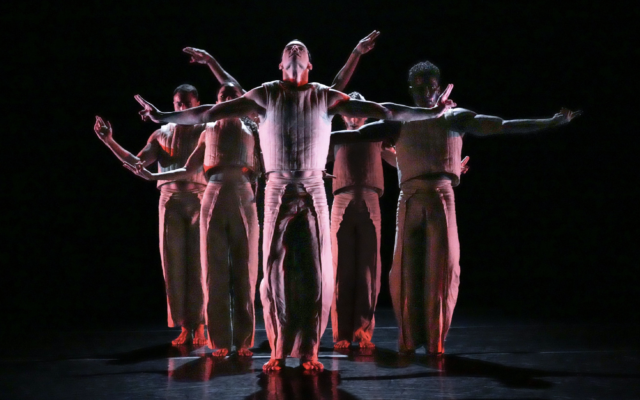
THE BABADOOK: TENTH ANNIVERSARY SCREENING

THE BABADOOK

A mother (Essie Davis) and her young son (Noah Wiseman) must get past terrible tragedy in The Babadook

THE BABADOOK (Jennifer Kent, 2014)
Industry City, Courtyard 5/6, 51 Thirty-Fifth St., Brooklyn
Tuesday, September 17, $22.15, 7:45
rooftopfilms.com
www.ifcfilms.com

A hair-raising sleeper hit at Sundance that was named Best First Film of 2014 by the New York Film Critics Circle, The Babadook will be celebrating its tenth anniversary with a special Rooftop Films screening in Industry City on September 17, followed by a Q&A with director Jennifer Kent and a vodka-infused afterpaty.

The Babadook is a frightening tale of a mother and her young son — and a suspicious, scary character called the Babadook — trapped in a terrifying situation. Expanded from her 2005 ten-minute short, Monster, writer-director Kent’s debut feature focuses on the relationship between single mom Amelia (Essie Davis), who works as a nursing home aide, and her seemingly uncontrollable six-year-old son, Samuel (Noah Wiseman), who is constantly getting into trouble because he’s more than just a little strange. Sam was born the same day his father, Oskar (Ben Winspear), died, killed in a car accident while rushing Amelia to the hospital to give birth, resulting in Amelia harboring a deep resentment toward the boy, one that she is afraid to acknowledge. Meanwhile, Sam walks around with home-made weapons to protect his mother from a presence he says haunts them. One night Amelia reads Sam a book that suddenly appeared on the shelf, an odd pop-up book called Mister Babadook that threatens her. She tries to throw it away, but as Sam and the book keep reminding her, “You can’t get rid of the Babadook.” Soon the Babadook appears to take physical form, and Amelia must face her deepest, darkest fears if she wants she and Sam to survive.

Writer-director Jennifer Kent brings out classic horror tropes in her feature debut, the sleeper hit THE BABADOOK

Writer-director Jennifer Kent explores classic horror tropes in her feature debut, the sleeper hit The Babadook

The Babadook began life as a demonic children’s book designed by illustrator Alex Juhasz specifically for the film — and one that was initially available for purchase from the movie’s official website, although anyone who bought the book hopefully thought twice before inviting the twisted tome into their house. The gripping film, shot by Polish cinematographer Radek Ladczuk in subdued German expressionist tones of black, gray, and white with bursts of other colors, evokes such classic horror fare as Stanley Kubrick’s The Shining, Roman Polanski’s Repulsion, and Edgar Allan Poe’s The Fall of the House of Usher, where place plays such a key role in the terror. The Babadook itself is a kind of warped combination of the villains from F. W. Murnau’s Nosferatu, Robert Wiene’s The Cabinet of Dr. Caligari, and Hideo Nakata’s The Ring. Kent, a former actress who studied at Australia’s National Institute of Dramatic Art with Davis and has made one other feature, 2018’s The Nightingale, lets further influences show in the late-night television Amelia is obsessed with, which includes films by early French wizard Georges Méliès. But the real fear comes from something that many parents experience but are too ashamed or embarrassed to admit: that they might not actually love their child, despite trying their best to do so. At its tender heart, The Babadook is a story of a mother and son who must go through a kind of hell if they are going to get past the awful way they were brought together.

ONE MORE TIME: THE CINEMA OF DANIEL POMMEREULLE

The film career of French artist Daniel Pommereulle is being celebrated at Metrograph this month

SIX MORAL TALES: LA COLLECTIONNEUSE (Eric Rohmer, 1967)
Metrograph
7 Ludlow St. between Canal & Hester Sts.
Saturday, September 14, 2:30
Sunday, September 15, 11:00 am
Series runs September 13-29
212-660-0312
metrograph.com

On September 12, the exhibit “Daniel Pommereulle: Premonition Objects” opens at Ramiken on Grand St. On September 13, Metrograph kicks off the two-week series “One More Time: The Cinema of Daniel Pommereulle,” consisting of seven programs featuring the French painter, sculptor, filmmaker, performer, and poet who died in 2003 at the age of sixty-six. First up is “Daniel Pommereulle X3,” bringing together Pommereulle’s shorts One More Time and Vite and Anton Bialas and Ferdinand Gouzon’s 2021 Monuments aux vivants, which documents the artist’s sculptural work; curators Boris Bergmann and Armance Léger will take part in a postscreening Q&A moderated by filmmaker Kathy Brew. “Pommereulle was one of those people who could stand firm against the all-consuming metropolis: someone who never compromised, who never sold his soul — even to America. We joyously return Pommereulle to New York: a necessary encounter, a poetic reward,” Léger and Bergmann said in a statement. The festival also includes Jean-Luc Godard’s Weekend, Jean Eustache’s The Mother and the Whore, Marc’O’s Les Idoles, Jackie Raynal’s Deux Fois, serge Bard and Olivier Mosset’s Ici et maintenant and Fun and Games for Everyone, and Eric Rohmer’s La Collectionneuse.

“Razor blades are words,” art critic Alain Jouffroy tells painter Daniel Pommereulle (Daniel Pommereulle) in one of the prologues at the start of La Collectionneuse, the fourth film in French master Eric Rohmer’s Six Moral Tales (falling between My Night at Maud’s and Claire’s Knee). Words might have the ability to cut, but they don’t seem to have much impact on the three people at the center of the film, which offers a sort of alternate take on François Truffaut’s Jules et Jim. Needing a break from his supposedly strenuous life, gallerist Adrien (Patrick Bauchau, who also appeared in La Carrière de Suzanne, Rohmer’s second morality tale) decides to vacation at the isolated St. Tropez summer home of the never-seen Rodolphe. Daniel is also at the house, along with Haydée (Haydée Politoff), a beautiful young woman who spends much of the film in a bikini and being taken out by a different guy nearly every night. Adrien decides that she is a “collector” of men, and the three needle one another as they discuss life and love, sex and morality, beauty and ugliness. Adrien might claim to want to have nothing to do with Haydée, but he keeps spending more and more time with her, even though he never stops criticizing her lifestyle. He even uses her as a pawn when trying to get an art collector named Sam (played by former New York Times film critic Eugene Archer under the pseudonym Seymour Hertzberg) to invest in his gallery.

While everybody else in the film pretty much knows what they want, Adrien, who purports to understand life better than all of them, is a sad, lost soul, unable to get past his high-and-mighty attitude. Rohmer crafted the roles of Daniel and Haydée specifically for Pommereulle and Politoff, who improvised much of their dialogue; Bauchau opted not to take that route, making for a fascinating relationship among the three very different people. La Collectionneuse is beautifully shot in 35mm by Néstor Almendros, the bright colors of the characters’ clothing mixing splendidly with the countryside and ocean while offering a striking visual counterpoint to the constant ennui dripping off the screen. His camera especially loves Politoff, regularly exploring her body inch by inch. The film is both Rohmer’s and Almendros’s first color feature; Almendros would go on to make more films with the director, as well as with Truffaut, even after coming to Hollywood and shooting such films as Days of Heaven, Kramer vs. Kramer, and Sophie’s Choice. Winner of a Silver Bear Extraordinary Jury Prize at the 1967 Berlinale, La Collectionneuse is screening September 14 and 15 at Metrograph.

[Mark Rifkin is a Brooklyn-born, Manhattan-based writer and editor; you can follow him on Substack here.]
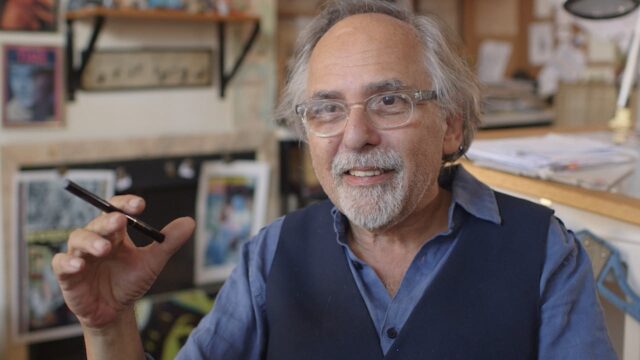
ONE-TIMERS: WANDA

Barbara Loden wrote, directed, produced, and stars in WANDA

Barbara Loden wrote, directed, produced, and stars in Wanda

WANDA (Barbara Loden, 1970)
Metrograph
7 Ludlow St. between Canal & Hester Sts.
Friday, September 13, 8:20 (with introduction)
Sunday, September 15, 2:50
Thursday, September 19, 3:00
212-660-0312
metrograph.com

“If you don’t want anything, you won’t have anything, and if you don’t have anything, then you’re as good as dead,” Mr. Dennis (Michael Higgins) tells Wanda Goronski (Barbara Loden) in Wanda, which is screening September 13, 15, and 19 in the continuing Metrograph series “One-Timers.” The first theatrical feature written, directed, produced by, and starring an American woman, Wanda is a raw, naturalistic road-trip movie about an emotionally vacant woman who walks through life in a kind of stupor, wandering into situations to avoid being alone yet still trapped in an unrelenting alienation. Loden, who won a 1964 Tony for her portrayal of Maggie in Arthur Miller’s After the Fall — the play was directed on Broadway by Elia Kazan, whom she would marry four years later and remain with through her tragic death in 1980 — doesn’t try to turn Wanda into a feminist antihero, but she does take all the power away from her, making her completely dependent on other people, primarily men, an excellent counterpoint to Loden herself, who has all the power. Staying on her sister’s (Dorothy Shupenes) couch in the middle of Pennsylvania coal country, Wanda is almost zombielike as she slowly heads to court in curlers and a housecoat and lets the judge award custody of her two children to her soon-to-be-ex-husband (Jerome Thier). “I’m just no good,” she mumbles. Broke and apparently with no faith or hope in her future, she proceeds to get involved with some sketchy losers, including Mr. Dennis, who takes her on a minor crime spree that is a far cry from Bonnie and Clyde. All along the way, she rarely has anything of any interest to say to anyone; the only time she speaks clearly and definitively is when she explains that she likes onions on her hamburgers.

WANDA

Mr. Dennis (Michael Higgins) takes Wanda Goronski (Barbara Loden) for quite a ride in Wanda

Shot in a cinéma vérité style by documentary cinematographer Nicholas T. Proferes, Wanda — named Best Foreign Film at the Venice International Film Festival — is a riveting and infuriating exploration of the death of the American dream as the 1960s come to an end and the country reexamines itself, not necessarily liking what it sees. Apathy competes with melancholy as Wanda is unable and unwilling to take control of her life, dressed in the same white outfit and carrying the same white pocketbook throughout nearly the entire film, but she is more disconsolate than angelic. Much of the film is improvised and most of the characters are portrayed by nonprofessional actors or people who just happened to be in the area, like the scene in which Mr. Dennis and Wanda encounter a family flying a remote-control model airplane. (Higgins would go on to make more than fifty films, including The Conversation, The Stepford Wives, and The Seduction of Joe Tynan.) Coming on the cusp of the women’s liberation movement, Wanda is about a pouty sad-sack who barely ever changes emotion, always wearing the same blank stare. It’s not that she’s promiscuous, adventurous, or even unpredictable; she just is. You desperately want her to take action, to care about something or someone, but it’s just not going to happen. It’s almost as if Loden is setting the groundwork for such future films as Martin Scorsese’s Alice Doesn’t Live Here Anymore and Taxi Driver, which feature such strong, decisive female characters as Alice (Ellen Burstyn) in the former and Iris (Jodie Foster) in the latter, who at least attempt to take matters into their own hands; elements of Wanda can also be found in Aki Kaurismäki’s Match Factory Girl and Chantal Akerman’s Jeanne Dielman, 23, Quai du Commerce, 1080 Bruxelles. Wanda would end up being Loden’s only film as writer and director; she died in 1980 of cancer at the age of forty-eight. The September 13 screening will be introduced by Caryn Coleman, founder of the Future of Film Is Female.

[Mark Rifkin is a Brooklyn-born, Manhattan-based writer and editor; you can follow him on Substack here.]