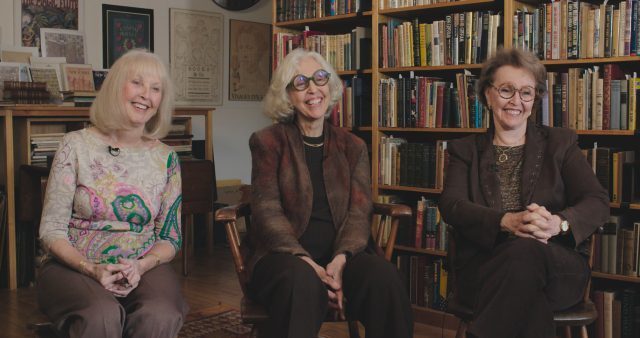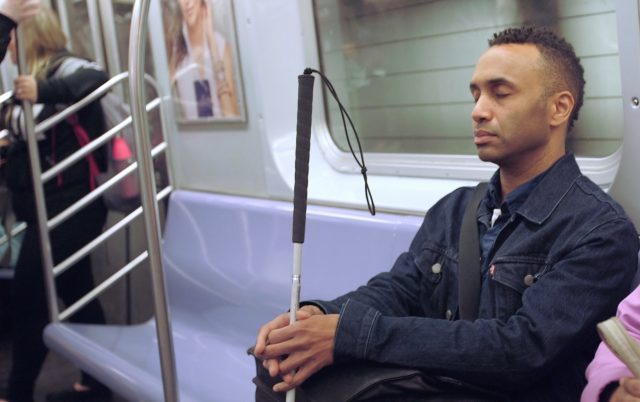
Filmmaker Rodney Evans explores his increasing blindness in Vision Portraits (photo by Kjerstin Rossi)
VISION PORTRAITS (Rodney Evans, 2019)
BAMfilm, BAM Rose Cinemas
30 Lafayette Ave. between Ashland Pl. & St. Felix St.
October 18-20
718-636-4100
www.bam.org/film
www.thefilmcollaborative.org
 “In a lot of ways, I feel like I’m just looking for guidance in how to be a blind artist,” filmmaker Rodney Evans says in Vision Portraits, his remarkable new documentary playing October 18-20 at BAM. Evans follows three artists as they deal with severe visual impairment but refuse to give up on their dreams as he seeks experimental treatment for his retinitis pigmentosa. Manhattan photographer John Dugdale lost most of his eyesight from CMV retinitis when he was thirty-two but is using his supposed disability to his advantage, taking stunning photos bathed in blue, inspired by the aurora borealis he sees when he closes his eyes. “Proving to myself that I could still function in a way that was not expected of a blind person was really gonna be the thing,” he says. “It’s fun to live in this bliss.” Bronx dancer Kayla Hamilton was born with no vision in one eye and developed iritis and glaucoma in the other, but she is shown working on a new piece called Nearly Sighted that incorporates the audience into her story. “How can I use my art form as a way of sharing what it is that I’m experiencing?” she asks.

Dancer Kayla Hamilton is not about to let visual impairment get in the way of her career (photo by Kjerstin Rossi)
Canadian writer Ryan Knighton lost his eyesight on his eighteenth birthday due to retinitis pigmentosa, but he teaches at a college and presents short stories about his condition at literary gatherings. “I had that moment where I had a point of view now, like, I realized blindness is a point of view on the world; it’s not something I should avoid, it’s something I should look from, and I should make it my writerly point of view,” Knighton explains. Meanwhile, Evans heads to the Restore Vision Clinic in Berlin to see if Dr. Anton Fedorov can stop or reverse his visual impairment, which is getting worse.
Vision Portraits is an intimate, honest look at eyesight and art and how people adapt to what could have been devastating situations. Evans, who wrote and directed the narrative features Brother to Brother and The Happy Sad, also includes animated segments that attempt to replicate what the subjects see, from slivers of light to star-laden alternate universes. BAM is hosting several postscreening Q&As, with Evans, moderated by Kirsten Johnson, Friday at 7:30; with Evans, moderated by Imani Barbarin, Saturday at 5:00; with Evans, moderated by Jourdain Searles, Saturday at 8:30; and with Kjerstin Rossi, Mark Tumas, Hannah Buck, and Hamilton, moderated by Charmaine Warren, Sunday at 4:30.
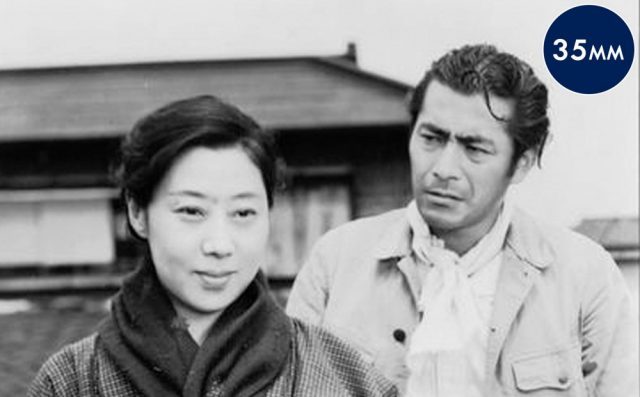
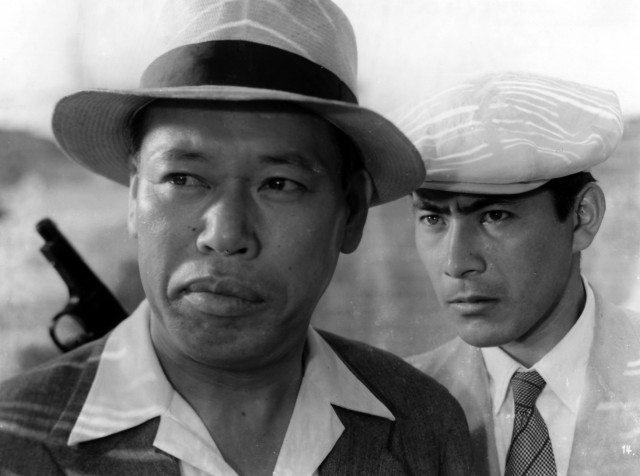
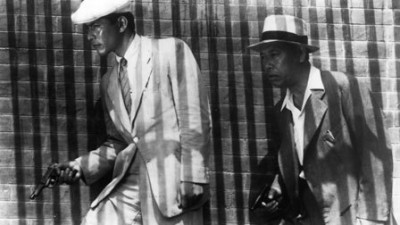
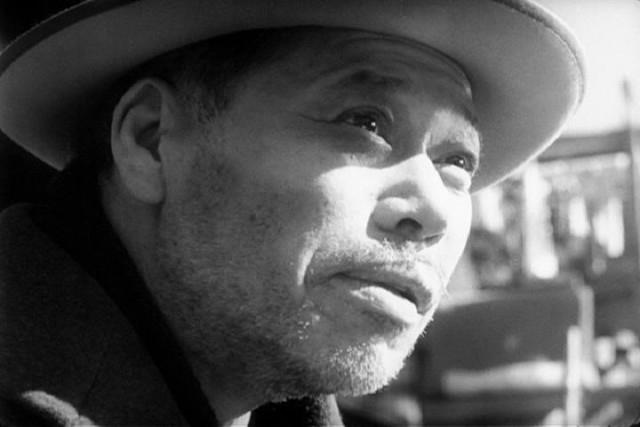
 In Akira Kurosawa’s 1952 gem, Ikiru, winner of a special prize at the 1954 Berlin International Film Festival, the great Takashi Shimura is outstanding as simple-minded petty bureaucrat Kanji Watanabe, a paper-pushing section chief who has not taken a day off in thirty years. But when he suddenly finds out that he is dying of stomach cancer, he finally decides that there might be more to life than he thought after meeting up with an oddball novelist (Yunosuke Ito). While his son, Mitsuo (Nobuo Kaneko), and coworkers wonder just what is going on with him — he has chosen not to tell anyone about his illness — he begins cavorting with Kimura (Shinichi Himori), a young woman filled with a zest for life. Although the plot sounds somewhat predictable, Kurosawa’s intuitive direction, a smart script (cowritten with Hideo Oguni), and a marvelously slow-paced performance by Shimura (Stray Dog, Scandal, Seven Samurai) make this one of the director’s best melodramas.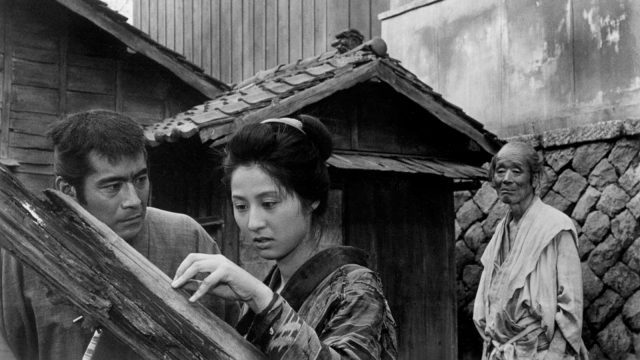
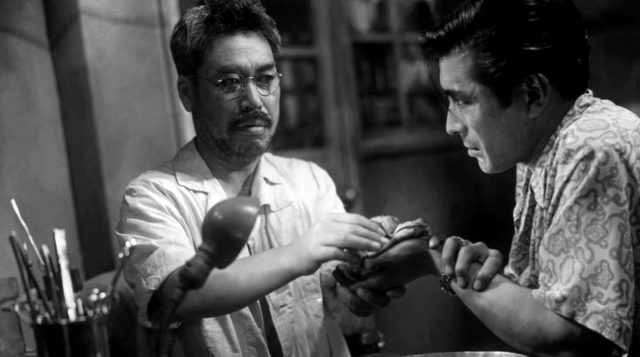
 Loosely adapted from Maxim Gorky’s social realist play, The Lower Depths is a staggering achievement, yet another masterpiece from Japanese auteur Akira Kurosawa. Set in an immensely dark and dingy ramshackle skid-row tenement during the Edo period, the claustrophobic film examines the rich and the poor, gambling and prostitution, life and death, and everything in between through the eyes of impoverished characters who have nothing. The motley crew includes the suspicious landlord, Rokubei (Ganjiro Nakamura), and his much younger wife, Osugi (Isuzu Yamada); Osugi’s sister, Okayo (Kyôko Kagawa); the thief Sutekichi (Toshirō Mifune), who gets involved in a love triangle with a noir murder angle; and Kahei (Bokuzen Hidari), an elderly newcomer who might be more than just a grandfatherly observer. Despite the brutal conditions they live in, the inhabitants soldier on, some dreaming of their better past, others still hoping for a promising future. Kurosawa infuses the gripping film with a wry sense of humor, not allowing anyone to wallow away in self-pity. The play had previously been turned into a film in 1936 by Jean Renoir, starring Jean Gabin as the thief.