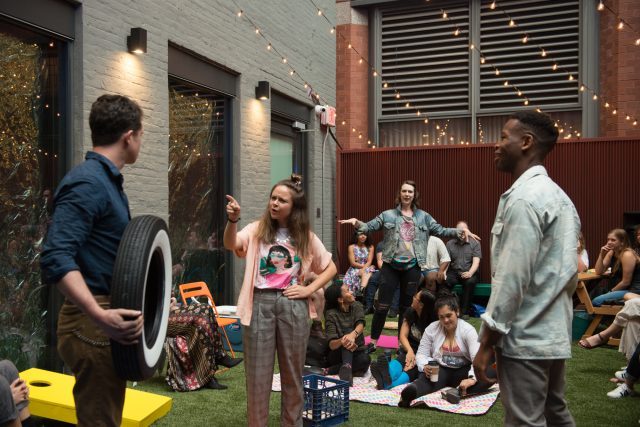
Kat (Emma Orne) points out some of society’s ills in strong revival of Mac Wellman’s Bad Penny at the Flea (photo by Allison Stock)
BAD PENNY
Flea Theater, the Pete
20 Thomas St. between Broadway & Church St.
Thursday – Monday through October 13, $17-$102
theflea.org
If there’s one thing to take away from the first three productions in the Flea’s five-play tribute to cofounder Mac Wellman, it’s to expect the unexpected. The seventy-four-year-old Cleveland-born Wellman, who started the Flea with Jim Simpson and Kyle Chepulis in 1996, eschews standard narrative conventions in his works, favoring unusual characters in unusual situations saying unusual things. You should kick off your Wellman adventure with 1989’s Bad Penny, a forty-five-minute site-specific piece originally staged in Central Park. Director Kristan Seemel has reimagined it for the Flea’s outdoor theater known as the Pete, a cramped space transformed by Jian Jung into a picnic area with a variety of chairs, tables, blankets, fake grass, and coolers. The oddball Kat (superbly played by Emma Orne) has picked up a tails-up penny and does not want it to ruin a perfectly fine day in the park, but she might not have a choice as she is joined by a group of ever-more-bizarre, surreal people who emerge from the audience. That person sitting next to you just might be the next actor to get up and pontificate on the state of the world; Emily White’s costumes are meant to mix them right in with us.
“I come here every day, every single day,” Kat says at the beginning. “I come here, to this spot, every single day and every single day, every single goddam day, it’s the same or it’s different or it rains or it’s clear or it snows or it’s bright and beautiful or it’s dark, rainy, and kinda foul. Or it’s like it is now, kinda strange. Sometimes the sky reminds me of home and sometimes the sky reminds me of the sea, or sometimes it doesn’t remind me of anything at all, much, and I pay no attention and sometimes the sky looks like its own reflection in an oily puddle of rain water, like nothing, nothing at all.” That covers about everything. Ray X (Joseph Huffman) is from Ugly, Montana, and is carrying a tire, looking for a gas station to fix his flat. Man #2 (Alex J. Moreno) thinks Ray X is crazy and a liar. Man #3 (Lambert Tamin) also doesn’t believe his story, accusing Ray X of being up to no good. Woman #2 (Bailie de Lacy) is suspicious of Kat, declaring, “There’s something the matter with you. Normal people don’t talk like you.” Meanwhile, a chorus of three women (Caroline Banks, Dana Placentra, and Katelyn Sabet) murmurs about the Dead Boatman of Bow Bridge (Ryan Wesley Stinnett), who just might be “coming to ferry the criminal to hell, the one who stole his penny, the one who thieved his bad penny, the one who thoughtlessly took what did not belong to him.”
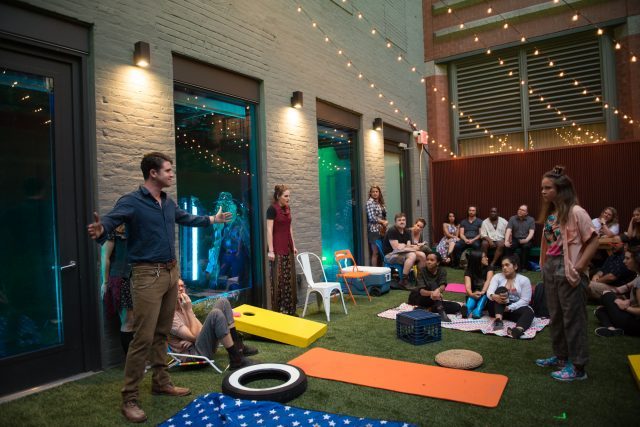
Bad Penny takes place in the Flea’s outdoor space known as the Pete (photo by Allison Stock)
In Bad Penny, Wellman toys with audience expectations as monologues evolve into unpredictable diatribes, unfair judgments are made, and fear lurks close by. Performed by the Bats, the Flea’s resident company, the show features a mixed bag of acting, some good, some not so good, but it’s Wellman’s words, which he refers to as “objects,” that drive the story as he explores the mythology of the everyday and the “bad habits” we all “might acquire by hanging out with the wrong type of people, people not used to acting normal, people who act strange.” It’s an entertaining picnic in the park, enveloped in a warm and friendly weirdness that is as funny as it is intriguing and, well, strange. And yes, that actress is mimicking your movement.
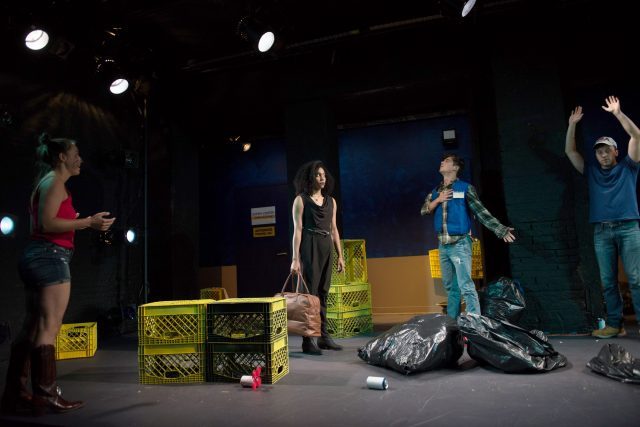
The Bats revive Mac Wellman’s Sincerity Forever at the Flea (photo by Allison Stock)
SINCERITY FOREVER
Flea Theater, the Siggy
20 Thomas St. between Broadway & Church St.
Thursday – Monday through October 13, $17-$102
theflea.org
Wellman’s 1990 play Sincerity Forever presaged a key reason why Hillary Clinton lost the 2016 election to Donald Trump as well as predicting a defining moment in the latter’s presidency: Clinton’s use of the phrase “basket of deplorables” and Trump’s claim that there are “very fine people” among white supremacists, respectfully. However, what may have been satire thirty years ago now feels more like a tepid documentary, resulting in a show that falls flatter than some very fine conspiracy theorists believe the Earth to be. The sixty-five-minute play, which can be seen the same night as Bad Penny, takes place in the hellish contemporary American town of Hillsbottom, where white hoods and robes are standard wear. (The costumes are by Barbara Erin Delo, with the dark warehouse delivery set by Frank J. Oliva.) The story unfolds through a series of conversations local young folk, who would not be accused of being the brightest bulbs in the chandelier, have in cars, represented by side-by-side chairs pulled up to the very edge of the stage.
“Molly, do you know why God created the world the way he did? So complicated, I mean,” Judy (Malena Pennycook) asks Molly (Charly Dannis), who wonders, “Why else would we not know anything, unless there were an intelligent being out there, somewhere, whose cunning idea it was that you and I, Judy and Molly, should be forever ignorant of the true nature of things, ignorant forever in absolute sincerity. Does Dexter really have a crush on me, or did he just say he did?” With Jesus H. Christ (Amber Jaunai), appearing to them as a black woman with a metaphorical heavy bag, joining them, Tom (Vince Ryne) tells Hank (Nate DeCook), “Now me, I too, may be as dumb as a post, and unclear about the multiplication table, the boundaries of more than a half dozen states, and unable to repair my own toilet, but dammit, Hank, if the English language was good enough for Jesus H. Christ then it’s good enough for me. Furthermore, I do not feel compelled by reason to accept this theory of evolution, nor the periodic table of elements, nor the theory of global warming, nor the supposed crimes against the Jews attributed to one Rudolf Hitler. Nor the spherical nature of the earth, because it’s against the law of nature and we would fall off for sure and my motto is: Never explain, never apologize.”
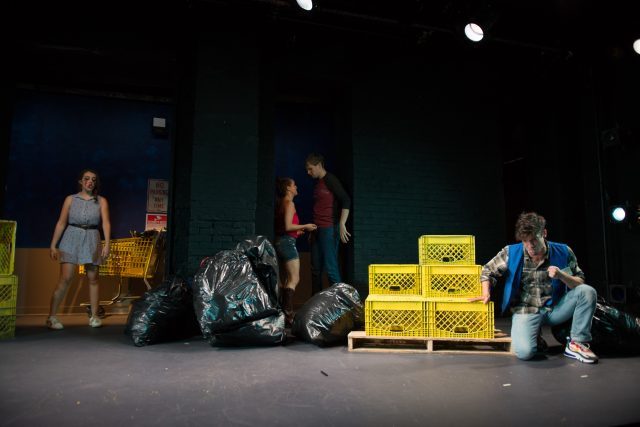
Sincerity Forever features Klansmen, Furballs, Jesus H. Christ, and warehouse workers (photo by Allison Stock)
Others who share their thoughts are George (Peter McNally), Melvin (Alex Hazen Floyd), and a pair of furballs (Zac Porter and Neysa Lozano) who hate Hillsbottom and everyone in it, as the second one explains: “I mean, it’s all so fucking decent and god-fearing and goody-two-shoes and law-abiding and thankful and smarmy and sentimental and full of wishful thinking and sugar coated bad faith and chintzy, cheesy, boring mediocrity it makes me want to gag. I mean, all these totally square fuckheads who only care about God and family and communication and community and law and order and morality and safe sex and global warming and Jesus H. Christ and the whole moldy, worn-out crock of shit. It makes me want to spew and leave my lunch all over their well-manicured lawns.”
That may have played like acerbic wit in 1990, but in 2019 it hits a little too close to home and comes off as too-easy fodder. It’s all so clear and obvious, as well as repetitive; director Dina Vovsi is unable to add any nuance or legitimate conflict, so the narrative just stagnates, a bunch of vignettes about dumb racists saying dumb racist things without realizing it, its point long made as the characters go on and on until Jesus sums it all up in a grand finale. In his author’s note, Wellman — who dedicated the work to Sen. Jesse Helms, “for the fine job you are doing destroying civil liberties in These States” — takes a shot at the National Endowment for the Arts, which gave him a grant for the project but then demanded not to be credited because they had issues with the play. They’re not the only ones.

Mac Wellman’s The Invention of Tragedy makes its long-awaited debut at the Flea (photo by Hunter Canning)
THE INVENTION OF TRAGEDY
Flea Theater, the Sam
20 Thomas St. between Broadway & Church St.
Thursday – Monday through October 14, $17-$102
theflea.org
“Perfect Catastrophes” continues with the world premiere of Wellman’s The Invention of Tragedy, which was written in 2004 as a response to the Iraq War but is finally getting its debut staging appropriately during the Trump era, when fear of the other keeps gathering momentum, be it for a wall, a Muslim ban, an upsurge in hate crimes, undocumented workers being rounded up by ICE, refugee deportations tearing apart families, or “imagining a terrorist under every hat.” Running in the Flea’s Sam theater through October 14, the hourlong play uses elements of Greek tragedy mixed with the nonsense lyrical style of Lewis Carroll and Edward Lear and Kurt Schwitters’s “Ursonate” to skewer the America-first attitude that took over after 9/11 and runs rampant today. A chorus of seven young women (Sophia Aranda, Drita Kabashi, Mirra Kardonne, Susan Ly, Alice Marcondes, Ana Semedo, and Zoe Zimin) is disturbed when one of them, who becomes known as the Answerer (Kabashi), breaks away from the pack, followed shortly by the Enforcer, who morphs into the Hare (Ly). “This difference is a problem,” says the Narrator (Sarah Alice Shull), who offers details during each pause — or “paws,” as Wellman includes a never-ending stream of cat references — while playing a piano score by Michael Cassedy. Individuality is verboten in this world of mob mentality.
The second of a series of choruses chanted in unison declares in Orwellian groupspeak: “And chop the chails off all cats. The bird of alignment off to nuts grows grows a possum hell bore can’t do finger whole of a part yessir yessir yessiree at to on an island scamper way to benumbed fruitcake walk to lean to adventure whose whose which of the parterre o glad eyed speak, er, speech and say not to nothing but hinge grammaticus grammarye’s red boast o machine o machine break down de doom. O machine of the other the other imagining.” The chorus is troubled by the Answerer, as explained by the Narrator: “One step steps forth from the rest. Unlawfulness is revealed. Awfulness.” The chorus’s gobbledygook occasionally makes a more specific, understandable point as it soon adds, “Horror horror horror the world is broken broken and come to be fractured,” so the Enforcer is given an ax to take care of business.
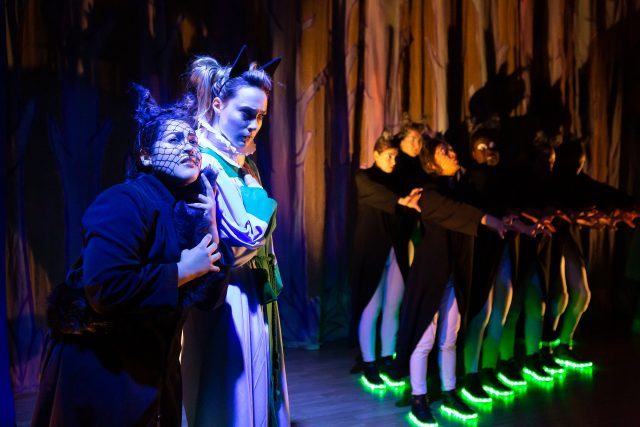
Trouble ensues when the Hare (Susan Ly) and the Answerer (Drita Kabashi) break away from the pack in The Invention of Tragedy (photo by Hunter Canning)
But the Answerer is not about to fall into line with everyone else. “I have become one for my own mind in thought,” she announces. “I perceive how cats have been mistreated in these parts. Fed with crap food. Despised and chased. Played cat in the bag with and other such. Dull the fur. I see them treed and often hopeless and puzzled. And then there is is the oft spoken threat of top er chop off the chails of. Er them.” Later the Hare, who previously was a sandwich man wearing “low and vulgar sandwich boards,” asks, “Is then the symbol the same as the thing symbolized?”
Adroitly directed by Meghan Finn with a keen sense of humor and choreographed by Chanon Judson, The Invention of Tragedy is a terrifically rendered allegory about post-9/11 America. It was written fifteen years ago but feels like it could have emerged today, particularly as partisanship rules the day and Fox News and Trumpists get behind nearly everything the president does and says. Dare to speak your own mind and you risk more than just your tail being chopped off. Wellman is telling us we are all trapped in a hellish fairy tale, albeit one with candy-colored costumes and an innate charm that is ultimately deceiving.
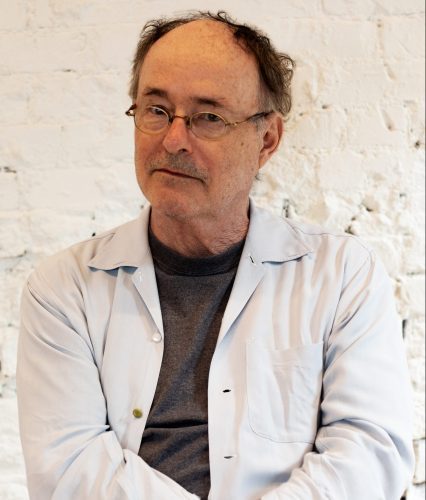
Mac Wellman play series at the Flea also features a three-day symposium (photo by Crystal Arnette)
Up next in the Wellman festival are The Sandalwood Box and The Fez, presented together starting September 26. From October 4 to 6, the Flea will also host “The Art of Stacking the Deck: A Mac Wellman Symposium,” three days of panel discussions and performances with Wellman collaborators, protégés, and scholars.
Friday, October 4
Welcome Reception, 5:30
Saturday, October 5
Critical & Scholarly Discussion of Mac’s Work & Nontraditional Theater, with Kate Benson, Helen Shaw, Karinne Keithley Syers, and Anne Washburn, 10:00
Approaching Language in Mac’s Plays, with Claudia Brown, Meghan Finn, Jan Leslie Harding, David Lang, Paul Lazar, and Kristan Seemel, 11:30
Producing & Directing the Event in Mac’s Plays, with Elena Araoz, Kyle Chepulis, Meghan Finn, Anne Hamburger, Graham Sack, Kristan Seemel, and Maria Striar, 2:00
Performance of Terminal Hip, with Steve Mellor, 8:00
Sunday, October 6
Teaching and Learning Playwriting, with Eliza Bent, Erin Courtney, Kristine Haruna Lee, Young Jean Lee, and Sibyl Kempson, 10:00
A Conversation with Mac and Helen Shaw, 11:30
Performance of Terminal Hip, with Steve Mellor, 7:00

 “I’m writing as a form of activism,” Joel Francois says in Max Powers’s Don’t Be Nice, an intense and inspiring fly-on-the-wall documentary that follows the Bowery Slam poetry team over nine weeks as it prepares for the national finals in Atlanta. Representing Bowery Poetry Club, Francois, Ashley August, Noel Quiñones, Timothy DuWhite, and Sean MEGA DesVignes, are in it to win it, led by coaches Lauren Whitehead and Jon Sands, who work hard to get the most out of each of them. Sands is more of a cheerleader as Whitehead pressures the multiracial poets to reach deep within themselves to get to the root of who they are as they write about their often tenuous place in a dangerous and difficult world, sharing thoughts and feelings from their core. Filmed in the summer of 2016, Don’t Be Nice explores issues of race, class, sexual orientation, physical and emotional abuse, violence, and gender without apology as the members of the team bare their souls, particularly relating to racial injustice and the whitewashing of black culture as a stunning number of black men are killed by white police officers that year.
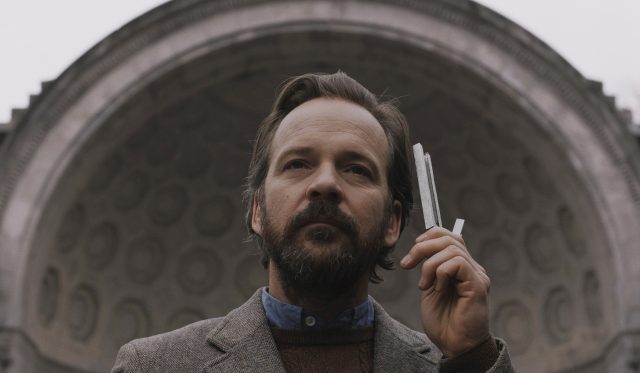
 Peter Sarsgaard gives a beautifully gentle performance as a house tuner in Michael Tyburski’s feature debut, The Sound of Silence. Sarsgaard is Peter Lucian, an idiosyncratic New Yorker who is hired by people to investigate how sounds in their homes might be affecting them in negative ways, impacting their sleeping habits, success at work, and overall mood. Walking from room to room with tuning forks and a tape recorder, Peter tracks seemingly impossible-to-hear noise and suggests alterations that will change his clients’ lives, sometimes as simple as replacing a small appliance. He is also mapping the city itself, documenting buildings and street corners by the musical notes they emit. At the urging of his mentor, Robert Feinway (Austin Pendleton), he hires Samuel Diaz (Tony Revolori) to assist him as he prepares to publish his findings, something he prefers to do alone. Meanwhile, CEO Harold Carlyle (Bruce Altman) wants Peter to join his firm and turn his unique skill into a big-time money-making venture, but Peter has no interest in corrupting his unusual profession. When he hits a snag trying to solve the problems of his latest client, Ellen Chasen (Rashida Jones), he becomes obsessed, desperate to find the answer as his calm, even-keeled life suddenly becomes turbulent and disorderly.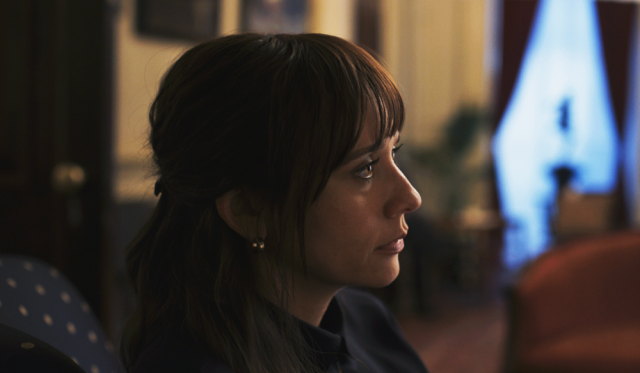
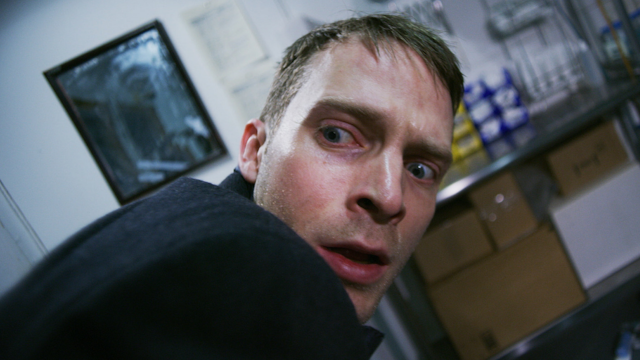
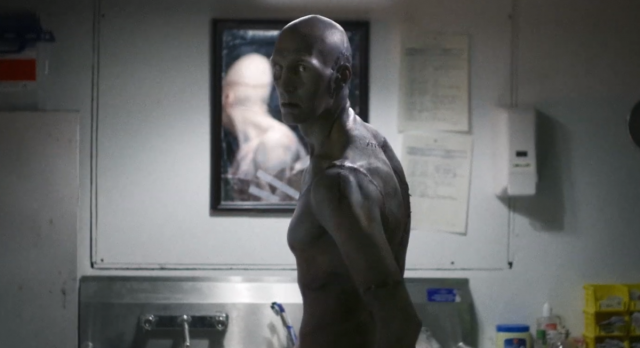
 Earlier this year, Larry Fessenden’s Depraved made its world premiere at IFC Center as the opening-night selection of What the Fest!?, five days of twisted films and discussions that pushed the boundaries of the horror genre. Depraved, which does just that, is now back at IFC for its inaugural theatrical release. “Humanity does so love destruction. Depraved. That’s what we are. Utterly depraved,” Polidori (Joshua Leonard) explains in the film, a contemporary reimagining of Frankenstein and The Bride of Frankenstein involving the military, Big Pharma, and fatherhood. The smooth-talking Polidori (named for John William Polidori, an acquaintance of Mary Wollstonecraft’s who in 1819 published the first modern vampire story) is overseeing a cutting-edge experiment by Henry (David Call), who is seeking to bring life to the dead through surgery, medication, and therapy. (Dr. Frankenstein was named “Victor” in Mary Shelley’s book but “Henry” in James Whale’s 1931 movie.) Using body parts from multiple corpses, Henry, a former army medic in Iraq, has patched together a living being he names Adam (Alex Breaux). The final, key piece is the warm brain of Alex (Owen Campbell), who is brutally murdered moments after having a fight with his girlfriend, Lucy (Chloë Levine), in Brooklyn. Adam develops sooner than expected, taking a liking to Henry’s girlfriend, Liz (Ana Kayne), while Polidori uses this as an opportunity to speed up the deals he’s working on. It doesn’t go very well.