this week in lectures, signings, panel discussions, workshops, and Q&As

NEW YORK JEWISH FILM FESTIVAL OPENING NIGHT SELECTION: AULCIE

Aulcie

The life and times of Aulcie Perry on and off the court are documented in New York Jewish Film Festival opener

AULCIE (Dani Menkin, 2019)
Walter Reade Theater, Film at Lincoln Center
165 West 65th St. between Broadway & Amsterdam Aves.
Thursday, January 16, 8:30
Festival runs January 15-28
212-875-5050
www.filmlinc.org
thejewishmuseum.org

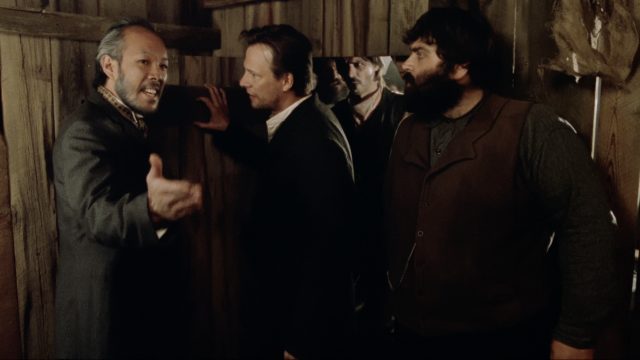
Israeli director Dani Menkin follows up his 2016 documentary, On the Map, about Maccabi Elite Tel Aviv’s unlikely victory in the 1976-77 European Champions Cup, with an inside look into the life of one of its stars in Aulcie, the opening night selection of the New York Jewish Film Festival. After being the last man cut from the New York Knicks in 1976, Newark native Aulcie Perry was recruited to play for Maccabi in Israel, where the 6-10 black man — an unusual sight in the Land of Milk and Honey — quickly became a superstar, helping the team to championships, falling in love with top model Tami Ben Ami, and hanging out in hot clubs, living the high life. But it all came tumbling down in a haze of drugs, and Menkin traces Perry’s attempt to put it all back together, primarily by finding the daughter he has not seen since she was a baby.

The film is set up as Perry’s confession to that daughter, Cierra Musungay. “I always knew one thing: that I wanted to tell you my story, the way it is, with the good and the bad,” he says at the beginning. “So where do I start? People say you start at the beginning. But I wanted to start at the end, or when I thought the end was coming.” He was inspired to track her down after facing a serious health scare. “I think, that only when I almost died, I started to really live. And that’s when I wanted to find you and, maybe in some ways, find myself,” he adds.

Aulcie

Top model Tami Ben Ami and basketball superstar Aulcie Perry are shown as the hot couple in Aulcie

Menkin goes back and forth between archival footage, animation by Assaf Zellner, and interviews with Aulcie’s sister Bernadine Lewis, his friends Wayne Tyre and Roy Young, his ex-girlfriend Juanita Jackson, his son Aulcie Perry Jr., and many men from his Maccabi family, including former teammates Earl Williams and Tal Brody, team president Shimon Mizrahi, co-owner Oudi Recanati, coach Zvi Sherf, and manager Shamluk Maharovsky, who was like a father to him. “In Israel, there wasn’t that much prejudice against black players, and he felt at home here,” NBA commentator Simmy Reguer says. “Aulcie came in like a blessing from the gods,” fellow Jersey native and team captain Brody recalls. And Sports Illustrated writer Alexander Wolff explains, “At Maccabi Tel Aviv, Aulcie Perry was Michael Jordan, Kareem Abdul-Jabbar rolled into one.”

Now sixty-nine, Perry is honest and forthright thorughout, admitting his failings and wanting to make up for lost time. He makes no excuses for his precipitous fall, and he’s not seeking sympathy. He’s a man who made mistakes and wants a chance to set things right. Aulcie is a cautionary tale of redemption with heart and soul, focusing on the need to be part of a family, no matter how different and unexpected it may be. Aulcie is having its New York City premiere January 16 at 8:30 at the Walter Reade Theater, with Perry, Menkin, and producer Nancy Spielberg (brother of Steven) participating in a Q&A. Aulcie might be the opening selection of the New York Jewish Film Festival, but the twenty-ninth annual fest actually kicks off a day earlier with Picture of His Life, a documentary codirected by Menkin and Yonatan Nir about Yom Kippur War veteran and underwater photographer Amos Nachoum, showing on January 15 at 1:00, with Menkin, Spielberg, and Nachoum present. A joint presentation of Film at Lincoln Center and the Jewish Museum, the festival continues through January 28 with such other works as Marceline Loridan-Ivens’s centerpiece The Birch Tree Meadow, starring Anouk Aimée and August Diehl, a fiftieth anniversary presentation of Vittorio De Sica’s The Garden of the Finzi-Continis, and Dror Zahavi’s closing night selection, Crescendo, about an attempt to establish an Israeli-Palestinian youth orchestra.

UNDER THE RADAR: NOT I

(photo by James Lyndsay)

Jess Thom’s multidimensional Not I is a stirring evening of communal theater (photo by James Lyndsay)

BRIC House Ballroom
January 10 – January 19, $30
647 Fulton St.
publictheater.org
www.bricartsmedia.org

London-born comedian and disability activist Jess Thom returns to the BRIC House Ballroom with a spectacular sixty-minute presentation, a brilliantly conceived evening that reimagines the theatrical experience, for both actor and audience. In May 2016, Thom, who has Tourette Syndrome, held the New York premiere of her Edinburgh Fringe hit Backstage in Biscuit Land at the Brooklyn arts institution, delivering a “one-woman show for two” that humorously looks at her life and how she deals with Tourette’s, a neurological disorder that causes her to uncontrollably shout out words and phrases, such as “biscuit,” “hedgehog,” “sausage,” “I love cats,” and “Fuck a goat.” (Only ten percent of those with Tourette’s have copralalia, involving foul language.) She also uses a wheelchair, as her disability comprises various physical tics, such as banging her chest whenever she says “biscuit,” that make it too dangerous for her to walk on her feet.

Back at BRIC for the Public Theater’s Under the Radar Festival, Thom is performing Samuel Beckett’s 1972 monologue Not I in a relaxed, inclusive environment. As you enter the small, intimate black-box space, Thom is in her wheelchair, greeting each audience member and inviting them to sit either on cushions, benches, or folding chairs. She is friendly and outgoing, and she doesn’t pause or change moods when the tics come up. She even plays off them; for example, when she says, “I love cats,” she quickly adds something like, “Well, I don’t really even like cats,” and when she proclaims, “Fuck a goat,” she responds by assuring everyone that no one will be having sex with an animal. Meanwhile, to her right, ASL performer Lindsey D. Snyder signs everything Thom says, including the verbal tics. Reaching the whole audience matters to Thom: The seating in Not I is inspired by how she was rudely treated when she attended a 2011 show by stand-up comic Mark Thomas, when theater staff confined her to a sound booth because other members of the audience objected to her gesticulations and vocal outbursts.

Once everyone is settled, she explains the plans for the evening and describes how a friend had told her that she should consider staging her own version of Not I, because it relates so organically to her life. The play, which has been performed by such actresses as Jessica Tandy, Beckett muse Billie Whitelaw, Julianne Moore, and Lisa Dwan and gets its title because it is told in the third person by the protagonist, is an ellipses-filled diatribe of incomplete thoughts and tangents that generally runs between nine and fifteen minutes; it is not a race, but the performer is expected to go through the 2,268 words as fast as possible. “I am not unduly concerned with intelligibility. I hope the piece may work on the nerves of the audience, not its intellect,” Beckett wrote in a 1972 letter to Tandy prior to the play’s world premiere at Lincoln Center. Dressed all in black, wearing a balaclava and a hoodie, Thom, in her wheelchair, is lifted eight feet in the air (the set is designed by Ben Pacey), and she is lit so only the bottom half of her face can be seen. Usually, only the actress’s mouth can be seen, as if it exists by itself, but changes had to be made because of Thom’s Tourette’s. As she power-drives through the piece, she occasionally gets caught in a series of “biscuit” moments but then forges ahead. She is moving through the dialogue so fast, and so unpredictably, that Snyder, also dressed in black and taking the place of the Auditor, the second character in the play, is practically dancing on the floor. (Beckett’s movement directions for the Auditor note, “This consists in simple sideways raising of arms from sides and their falling back, in a gesture of helpless compassion.”)

The audience is not meant to understand every word and plot detail as a woman, identified as “Mouth” in the script, relates several stories involving shopping in a supermarket, going to court, sitting on a mound in Croker’s Acres, and searching for cowslips in a field, bringing up such concepts as shame, torment, sin, pleasure, and guilt. This protagonist has suffered an unnamed trauma that has led to her becoming an outcast from society and virtually unable to communicate with others via speech. It’s clear why Thom’s friend suggested Not I for her, perhaps most evident from the following excerpt:

“what? . . tongue? . . yes . . . lips . . . cheeks . . . jaws . . . tongue . . . never still a second . . . mouth on fire . . . stream of words . . . in her ear . . . practically in her ear . . . not catching the half . . . not the quarter . . . no idea what she’s saying . . . imagine! . . no idea what she’s saying! . . and can’t stop . . . no stopping it . . . she who but a moment before . . . but a moment! . . could not make a sound . . . no sound of any kind . . . now can’t stop . . . imagine! . . can’t stop the stream . . . and the whole brain begging . . . something begging in the brain . . . begging the mouth to stop . . . pause a moment . . . if only for a moment . . . and no response . . . as if it hadn’t heard . . . or couldn’t . . . couldn’t pause a second . . . like maddened . . . all that together . . . straining to hear . . . piece it together . . . and the brain . . . raving away on its own . . . trying to make sense of it . . . or make it stop . . .”

Not I has a sound map to ensure everyone is comfortable and no one is excluded

Not I has a sound map to ensure everyone is comfortable and no one feels excluded for auditory reasons

When we go to live theater and watch someone stumble over lines or hesitate and stammer as if they’ve lost their place, our hearts tend to sink and we don’t want the actor to be embarrassed. But when Thom, tearing through the words at a frenetic pace, suddenly goes into “biscuit” mode, not only are we rooting for her, we are with her every second, willing her on to get to the finish line with glory. It’s exhilarating when she storms back into Beckett’s language. But it’s important to note that we are not rooting for her because of or in spite of her disability (a word, by the way, that she freely uses); we are helping carry her to the end in a communal act that goes far beyond mere kindness.

The Beckett section is followed by Sophie Robinson’s short documentary Me, My Mouth, and I, which goes behind the scenes of the creation of Thom’s performance, and then Thom — who is also known as Touretteshero for her work with children and for her same-named organization that seeks to “change the world one tic at a time” — offers the audience the chance to talk to their neighbors about their thoughts on the play and ask her questions. The evening, which is passionately directed by her longtime collaborator Matthew Pountney, concludes with Thom signing copies of her 2012 book, Welcome to Biscuitland, in which Stephen Fry writes in the foreword, “Jess is a true hero, with or without her Touretteshero costume. Jess fuck biscuit Thom, I biscuit fuck fuck biscuit salute biscuit you.” And so will you.

BERNARD-HENRI LÉVY x 4

Peshmerga

Bernard-Henri Lévy speaks with General Maghdid Harki in gripping war documentary Peshmerga

Quad Cinema
34 West 13th St. between Fifth & Sixth Aves.
January 10-16
212-255-2243
quadcinema.com

In the introduction to his most recent book, The Empire and the Five Kings: America’s Abdication and the Fate of the World, published in February 2019, controversial and provocative Algerian-born French Jewish philosopher Bernard-Henri Lévy writes, “When I review the reasons why, at this stage of my life, I poured so much energy into the cause of the Kurds and Kurdistan, this is what comes to mind. The justice of the fight, of course. . . .

“Next, there is the debt they are owed. The indelible debt that the world owes to the only armed force that, when ISIS appeared and the region was frozen stiff with terror, dared fight it face-to-face. It was because I was aware of this debt that I, with a small band of friends, came to the region between July and December 2015 to shoot a documentary film, Peshmerga, along the six-hundred-mile front that the Kurds were holding, alone, against the fanatics of the Islamic State. It was because I was aware that these men and women — the Peshmerga includes battalions of women — were the first line of defense not only of Kurdistan but of the world, that I left Europe again in November 2016, on the first day of the fight for Mosul, to make a second documentary, The Battle of Mosul, about the liberation of the most important city of the Caliphate. And it was for the same reasons that I personally promoted these films wherever anyone was willing to show them, that I brought the first of them to the very symbolic great hall of the United Nations building in New York and to the hallowed dome of Congress in Washington, and that I lived those two years in step with the Peshmerga and their aspirations. These fighters were sentinels against barbarism, the world’s outposts and shields. The film crew and I deemed it essential to be the witnesses of that.”

Battle for Mosul

Bernard-Henri Lévy embeds himself with Kurdish troops in The Battle for Mosul

What Lévy and his brave crew were witnesses to can be seen at the Quad, which will be hosting the series “Bernard-Henri Lévy x 4,” with the seventy-one-year-old Lévy, popularly known as BHL, making four appearances at the Thirteenth St. theater this weekend. The festival begins with the weeklong theatrical release of 2016’s Peshmerga and 2017’s The Battle of Mosul, shown as a double feature; the 7:00 screenings on January 10 and 11 will be followed by Q&As with Lévy, the first moderated by Adam Gopnik, the latter by Ben Cohen. In addition, on January 11, Lévy will introduce the 2:15 screening of 1994’s Bosnia-set Bosna! and the 4:45 screening of 2012’s The Oath of Tobruk, about the fall of Muammar Gaddafi.

Peshmerga and The Battle of Mosul are remarkable inside looks at war; Lévy, who has also directed the romance Day and Night and written such books as Who Killed Daniel Pearl?, In the Footsteps of Tocqueville, and In the Spirit of Judaism, embeds himself with the Peshmerga, troops dedicated to ridding the world of ISIS, aka Daesh; the name Peshmerga translates as “Those who stand in the face of death,” and that’s just what happens throughout the two films. Lévy rides with the Kurdish military, joining the somewhat ragtag but dedicated group of fighters as they investigate villages, journey into tunnels, and get shot at in bunkers. Along the way from Kirkuk to Erbil and Mosul, he encounters such brave men and women as General Kemal Kirkuki, General Maghdid Harki, Mike Barzani, Dr. Jacques Bérès, Prime Minister Nechirvan Barzani, Iraqi general Fazeel Barwari, counterterrorism leader Abdulwahab al-Saadi, and Helly Luv, the Kurdish Madonna who makes anti-Daesh music videos. “Daesh is the enemy of the whole world,” one soldier says, explaining why they do what they do — and are extremely successful at it. Lévy risks his life and that of his crew, which includes cinematographers Ala Hoshyar Tayyeb, Olivier Jacquin, and Camille Lotteau, one of whom gets caught in an explosion. He thankfully chooses not to show the killing of one general, who gets shot in the head while using sandbags for cover, something Lévy will never forget.

The films feature gripping scores by Nicolas Ker, Jean-Fabien Dijoud, Henri Graetz, and Jeff D., with sound by Jean-Daniel Bécache and editing by Camille Lotteau that make you feel like you’re part of the action, the threat of snipers, booby-trapped vehicles, and IEDs ever present. “Good God, how ugly, dirty, and foul war is!” Lévy cries out, but he also sees reason for hope. “The spirit of Bashiqa, the timeless alliance between Yezidis, Muslims, and Christians, promptly flourishes again,” he says at one point while also showing villagers’ respect for the history of the region’s now-departed Jewish population.

“We witnessed the astonishing spectacle of the world’s leading power consenting to the defeat and humiliation of its staunchest ally in the region,” he continues in the book’s introduction. “We saw the same President Trump, who had just declared Iran to be enemy number one in the complicated Middle East, voice no objection as Major General Qasem Soleimani, head of the Quds Force, the elite unit of the Iranian revolutionary Guards responsible for Iran’s external operations, came and went, parading around the field of battle like a conqueror and posing for photographers. . . . The Kurds perceived this nonintervention as a terrifying enigma.” It should be fascinating to hear what he has to say about Trump and Soleimani now. Lévy also notes of the fighters who lined up to vote at the ballot box, “Like them, I was thinking that this affair bore an unmistakable odor of betrayal. Like them, I was shocked by the mixture of amateurism, fecklessness, and absence of vision of the U.S. and European administrations.”

KNOWLEDGE OF WOUNDS

(photo by S.J Norman, Cicatrix I, 2019)

S.J Norman’s Cicatrix I is the symbol for “Knowledge of Wounds” weekend festival

Performance Space New York
150 First Ave. at Ninth St.
January 11-12, day pass $35, weekend pass $55
performancespacenewyork.org

The second annual “Knowledge of Wounds,” celebrating indigenous cultures through readings, discussions, performances, and ritual gatherings, takes place January 11-12 at Performance Space New York in the East Village. Organized by S. J Norman (Koori, Wiradjuri descent) and Joseph M. Pierce (Cherokee Nation), the event explores ideas of threshold spaces, displacement, settler colonialism, borders, and community. Below is the full schedule; tickets are $35 for one day and $55 for both days.

Saturday, January 11
Morning physical session with devynn emory and Joshua.P, noon

Opening Blessing & Group Prayers with the Fire, 1:00

Kinstillatory Action, with Emily Johnson, 2:30

Bodies in Resistance, 4:00

Active rest with devynn emory and Joshua.P, 5:30

Story time with Joe Cross and Donna Couteau, 6:00

Shadow Songs and Root Mirrors, with Laura Ortman, Demian DinéYazhi’ and Kevin Holden, and Elisa Harkins, 8:30

Ixkin: Kaxb’ichil, Xamal, Ootzaqib’al / ThreeStones: Wound, Fire, Knowledge — Tohil Fidel Brito, in collaboration with María Regina Firmino-Castillo and with the participation of Amaru Márquez Ambía, 10:30

Sunday, January 12
Morning physical session with devynn emory and Joshua.P, noon

Opening blessing and fire ritual blessing with Javier Stell-Frésquez, 1:00

Making Love to the Land, 2:30

La utopía de la mariposa, María Regina Firmino-Castillo, 4:30

Ancestral Skin, with Holly Mitiquq Nordlum, 6:00

Sustenance with Chef Quentin Glabus of I-Collective, 8:00

Night offering and fire ritual with devynn emory and Joshua.P, 9:30

THE WOMAN WHO LOVES GIRAFFES

Giraffes

Anne Innis Dagg returns to where it all started in The Woman Who Loves Giraffes

THE WOMAN WHO LOVES GIRAFFES (Alison Reid, 2019)
Quad Cinema
34 West 13th St. between Fifth & Sixth Aves.
Opens Friday, January 10
212-255-2243
quadcinema.com

Before Jane Goodall went to Tanzania to study chimpanzees and Dian Fossey headed to Rwanda to study mountain gorillas, Canadian biologist Anne Innis Dagg was in South Africa, studying giraffes. Her delightful yet infuriating story is told in Alison Reid’s The Woman Who Loves Giraffes, which opens January 10 at the Quad, where the eighty-six-year-old Dagg will participate in Q&As with Reid at six screenings on Friday and Saturday. Dagg fell in love with giraffes when she was three and first saw them at the Brookfield Zoo in Chicago. In 1956, when she was twenty-three, she set off for the Fleur de Lys ranch near Kruger National Park. That trip was quite a victory, based on a bit of subterfuge; in her application to manager Alexander Matthew, she didn’t identify herself as female because she had been previously rejected by many other locations that claimed that “Africa is no place for a young woman.”

She spent a year taking meticulous notes on the social and sexual behavior of giraffes, essentially making up her methods as she went. “No one had ever really studied an African animal in the wild, or pretty well any animal in the wild,” she says in the film. “So I was sort of breaking ground without realizing it.” But when she returned to Toronto, Dagg, the daughter of a university professor father and an economic historian mother, both of whom were widely published writers, was met with a frightening amount of misogyny in the scientific and education communities; she failed to get tenure or other prominent teaching positions, which led her to become a feminist activist in the 1970s. “She ran into the old boys’ network and I think it destroyed her career,” says former University of Guelph professor Sandy Middleton, the only member of the tenure committee that supported Dagg. All these years later, the head of the committee, former dean Keith Ronald, still adamantly defends his decision against Dagg.

It wasn’t until 2010 that Dagg, who uses “giraffe” as both a singular and a plural, reentered the giraffe fold, mainly because of women such as San Francisco Zoo curator Amy Phelps, who says, “I was the little girl that that woman was a hero for, and so it was really important to me that we be able to find her. . . . We were searching for Anne because we really didn’t know if she was alive.” Reid follows Dagg as she is celebrated at the Giraffe Care Conference in Arizona, then goes back to Africa for the first time since the mid-1950s to attend a Giraffe Indaba near Fleur de Lys, bringing her daughter, Mary, with her. Reid and editors Mike Munn and Caroline Christie heartwarmingly intercut footage Dagg took in 1956, photographs and 16mm film, with new scenes of her in the same exact places. Reid also includes narration of Dagg’s extensive letters and writings — she’s written more than twenty books, most importantly The Giraffe: Its Biology, Behavior, and Ecology, considered the bible on the subject — with the voices of Tatiana Maslany as Dagg, Victor Garber as Matthew, David Chinchilla as Anne’s husband, Ian, and Lindsay Leese as Dagg’s mother, Mary Quayle Innis.

The previously little-known Dagg — who in 1965 stumped the To Tell the Truth panel, a clip of which begins the documentary — revels in her newfound semicelebrity and has delved right back into her research. “I always wanted to be a scientist,” she says. The documentary has an inconsistent pace and treacly music, but it’s a thrill watching Dagg look back at her past as she heads into the future; it’s also hard not to think about what could have been had she not been thwarted time and time again because of her gender.

UNDER THE RADAR: THE UNKNOWN DANCER IN THE NEIGHBORHOOD

(photo by Ryuichiro Suzuki)

Dancer-choreographer Wataru Kitao stars in one-man multimedia show at Japan Society (photo by Ryuichiro Suzuki)

Japan Society
333 East 47th St. at First Ave.
January 10-14, $35
212-715-1258
Festival continues through January 19
www.japansociety.org
www.hanchuyuei2017.com

Writer-director Suguru Yamamoto returns to Japan Society after the success of his Hanchu-Yuei collective’s 2017 production of Girl X with The Unknown Dancer in the Neighborhood, a one-man dance-theater piece featuring dancer-choreographer Wataru Kitao. In the ninety-minute show, which is running January 10-14 as part of the Public Theater’s Under the Radar Festival, the Tokyo-based Yamamoto explores ideas of anonymity, empathy, and death in an abstract urban environment where young people rely on texting to make connections. Kitao, founder of the dance ensemble Baobab, portrays multiple characters of different ages and genders as he moves across a stage with various props, police caution tape, and a back wall onto which text (in Japanese and English), video, and photographs are projected; meanwhile, the lighting shifts from reds, blues, and greens to grays and blacks.

“This is a dance performance and also a play,” the thirty-two-year-old Yamamoto (I Can’t Die without Being Born, Enjoyable Time) says in an Under the Radar promotional video. “The theme is the indifference of people living in a metropolis.” It might have been written about Yamamoto’s experiences in Tokyo, but it should feel right at home here in Gotham, although Yamamoto, who founded Hanchu-Yuei in 2007 and has cited such influences as Charlie Chaplin, Buster Keaton, and Woody Allen, is a bit worried. “I don’t know how such a performance is going to be received by a New York audience, but I hope it will catalyze something interesting.” The January 10 show will be followed by a meet-the-artists reception, while the January 11 show will be followed by an artist Q&A.

FREE: MEET AT THE SHED

the shed

The Shed, the Bloomberg Building
545 West 30th St. at Eleventh Ave.
Saturday, January 11, free with RSVP, 11:00 am – 8:00 pm
646-455-3494
theshed.org

If you haven’t been to the Shed yet, the entertainment hub at Hudson Yards, this Saturday offers you a pretty good reason to finally head over. From 11:00 am to 8:00 pm, admission to the two current art exhibits, “Agnes Denes: Absolutes and Intermediates” and “Manual Override,” which usually require $10 tickets each, is free. There will also be several special programs as well as food trucks in the McCourt, a photo booth on level six, and music and dance. There will be tours of the wide-ranging Agnes Denes retrospective, which consists of more than 150 works from throughout the career of the eighty-eight-year-old Budapest-born American artist (including newly commissioned pieces), at 2:30 with artists Bahar Behbahani, Tattfoo Tan, Avram Finkelstein, Moko Fukuyama, and Janani Balasubramanian and astrophysicist Dr. Natalie Gosnell, at 3:15 with curatorial assistant Adeze Wilford, at 3:45 with senior curator Emma Enderby, and at 5:00 with John Hatfield and artist Torkwase Dyson. “Manual Override” brings together the work of Morehshin Allahyari, Simon Fujiwara, Lynn Hershman Leeson, Sondra Perry, and Martine Syms, which combines social and ethical issues with cutting-edge technology. In addition, DJ Synchro will be spinning in the lobby from 2:00 to 4:00, DJ April Hunt from 4:00 to 6:00, and DJ Bembona from 6:00 to 8:00; Dance Battle: It’s Showtime NYC! vs. the D.R.E.A.M. Ring will get under way in the lobby at 2:15 and 4:30; the two dance teams will be hosting workshops around the building at 3:00 and in the Tisch Skylights at 5:00 and 5:15; and Brooklyn-based singer-songwriter J Hoard will perform in the Tisch Skylights at 5:30.