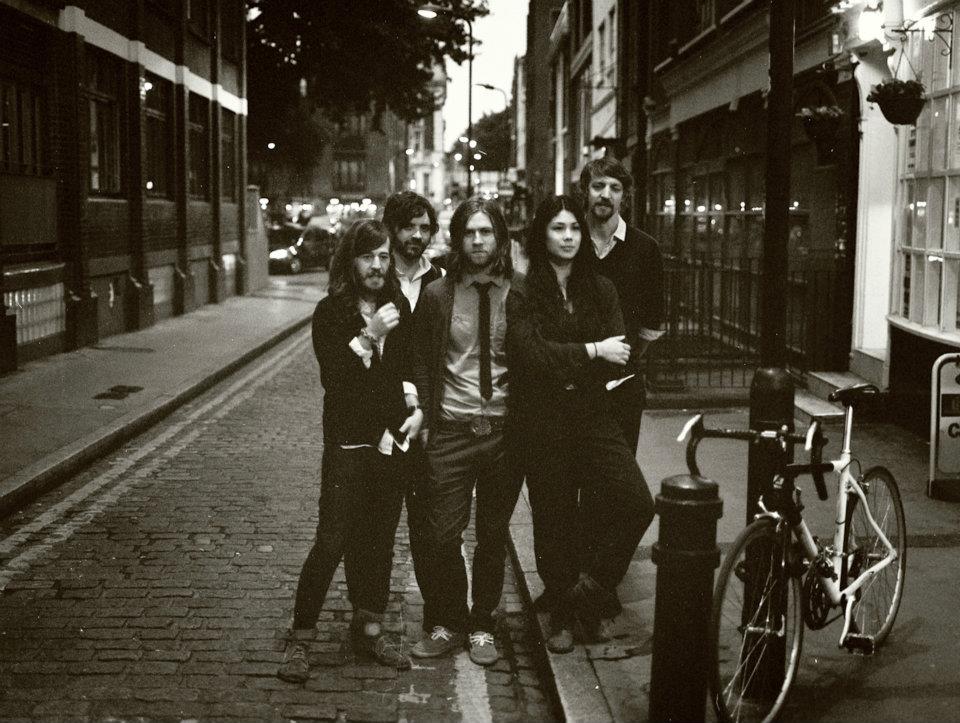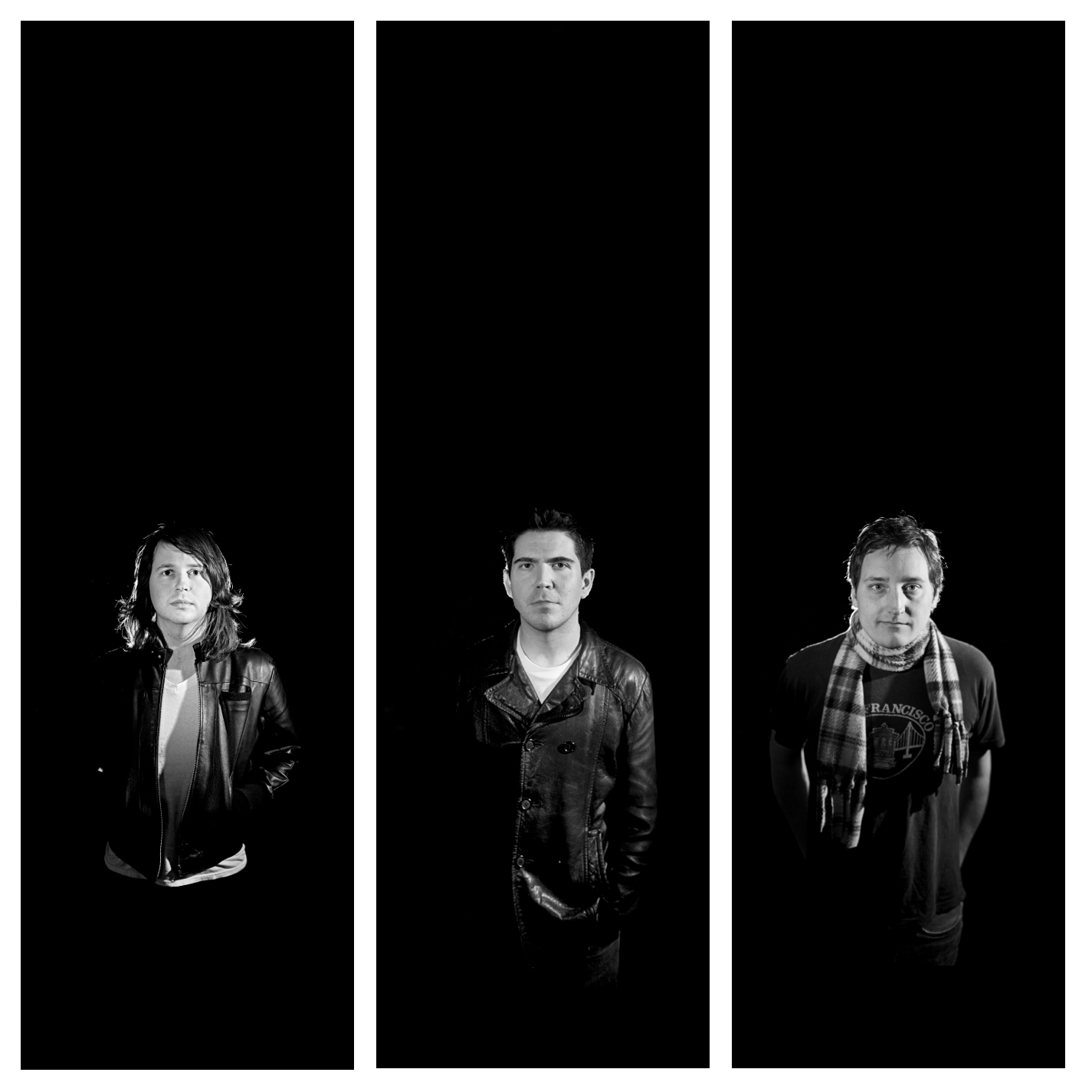
Brooklyn-based Candidate will be celebrating Valentine’s Day at Mercury Lounge
Tuesday, February 14, Mercury Lounge, $10, 9:30
Monday, February 27, Spike Hill, free, 8:00
www.candidatesound.com
Brooklyn-based trio Candidate embraces four decades of American and British rock and roll and wraps it up in a sweet little twenty-first-century indie package. Guitarists Laurence Adams and Cedric Sparkman, who hail from Hazard, Kentucky, bonded over a Smiths album and eventually went on to form the Poor Richards. They soon added Cincinnati native Jason Matuskiewicz, who learned the bass for their new trio, Varsovia. The band changed its name to Candidate and played its first show ever in their original hometown of Lexington, Kentucky, in November 2010, followed seven months later by the release of its debut disc, A New Life, a delightful collection of pop hooks that includes such infectious songs as “I’d Come Running” and “Never Get Enough.”
Not to be confused with the UK band of the same name, Candidate then moved to Brooklyn, where it is currently putting the finishing touches on its sophomore effort, which features a dramatic leap forward on such powerful tunes as “April Again,” “Brutal,” and the horn-laden “NYC or Bust,” on which Sparkman declares, “One day I will die / and wish I’d given it a try / I will not just survive / I will thrive / So as fast as I can run / You will see me, here I come.” Hot on the heels of its February 3 appearance at the Cameo Gallery, Candidate is coming to Mercury Lounge on Valentine’s Day, playing with Brother Reverend, followed by a free gig at Spike Hill on February 27 with I Anthem, American Restless, and the Matt Albeck Group. Matuskiewicz, who handles much of the band’s blogging, recently discussed Brooklyn, bromance, earboners, and more in our latest twi-ny talk.
twi-ny: You recently moved from Lexington, Kentucky, to Brooklyn. How is the Borough of Kings treating you?
Candidate: We love it!!! Laurence and I live on the outskirts, near the Wastes, at the border of Midgar and Megaton. So, we get to lug our gear around after forever-long train rides on the Killer L, hoping its robot overlords are not particularly displeased with humanity that day — if its running at all. Our building was billed as containing “artist’s lofts,” but they forgot to append “with forever leaking ceilings” to their description of these fine abodes. And yet, with all that being true, it is still incredible to be here. We’ve met a lot of really great people, ridiculously talented musicians, and gotten a drummer [Chris Infusino] who is a real live music professional.
twi-ny: You played your second New York City gig ever at Cameo Gallery in Brooklyn on February 3 as part of Amy Grimm’s Whatever Blog Party. How did that come about?
Candidate: Superproducer (and genius) Justin Craig played a DJ set with his cohort, Jesse Elliott, both of rock supergroup These United States, while we were recording our new album. He introduced us to Amy at the show. After that we followed up with her with what I am sure was a super-professional introduction that probably didn’t contain any quotes along the lines of “if after listening to this you wonder how it is possible to pee on yourself and have a boner at the same time, please know that it is because the source of these jams is real-life heartbreak, by far the greatest source of earboners in the history of the world.”
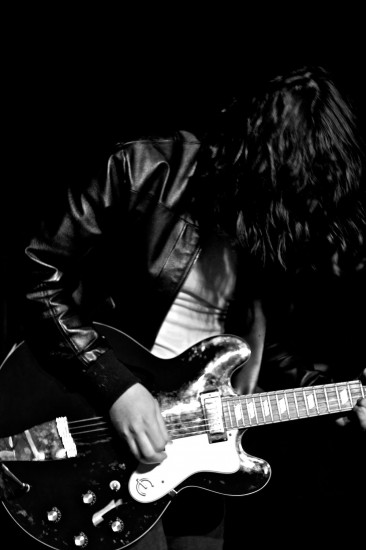
Candidate will break out their new songs at a pair of upcoming local shows
twi-ny: Did the show live up to that hard-to-top introduction?
Candidate: The show was incredible. Big shout-out to the Yoni Gordon Orchestra, Elliot and the Ghost, and Howth, all of whom put on a great show.
Our new album is much more lush in terms of production than the first one, so for the live setting the new songs were stripped down and much more raw than their recorded counterparts. I’m told by the aforementioned genius, Justin Craig, that the crowd was feeling us, but I felt as if there was some confusion in the audience. Here is my impression of their internal monologue: “Uhm. Why are these dudes throwing their instruments around, and why is their singer running around like a crazed maniac, and what are these ‘feelings’ and these ‘emotions’ they seem to exude? Why, I don’t think these songs are winking at me at all!!! Swoon.” So, we were a little bit more sloppy than normal, but full of energy.
twi-ny: As you mentioned, your upcoming record is indeed more lush, with a bigger, broader sound than A New Life. Craig played on the previous album, but now he’s behind the boards. What were the recording sessions like?
Candidate: Despite being behind the boards, Justin played more parts on the new record than the last one. The sessions were great. We recorded the album at Translator Audio in Park Slope. It was engineered by Andrew Gerhan, who also plays in the Lupine Chorale Society, with Adam Arcuragi — who also happens to be pretty great. The people at Translator were very helpful. So, I want to thank them for that.
As you can tell from the previous answer, I have mixed feelings about Mr. Craig’s abilities. I jest. He’s amazing. The sessions followed a pretty traditional method of recording. Drums first, then bass, then guitar, keyboard, found sounds, and vocal overdubs from my dog, Lu-Lu. And of course, no song is complete until something is pitch shifted. Justin brought a lot of ideas to the songs. They were pretty uniformly great ideas. Beware: Trite musical comparison ahead. I would liken Justin’s role to that of Brian Eno and Daniel Lanois’s role in the production of U2 albums. He had a very large part in shaping the sound of the album.
Allow me to digress a bit. With the last one, we were very purposefully 100% independent, and not at all self-righteous about it. Just kidding; we were a tiny bit self-righteous about it. We were enamored with the idea that, given the reach of the internet and what have you, it is viable to be totally independent and do everything yourself. It isn’t. What you wind up doing is creating an organizational structure that mimics a label, which you pay for out of pocket, or you neglect integral functions because you just don’t have enough time to do everything. For instance, Laurence and I have been planning on doing a self-administered college radio campaign for a while. There is, however, no way for us to update our list of program directors that will not take about twenty hours. Seriously. So, we’re probably more proud than we should be with what we’ve managed to do with no publicist, no label, nothing but ourselves. But we’re ready to move on from that. We’ve recently signed on some licensing reps, so if we can get some of that sweet, sweet corporate cash, we’ll put that to some good, tirelessly self-promotional enterprise. We’ve also been talking to some labels about the album a bit. Plus, we’ve sent off some exemplar tracks to labels that still accept unsolicited demos. (Labels that still do this, thank you for not being stuck-up douches.) So, we’ll see what happens. I’m hoping sooner than later, but I am prepared to exercise a novel virtue — patience.
twi-ny: You’ll be at Mercury Lounge on Valentine’s Day, promising “an evening of romance and bromance.” Got anything special planned for that?
Candidate: Anytime the fellas in Candidate get together, there is more than enough bromance to go around. The excellent folks in Brother Reverend are giving away a special limited edition collector’s item in the form a fantastic T-shirt to commemorate the occasion. Plus, our first album, A New Life, is “pay what you want” on Bandcamp until after the show — meaning that it is essentially free, if you want it to be. We’re also playing a bunch of the new songs, which is always very exciting.