Craig Finn and the Baseball Project will team up again at City Winery as part of the CBGB Festival (photo by twi-ny/mdr)
City Winery
155 Varick St.
Thursday, July 5, $25-$35, 7:30
212-608-0555
www.citywinery.com
www.cbgb.com
Last May, the Baseball Project played the Hoboken Arts & Music Festival, rocking out to a fine set of tunes from their two releases, 2008’s Volume 1: Frozen Ropes and Dying Quails and 2011’s Vol. 2: High & Inside, in the city where America’s pastime held its very first organized game on June 19, 1846. On July 5, they’ll be headlining at City Winery with the Hold Steady’s Craig Finn and Joe D’Urso & Stone Caravan as part of the inaugural CBGB Festival. Consisting of R.E.M.’s Peter Buck and Scott McCaughey (with Mike Mills occasionally sitting in for Buck), the Dream Syndicate’s Steve Wynn, and the Pretty Babies’ Linda Pitmon, the quartet reveals their knowledge and love of baseball on such songs as “Ted Fucking Williams,” “Buckner’s Bolero,” “Sometimes I Dream of Willie Mays,” “Gratitude (for Curt Flood),” “Ichiro Goes to the Moon,” “Satchel Paige Said,” and “The Death of Big Ed Delahanty,” which come off more as fun and clever tributes rather than a novelty act. “A fair weather fan is not what I am / Even though my zip code has changed,” they explain on “Fair Weather Fans,” continuing, “I might smile and enjoy where I’m currently employed / Your soul can’t be rearranged / It’s so hard to understand / It’s so hard to understand a fair weather fan.” On “Don’t Call Them Twinkies,” they team up with Finn, a Minneapolis native on a song about his hometown team. Finn joined them onstage in Hoboken, and you can expect the same at City Winery, where Finn will be featuring songs from his outstanding debut solo album, Clear Heart Full Eyes, an engaging collection of quirky tales that includes such superb tunes as “New Friend Jesus,” “Honolulu Blues,” and “No Future,” as Finn shows he has a very promising future with or without the Hold Steady, who are currently on hiatus. The evening begins with Jersey Shore favorites Joe D’Urso & Stone Caravan, who have been making good-time bar-band rock and roll for more than twenty years.
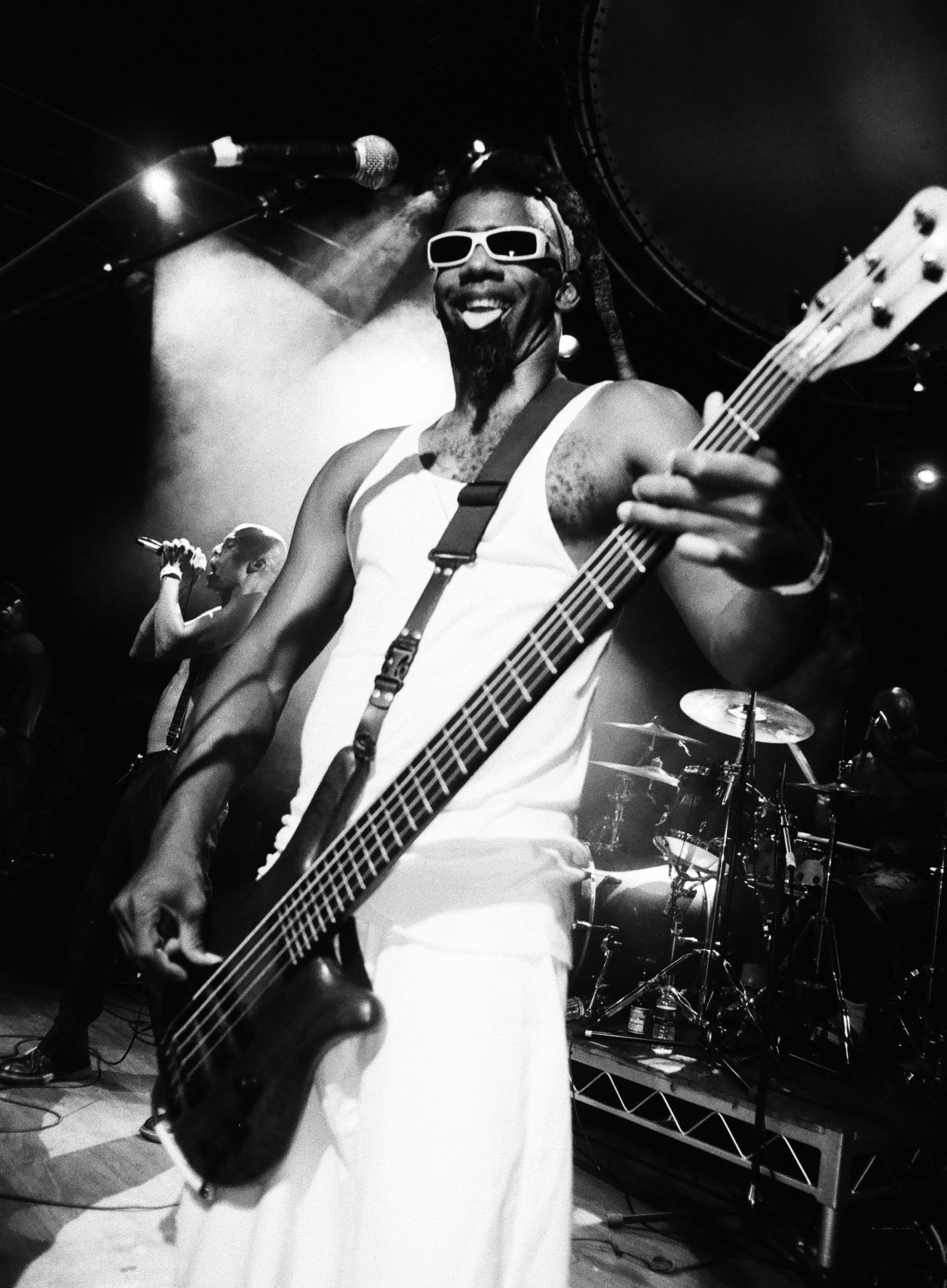
 When they were junior high school students in South Central Los Angeles in 1979, Angelo Moore and Norwood Fisher formed the core of Fishbone, what would soon become one of the most exciting live bands on the planet. Chris Metzler and Lev Anderson document the band’s rise and fall — and rise and fall, and rise and fall, etc. — in the stirring Everyday Sunshine: The Story of Fishbone. Using archival footage, old and new interviews, and playful animation, Metzler and Anderson follow the group — Moore and Fisher along with fellow founding members Chris Dowd, Walter “Dirty Walt” Kibby II, and Kendall Jones — through its many personal and financial struggles as it tries to deal with such socioeconomic issues as racism, violence, and the anti-liberal bias taking hold of the nation in Ronald Reagan’s 1980s. Fishbone held nothing back on such albums as In Your Face (1986), Truth and Soul (1988), The Reality of My Surroundings (1991), Give a Monkey a Brain and He’ll Swear He’s the Center of the Universe (1993), and Chim Chim’s Badass Revenge (1996), mixing in pop, punk, funk, ska, reggae, R&B, soul, jazz, and hardcore, prancing about the stage without shirts, diving into the crowd, and always speaking their mind, and they hold nothing back in Everyday Sunshine as well. Narrated by Laurence Fishburne, the film really picks up speed when it delves into the Rodney King beating and the mysterious circumstances involving Jones’s religious transformation and the band’s attempt at an intervention. The decidedly unusual tale also features an impressive lineup of talking heads offering their views on the history of Fishbone, including Flea from the Red Hot Chili Peppers, Perry Farrell from Jane’s Addiction, fIREHOSE’s Mike Watt, No Doubt’s Gwen Stefani and Tony Kanal, the Roots’ ?uestlove, Gogol Bordello’s Eugene Hutz, Parliament-Funkadelic’s George Clinton, Primus’s Les Clayool, Living Colour’s Vernon Reid, Circle Jerk Keith Morris, Ice-T, and, perhaps most informatively, Columbia Records executive David Kahne, who lends fascinating insight into what made Fishbone great — and what kept them from greater success. While you definitely don’t have to know a thing about Fishbone to enjoy this very intimate documentary, longtime fans should eat it up. Everyday Sunshine is screening July 6 at 5:45 at Anthology Film Archives as part of the inaugural CBGB Festival and will be followed by a Q&A with Metzler. The festival runs July 5-8 at venues in Manhattan and Brooklyn and includes a bevy of concerts, film screenings, panel discussions, and other special events being held in honor of the classic Bowery club that hosted cutting-edge, alternative, punk, and indie bands from 1973 to 2006. Among the other films being shown are Michael Winterbottom’s 24 Hour Party People, Keirda Bahruth’s Bob and the Monster, Sara Sugarman’s Vinyl, and Gorman Bechard’s Color Me Obsessed.
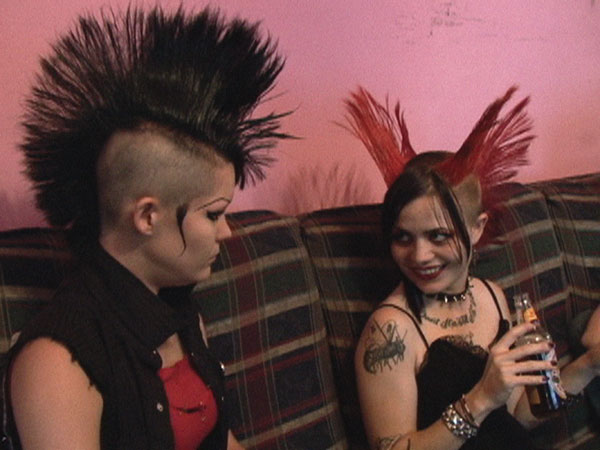
 Director Susan Dynner examines the past, present, and future of punk rock in the fast-paced documentary Punk’s Not Dead. Punk rock broke wide open in the mid-to-late 1970s, as pierced and tattooed fans packed small, sweaty clubs to have the Sex Pistols spit on them and other bands scream about anarchy and chaos, railing against the establishment that had brought them Vietnam, suburban sprawl, bloated arena rock, and an uninspired mainstream society. Bands such as Bad Religion, the Damned, Social Distortion, Minor Threat, and UK Subs used shrieking guitars, killer drums, and a nonstop verbal barrage that, as Dynner points out, never went away; thirty years down the road, many of these bands are still together or have re-formed, appearing in underground clubs and on indie records. Punk influence saw a revival in the 1990s, with Nirvana, Green Day, and Rancid all hitting the charts, but the film argues that the current wave, which includes such groups as Good Charlotte, My Chemical Romance, and Sum 41 and stores such as Hot Topic, is more market-friendly pop punk than the real deal. Among those sharing their opinions on what qualifies as punk are Black Flag’s Henry Rollins and Greg Ginn, X’s John Doe, Circle Jerks’ Keith Morris, Rancid’s Tim Armstrong (who also coproduced the film), Green Day’s Billie Joe Armstrong, the Dead Kennedys’ Jello Biafra, the Subhumans’ Dick Lucas, Social D’s Mike Ness, and members of dozens of bands both old and new. The biggest revelation is the Adicts, a British band that has been doing it their own way, with the original lineup, for more than thirty years now, still bucking the system and attracting a whole new generation of fans. Punk’s Not Dead also includes snippets of hundreds of songs that will send you poring through your record collection to find those old gems you haven’t listened to since you were in college. Sham 69’s “If the Kids Are United” fabulously sums things up over the closing credits. Punk’s Not Dead is screening July 6 at 10:45 at Anthology Film Archives as part of the inaugural CBGB Festival. The festival runs July 5-8 at venues in Manhattan and Brooklyn and includes a bevy of concerts, film screenings, panel discussions, and other special events being held in honor of the classic Bowery club that hosted cutting-edge, alternative, punk, and indie bands from 1973 to 2006. Among the groups participating in the festival are Sick of It All, Redd Kross, Reggie Watts, Quincy Mumford & the Reason Why, JD Samson & Men, PS I Love You, DJ Jonathan Toubin, Lissy Trullie, the Van Allen Belt, LA Guns, Sic F*cks, the Virgins, and Michael Cerveris & Loose Cattle, and that’s just on Friday.
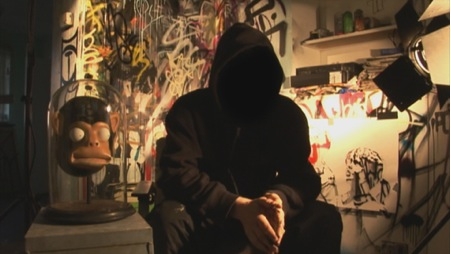
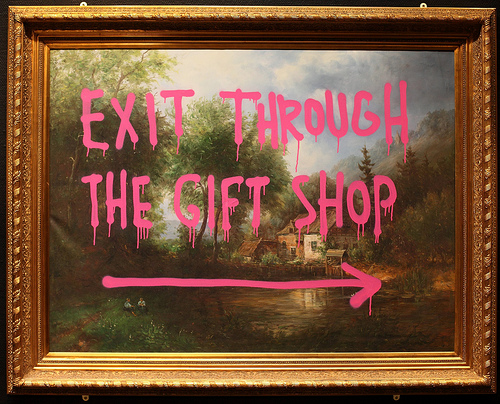
 In 1999, L.A.-based French shopkeeper and amateur videographer Thierry Guetta discovered that he was related to street artist Invader and began filming his cousin putting up his tile works. Guetta, who did not know much about art, soon found himself immersed in the underground graffiti scene. On adventures with such famed street artists as Shepard Fairey, Swoon, Ron English, and Borf, Guetta took thousands of hours of much-sought-after video. The amateur videographer was determined to meet Banksy, the anarchic satirist who has been confounding authorities around the world with his striking, politically sensitive works perpetrated right under their noses, from England to New Orleans to the West Bank. Guetta finally gets his wish and begins filming the seemingly unfilmable as Banksy, whose identity has been a source of controversy for more than a decade, allows Guetta to follow him on the streets and invites him into his studio. But as he states at the beginning of his brilliant documentary, Exit Through the Gift Shop, Banksy—who hides his face from the camera in new interviews and blurs it in older footage—turns the tables on Guetta, making him the subject of this wildly entertaining film.
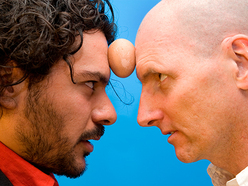
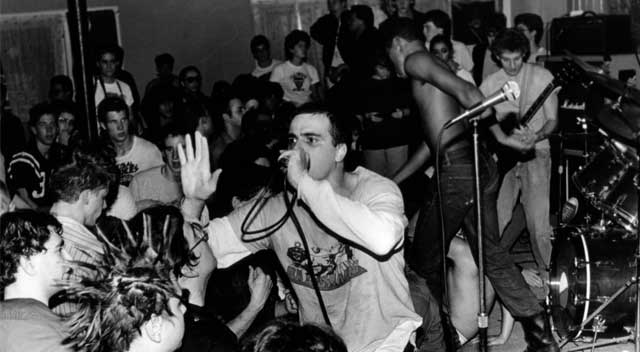
 A must-see for fans of loud, fast, angry music circa 1980-86, American Hardcore looks at one of the smaller but nonetheless influential movements in American music. A basic doc in the classic do-it-yourself sensibility that informed so much of the music scene it chronicles, American Hardcore features interviews with Henry Rollins, lead singer of Black Flag; H.R., the mercurial, difficult, but brilliant lead singer for the Bad Brains; Mike Watt of the Minutemen; and various personnel from the Circle Jerks, Minor Threat, and 7 Seconds. Tommy Stinson of the Replacements and Flea of the Red Hot Chili Peppers weigh in as well. The abundance of old concert footage is fabulous, but director Paul Rachman and writer Steve Blush discovered much of it in shoeboxes in basements during their low-budget cross-country trip while making the movie, so the overall production quality is not high ― which in some ways works better overall. The film does a good job of lovingly showing just how home-grown and amateurish the scene was and debating the importance of the scenes in Houston, Minneapolis, DC, Boston, and Southern California. The finale with a graphic artist and cover designer calling for the next generation of hardcore is a riot. American Hardcore is screening July 5 at 4:00 at Landmark Sunshine Cinema as part of the inaugural CBGB Festival and will be followed by a Q&A with Rachman and Blush. The festival runs July 5-8 at venues in Manhattan and Brooklyn and includes a bevy of concerts, film screenings, panel discussions, and other special events being held in honor of the classic Bowery club that hosted cutting-edge, alternative, punk, and indie bands from 1973 to 2006. Among the groups participating in the festival are the Dirty Pearls, Agnostic Front, Richard Llloyd, Tuff Darts, David Johansen, Glen Matlock, Tommy Ramone, Sic F*cks, Eric Ambel, Xylos, Popa Chubby, Dayna Kurtz, and Mike Peters of the Alarm, and that’s just on Thursday.