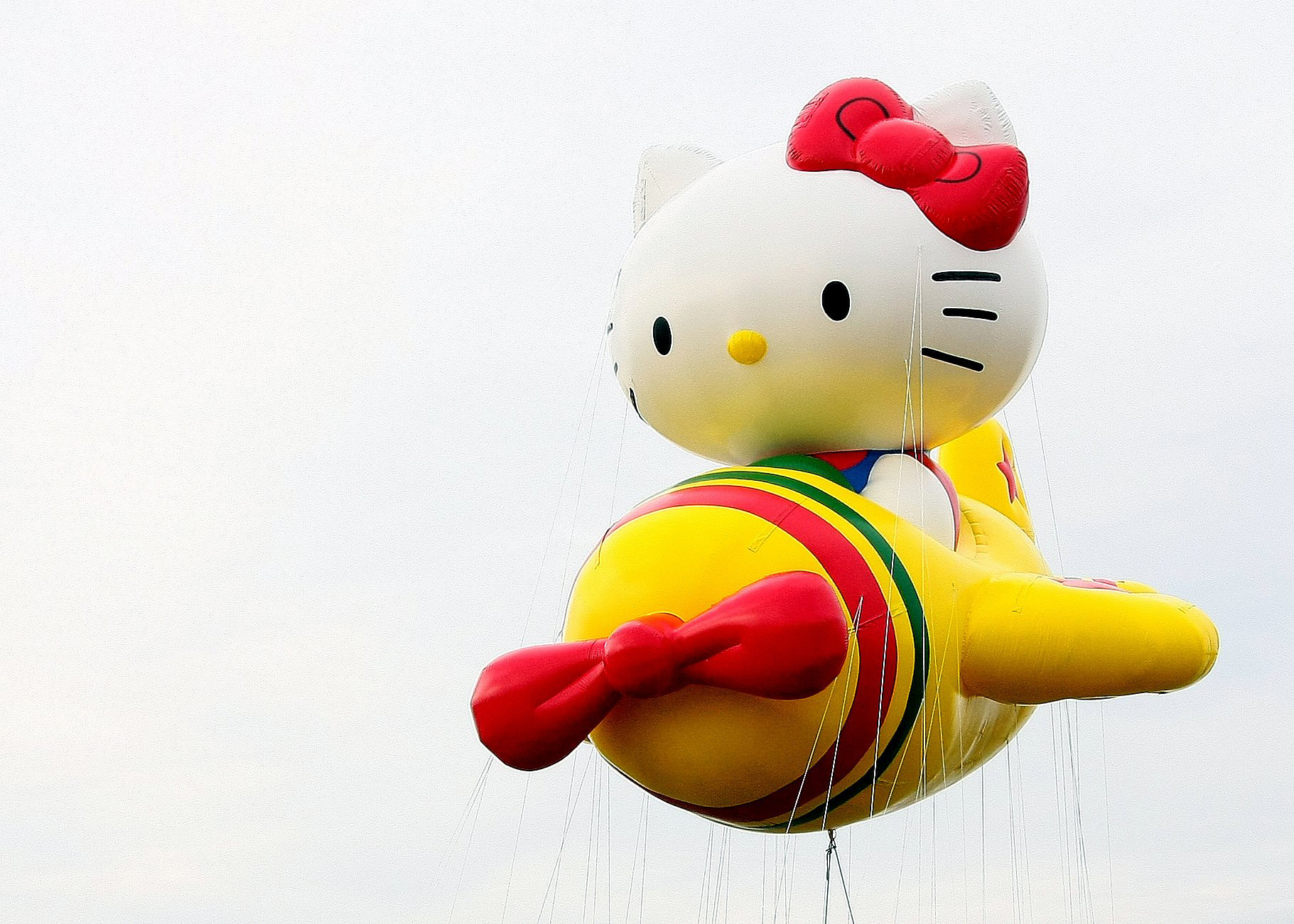
Hello Kitty will fly into New York City this week, making her Macy’s Thanksgiving Day Parade debut
77th St. & Central Park West to 34th St. & Seventh Ave.
Thursday, November 22, free, 9:00 am – 12 noon
212-494-4495
www.macys.com
In 1924, a bunch of Macy’s employees joined forces and held the first Macy’s Christmas Parade, as it was then known. This year Macy’s celebrates the eighty-sixth edition of this beloved American event. (For those of you going crazy trying to figure out how 1924 to 2012 makes 86, the parade was canceled from 1942 through 1944 because of World War II.) The 2012 lineup features such new giant balloons as Hello Kitty, Papa Smurf, and Elf on the Shelf and such new floats as Sprout, Pepperidge Farm Goldfish, Gibson’s Music Is Our Life, and 75 Years of March Madness alongside such returning favorites as Kermit the Frog, Spider-Man, Julius, the Kool-Aid Man, Uncle Sam, the Pillsbury Doughboy, Snoopy’s Dog House, and Big Man Santa, all making their way through a new route that will take the parade down Sixth Ave. from Central Park South to Herald Square. Among the Broadway shows that will present lip-synching floats are Annie, Bring It On, Cinderella, Elf, and Nice Work if You Can Get It in addition to live performances by Carly Rae Jepsen, Flo Rida, the Wanted, Karmin, Neon Trees, Cody Simpson, Jimmy Fallon & the Roots, Jennette McCurdy, Chris Isaak, and Don McLean. Other special guests include Kareem Abdul-Jabbar, Whoopi Goldberg, Geoffrey Zakarian, Colbie Caillat, Mannheim Steamroller, Trace Adkins, Miss USA Olivia Culpo, and Olympic gold medalists Gabby Douglas, McKayla Maroney, Aly Raisman, Kyla Ross, and Jordyn Wieber. The parade will feature 11 marching bands, 16 giant balloons, 28 floats, 19 novelty balloonicles, 20 marching bands and cheerleading groups, 30 clown troupes, and more.
To get a start on the parade, head on over to Central Park West and Columbus Ave. between 77th & 81st Sts. the day before, November 21, from approximately 3:00 to 10:00 to check out the Big Balloon Blow-up. Watching the annual inflation-eve blow-up of Thanksgiving Day Parade balloons is a growing tradition, with crowds getting bigger and bigger every year, but it’s still a thrill to see the giant characters raised from the ground, reborn every Thanksgiving to march in a parade viewed by millions and millions of people around the world. (For further information, you can get the official parade app here.)
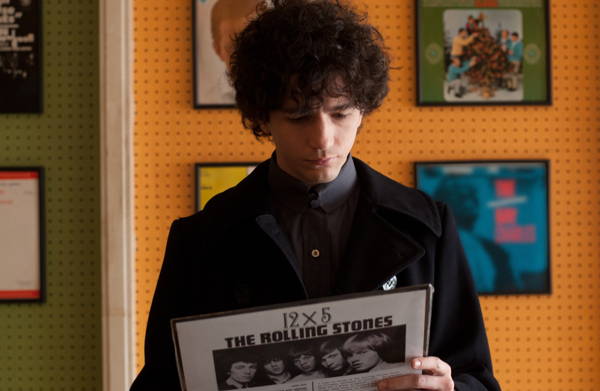
 Inspired by his brief stint as a suburban New Jersey garage-band drummer with rock-and-roll dreams, Sopranos creator David Chase makes his feature-film debt with the musical coming-of-age drama Not Fade Away. Written and directed by Chase, the film focuses on Douglas (John Magaro), a suburban New Jersey high school kid obsessed with music and The Twilight Zone. It’s the early 1960s, and Douglas soon becomes transformed when he first hears the Beatles and the Stones — while also noticing how girls go for musicians, particularly Grace (Bella Heathcote), whom he has an intense crush on but who only seems to date guys in bands. When his friends Eugene (Jack Huston) and Wells (Will Brill) ask him to join their group, Douglas jumps at the chance, but it’s not until he gets the opportunity to sing lead one night that he really begins to think that music — and Grace — could be his life. Not Fade Away has all the trappings of being just another clichéd sex, drugs, and rock-and-roll movie, but Chase and musical supervisor (and executive producer) Steven “Silvio” Van Zandt circumvent genre expectations and limitations by, first and foremost, nailing the music. Van Zandt spent three months teaching the main actors how to sing, play their instruments, and, essentially, be a band, making the film feel real as the unnamed group goes from British Invasion covers to writing their own song. Even Douglas’s fights with his conservative middle-class father (James Gandolfini) and his battle with Eugene over the direction of the band are handled with an intelligence and sensitivity not usually seen in these kinds of films. Not Fade Away does make a few wrong turns along the way, but it always gets right back on track, leading to an open-ended conclusion that celebrates the power, the glory, and, ultimately, the mystery of rock and roll. Not Fade Away, which was the centerpiece of the fiftieth