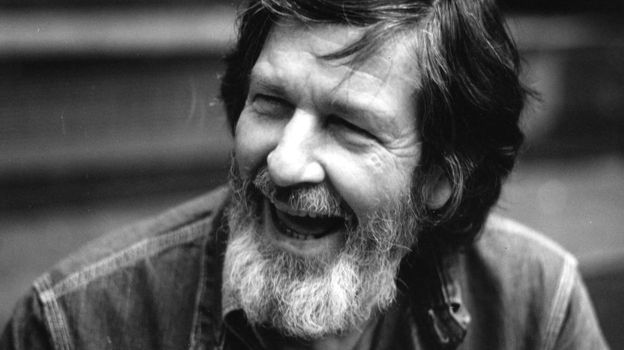
A four-day program at White Box celebrates the centenary of the birth of revolutionary sound artist John Cage
White Box
329 Broome St. between Grand & Delancey Sts.
December 20-23, suggested donation $10
www.eartotheearth.org
www.whiteboxnyc.org
New York City’s celebration of the centennial of John Cage’s birth continues with an impressive collection of audiovisual programs December 20-23 at White Box. Held in conjunction with Ear to the Earth and MA.P.S (Media Arts, Performance, and Sound), “100 x John: A Global Salute to John Cage” consists of one hundred compositions and sound projects, beginning Thursday at 5:00 with “Phill Niblock: Four Videos from Working Title, in which Niblock will present a multimedia examination of his life and art. At 7:00, “Cagean Mix #1: Sounds from Around the World” is highlighted by a sound collage organized by Joel Chadabe and video improvisation by Luke DuBois, followed at 8:00 by solo soundscapes by Rodolphe Alexis, Adam Gooderham, Walter Bianchi, Warren Burt, Thomas Gerwin, and Arsenije Jovanovic. Friday night’s program includes “Cagean Mix #2: Sounds of Water and the Natural World” at 7:00 and performances by Joseph Kubera, Susan Kaprov and Don Bosley, and David Rothenberg. On Saturday at 12 noon, “Sounds and Images” comprises solo pieces by David de Gandarias, Jovanovic, Alexis, Leah Barclay, and Annea Lockwood, followed by a book talk at 3:00 with Kay Larson, author of Where the Heart Beats: John Cage, Zen Buddhism, and the Inner Life of Artists; at 8:00, there will be performances by Garth Paine, Guy Barash, and Richard Lainhart. The festival concludes on Sunday with a Christmas party and “Cagean Mix #3: Sounds of New York City” at 5:00 and “Shelley Hirsh, Katherine Liberovskaya, Gil Arno: New York Stories” at 8:00. To get a sneak peek at some of the “100 x John” soundscapes, go here.
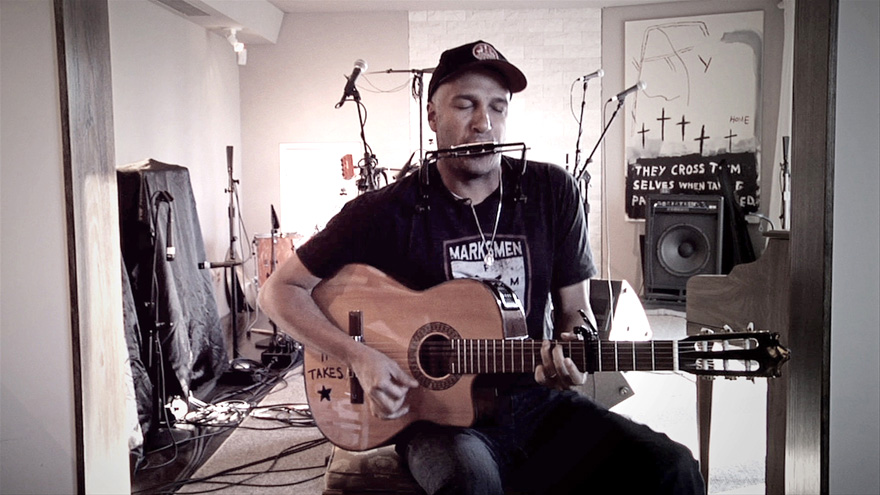
 In his recently released book Let Fury Have the Hour: Joe Strummer, Punk, and the Movement That Shook the World, author, editor, and visual artist Antonino D’Ambrosio writes, “Let Fury Have the Hour, the book and film, is a call to celebrate the art of living, or being for, not against. For the movie, which had its world premiere at the Tribeca Film Festival in April, D’Ambrosio brought together some fifty artists to talk about how they use creative response in a positive way to deal with the social, political, and economic outrage that began in the 1980s with the separatist policies of Ronald Reagan and Margaret Thatcher and has exploded today. Shot over the course of seven years, the film features intelligent discourse from such musicians as Billy Bragg, Tom Morello from Rage Against the Machine, Wayne Kramer from the MC5, Chuck D from Public Enemy, Eugene Hütz from Gogol Bordello, and, perhaps most eloquently, Ian MacKaye from Fugazi and Minor Threat. In addition, street artist Shepard Fairey (whose designs can be seen throughout the film), spoken-word poet Staceyann Chin, comedian Lewis Black, filmmaker John Sayles, author Edwidge Danticat, playwright Eve Ensler, choreographer Elizabeth Streb, skateboarder Tommy Guerrero, and many more share how the DIY punk aesthetic influences them in their work and their daily life as they continue to fight the power through artistic self-expression that understands the interconnectedness of everything. “Our freedom of speech is our freedom from death,” Chuck D states. The jumping-off point for many of those in the film, as well as D’Ambrosio himself, was the music of the Clash; the title comes from a line in the Clash classic “Clampdown.” D’Ambrosio and editor Karim Lopez supplement the original interviews, which are all conducted in personal settings unique to each individual, with dramatic archival footage of political and artistic movements from around the world throughout the twentieth century, backed by a score composed by Kramer with songs by Public Enemy, Hütz, Sean Hayes, and others. It all comes together in a rousing wake-up call that is a direct counter to Reagan’s “Morning in America” agenda. “A citizen is someone who participates,” DJ Spooky says in the film. D’Ambrosio is seeking to spread his message of creative response by getting as many citizens as possible to participate in any way they can, making an ambitious film that avoids coming off as propaganda and instead feels necessary in these hard times.