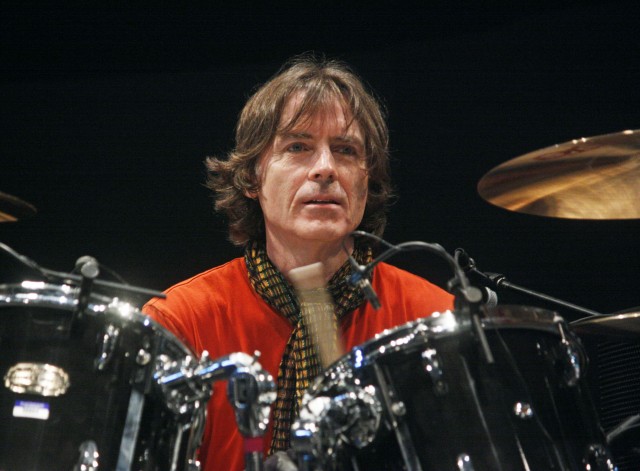
Jody Stephens will lead a special SummerStage concert performance of Big Star’s THIRD on June 30 (photo by Daniel Coston)
Central Park SummerStage
Rumsey Playfield
Sunday, June 30, free, 7:00
www.cityparksfoundation.org
www.bigstarthird.com
In March 2010, Chris Stamey was getting ready to head to SXSW to ask the re-formed Big Star if he could put together an all-star band to play the group’s seminal 1970s record Third / Sister Lovers when he found out that Alex Chilton had suddenly passed away at the age of fifty-nine. With the help of Big Star cofounder Jody Stephens, the project eventually went on because, as Stamey explains on his blog, “regardless of who performed it, it should be heard out in the air, not confined to earbuds, cars, and living rooms. In the same way that Mozart and Beethoven, in their day, were heard.” On June 30, Stamey will lead a diverse group of friends in a performance of the full album, which includes such tracks as “Kizza Me,” “Holocaust,” “Kangaroo,” “You Can’t Have Me,” “Femme Fatale,” and “Take Care,” in Central Park, with vocalists Sharon Van Etten, Kurt Vile, Marshall Crenshaw, Pete Yorn, Reeve Carney, Jonathan Donahue, and Becky Stark joining instrumentalists Mike Mills, Mitch Easter, Ken Stringfellow, Richard Lloyd, Dale Baker, Charles Cleaver, Django Haskins, Brett Harris, Skylar Gudasz, Stephens, and a twenty-piece chamber orchestra featuring Jane Scarpantoni and the Uptown Horns. Big Star fans can get even more beginning on July 3, when Drew DeNicola’s documentary Big Star: Nothing Can Hurt Me opens at the IFC Center, with Stephens, DeNicola, and others participating in Q&As at select shows on July 4.
 Based on the play by Charles Bennett, Alfred Hitchcock’s 1929 thriller, Blackmail, is both his last silent picture as well as his first sound film. The transition is evident from the very beginning, eight glorious minutes of a police arrest with incidental music only, highlighted by an unforgettable mirror shot (courtesy of cinematographer Jack E. Cox) as the cops close in on their suspect. After those opening moments, the film switches to a talkie in the nonsilent version, as New Scotland Yard detective Frank Webber (John Longden) gets into a fight with his girlfriend, Alice White (Anny Ondra, later to become the longtime Mrs. Max Schmeling), who goes off on a secret rendezvous with a slick artist named Crewe (Cyril Ritchard). When things go horribly wrong at Crewe’s studio, Frank assures Alice that he will help her, but slimy ex-con Tracy (Donald Calthrop) has other ideas, thinking he can use some inside information to make a small killing. After shooting the picture with sound — including having Ondra’s dialogue spoken off-screen by Joan Barry because Ondra’s Eastern European accent was too thick — Sir Alfred filmed some scenes over again in silence, resulting in two versions of this splendid psychological thriller, both laced with elements of German Expressionism and early film noir as well as flashes of Edgar Allan Poe’s “The Tell-Tale Heart” and Fyodor Dostoyevsky’s Crime and Punishment. Look for the Master of Suspense as the man on the subway being menaced by a young boy. A DCP restoration of the silent version of Blackmail is being screened June 29 at 7:30 in the BAM Harvey Theater as part of “The Hitchcock 9,” with live music by the Mont Alto Motion Picture Orchestra. The series continues through July 3 with such other rarely shown Hitchcock silents as The Manxman, The Pleasure Garden, Downhill, and Champagne.
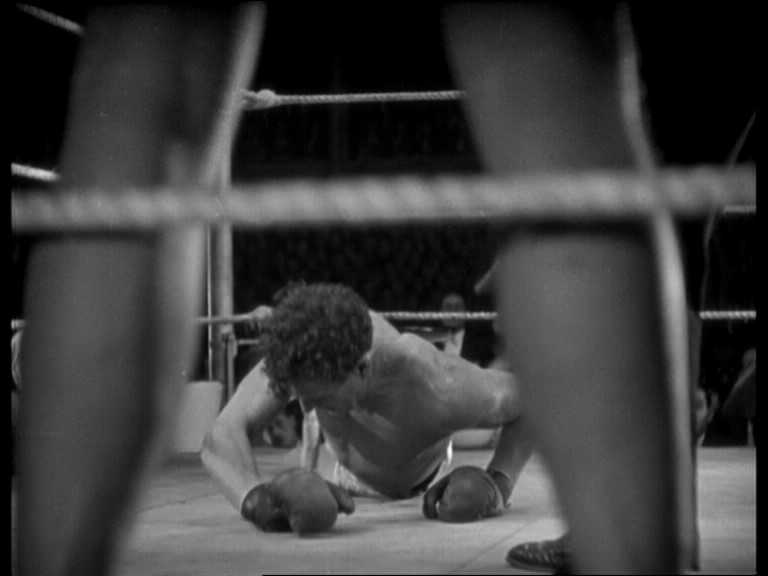
 When one thinks of Alfred Hitchcock, such psychological thrillers as North by Northwest, Psycho, Vertigo, Notorious, and Rear Window come to mind, not The Manxman, Easy Virtue, The Pleasure Garden, and The Farmer’s Wife. But it is these early, British silent films that are the focus of BAM’s exciting new series, “The Hitchcock 9.” The program runs June 29 through July 3 and features brand-new DCP restorations of nine romantic melodramas made by the Master of Suspense, each one shown in the Harvey Theater on the new Steinberg Screen, with live musical accompaniment. The series begins with 1927’s The Ring, a tantalizing tale of a love triangle set in the world of boxing, a favorite sport of Hitchcock’s. When Bob Corby (Ian Hunter) shows up at a county fair and takes a liking to Mabel (Lillian Hall-Davis), who sells tickets to see her fiance, “One-Round” Jack Sander (Carl Brisson), battle all comers for a cash prize, Corby decides to get in the ring with Sander to impress Mabel; little do they know that Corby is a professional. Soon the two men are also fighting outside the ring, to win the heart of their beloved. Comic relief is supplied by Gordon Harker as Jack’s trainer, who makes some very funny faces throughout. One can see Hitchcock’s visual style emerging in The Ring, as he employs little dialogue in favor of dramatic montages, ghostly superimpositions, and shadowy lighting. The film also deals with issues of class and financial success, themes that will become prevalent in much of Hitchcock’s work. Produced at Elstree Studios and the first film to be released by Gainsborough Pictures, The Ring will be screened at BAM on June 29 at 3:00, with a live score performed by the Mont Alto Motion Picture Orchestra.