Immersive production re-creates shady tale in 1930s New York City (photo © Margee Challa, 2012)
102 Norfolk St.
First monthly Saturday and Monday, September 7 – December 14, $55 general admission, $145 VIP
800-838-3006
www.speakeasydollhouse.com
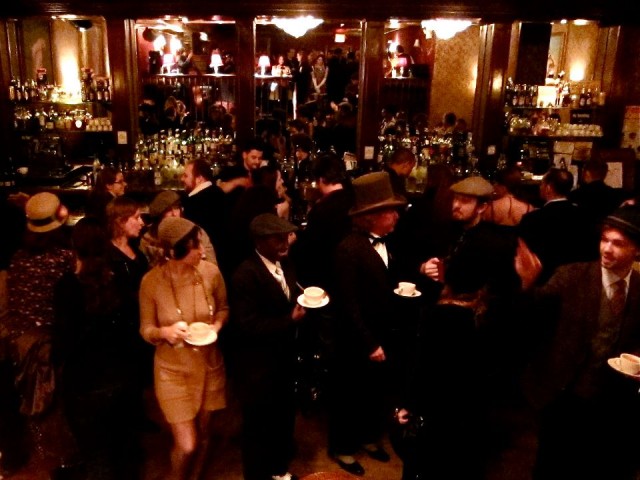
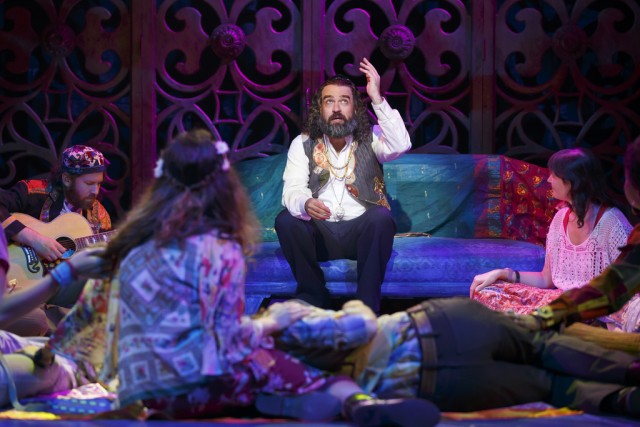
New York has gone crazy for immersive theatrical productions recently, as the audience interacts with the actors in various ways in such hit shows as Sleep No More at the McKittrick Hotel and Natasha, Pierre & the Great Comet of 1812 at the temporary Klub Kazino. Things go even further in Speakeasy Dollhouse, a flashy, lurid tale of murder and deception taking place in a series of rooms in an underground location on Norfolk St. Once you purchase your tickets — which just jumped from $30/$55 to $55/$145 — you start receiving e-mails from Cynthia von Buhler detailing the real-life murder of her grandfather Frank Spano and its cover-up, which reached all the way inside Tammany Hall. “My grandmother died in the 1980s and I never knew my grandfather,” one von Buhler missive explains. “He was mysteriously killed in 1935. He died on the very same day my mother was born. She told us that he was shot and nobody knew why. It was a secret. They boarded up the club and bakery after that.” Speakeasy Dollhouse re-creates that time period, acting out the events that led to the shooting, based on both facts and supposition, as von Buhler seeks to uncover the truth. Attendees are given a password and asked to dress in Prohibition-era costumes, which is a good idea, as the vast majority of people do so. Upon entering the nightclub, each person receives a piece of paper from the Fortune Teller (Jordana Rollerdazzler) giving them a specific role to carry out. For the next few hours, the cast, crew, and audience mingle as they travel from room to room and various plot elements are revealed, from an autopsy and a secret lovers tryst to back-room machinations and a card game.
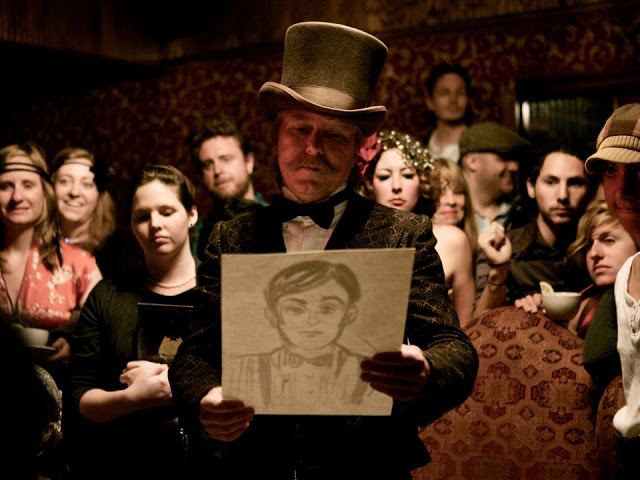
Evidence is presented as SPEAKEASY DOLLHOUSE seeks to find answers to real-life murder (photo © Margee Challa, 2012)
The story revolves around the killing of club owner Frank Spano (Russell Farhang) by barber John Guerrieri (Silent James), which soon involves such figures as Detective Thomas Crane (Justin Moore), mobster Dutch Schultz (Travis Moore), Tammany Hall party boss Jimmy Hines (Charley Layton), and Magistrate Hulon Capshaw (Scott Southard). To further the atmosphere, there are a series of live performances by burlesque singers and dancers and the Howard Fishman Quartet. Meanwhile, a cash bar serves drinks and a bakery offers cannoli and other pastries. Originally planned as a one-time-only presentation, Speakeasy Dollhouse is now playing the first Saturday and Monday of each month through December, with each show centering on a different theme investigating the possible motive behind the killing; on October 26, there will be a special Halloween performance only for people who have previously attended a show, complete with zombies, werewolves, vampires, and unicorns. The production captures the feel of 1930s New York City, but the allowance of photography detracts a bit from the overall experience; the producers might want to have pictures spread all over social media, but there weren’t really many iPhones back in those days. Still, the more you immerse yourself in Speakeasy Dollhouse, the more fun you’re going to have. And there’s a whole lot of fun to be had as von Buhler, who appears as herself, keeps trying to get to the bottom of what happened to her family.
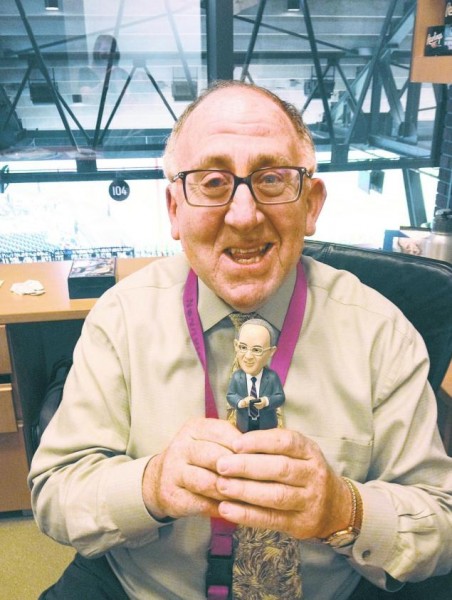
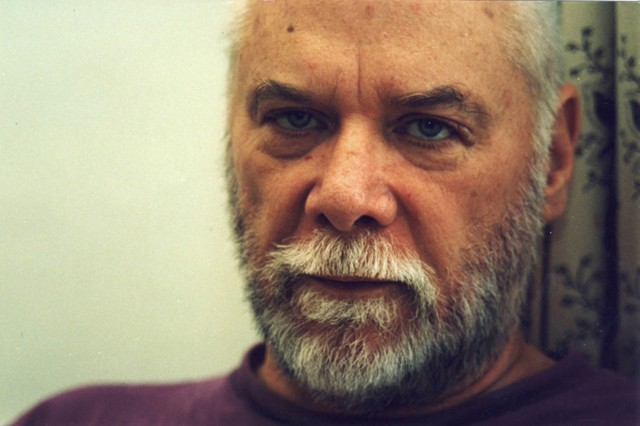
 “He created a new language, modally speaking, harmonically speaking,” Pete Townshend says about guitarist and composer John Fahey at the beginning of In Search of Blind Joe Death: The Saga of John Fahey. “And if that’s not an iconoclast, I don’t know what is, really,” the Who axman continues, comparing Fahey to William S. Burroughs and Charles Bukowski. Those are apt comparisons for the so-called American primitive guitarist who did things on his instrument that no one has done before or since. Decemberists guitarist Chris Funk then calls the multifaceted Fahey, who was born in Washington, DC, in 1939, an “independent label owner, like maybe the first; record collector, musicologist, alcoholic, hobo, thrift store master.” Unfortunately, the documentary, directed by James Cullingham, spends the rest of its nearly sixty minutes cutting between amazing archival footage of Fahey, particularly in an early television interview with Laura Weber in which he shyly talks about his work, uses his guitar as an ashtray, and plays, which is mesmerizing to watch, and various experts trying to describe what might just be indescribable. The documentary never quite flows like a Fahey composition, instead going through fits and starts as talking heads (including Fahey college friend Barry Hansen, better known as Dr. Demento) discuss his influence, which turns out to be more interesting, perhaps, for Fahey purists than for general music fans. However, the scene with record collector Joe Bussard is a riot. Throughout the film, Cullingham, who met Fahey in 1982, dryly reads from Fahey’s writings and regularly returns to images of a turtle, a major Fahey symbol, but the director might have been better served by incorporating more archival footage of Fahey, who never did what was best for his career and today languishes in relative obscurity, twelve years after his death at the age of sixty-one.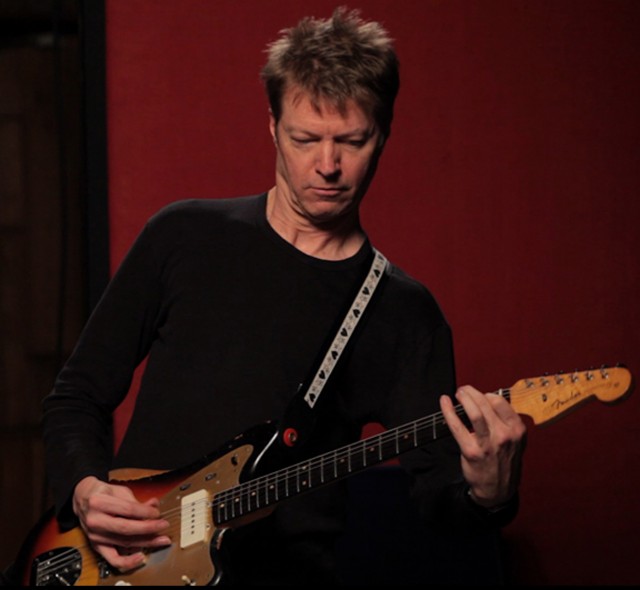
 In Search of Blind Joe Death: The Saga of John Fahey is part of a “Guitar Innovators” double feature that also includes Steven Okazaki’s lovely little Approximately Nels Cline, in which the multinominated director goes inside the studio to capture guitarist Nels Cline reimagining a pair of Irish folk songs with an eclectic group of musicians. Cline, a philosophy major who has played with Wilco, the Bad Plus, Mike Watt, Thurston Moore, Elliott Sharp, and his own Nels Cline Trio and Nels Cline Singers in addition to so many others, speaks eloquently about his process in a friendly, personable manner that makes him instantly likable. The sessions are a joy to watch, performed with violinist and vocalist Carla Kihlstedt, bassist Devin Hoff, trumpeter Ron Miles, Cibo Matto keyboardist Yuka Honda, clarinetist Ben Goldberg, and drummer Matthias Bossi. Oscar winner Okazaki (Days of Waiting, Troubled Paradise) primarily lets the music do the talking, from experimental noise to jazzlike improvisation to carefully orchestrated sections. “It’s really important if you feel something that’s really sensitive, and that’s really transporting, whether it’s a chord or if it’s a sound, I just try to process that and manifest it in a way that’s personal,” Cline explains. The only drawback is that the film is a mere twenty-seven minutes; we would have loved to see and hear more. In Search of Blind Joe Death: The Saga of John Fahey and Approximately Nels Cline open August 16 at Cinema Village, with Cullingham and Nels Cline producer Jeff Wood participating in Q&As following the 8:45 screenings on Friday and Saturday night.