this week in music

MIXER READING AND MUSIC SERIES: LUCY CORIN, ALINA SIMONE, AND RAYYA ELIAS

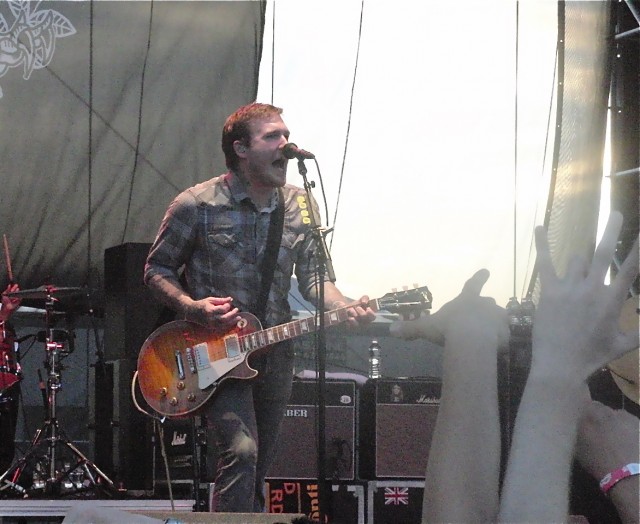
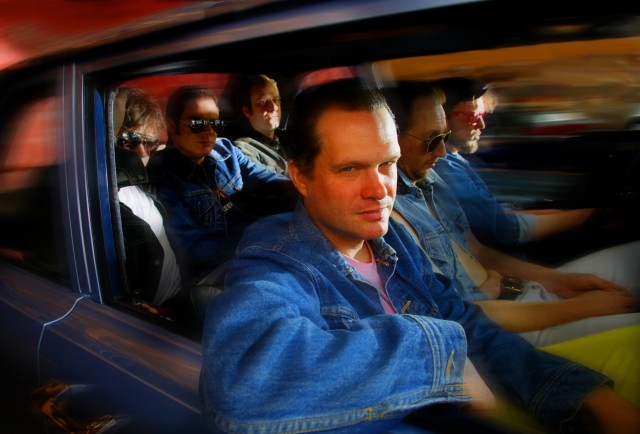
Rayya Elias will read from her memoir and play a twenty-minute set at free Mixer series at Cake Shop on September 18 (photo by twi-ny/mdr)

Rayya Elias will read from her memoir and play a twenty-minute set at free Mixer series at Cake Shop on September 18 (photo by twi-ny/mdr)

Cake Shop
152 Ludlow St.
Wednesday, September 18, free, 7:00
212-253-0036
www.cake-shop.com

Hosts Melissa Febos and Rebecca Keith have put together another eclectic collection of writers for this month’s edition of the Mixer Reading and Music Series, taking place September 18 at 7:00 at Cake Shop. Lucy Corin will be reading from her new collection, One Hundred Apocalypses and Other Apocalypses (McSweeney’s, August 2013), Alina Simone will share parts of her latest novel, Note to Self (Faber & Faber, June 2013), and Rayya Elias will be delving into her debut, Harley Loco: A Memoir of Hard Living, Hair, and Post-Punk from the Middle East to the Lower East Side (Viking, April 2013). In addition, Elias, who has been a hair stylist to the stars, a punk rocker, a homeless woman, a drug addict, and an incarcerated prisoner during her remarkable life, will be playing a twenty-minute set of songs that serve as the soundtrack to her book.

FIAF FALL FSTVL: CROSSING THE LINE

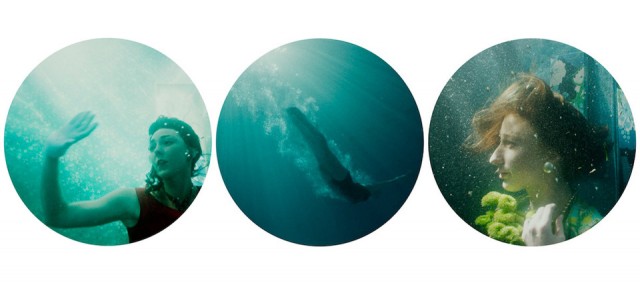
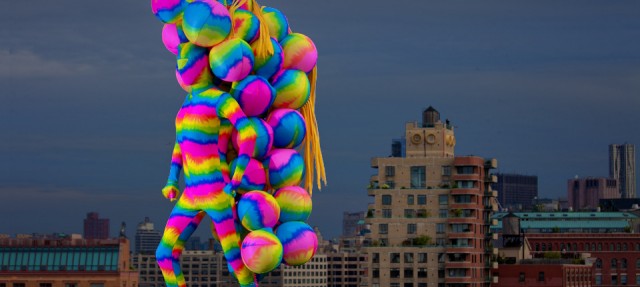
Eliane Radigue and Xavier Veilhan’s SYSTEMA OCCAM kicks off FIAF’s seventh annual Crossing the Line festival

Eliane Radigue and Xavier Veilhan’s SYSTEMA OCCAM kicks off FIAF’s seventh annual Crossing the Line festival

French Institute Alliance Française and other locations
Florence Gould Hall, 55 East 59th St. between Madison & Park Aves.
Le Skyroom and FIAF Gallery, 22 East 60th St. between Madison & Park Aves.
September 19 – October 13, free – $30
212-355-6160
www.fiaf.org

Curators Lili Chopra, Simon Dove, and Gideon Lester have once again put together an impressive, wide-ranging program for the Crossing the Line festival, now in its seventh year. Sponsored by the French Institute Alliance Française and taking place there as well as at other venues around the city, CTL features cutting-edge art, dance, music, theater, discussion, and more from an international collection of multidisciplinary performers, with many events free and nothing costing more than $30. The twenty-five-day festival begins September 19 with electronic music composer Eliane Radigue and artist Xavier Veilhan collaborating on Systema Occam (Florence Gould Hall, $30), a multimedia performance installation that is part of CTL’s “New Settings” series, a joint venture with Hermès; the fashion company will be hosting Martine Fougeron’s “Teen Tribe” photo exhibition at the Gallery at Hermès from September 20 to November 8. In Capitalism Works for Me! True/False (September 20, October 6-9, free), Steve Lambert will keep score in Times Square as people vote on whether capitalism indeed works for them. The award-winning Nature Theater of Oklahoma presents episodes 4.5 and 5 at FIAF of their massive undertaking, Life and Times (September 20-21, $30), accompanied by the FIAF Gallery show “10fps,” consisting of 1,343 hand-colored drawings (September 21 – November 2, free). For “The Library,” Fanny de Chaillé invites people to FIAF’s Haskell Library on September 24 and 26 and the NYPL’s Jefferson Market Branch on September 27 (free), where they can choose books that are actually men and women who will share their stories verbally one on one.

Boyzie Cekwana and Panaibra Canda look at postcolonial Africa in THE INKOMATI (DIS)CORD

Boyzie Cekwana and Panaibra Canda look at postcolonial Africa in THE INKOMATI (DIS)CORD

In The Inkomati (dis)cord (September 25-26, New York Live Arts, $20), Boyzie Cekwana and Panaibra Canda use contemporary dance to examine postcolonial Africa. De Chaillé teams up with Philippe Ramette for Passage à l’acte / Acting Out (September 26-28, Invisible Dog, $30), using absurdist human sculpture to “rationalize the irrational.” Dancer and choreographer Nora Chipaumire will perform the CTL-commissioned solo piece rite riot (October 3-5, Le Skyroom, $30), exploring African stereotypes, collaborating with writer Teju Cole and visual artist Wangechi Mutu. Pascal Rembert’s large-scale A (micro) history of world economics, danced (October 11-13, La MaMa, $20) features New Yorkers discussing how the financial crisis impacted their lives. The festival also includes works by Annie Dorsen, Ernesto Pujol and Carol Becker, Bouchra Ouizguen, Tim Etchells, and Kyle deCamp and Joshua Thorson, in addition to a series of talks and conversations.

DAYLIFE

DayLife festival returns to Lower East Side for summer finale on September 15

DayLife festival returns to Lower East Side for summer finale on September 15

Orchard St. between East Houston and Delancey Sts.
Sunday, September 15, free, 12 noon – 5:00 pm
www.lowereastsideny.com

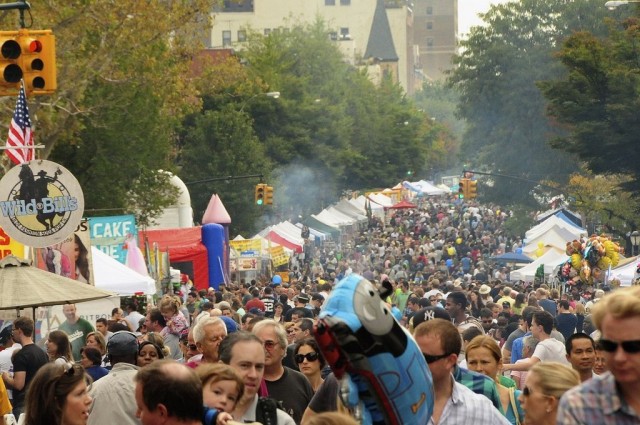
The Lower East Side BID says goodbye to summer with DayLife, a block party featuring food, fashion, live music, food, sports, and other activities. (The LES welcomed the season with a DayLife party back on June 2.) Held on Sunday, September 15, from 12 noon to 5:00, the three-block festival will cover Orchard St. in AstroTurf between Houston & Delancey Sts. The music lineup, sponsored by the Living Room on the Tammany Hall Stage, begins at noon with DJ Twin T and continues with Catey Shaw, DJ Kai Song, Miwa Gemini, Michael Hunter, Norman Vlardimir, and Deja; the Hits, Lewis Lazar, Chances with Wolves, and Swaai Boys will play on Lost Weekend’s Leadbelly Stage. There will also be fitness challenges, badminton, urban croquet, yoga demonstrations, an art fair, face painting, and other family-friendly activities. Food will be supplied by more than two dozen local restaurants, including Antibes Bistro, Georgia’s BBQ, Goodfellas Brick Oven Pizza, the Meatball Shop, Melt Bakery, Mission Chinese, Pop Karma, Souvlaki GR, and Sweet Buttons Desserts.

THE SISTER ROSETTAS

terraNOVA Collective
IRT Theater
154 Christopher St.
Friday, September 13, 20, 27, $20-$25, 9:30
917-639-3166
www.terranovacollective.org

From 2006 to 2009, Ming Dynasty built a large local following, playing such clubs as the Continental, Arlene’s Grocery, and CBGB and releasing such discs as Yellow Tiger and Spaghetti Eastern. Led by former Plums frontman Eric Miranda and Taipei-based Moo Shoo Sweet Potato singer and bassist Ming Chan, Ming Dynasty mixed ’70s glam rock with Beatles-esque melodies and propulsive power pop on such songs as “Kung Fu Girl,” “Spy People,” “Bring Me Down,” and “Tangerine.” Ming Dynasty parted ways in 2009, but four days after bumping into musical theater actress and singer-songwriter Diana Oh on the corner of Bleecker and Lafayette, Miranda and Oh decided to revive Ming Dynasty’s music in a fresh new way. This month, the Sister Rosettas, named after gospel crossover star Sister Rosetta Tharpe, will make their debut with a Friday-night residency at the IRT Theater in conjunction with terraNOVA. The band consists of Oh on lead vocals, Miranda (who does a mean Neil Diamond impression) on vocals and lead guitar, Kole Smith on guitar, Philippe Arman on bass, and Matt Harrington on percussion, with Jessi D. Hill serving as creative director. Yesterday, Oh posted on Facebook that “we just had the best band practice ever on the planet of band practices. Everything came together like butter on bread, like sushi on rice, like crackers on cheese. The boys sang me ‘you have our blessings’ in four part harmonies into their microphones. I sang it back. And with that, we marry theatre with rock and roll. And rock and roll with theatre tomorrow night. What you thought you’d never see, you are about to see. And hear. And feel. And love.” The Sister Rosettas will be at the IRT Theater on September 13 with Christopher Gabriel Núñez, September 20 with Jes Tom, and September 27 with Lauren Hennessy.

VIDEO OF THE DAY: “FALL BACK” BY ZOLA JESUS

Last summer, Zola Jesus gave one of the hottest performances at the Catalpa Festival on Randall’s Island, prancing across the stage, smashing cymbals, and climbing the scaffolding. Things are likely to be somewhat more subdued when Nika Roza Danilova, aka Zola Jesus, plays Our Lady of Lebanon Cathedral in Brooklyn Heights on September 14, supporting her gorgeous new album, Versions (Sacred Bones, August 2013). In May 2012, Zola Jesus was invited to perform at the Solomon R. Guggenheim Museum, and she decided to do something different, teaming with industrial music guru J. G. Thirlwell (Foetus, Manorexia), who rearranged Zola Jesus’s songs for a string quartet, removing the electronic techno aspects and giving the songs a whole new life, with the vocals allowed to take off front and center. Zola Jesus and Thirlwell continued the collaboration on Versions, reinterpreting such songs from Danilova’s repertoire as “Avalanche,” “Fall Back,” “Hikikomori,” “Seekir,” and “In Your Nature,” which previously appeared on such albums as 2010’s Stridulum and 2011’s Conatus and the 2010 EP Valusia. On the new disc, Danilova is backed by the Mivos Quartet, consisting of Olivia De Prato and Joshua Modney on violins, Victor Lowrie on viola, and Mariel Roberts on cello, offering mesmerizing takes on Zola Jesus’s intimate songs about love and fear. “Oh, it hurts me / Yes, it hurts to let you in / But I won’t make a sound / when the crowd comes to call,” she sings on “Collapse.” The crowd will indeed be coming to call on Saturday night in Brooklyn, when Zola Jesus will be making very different yet still beautiful sounds, with Thirlwell and a string quartet.

JOHN ZORN SELECTS: PIERROT LE FOU

Jean-Paul Belmondo and Anna Karina star in Godard’s colorful crime musical, PIERROT LE FOU

PIERROT LE FOU (Jean-Luc Godard, 1965)
Anthology Film Archives
32 Second Ave. at Second St.
Saturday, September 14, 4:45, and Thursday, September 19, 9:15
Series runs September 12-30
212-505-5181
www.anthologyfilmarchives.org

Art, American consumerism, the Vietnam and Algerian wars, Hollywood, and the cinema itself get skewered in Jean-Luc Godard’s fab feaux gangster flick / road comedy / romance epic / musical Pierrot Le Fou. Based on Lionel White’s novel Obsession, the film follows the chaotic exploits of Ferdinand Griffon (Jean-Paul Belmondo) and Marianne Renoir (Anna Karina, Godard’s then-wife), former lovers who meet up again quite by accident. The bored Ferdinand immediately decides to leave his wife and family for the flirtatious, unpredictable Marianne, who insists on calling him Pierrot despite his protestations. Soon Ferdinand is caught in the middle of a freewheeling journey involving gun running, stolen cars, dead bodies, and half-truths, all the while not quite sure how much he can trust Marianne. Filmed in reverse-scene order without much of a script, the mostly improvised Pierrot Le Fou was shot in stunning color by Raoul Coutard. Many of Godard’s recurring themes and style appear in the movie, including jump cuts, confusing dialogue, written protests on walls, and characters speaking directly at the audience, who are more or less along for the same ride as Ferdinand. And as with many Godard films, the ending is a doozy.

PIERROT LE FOU is screening as part of “John Zorn Selects” series at Anthology Film Archives

PIERROT LE FOU is screening as part of “John Zorn Selects” series at Anthology Film Archives

Pierrot Le Fou is screening September 14 and 19 as part of the Anthology Film Archives series “John Zorn Selects,” comprising a dozen works chosen by the master experimental musician on the occasion of his sixtieth birthday, focusing on the soundtracks. “Godard continues to be the ONLY director whose drop-the-needle strategies work for me — he alone commands a supreme knowledge of how previously existing music can be used in an overall sonic design, and his Histoire(s) du Cinéma is perhaps the highest level of this technique, reducing Hollywood’s attempts at the same approach to nostalgia, advertising, and cartoon silliness,” Zorn writes on the Anthology website. “But here in his early years he trusted the brilliant Georges Delerue to do his thing and the results are magnificent. This and Shoot the Piano Player are fabulous examples of 1960s French scoring — heavy on strings, lyricism, and moodiness. Pierrot holds a special place in my heart — I am really a Romantic, not a Postmodern — and this film’s music never ceases to reduce me to tears.” The festival runs September 12-30 and includes such other films as Alfred Hitchcock’s Vertigo, Michael Winner’s The Mechanic, Masahiro Shinoda’s Pale Flower, and Orson Welles’s Touch of Evil. From September 20 to 28, Anthology will present “A Pocketful of Firecrackers: The Film Scores of John Zorn,” consisting of such films as Marc Levin’s Protocols of Zion, Michael Glawogger’s Workingman’s Death, and Joseph Dorman’s Sholom Aleichem: Laughing in the Darkness, but the real highlight are two nights of Zorn performing live to short films.

JOHN ZORN SELECTS: THE CONVERSATION

Gene Hackman traps himself in a corner in Francis Ford Coppola’s gripping psychological thriller, THE CONVERSATION

THE CONVERSATION (Francis Ford Coppola, 1974)
Anthology Film Archives
32 Second Ave. at Second St.
Thursday, September 12, 6:45, and Sunday, September 15, 4:15
Series runs September 12-30
212-505-5181
www.anthologyfilmarchives.org

While changing the face of Hollywood cinema with The Godfather and The Godfather Part II, American auteur Francis Ford Coppola snuck in yet another 1970s masterpiece, the dark psychological thriller The Conversation. Gene Hackman gives a riveting performance as Harry Caul, an audio surveillance expert who has been hired to record a meeting between two people (Cindy Williams and Frederic Forrest) in Union Square in San Francisco. Thinking that he might have stumbled onto a murder plot, Caul soon finds himself in the middle of a dangerous conspiracy that threatens the lives of all those involved. The Conversation is a gripping, taut examination of obsession, paranoia, and loneliness as well as an exploration of language and communication. Caul might spend most of his time listening in on the intimate conversations of others, but he is an intensely private individual who is extremely uncomfortable in his own skin. A deeply religious man who also plays the saxophone, Caul has trouble relating to other people; Hackman is particularly outstanding in a party scene where Caul is forced to talk shop with fellow surveillance expert Bernie Moran (Allen Garfield), who wants to know Caul’s secrets, but the always nervous Caul isn’t about to share everything. The film also examines how people hear what they want to hear and see what they want to see, and it takes on even more meaning in a twenty-first century dominated by public and private surveillance, from store security cameras and government monitoring to Facebook, Twitter, and YouTube. The supporting cast, which also features Harrison Ford, Robert Duvall, Teri Garr, and John Cazale, is exceptional, but this is Hackman’s show all the way, leading to one of the great endings in the history of cinema.

A recorded conversation between a mysterious couple (Talia Shire and Frederic Forrest) triggers a possible conspiracy in Coppola masterpiece

A recorded conversation between a mysterious couple (Talia Shire and Frederic Forrest) triggers a possible conspiracy in Coppola masterpiece

Winner of the Palme d’Or at Cannes, The Conversation is screening September 12 and 15 as part of the Anthology Film Archives series “John Zorn Selects,” comprising a dozen works chosen by the master experimental musician and Anthology composer-in-residence on the occasion of his sixtieth birthday, focusing on the soundtracks. “Along with Murder by Contract, The Third Man, and a very few others, The Conversation is a perfect example of restraint, modesty, and intimacy in film scoring — the entire film scored by a single instrument!” Zorn explains. “With an incredible economy of means [David] Shire provides tension, release, excitement, and melancholy to this masterful tale of Harry Caul, the surveillance expert. Originally scored for a small jazz ensemble, Coppola wisely decided to use the solo piano score instead throughout the entire picture. The music was composed first and played to the actors before shooting to get them into the mood. A modern classic.” The festival runs September 12-30 and includes such other films as Alfred Hitchcock’s Vertigo, Michael Winner’s The Mechanic, Masahiro Shinoda’s Pale Flower, and Orson Welles’s Touch of Evil. From September 20 to 28, Anthology will present “A Pocketful of Firecrackers: The Film Scores of John Zorn,” consisting of such films as Marc Levin’s Protocols of Zion, Michael Glawogger’s Workingman’s Death, and Joseph Dorman’s Sholom Aleichem: Laughing in the Darkness, but the real highlight are two nights of Zorn performing live to short films.