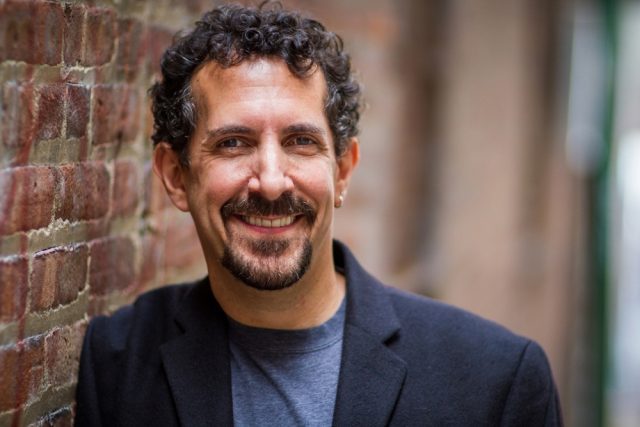
Who: Andre J., Tyler Ashley (aka the Dauphine of Bushwick), Raja Feather Kelly, Bill T. Jones, Migguel Anggelo, Bubble_T, DJ Shirine Saad’s Gyal Tings, the House of LaBeija, the Illustrious Blacks, OOPS!, RAGGA NYC, Papi Juice, Switch n’ Play What: Virtual Pride party Where:BAM,New York Live Arts When: Saturday, June 27, free (donations accepted), 8:00 Why: BAM and New York Live Arts will celebrate Pride together with the virtual House Party with Everybooty. The livestreamed event, taking place June 27 at 8:00, was inspired by a creator they have in common: dancer, choreographer, and activist Bill T. Jones, NYLA’s artistic director and whose troupe, the Bill T. Jones/Arnie Zane Company, has been performing at BAM for more than three dozen years. The festivities will include music, dance, storytelling, drag, video collages, and more by a diverse group of queer performance artists, musicians, dancers, choreographers, and more. Among the participants in the eighth annual Everybooty are Tyler Ashley (aka the Dauphine of Bushwick), Raja Feather Kelly, Migguel Anggelo, Bubble_T, DJ Shirine Saad’s Gyal Tings, the House of LaBeija, the Illustrious Blacks, and Papi Juice. In addition, beginning June 25, BAM will be streaming twelve archival works by Bill T. Jones/Arnie Zane Company, from Secret Pastures (1984), The Animal Trilogy (1986), A Letter to My Nephew (2017) and Still/Here (1994) to We Set Out Early . . . Visibility Was Poor (1998), The Flight Project (2003), A Rite (2013), and A Quarreling Pair (2008). “BAM and Live Arts stand proud of their LGBTQIA legacies and in solidarity with those fighting to dismantle systemic racism and end violence against Black and brown people,” the two organizations said in a statement. The party is free, but donations will be accepted, with proceeds split between Callen-Lorde Community Health Center,GRIOT Circle, and Black Trans Femmes in the Arts.
Australian actor and filmmaker Damon Gameau has followed up his award-winning 2014 documentary, That Sugar Film, about the effects of sugar on the body, with 2040, in which he goes around the world not only to point out how our environment is rapidly deteriorating in numerous ways but also to do something about it, for the sake of his four-year-old daughter, his wife, and the rest of the planet. “I think we’re all pretty aware that when it comes to predictions of the future, they’re almost entirely negative at the moment,” he says near the start of the film. “Any time you open your news feed or social media, there’s some kind of doom and gloom story about the future of our environment. And as a father, I think there’s room for a different story, a story that focuses on the solutions to some of these problems. So my plan is to go out and find some of these solutions and then create a vision of a different future for our daughter. I want to show her what the world would look like if the solutions I find were implemented today. So what would the world look like in 2040 if we just embraced the best that already exists. That’s my only rule: Everything I show her in this 2040 has to exist today in some form. I can’t make it up.”
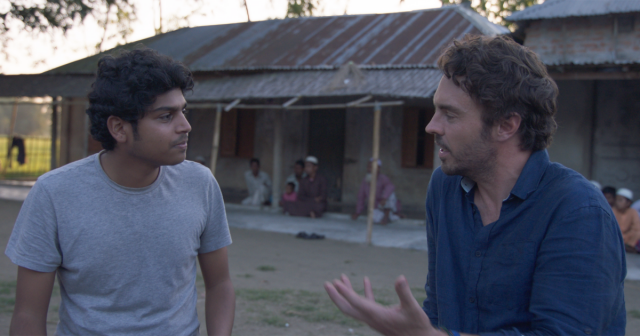
Gameau heads out to Bangladesh, Singapore, Sweden, America, the UK, and Tanzania, meeting with scientists, farmers, economists, and other experts to come up with answers to questions involving carbon dioxide, methane gas, solar and wind power, automobile traffic, fossil fuels, meat consumption, and other key issues. “It’s our generational challenge,” Doughnut Economics purveyor Kate Raworth explains. Gameau speaks with Neel Tamhane about self-sustaining energy microgrids, RethinkX cofounder Tony Seba about transportation, Colin Seis about regenerative farming, Dr. Brian von Herzen of the Climate Foundation about our use of water, Dr. Amanda Cahill about women, childbirth, and education for girls, and Eric Toensmeier and Paul Hawken of Project Drawdown about greenhouse gases. Gameau shifts between 2019 and 2040, when an older version of him, his wife, and his daughter reveal what the world might be like if we take action now. It all comes down to creating more than we consume, and Gameau makes the case that we can start immediately with what we already have.
Writer-director-producer-star Gameau is an engaging character, an instantly likable fellow with a lively sense of humor. He has fun with the media of film, using animation effects to turn his home into a place of climate disaster and depicting some of the people he talks with in miniature, putting them in fireplaces and atop wind turbines. He also lets children between the ages of six and eleven tell us what they think is wrong with the world and what they want for their future, and the result is as hysterically funny as it is smart and poignant, getting right to the point.
2040 is available for streaming through July 1; Gameau will be hosting a week of free panel discussions online (see the full schedule below), delving into specific issues brought up in the documentary with various experts, including some who appeared in the film. It’s time to do something, and I’m fine with Gameau leading the way. As one of the kids says near the end, “If people keep doing what they’re doing now, the world won’t be a very good place.”
Friday, June 26
US Premiere, with Damon Gameau, Paul Hawken, Kate Raworth, and Neel Tamhane discussing innovative solutions to the climate crisis, moderated by Kate Aronoff of The New Republic, free with advance RSVP, 7:30
Saturday, June 27
“From Drawdown to Regeneration: Meet the Researchers Behind Drawdown,” with Damon Gameau, Chad Frischmann, Mamta Mehra, Ryan Allard, moderated by Crystal Chissell, free with advance RSVP, 7:30
Sunday, June 28
“Regenerative Agriculture,” with Damon Gameau, Eric Toensmeier, and Portia Adomah Kuffuor, free with advance RSVP, 4:30
“Sustainable Travel,” with Damon Gameau, Darrell Wade, and Denaye Hinds, moderated by Ashley Renne, free with advance RSVP, 7:30
Monday, June 29
“Seaweed & Marine Regeneration,” with Damon Gamean, Brian von Herzen, Brad Ack, and Jo Kelly, free with advance RSVP, 7:30
Tuesday, June 30
“The Power of Youth Voices,” with Damon Gameau, Xiye Bastida, and Alexandra Berry, moderated by Annelise Bauer, free with advance RSVP, 7:30
Wednesday, July 1
“Climate Justice & Empowering Women,” with Damon Gameau, Mary Heglar, and Amy Westervel, free with advance RSVP, 7:30
Thursday July 2
“The Importance of Hope,” with Damon Gameau, Eric Holthaus, and Renee Lertzman, free with advance RSVP, 7:30
Horizon Line will be part of Streb fundraiser “Action Heroes: Home Season @ Home”
Who:STREB Extreme Action Company What: Livestreamed virtual presentation and fundraiser Where:STREB Zoom When: Friday, June 26, $0-$50, 7:00 Why: No other dance troupe in New York City uses space like the STREB Extreme Action Company. The Brooklyn-based company, founded in 1985 by artistic director Elizabeth Streb, uses small- and large-scale proprietary constructions to jump, run, tumble, and soar in such locations as the Park Ave. Armory (Kiss the Air!), the World Financial Center (Human Fountain), Gansevoort Plaza (Ascension), Lumberyard in the Catskills, and the Sony Center am Potsdamer Platz, combining dance, gymnastics, athletics, and acrobatics in breathtaking ways. So what is such a company to do during a pandemic lockdown, with Streb and her “Action Heroes” sheltering in place?
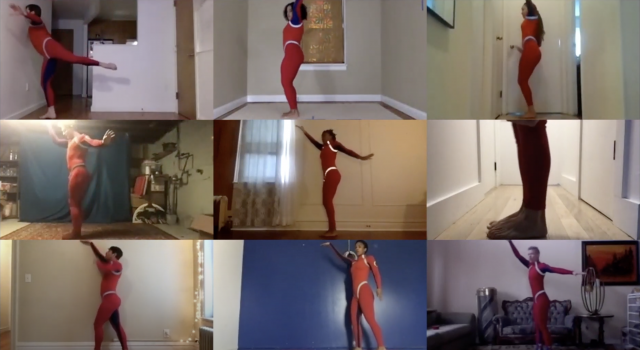
On Friday, June 26, at 7:00, STREB goes virtual with “Action Heroes: Home Season @ Home,” a benefit fundraiser that will include classic archival footage, rarely seen pieces, and two new works choreographed specifically for Zoom, Horizon Line, which premiered last month and takes the troupe to a new, claustrophobic level, and the world premiere of Body Grammar. As always, Streb will be “pushing boundaries of what the human body can do,” with associate artistic director Cassandre Joseph, Jackie Carlson, Daniel Rysak, Tyler DuBoys, Justin Ross, Sophia Wade, Kairis Daniels, Brigitte Manga, Luciany Germán, and Matthew Keywas. If you’ve never seen Streb and her Pop Action movement vocabulary, you can watch this Ted Talk and check out Catherine Gund’s 2014 documentary, Born to Fly: Elizabeth Streb vs. Gravity. Admission to “Action Heroes: Home Season @ Home” is free with advance RSVP, although donations are appreciated; if you give fifty dollars or more, you’ll be invited to the live postshow talk with Streb and the company.
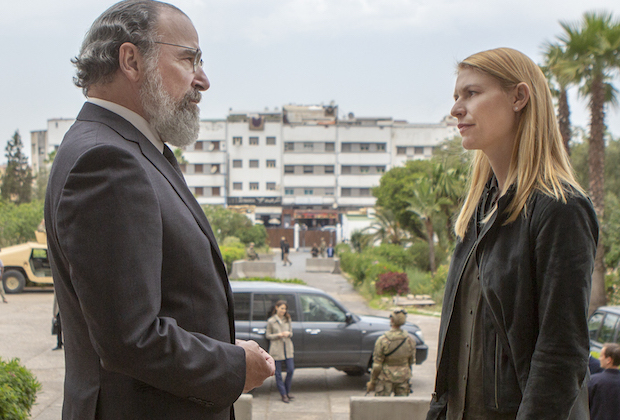
Mandy Patinkin and Claire Danes will talk about the end of Homeland in livestreamed discussion June 25 (photo by Sifeddine Elamine/Showtime)
Who: Alex Gansa, Claire Danes, Mandy Patinkin, Seija Rankin What: Livestream discussion presented by 92Y and Entertainment Weekly Where:92Y Vimeo livestream When: Thursday, June 25, free (donations accepted), 5:00 Why: After eight beguiling, thrilling, torturous, exciting, infuriating, and memorable seasons, the Showtime drama Homeland came to a close on April 26 with a jam-packed finale. Based on the Israeli series Prisoners of War, the show centered on the unique relationship between on-again, off-again CIA agent Carrie Mathison, portrayed by Claire Danes, who has won two Emmys for the role, and CIA division chief and National Security Advisor Saul Berenson, played to grumpy perfection by Mandy Patinkin, who earned four Emmy nominations with no win, which makes sense for Saul, who ends up losing a lot in his endless national and international negotiations. They fostered a special friendship over the years, so no matter what other crazy stuff was going on, you always knew something would bring them back together. On June 25, Danes, Patinkin, and creator, executive producer, and showrunner Alex Gansa will discuss Homeland with Entertainment Weekly’s Seija Rankin as part of the 92nd St. Y’s continuing digital programming, focusing on Carrie and Saul, what it was like filming the last season, and, hopefully, how the plots relate to what is happening in the real world. (Oh, and by the way, if you have not been following the adventures of Patinkin and his wife, Kathryn Grody, on Twitter, you don’t know what you’re missing.)
One of the hallmarks of summer in New York City is the plethora of free outdoor theater, from the Public’s star-studded Shakespeare in the Park at the Delacorte to such troupes as Smith Street Stage, Hudson Warehouse, Moose Hall Theatre Company, Hip to Hip, the Classical Theatre of Harlem, Manhattan Shakespeare Project, Seven Stages Shakespeare Company, Gorilla Rep, the Boomerang Theatre Company, Molière in the Park, Piper Theatre Productions, the Drilling Company, and more putting on shows in such locales as Morningside Park, Carroll Park, Riverside Park, Inwood Hill Park, Gantry State Plaza Park, Marcus Garvey Park, Bryant Park, Socrates Sculpture Park, the Old Stone House, and even in a Lower East Side parking lot. Since 2000, NY Classical, under the leadership of founding artistic director Stephen Burdman, has presented more than seven hundred site-specific immersive performances of works by the Bard as well as Chekhov’s The Seagull, Molière’s The School for Husbands, Schiller’s Mary Stuart, and Shaw’s Misalliance, among others, in Central Park, Prospect Park, Rockefeller Park, Battery Park, Carl Schurz Park, Teardrop Park, and at the World Financial Center.
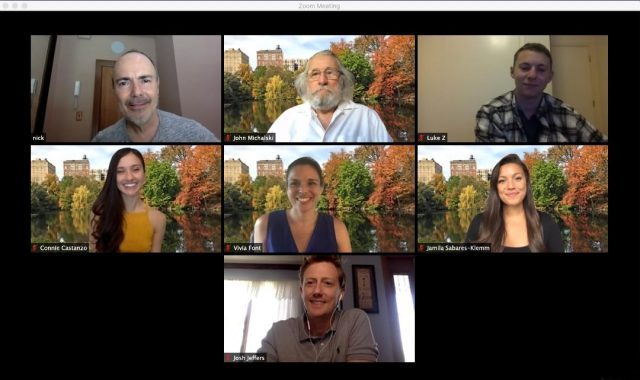
All productions have been shut down this summer because of the coronavirus crisis; parks are open, but crowds are limited to just ten in phase two and only twenty-five when we reach phase three. A California native who lives in New York City with his wife and son, Burdman had been preparing a dual look at King Lear this season, staging on alternate nights Shakespeare’s original, familiar version, which he might have written while in lockdown during a plague, and Nahum Tate’s 1681 “happy ending” adaptation, which was popular for about 150 years and is now seldom performed. On June 25 at 8:00, NY Classical will go virtual with a live, rehearsed Zoom reading incorporating both iterations, a streamlined two-hour show featuring Connie Castanzo, Vivia Font, Josh Jeffers, John Michalski, Jamila Sabares-Klemm, Nick Salamone, and Luke Zimmerman from wherever they are sheltering in place. Directed and adapted by Burdman, the reading is a benefit fundraiser for the company; admission is free, but if you can, you’re asked to make a suggested donation of thirty dollars per person. The money will help fund the full, alternating productions of King Lear planned for the fall. Burdman took a break from online rehearsals to discuss King Lear, Panoramic Theatre, and being a husband and father during a pandemic.
twi-ny: You’ve been sheltering in place with your wife and son. How has that been?
stephen burdman: It’s actually been easier than I expected. The three of us make a pretty good team — and we really travel well together. Fortunately, my wife’s work (which is mostly on conference calls around the world) didn’t change that much and our son adapted to Zoom learning really quickly. His school, the Abraham Joshua Heschel School, did an outstanding job of adapting to this extremely challenging environment while providing great support to the students.
One thing to note is that our managing director, Hillary Cohen, lost both of her parents to Covid-19 in early April. This has been extremely difficult and as a company we have been in mourning. We have decided to close our administrative office on August 10, which would have been her parents’ fifty-first wedding anniversary, as a day of mourning for them and the thousands of other lives lost to Covid-19.
Stephen Burdman founded NY Classical in 2000, directing many of its productions in parks all around the city
twi-ny: That’s both sad and deeply affecting. When did you decide to do a Zoom benefit reading, and why did you choose King Lear?
sb:King Lear, with alternating endings (both Shakespeare’s and Tate’s), was always our plan for our 2020 summer season. This is the culmination of a three-year project of investigating how Shakespeare’s company toured their shows outside London. In the time of plague, theaters were closed in Elizabethan London, and while we never expected to have a pandemic of our own. . . . We also had great success with both our six-actor Romeo and Juliet as well as the alternating versions of The Importance of Being Earnest, so this project was a combination of these recent experiments.
We auditioned and hired the actors and staff prior to New York State on Pause, and we wanted to make sure to keep our commitments to these wonderful people. In addition to a union salary, they are receiving pension and healthcare. This is an opportunity for us to develop the production with these artists and serve our audience community in the safest way possible.
twi-ny: How have you been able to maintain that?
sb: The core of our mission is that all our programs are free and open to the public. We never want ticket price to be a barrier to accessing our performances, so we have always depended on financially secure audience members paying for their experience and their less fortunate neighbors’ families. In that sense, we are able to maintain because we have a community-oriented “business model.” We play for everybody across the city’s economic spectrum, and those who can support us do.
twi-ny: I’m used to walking through Central Park and suddenly coming upon NY Classical rehearsing out in the open. What was the rehearsal process like for this reading? Have you been watching other livestreamed shows during the pandemic lockdown, either for pure entertainment or research?
sb: Zoom rehearsal has been really interesting. The Zoom format has its strengths and challenges. While I did watch a few other readings and did some best-practice research, I wanted to make sure that we approach this work in line with our signature technique — which is called Panoramic Theatre. We feel it is important that when our audience sees a Zoom reading and then a full production of the same script, there is no disconnect between the two. One should be a natural extension of the other.
Some elements of Panoramic Theatre staging immediately transfer. Our blocking style ensures that, when a character is speaking, they are facing toward the audience. In the parks, this helps the actors’ voices comfortably and sustainably reach as large an area as possible. On Zoom, they are also facing toward the audience, in order to better connect on an emotional level.
twi-ny: What are your thoughts about what theater will be like in New York City on the other side of this? Has the pandemic changed any of your views about how theater is made and/or performed for audiences?
sb: Honestly, I don’t think professional theater will be able to return to prepandemic levels for two to three years. I have many family and friends who live outside New York and they are feeling very wary of visiting the city right now. As I recently said to a major supporter of the company, “When are you going to feel comfortable sitting in a small, dark space with lots of people again?” Theaters that work outdoors, like NY Classical, will most likely produce sooner than most and we are still hoping to produce King Lear as a full production later this year. However, outdoor theaters that rely on bleacher-style seating will have to substantially reduce their attendance expectations.
twi-ny: You’ve been vocal on social media about the Black Lives Matter movement. What are some of the things that NY Classical is doing to address systemic racism?
sb: One of the founding artists and board members of NY Classical — and my best friend — was Black. Don Mayo was a consummate and extremely versatile actor who appeared in everything from August Wilson to Shakespeare, Broadway to regional theater, and was very committed to NY Classical. When he died nearly twelve years ago, we created the Don Mayo Fund for Classical Actors of Color. Since NY Classical started, we have employed many BIPOC artists as significant collaborators on our productions, but we recognize we need to do more.
NY Classical’s staff completed an intensive Diversity, Equity, and Inclusion training program. It really helped us more deeply understand how our non-Black company members have benefited from systemic racism. Now we are actively implementing changes and reimagining our company culture to fully reflect our anti-racist values. It means considering our unconscious biases, checking our areas of privilege, and consistently partnering as equals with more historically underrepresented teammates — casts, directors, designers and technicians, administrators, and board leadership — in producing classical theater.
twi-ny: When you’re not creating or watching theater, what are you doing with your time during these crises? What are some of your other obsessions?
sb: So, in addition to a deep reworking of King Lear, I have spent lots of time with my wife and son, doing projects around the house, reading (I am an avid reader and just finished War and Peace — my final book in a years-long project to read every major Russian classic), and watching a few television series. Right now, my son and I are (re)watching the entire Star Trek (TNG) series.
twi-ny: We recently finished the new Star Trek shows, Discovery and Picard. It looks like your family had a fun virtual Seder. It now seems like Jews will not be able to celebrate Rosh Hashanah and Yom Kippur in schul. Hopefully we’ll be back in temple by the time of your son’s Bar Mitzvah next spring. How has your family been dealing with that?
sb: Thanks! We had a blast! It was super nice to have family and friends from Los Angeles (my hometown) join us for Seder. As for the High Holidays, I’ve honestly been in a bit of denial. After this reading of King Lear is over, we will begin to consider some options. As for my son, who recently turned twelve and attends a Jewish school, a number of his classmates have postponed their b’nei mitzvahs into 2021. Right now, my wife is teaching him to chant his Torah portion and Haftorah. His grandmother (Bubbie, my wife’s mother) is a Jewish educator and spends time with him every week to study his portion and, ultimately, help craft his Bar Mitzvah speech. We’re very lucky this way, as his uncle (who co-officiated with my late father-in-law at our wedding) will also officiate at his service next spring.
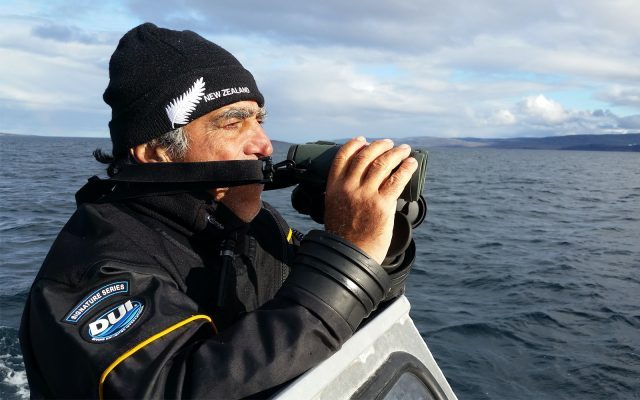
Amos Nachoum searches for the elusive polar bear in Picture of His Life
Who: Dani Menkin, Amos Nachoum What: Live Q&A about Picture of His Life (Yonatan Nir & Dani Menkin, 2019) Where:Marlene Meyerson JCC Manhattan When: Tuesday, June 23, free with advance RSVP, 8:30 Why: Captain Ahab had his great white whale in Moby-Dick, Captain Quint had his great white shark in Jaws, and Timothy Treadwell had his grizzly bear in Grizzly Man. People have been obsessed with animals in the wild since the dawn of humanity, as prey, for food, for sport, and for companionship. In Picture of His Life, directors Yonatan Nir and Dani Menkin track legendary Israeli-American underwater photographer Amos Nachoum as he attempts to cap his remarkable career by capturing, on film, a polar bear — “the world’s largest land carnivore,” opening text points out — while swimming with it in its native habitat. “I’ve been dreaming of this moment for a long time. After all these years of photographing in the wild, there is one subject that eludes me: that is photographing the polar bear in the water,” Nachoum admits.
So the filmmakers join Nachoum, his Emmy-winning cinematographer, Adam Ravetch, local Inuit guide Joe Kaludjak, and a few others on a five-day journey in the gorgeous Canadian Arctic. Nachoum, who turned seventy this year, is a Hemingway-esque figure, ruggedly handsome, introspective, a man of few words, devoted to his mission. “Amos, to me, is one of the best ambassadors of the ocean. There’s a message in every one of his pictures. Sometimes he takes huge amounts of risks to bring those images which nobody else has been able to capture,” says oceanographic explorer Jean Michel Cousteau, son of Jacques Cousteau. “Amos is like a scientist, observing carefully, and then reporting honestly,” National Geographic explorer in residence Dr. Sylvia Earle notes. “He doesn’t have a normal life,” explains underwater photographer Javier Mendoza, adding, “He’s married to the ocean.”
Nir (My Hero Brother, The Essential Link: The Story of Wilfrid Israel) and Menkin (39 Pounds of Love,On the Map), who previously collaborated on Dolphin Boy, about an Arab teenager who finds help from dolphins after being horrifically beaten, also speak with Scuba Diving Hall of Famer Howard Rosenstein, photographer J. Michael, Whitaker, The Blue Planet director Andy Byatt, shark expert Avi Klepfer, and Nachoum’s two sisters, Ilana Nachoum and Michal Gilboa, who discuss Amos’s difficult relationship with their father; some of his fellow soldiers talk about how serving in an elite commando unit in the 1973 Yom Kippur War affected them all. A self-described “soldier of the sea,” Nachoum is shown sitting alone in a dark room, projecting his wildlife photos from a carousel the way families look at vacation pictures together. “The polar bear for Amos is personal; it symbolizes something that makes it more than a picture of the polar bear. It’s a picture of his life,” Mendoza says.
The film is spectacularly photographed by Nir aboveground and Ravetch underwater; the small expedition seems to have the entire world all to itself. Editors Taly Goldenberg, Martin Singer, and Shlomi Shalom cut from the Canadian Arctic to Nachoum’s remarkable wildlife photos, from archival war footage to old snapshots and video of Nachoum as a boy and a young man. Nir manages to catch Nachoum, the 2019 SeaKeeper of the Year, several times by himself, lying on a rock, looking up at the sky or out at the ocean, a strong but quiet man still searching for purpose, still seeking approval as he risks his life yet again for what for him is more than just a photograph, a different kind of old man and the sea. Picture of His Life can be streamed via the Angelika or the Marlene Meyerson JCC Manhattan; Menkin and Nachoum will participate in a live Q&A through the JCC on June 23 at 8:30 that is free with advance RSVP here.
Who: Mike Myers, Dr. Stephen D. Smith, Pinchas Gutter, Akim Aliu, Dr. Claudia Wiedeman, Rachel Luke What: Live panel discussion sponsored by the USC Shoah Foundation Where:Zoom webinar When: Monday, June 22, free with advance RSVP, 12:30 Why: In honor of the seventy-fifth anniversary of the liberation of the concentration camps at the end of WWII, the USC Shoah Foundation is hosting a Zoom panel discussion on June 22 at 12:30 focusing on the personal story of Holocaust survivor Pinchas Gutter and others. Examining history with an eye toward how change can happen now, the talk features Gutter, Hockey Diversity Alliance cofounder Akim Aliu, USC Shoah Foundation director of education Dr. Claudia Wiedeman, high school educator Rachel Luke, producer, director, and actor Mike Myers, and USC Shoah Foundation executive director chair Dr. Stephen D. Smith. Founded by Steven Spielberg, the USC Shoah Foundation seeks “to develop empathy, understanding, and respect through testimony,” compiling audio and video testimonies for its Visual History Archive. “Stories Are Stronger Than Hate: A Call to Action” is geared to students but can be watched by anyone, as these personal narratives need to be shared around the world, particularly as fewer eyewitnesses are left to tell us the truth and guide us on how to prevent it from happening again.