this week in film and television

HOLEY CINEMA: TRIPLE CANOPY PRESENTS DECASIA AND MORE AT BAM

Bill Morrison’s Decasia concludes BAM/Triple Canopy series on holes

DECASIA (Bill Morrison, 2002)
BAM Rose Cinemas
30 Lafayette Ave. between Ashland Pl. & St. Felix St.
Thursday, April 24, 9:15
Series runs April 18-24
www.bam.org
canopycanopycanopy.com

Experimental filmmaker Bill Morrison’s production company is called Hypnotic Pictures, and for good reason: The Chicago-born, New York–based auteur makes mesmerizing, visually arresting works using archival found footage and eclectic soundtracks that are a treat for the eyes and ears. Made in 2002, Decasia is about nothing less than the beginning and end of cinema. The sixty-seven-minute work features clips from early silent movies that are often barely visible in the background as the film nitrate disintegrates in the foreground, black-and-white psychedelic blips, blotches, and burns dominating the screen. The eyes at first do a dance between the two distinct parts, trying to follow the action of the original works as well as the abstract shapes caused by the filmstrip’s impending death, but eventually the two meld into a single unique narrative, enhanced by a haunting, compelling score by Bang on a Can’s Michael Gordon, which begins as a minimalist soundtrack and builds slowly until it reaches a frantic conclusion. The onscreen destruction might seem random, but it is actually carefully choreographed by Morrison (The Miners’ Hymns, The Great Flood), who wrote, directed, produced, and edited the film.

The first twenty-first-century film to be added to the National Film Registry, Decasia is screening April 24 at BAM Rose Cinemas, concluding “Triple Canopy Presents: In the Hole,” the fifth collaboration between BAM and the magazine; running April 18–24, the series, guest-curated by Yasmina Price, focuses on “films about openings and absences.” Among the other works being screened are Andrew Davis’s Holes, Pier Paolo Pasolini’s Salò, or the 120 Days of Sodom, Georges Franju’s Eyes without a Face, and Raoul Peck’s Lumumba: The Death of a Prophet.

[Mark Rifkin is a Brooklyn-born, Manhattan-based writer and editor; you can follow him on Substack here.]
DRIFTING THROUGH TIME: LEE KANG-SHENG AT METROGRAPH

Hsiao-kang (Lee Kang-sheng) has a thing about time in Tsai Ming-liang film

Hsiao-kang (Lee Kang-sheng) has a thing about time in Tsai Ming-liang film

WHAT TIME IS IT THERE? (NI NA BIAN JI DIAN) (Tsai Ming-liang, 2001)
Metrograph
7 Ludlow St. between Canal & Hester Sts.
Monday, April 21, 4:40
Series runs April 19 – May 4
212-660-0312
metrograph.com

Malaysian-born Taiwanese filmmaker Tsai Ming-liang’s What Time Is It There? is one heck of an existential hoot. When his father (Miao Tien) dies, Hsiao-kang (Lee Kang-sheng), who sells watches on the street in Taipei, becomes obsessed with a series of things: a strange woman (Chen Shiang-chyi) who insists on buying Hsiao-kang’s own watch and then leaves for Paris; François Truffaut’s The 400 Blows (Tsai’s “all-time favorite film”); urinating in whatever is near his bed instead of going to the bathroom; and changing clocks to Paris time. Meanwhile, his mother (Lu Yi-ching) is determined to follow ridiculous rituals to bring her husband back, and the woman in Paris (Cecilia Yip) goes through a number of bizarre events as well. There is not a single camera movement in the film (except for in the 400 Blows film clips); the scenes are shot by Benoît Delhomme in long takes, often lingering before and after any action — when there is any action. The dialogue is spare, ironic, and hysterical. If you like your movies straightforward and linear, then this is not for you, but it’s easy to love this absolute riot of a film. And yes, that person sitting on the bench in the cemetery is exactly who you think it is.

One of several Tsai films in which Lee portrays a version of Hsiao-kang, What Time Is It There? is screening April 21 at 4:40 as part of “Drifting Through Time: Focus on Lee Kang-sheng,” Metrograph’s tribute to Lee’s thirty-five-year career as an actor, screenwriter, and director, in conjunction with the US release of Constance Tsang’s Blue Sun Palace, in which Lee portrays an immigrant working in Flushing; the series also features such films as Tsai’s The Wayward Cloud, Vive l’amour, The Hole, and I Don’t Want to Sleep Alone and Lee’s Help Me Eros. Lee will be at Metrograph April 25–27 to introduce The Hole and for Q&As following screenings of Blue Sun Palace with Tsang and costar Ke-Xi Wu, Help Me Eros, and the triple pack of Tsai’s Boys (Xiaohai), My Stinking Kid, and Single Belief.

[Mark Rifkin is a Brooklyn-born, Manhattan-based writer and editor; you can follow him on Substack here.]
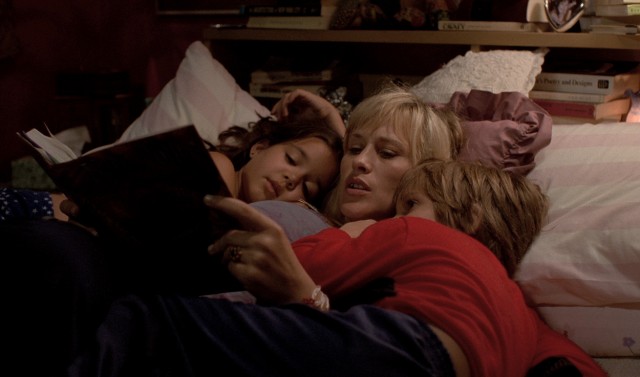
HELEN AND THE BEAR: ONE OF THE GREAT LOVE STORIES

Helen V. Hooper examines her complex, unexpected life in moving documentary (photo by Alix Blair)

HELEN AND THE BEAR (Alix Blair, 2024)
Cleveland International Film Festival
Streaming April 6–13, $15.74
helenandthebear.us
www.clevelandfilm.org

“They’re really one of the great love stories. Maybe it doesn’t make sense all the time, but I think Helen taught him how to love,” Kathleen McCloskey says about the more-than-forty-year relationship between her father, Paul “Pete” McCloskey Jr., and his second wife, Helen V. Hooper, in the deeply touching and intimate documentary Helen and the Bear.

Beautifully directed and photographed by Alix Blair, Hooper’s niece, and edited with a sweetly poetic grace by Katrina Taylor, the film follows the daily life of Pete, aka Bear, a Korean War veteran, lawyer, and longtime Republican California Congressman who became a Democratic activist in 2007, and Helen, whom he calls Eaglet, an artist who has grappled with her sexuality, depression, and independence since she was very young.

Primarily told in a cinéma vérité style, the eighty-one-minute doc goes back and forth between Helen’s and Pete’s pasts and the present, where Pete, who is about a quarter century older than Helen, is showing signs of physical and mental aging. “I can remember when I was six years old, but I can’t remember yesterday,” he tells her. While Pete makes phone call after phone call and meets with Democratic political operatives — he was the first Republican to call for the resignation of Richard Nixon, came out against the Vietnam War before the public protests, and was a leader on such bills as the Endangered Species Act and the Wilderness Protection Act — Helen, feeling despair and depressed, toils on the farm by herself, taking care of their bird, roosters, pigs, horses, cats, goats, chickens, and turkeys. “Is this what I want to spend my day doing?” she asks.

“Originally, I wanted to make a film about Pete’s history as a renegade Republican and activist. But soon, my focus shifted to Helen: my wild, loving, enigmatic aunt,” Blair explains in her director’s statement. “As I came to see Helen and Pete as two people who were madly in love, and yet, also hurt each other, the film became an investigation into how one negotiates love-of-self and love-of-partner when those forces are at odds with each other. What had their love, heartache, betrayal, and forgiveness cost them and what did it give them in return? And particularly for Helen, as a woman, what does it mean to be selfish?”

The film is supplemented with terrific archival political footage — a verbal battle between William F. Buckley Jr. and Pete on Firing Line is a highlight, as is Pete telling reporter Gabe Pressman, “That’s what this country needs: Politicians willing to lose” — but it is the home movies, personal photos, and revealing drawings and quotes from Helen’s journals that serve as its anchor: “Pete’s on the road again. I feel restless and unfree.” “I can’t deny all that I am. I guess I want everything.” “I feel loved by many people, but I still don’t really feel known.” “I just so love life; everything awes me.” And “I am realizing how lonely everyone often is — so many kinds of loneliness, of needs unmet.”

Pete and Helen take a road trip in their small camper, read a Tintin comic book, play with their dogs Jake, Mickey, and Tita, cuddle, stop to pluck the quills off a dead porcupine, and get high. One of the most poignant moments comes when Helen, who has never been a fan of the institution of marriage, wonders about life after Pete. “What will it feel like being in this bed without him,” she asks while petting one of the dogs.

The original score and sound design, by Troy Herion and J. R. Narrows, add to the overall visceral, involving experience as Blair (Farmer/Veteran, Documentary Happy Hour) invites us inside the world of a unique couple who enjoyed a special life together. “I will fucking kill you if you don’t take this seriously,” Helen tells Pete at one point, encapsulating their relationship.

Helen and the Bear premiered in April 2024 at the Hot Docs Festival; Pete passed away that May at the age of ninety-six. If you missed the film’s recent screening at IFC, you can stream it April 6–13 as part of the Cleveland International Film Festival.

[Mark Rifkin is a Brooklyn-born, Manhattan-based writer and editor; you can follow him on Substack here.]
BEAUTIFUL UNCERTAINTY: TOM SANTOPIETRO, AUDREY HEPBURN, AND DORIS DAY

TOM SANTOPIETRO AT B&N
Barnes & Noble
2289 Broadway at Eighty-Second St.
Monday, March 31, free, 6:30
212-362-8835
barnesandnoble.com
tomsantopietro.com

“When Audrey Hepburn died at 8 P.M. on January 20, 1993, at the age of sixty-three, she left behind one Academy Award, two Tony Awards, dozens of lifetime achievement awards, her beloved sons Sean and Luca, companion Robert Wolders, millions of fans, universal acclaim as an indefatigable activist on behalf of the world’s children, and one final surprise — a nearly empty closet.

“She had walked away from the church of fame that rules Hollywood and ever-increasing swaths of the general public yet held onto that fame without even trying. Her elusiveness only increased public interest in her films and clothes as well as her life and loves, but Audrey Hepburn had grown uninterested in rehashing old tales of Hollywood glamour and legendary friends. In an industry which based its self-image on endless awards shows, she was, it was safe to say, the only screen idol about whom a son could convincingly state: ‘Being away from home to win an award was really a lost opportunity. Walking the dogs with her sons was a personal victory.’”

So begins Tom Santopietro’s latest book, Audrey Hepburn: A Life of Beautiful Uncertainty (Rowman & Littlefield, March 2025, $45). Born and raised in Waterbury, Connecticut, Santopietro attended Trinity College in Hartford, then went to the University of Connecticut Law School, also in Hartford.

“I always joke that law school was the three misbegotten years of my life,” Santopietro tells me in a phone interview. “I stayed, I graduated, and as soon as I graduated, I said, I’m never doing this ever. And I never have. You know why? Because I was uninterested. And when it comes to work, we’re all good at what we’re interested in.”

A few weeks before, I had met Santopietro at the Coffee House Club for an Oscars straw vote event he hosted with his friend Simon Jones, who has appeared in such series as Brideshead Revisited, The Hitchhiker’s Guide to the Galaxy, and The Gilded Age (as Bannister) and in New York in such shows as The Real Thing, Privates on Parade, and, most recently, Trouble in Mind.

Santopietro is a lovely storyteller, in person and in print. Among his previous books are The Sound of Music Story: How a Beguiling Young Novice, a Handsome Austrian Captain, and Ten Singing von Trapp Children Inspired the Most Beloved Film of All Time; Considering Doris Day; The Way We Were: The Making of a Romantic Classic; The Importance of Being Barbra: The Brilliant, Tumultuous Career of Barbra Streisand; Why To Kill a Mockingbird Matters: What Harper Lee’s Book and the Iconic American Film Mean to Us Today; Sinatra in Hollywood; and The Godfather Effect: Changing Hollywood, America, and Me.

In A Life of Beautiful Uncertainty, Santopietro details Hepburn’s fascinating life and career in five acts comprising sixty-two chapters, including “What Price Hollywood,” “The Last Golden Age Star,” “A Star Is (Not Quite Yet) Born,” “Paris When It Fizzles — 1962–1964,” and “Everything Old Is New Again.” He explores Hepburn’s diverse filmography, from the many hits (Roman Holiday, Love in the Afternoon, The Nun’s Story, Charade, My Fair Lady, Breakfast at Tiffany’s, Funny Face) to a trio of what he calls “mistakes” (Green Mansions, The Unforgiven, Bloodline).

On March 13 at 6:30, Santopietro, who lives on the Upper West Side, will be at the Barnes & Noble on Broadway and Eighty-Second St. to discuss and sign copies of A Life of Beautiful Uncertainty. Below he talks about speaking with Doris Day and Alan Arkin, the decline of theater etiquette, celebrities’ charitable work, and his favorite Audrey Hepburn film.

Tom Santopietro will be at Upper West B&N March 31 for NYC launch of his latest book (photo by Joan Marcus)

twi-ny: Where did your love of movies come from?

tom santopietro: When I was a little kid, I always liked movies. But what really accelerated it was when I was at Trinity, I took film courses at Wesleyan, which is in Middletown, and their film department was headed by an incredible woman named Jeanine Basinger. Have you ever met Jeanine?

twi-ny: I haven’t, but I know of her.

ts: She was on the board of the AFI. She was an extraordinary teacher who ignited my love of old films and Hollywood. And that’s where it really took off. Jeanine showed me possibility, and that’s what’s so great. That’s what great teachers do. So anyway, that’s where it really took off. And then I came to New York and worked on several Broadway shows, which I still do, but about twenty years ago, I thought, I want to do something more creative. And that’s how I started to write.

twi-ny: That was your first book, The Importance of Being Barbra, which was published in 2006.

ts: I’ve been fortunate and lucky, and I always joke, I didn’t tell anybody I was writing a book because I thought, What if I don’t finish it? And what if it’s really bad? And then when it was done, I sent it to my oldest friend, and a couple of days later, he called me back. And in a voice of total surprise, he said, It’s good. So I still laugh about that. And that led to Doris Day, Frank Sinatra, and then the Godfather movies.

twi-ny: I’m looking at the books you have written and their subjects. This is something we talked about at the Coffee House, that they’re all beloved icons, beloved films, beloved characters; there’s a lot of love in the room. And one of the things you told me was that that’s one thing you do when choosing a subject.

ts: Yeah, I really do. Because I think, well, you know this, you are a writer. I always say I don’t want to write a book about Stalin because I don’t want that monster in my head for three years. So these are people whose talent I admire so much. And also what I realized, Mark, and this just came to me when the Audrey book was completed, I thought, Oh, I’ve completed a trilogy of books about enormous stars, all of whom are incredibly nice, which is so rare in Hollywood. And that’s Doris Day, Audrey Hepburn, and Julie Andrews, these women who are beloved by their costars. And in the same way, I also realized after it was completed, Oh, I wrote a trilogy of books about family, and those were The Godfather, The Sound of Music, and To Kill a Mockingbird.

So I didn’t even realize it until the trilogy had been completed, but whatever was inside of me clearly needed to be expressed.

twi-ny: In the case of Doris Day, you had a conversation with her.

ts: Yes, after the book came out. The phone rang very late one night. It was after eleven, and I answered the phone grumpily.

I hadn’t eaten dinner yet. I had just come in from work. And I said, Well, who is this? And she said, Well, I’ve been trying to reach you from Carmel, California, for a long time. And then I realized it was Doris. Everybody wants to know what it was like. We spoke for an hour; as nice as she was on the screen, she was even nicer on the phone. It’s extraordinary. She was so unbelievably honest and open; she talked about her failed marriages, her love of animals, and Hollywood. So yeah, she was pretty terrific. I wrote that book because I felt she was a huge star who never received her due.

twi-ny: She retired from movies so early in her career.

ts: Another thing in writing about Audrey Hepburn is Audrey Hepburn and Doris Day had a lot of similarities, which was they worked from when they were teenagers nonstop. And then they both walked away from their fame; Doris said, “It means much more to me to work for animal welfare.” And Audrey said, “I want to work for UNICEF.” So that interests me a lot, that in our fame-obsessed society, world-famous women would walk away from it.

twi-ny: Right. And someone like Doris Day — I bet a lot of people don’t realize that she died only in 2019. So there was a long time, even with social media and the internet and everything, that she still wasn’t around. People didn’t know her, except for her charity work, but she wasn’t flooding Facebook with it. So, she was a very private person.

ts: Yes, a very private person. And so was Audrey. And so what interests me, Mark, is we’re a fame-obsessed society today, right?

twi-ny: Oh, yes.

ts: That’s reality television, everybody demanding to be famous.

twi-ny: Even the president.

ts: That’s a really interesting dichotomy. One thing I discovered while researching the Audrey book is that who knew that Audrey Hepburn and Elizabeth Taylor were good friends? They were so opposite as people, but separately, toward the end of their lives, they used the exact same phrase: “At last, my fame makes sense to me.” And that’s because Elizabeth Taylor, with her AIDS activism, and Audrey, with UNICEF, that’s how they defined themselves. And I thought that was worth exploring.

twi-ny: That’s something that also happened and is still happening with Brigitte Bardot. She retired early to spend her life with animals and become an antifur activist. And I bet she would say the same thing as Audrey, Doris, and Elizabeth.

ts: I think that’s true. And because at a certain point, fame and money are nice, but how much does the acclaim of strangers really mean when you want to make a difference? And the difference comes through for these women through their social activism. Audrey was a kind of saint. She was such a good person.

twi-ny: All the people you spoke with, you probably never got a bad quote from anyone. Everybody just loved her. Is that right?

ts: That’s fair to say, and it’s not hyperbole. People who worked on the sets, everyone in the village in Switzerland where she lived, said she was unfailingly good to people. And I think after her war-torn, very disrupted childhood, I think she realized the value of family and the value of treating people with kindness. Because she said toward the end of her life, “The most important thing in life is being kind.” She really lived that.

Tom Santopietro signs copies of The Sound of Music Story at B&N in 2015 (photo courtesy Tom Santopietro)

twi-ny: In doing your research and interviews, was there one moment that really struck you or surprised you?

ts: I think the biggest surprise for me is how she really — how do I want to answer this — the reason why I titled the book A Life of Beautiful Uncertainty is that her entire life, she was uncertain of herself. And that was surprising. She genuinely did not think she was pretty. She just saw flaws everywhere. She genuinely did not think she was a good actress. And that shocked me because she was beautiful. And she was a terrific actress. And I think it stems from when, in the span of two months, she won the Tony Award and the Academy Award, and her mother said to her, “It’s amazing how far you’ve gotten considering how little talent you have.” [ed. note: In 1954, Hepburn won the Tony for Ondine and the Oscar for Roman Holiday.]

twi-ny: That haunts people, that kind of stuff.

ts: Yeah. So I think it all comes back to childhood, right?

twi-ny: It so often does.

ts: Barbra Streisand grew those incredibly long fingernails because her mother said, “Well, you should be a typist.” She grew her fingernails so she couldn’t type.

I think the other thing is that because I love films, and this is circling back to what we said earlier, I felt Audrey had never received her due as to how good an actress she was. Everybody says she’s charming and beautiful, but you look at a movie like The Nun’s Story, directed by Fred Zinnemann — that is a spectacularly good performance; the whole performance is with her eyes. And I wanted people to realize how skilled she was, even if she didn’t think she was skilled.

twi-ny: One of my favorite movies, and I don’t know that it would always be at the top of her list, but I adore Charade, which you write about in the book. Even with Cary Grant, Walter Matthau, George Kennedy, James Coburn, all these popular men in the movie, it is all built around her face.

ts: That’s exactly right.

twi-ny: And it’s the best Hitchcock movie Hitchcock didn’t make.

ts: That sums up that movie perfectly.

twi-ny: Do you have a favorite film of hers?

ts: That’s a great question. I know this is a cop-out answer, but I have three favorite films: The Nun’s Story, because her performance is spectacular. And also it’s really interesting the way it grapples with issues of faith and higher powers. My second favorite movie is My Fair Lady, because it’s so beautiful to look at and listen to. And the third one is, believe it or not, Wait Until Dark, because it still scares the living daylights out of me.

twi-ny: Yes. And it’s still scaring us. People who love Alan Arkin don’t realize that he could be pretty threatening.

ts: Toward the end of his life, I was able to interview him over the phone for the book. The funny thing is, when I finally got him, he started the conversation by saying, “Well, I hear you’ve been looking for me.” What he said was that Audrey was so lovely and such a good person that twenty years later, when she received the Chaplin Award from Lincoln Center, he was one of the speakers. And when he saw her, he actually apologized to her and said, I’m so sorry I was so mean to you in that movie, which is sort of amazing.

twi-ny: Can you share publicly who or what your next subject might be?

ts: I actually haven’t really figured out who I’m writing about next because, well, this has taken a long time, but also I wrote a play and it was produced this past summer in Connecticut. So I want to spend time putting the play out in the world for other productions, and it sort of fits in with what I write about because it’s a one-woman play called JBKO, about Jacqueline Bouvier Kennedy Onassis. So that’s really what I’m going to work on next.

twi-ny: Well, this is a good transition, because my last question was going to turn back to theater. You work as a house manager part-time on Broadway.

ts: Yes. I’ve been a general manager, and these days I’m working as a house manager most of the time. I don’t know if you’ve found this too, but because writing is so solitary, it’s really good for me to be around people at night at the theater. So that socialization is great, as long as the audiences are behaving themselves, of course.

twi-ny: That’s where I was going with this. At the Coffee House, we discussed how, since the pandemic, the audience’s relationship with the theater experience, interacting with other people, isn’t the same as when they were going out for a night of theater years ago.

ts: Well, I think it’s a funny thing, but since the pandemic, when people go to the theater, on some level they still think they’re in their living room streaming a show. That’s the only way I can try to make sense of it. When you’re home, you talk, you eat. And it’s different in a Broadway theater. So that’s sort of my best explanation for it.

twi-ny: Right. As someone who goes to a lot of theater, I’ve seen some things that I never had before. It’s like, I paid for my ticket, I can do whatever I want. But no, you can’t. It’s sort of representative to me of how we deal with our fellow human beings in everyday life. Now we’re much more quickly agitated, and people don’t want anyone telling them what to do.

ts: Exactly. Yeah, that has all changed. What hasn’t changed, the positive thing for me, is that theater offers people the sense of being part of a family. Everybody’s there backstage to put on the best possible show. I always say you belong when you walk through the stage door. And that’s a great feeling. That’s the joy of theater for me.

[Mark Rifkin is a Brooklyn-born, Manhattan-based writer and editor; you can follow him on Substack here.]
NOT JUST MAUS-ING AROUND: ART SPIEGELMAN AT THE 2025 COMIC ARTS FEST

Art Spiegelman discusses hie life and career in Disaster Is My Muse

COMIC ARTS FEST 2025: ART SPIEGELMAN: DISASTER IS MY MUSE (Molly Bernstein & Philip Dolin, 2024)
L’Alliance New York, Florence Gould Theater, Tinker Auditorium
55 East 59th St. between Madison & Park Aves.
Friday, March 28, $30.55 – $54.20, 7:30
Festival runs March 28–30, pass $86.10
212-355-6100
lallianceny.org

In the documentary Art Spiegelman: Disaster Is My Muse, Pulitzer Prize–winning cartoonist and editor Art Spiegelman explains, “I did take comics very, very seriously, and I thought they were time turned into space, a perfect container for memory, and an incredibly maligned art form. And without being pretentious about it, I thought that this was as valid as anything that happened in literature or in painting, or in cinema.”

Winner of the 2024 DOC NYC Grand Jury Prize in the Metropolis Competition, the hundred-minute PBS American Masters film is part of the opening-night celebration of the 2025 Comic Arts Fest, taking place March 28–30 at L’Alliance New York; it will be shown on Friday evening at 7:30, followed by a Q&A with special guests and a party with food and drink, music, and a live Exquisite Corpse session with guest illustrators.

In the documentary, Bernstein and Dolin incorporate archival footage, family photos, detailed investigations of key panels from many of Spiegelman’s comics and graphic novels, and new interviews with such comic artists as Griffith, R. Crumb, Trina Robbins, Gary Panter, Charles Burns, Chris Ware, Peter Kuper, and Jerry Craft in addition to author Hillary Chute, film critic J. Hoberman, filmmaker Ken Jacobs, Spiegelman, Mouly, and their children, Dash and Nadja. “By showing in your comics stuff you’re not supposed to show, stuff you’re not supposed to deal with, the culture outside is telling you don’t go there, by doing it, you’re robbing it of its power,” Griffith says of his Arcade cofounder’s aesthetic.

Mouly offers, “Art has never separated work and life,” especially when it comes to his genre-redefining 1986 graphic novel, Maus: A Survivor’s Tale (My Father Bleeds History) and the 1991 sequel, Maus: And Here My Troubles Began. The books explore his complicated relationship with his Polish father, Vladek, who finally told his son about his experiences at Auschwitz, a subject that he and Art’s mother, Anna, had previously avoided delving into with him.

Art Spiegelman holds up the 1973 “Centerfold Manifesto” in poignant documentary

In the books — which the New York Times originally listed as fiction until Spiegelman wrote them a letter explaining that Maus was a carefully and thoroughly researched true story and should be categorized as nonfiction — Spiegelman depicted the Jews as mice and the Nazi soldiers as evil cats. “He tackled a subject that was enormous and he established the medium as a serious literary form,” Sacco says.

As deeply personal as Maus is — the documentary includes scenes of Spiegelman visiting Auschwitz in 1987 — it is primarily a human tale of innocent people trapped amid the scourge of Fascism, something Spiegelman has been warning people about given what is happening around the world this century.

“Art Spiegelman is the guy that reinvented comics as a medium that people took seriously,” artist and author Molly Crabapple says. “He showed that comics could express the darkest, most tragic, most complicated, most true things about history, about our relationships, about family.” Disaster Is My Muse was made prior to Donald Trump reclaiming the presidency in November, but Spiegelman makes his feelings about him very clear in lectures and conversations.

Speaking about his early, radical work with EC and Mad writer and editor Harvey Kurtzman, Spiegelman notes, “It was asking you to deeply question things, and I believe it was an important aspect of what led to the generation that protested the Vietnam War.” Among the other topics that are examined are several of Spiegelman’s autobiographical panels from Breakdowns: Portrait of the Artist as a Young %@&*!; 1968’s Prisoner on the Hell Planet: A Case History, about his mother’s suicide, the comic that first attracted Mouly to him; his longtime association with Topps designing Wacky Packages and Garbage Pail Kids cards; making potent New Yorker covers; his 9/11 book, In the Shadow of No Towers; Maus being banned in many school libraries across the country; such influences as Mad magazine #11 and Bernard Krigstein’s Master Race; his adaptation of Joseph Moncure March’s 1928 lost classic, The Wild Party; and his time spent in a state mental facility and the tragic death of his brother. Although his smoking habit is never mentioned, he is nearly always seen with a pipe, cigarette, or vape.

In 1973, Spiegelman and Griffith created the “Centerfold Manifesto” in Short Order Comix #1, which proclaimed, “Comics must be personal! . . . Efficient and Callous Capitalist Exploitation must be condemned and deplored at every turn . . . And replaced by Inefficient and humane Capitalist Exploitation!” More than fifty years later, he is still living by his word.

The Comic Arts Fest overflows with opportunities to appreciate the art form Spiegelman champions: Highlights include screenings of four episodes from season two of Florian Ferrier’s series The Fox-Badger Family and four episodes of Daniel Klein’s Living with Dad, the masterclass “Aleksi Briclot: My Journey with Marvel Studios,” the conversation “The Return of the Iconic Gaston Lagaffe” with Delaf, the lecture “The Rise of Afromanga” with Gigi Murakami, a screening of Anora Oscar winner Jacques Audiard’s Paris, 13th District followed by a discussion with artist Adrian Tomine, a screening of Silenn Thomas’s Frank Miller: American Genius followed by a Q&A with Thomas and artist Emma Kubert, and the closing event, “Françoise Mouly, from Indie Comics to the New Yorker,” in which Spiegelman’s wife and business partner sits down with Anita Kunz, Peter de Sève, Barry Blitt, and others to talk about her career. Spiegelman will also be at the Artist Alley & Bookstore section of the fest on March 30 from 3:30 to 5:30; among the other participants are Paul & Gaëtan Brizzi, Patrick McDonnell, Pauline Lévêque, Griffith, and Tomine.

[Mark Rifkin is a Brooklyn-born, Manhattan-based writer and editor; you can follow him on Substack here.]
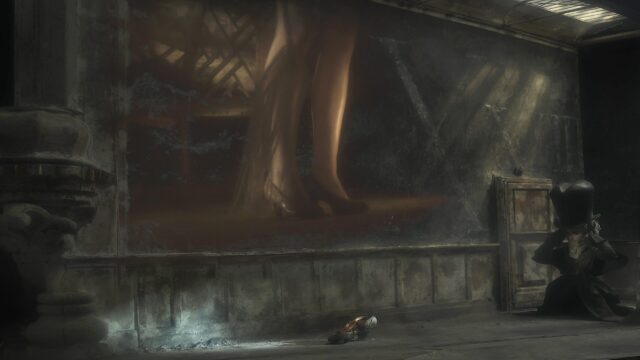
MARVELS AT MoMI: AUTISTIC MEDIA MAKERS FESTIVAL

Christina Phensy’s Elegy for the Future is part of opening night of Marvels of Media Festival at MoMI

MARVELS OF MEDIA FESTIVAL 2025
Museum of the Moving Image
35th Ave. at 36th St., Astoria
March 27-29, free with advance RSVP
movingimage.us

The Marvels of Media Festival returns to the Museum of the Moving Image (MoMI) for its fourth iteration, celebrating the work of autistic creators with film screenings, panel discussions, workshops, an exhibition, and satellite locations in Westchester, Long Island, and San Francisco.

“Marvels of Media has shown the brilliant work of neurodiverse media makers in clear evidence,” MoMI trustee and founder of Marvels of Media and Sapan Studio Josh Sapan said in a statement. Debut filmmaker and As We See It star Sue Ann Pien added, “Expanding the audience’s understanding of an autistic female’s reality is a perspective changer for those more accustomed to stereotypically male depictions in film and television history. It’s a culturally relevant reminder that no one person is meant to represent an entire spectrum (just like not everyone with blue eyes or brown hair is the same).”

The three-day festival features twenty-two films, five video games, and two virtual reality experiences focusing on the neurodivergent community. The opening-night selection is the East Coast premiere of Pien’s fifteen-minute short, Once More, Like Rain Man, which she explains “gives a voice to a young autistic teenage girl’s own experiences finding her creative empowerment through the casting process.” Also on the bill is Christina Phensy’s fourteen-minute Elegy for the Future; Pien appears in both works. The evening also includes a panel discussion on autistic representation, with Pien, actress Bella Zoe Martinez, and Phensy, moderated by filmmaker and playwright Jackson Tucker-Meyer, and will be followed by a reception and a viewing of the exhibition “The Adventure of Nature and the Senses,” consisting of five films totaling fifteen minutes and the VR presentations Booper, Get Home by Thomas Fletcher and MUD & TKU Student Work XR/VR Gallery by Mike S., Opy S., Pattrick L., Rafat A., Tate B., Xavier A., Rose L., Briana G., Sasha R., Alejan T., Joshua K., and Koby F. In addition, the Marvels of Media Game Lab Exhibition includes Elliot Rex White’s visual novel A Night for Flesh and Roses as well as Metal Place by Abdullah Kante, Fizzy Adventure by Alex Lundqvist, Awesome Game by Carter Lee, and The Happy Hedgehog Wants a Big Wish by Tech Kids Unlimited’s Digital Agency.

We’ve come a long way since Rain Man.

Below is the full schedule.

Thursday, March 27
“Vibrant Voices: Four Shorts”: House of Masks by Atticus Jackson and Jason Weissbrod, 420 Ways to Die by Samara Huckvale, Insight by Ben Stansbery, and Breaking Normal by Jessica Cabot, followed by a discussion with Weissbrod, Huckvale, Stansbery, and Tal Anderson, 4:00

“Marvels of Media Festival Opening Night,” with opening remarks from Josh Sapan, Aziz Isham, Leonardo Santana-Zubieta, and Miranda Lee; screenings of Once More, Like Rain Man by Sue Ann Pien and Elegy for the Future by Christina Phensy; panel discussion, reception, and exhibition viewing (including Night City by Kyle Davis, Daltokki by Daniel Oliver Lee, CMYK Walk in the Woods by Quinn Koeneman, As One by Bec Miriam, and Jellyfish Memories by Eliza Young), 6:30

Friday, March 28
New York premiere of Lone Wolves (Ryan Cunningham, 2024), followed by discussion with Cunningham (in person) and writer-actor Matt Foss (via live video), 6:00

Saturday, March 29
“Playful Tales: Six Shorts”: Secret of the Hunter by Jessica “Jess” Jerome, Wilson S. Whale by Harry Schad, Abelard the Traveling Hedgehog’s Underwater Adventure with Max the Turtle by Pete Peterman and Ambrose Peterman, Joust My Luck by Jacob Lenard, The Ugliest Masterpiece by Rae Xiang, and Julius’ Identity Crisis by Brendan Ratner, followed by a discussion with Schad, Lenard, Xiang, Ratner, Payton Hepler, and Andy Nava, moderated by Mr. Oscar Segal and Allison Tearney, 1:00

“Life Lessons: Four Shorts”: Unbreakable by Alex Astrella, Glitter by Violet Gallo and Maya Velazquez, Surviving the Spectrum by Carley Marissa Dummitt, and Late-Diagnosed by Matthew Baltar, followed by a discussion with Gallo, Baltar, and Dummitt, 2:30

“Media-Maker Talk and Networking Mixer,” with Jason Weissbrod and others, 6:00

Sunday, March 30
“Collage Animation Workshop,” with artist David Karasow, 4:00

[Mark Rifkin is a Brooklyn-born, Manhattan-based writer and editor; you can follow him on Substack here.]
SCORED BY YASUAKI SHIMIZU: CUTIE AND THE BOXER

CUTIE AND THE BOXER

Documentary tells the engaging story of a pair of Japanese artists and the life they have made for themselves in Brooklyn

CUTIE AND THE BOXER (Zachary Heinzerling, 2013)
Metrograph
7 Ludlow St. between Canal & Hester Sts.
Saturday March 22, 5:00
metrograph.com
www.facebook.com/cutieandtheboxer

Zachary Heinzerling’s Emmy-winning Cutie and the Boxer is a beautifully told story of love and art and the many sacrifices one must make to try to succeed in both. In 1969, controversial Japanese Neo Dada action painter and sculptor Ushio Shinohara came to New York City, looking to expand his career. According to the catalog for the 2013 MoMA show “Tokyo 1955-1970: A New Avant-Garde,” which featured four works by Ushio, “American art had seemed to him to be ‘marching toward the glorious prairie of the rainbow and oasis of the future, carrying all the world’s expectations of modern painting.’” Four years later, he met nineteen-year-old Noriko, who had left Japan to become an artist in New York as well. The two fell in love and have been together ever since, immersed in a fascinating relationship that Heinzerling explores over a five-year period in his splendid feature-length theatrical debut.

Ushio and Noriko live in a cramped apartment and studio in DUMBO, where he puts on boxing gloves, dips them in paint, and pounds away at large, rectangular canvases and builds oversized motorcycle sculptures out of found materials. Meanwhile, Noriko, who has spent most of the last half century taking care of her often childlike husband and staying with him through some rowdy times and battles with the bottle, is finally creating her own work, an R. Crumb-like series of drawings detailing the life of her alter ego, Cutie, and her often cruel husband, Bullie. (“Ushi” means “bull” in Japanese.) While Ushio is more forthcoming verbally in the film, mugging for the camera and speaking his mind, the pig-tailed Noriko is far more tentative, so director and cinematographer Heinzerling brings her tale to life by animating her work, her characters jumping off the page to show Cutie’s constant frustration with Bullie.

Ushio Shinohara creates one of his action paintings in CUTIE AND THE BOXER

Ushio Shinohara creates one of his action paintings in Emmy-winning Cutie and the Boxer

During the course of the too-short eighty-two-minute film — it would have been great to spend even more time with these unique and compelling figures — the audience is introduced to the couple’s forty-year-old son, who has some issues of his own; Guggenheim senior curator of Asian Art Alexandra Munroe, who stops by the studio to consider purchasing one of Ushio’s boxing paintings for the museum; and Chelsea gallery owner Ethan Cohen, who represents Ushio. But things never quite take off for Ushio, who seems to always be right on the cusp of making it. Instead, the couple struggles to pay their rent. One of the funniest, yet somehow tragic, scenes in the film involves Ushio packing up some of his sculptures — forcing them into a suitcase like clothing — and heading back to Japan to try to sell some pieces. Cutie and the Boxer is a special documentary that gets to the heart of the creative process as it applies both to art and love, focusing on two disparate people who have made a strange yet thoroughly charming life for themselves.

Cutie and the Boxer is screening March 22 at 5:00 as part of the Metrograph series “Scored by Yasuaki Shimizu” and will be followed by a discussion and Q&A with composer Yasuaki Shimizu and writer Yumiko Sakuma. The Saturday tribute also includes a double feature of Hiroyuki Nakano’s 1990 Pace and Nam June Paik’s 1986 Bye Bye Kipling at 2:35 and Buntarō Futagawa’s 1925 silent jidaigeki Orochi at 7:30, which will be introduced by Shimizu, about which he explains, “This film is a silent samurai movie made and released in 1925, directed by Bunta Suga. It is the first production of the Banto Tsumasaburō Production and a landmark work that sparked the ‘sword-fighting boom’ in Japan. This year marks the one-hundredth anniversary of its release! I composed music for a film concert. A few years later, the master film of Orochi was rediscovered, and in 2023, a digital master version was produced. I revised the score for this 4K digital restoration, which was released the same year. This film holds great significance for me.”

[Mark Rifkin is a Brooklyn-born, Manhattan-based writer and editor; you can follow him on Substack here.]