this week in film and television

THE LOAD

The Load

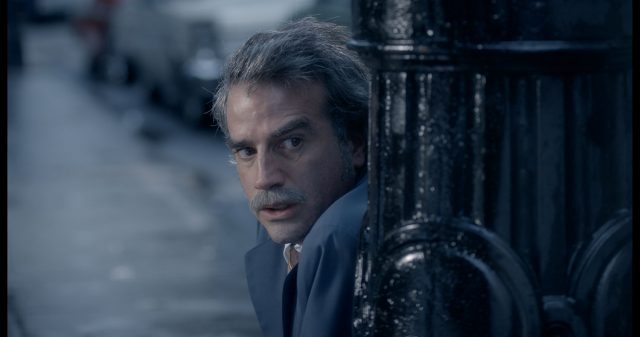
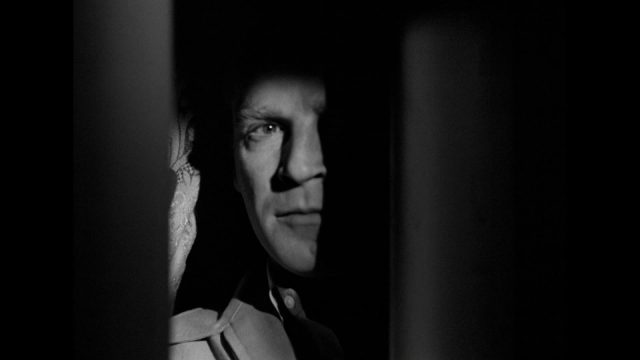
Leon Lučev stars as a man just trying to get by during the Kosovo war in The Load

THE LOAD (TERET) (Ognjen Glavonić, 2018)
Film Society of Lincoln Center, Francesca Beale Theater
Elinor Bunin Munroe Film Center
144 West 65th St. between Broadway & Amsterdam Aves.
Opens Friday, August 30
212-875-5600
grasshopperfilm.com
www.filmlinc.org

Eight years in the making, Ognjen Glavonić’s narrative feature debut, The Load, is a tense, gripping drama set amid the NATO bombings during the Kosovo war in Yugoslavia in 1999. After the factory where he worked closes down, Vlada Stefanovic (Leon Lučev) takes a job driving a truck from the countryside to Belgrade. The mission is reminiscent of the ones in Henri-Georges Clouzot’s The Wages of Fear and William Friedkin’s underrated remake, Sorcerer, except in those films, the drivers, played by Yves Montand and Roy Scheider, respectively, knew they were transporting dangerous cargoes of nitroglycerin and dynamite. Not only won’t his facilitators tell Vlada what’s in the back of the truck, but it’s padlocked so he can’t look inside. He just has to follow two very basic rules: “Once you start driving, there’s no stopping” and “Avoid traffic and don’t attract attention.”

The film, inspired by real events that Glavonić documented in 2016’s Depth Two, opens with a dark, beautiful shot of a vast mountain landscape, bombs going off in the distance while a van slowly moves down a winding path. Vlada is first shown from outside the vehicle, his head leaning against the window, a forest and a burning house reflected in the glass; he appears to be trapped inside, resigned to his fate. This is not the life he has chosen, risking everything so he can bring home money to his wife and son. For much of the movie, he is in the claustrophobic cab of his truck or in corners of small rooms, as if there is no way out. He reluctantly picks up a young hitchhiker, Paja (Pavle Čemerikić), who says he knows the way to Belgrade, avoiding roads and bridges that have been bombed.

The Load

Paja (Pavle Čemerikić) hitches a ride in Ognjen Glavonić’s suspenseful road movie

Glavonić occasionally strays from the central narrative, temporarily following the stories of minor, peripheral characters — the director has said that he structured the film like a tree, with many branches representing various aspects of everyday life at that harsh time — but he always returns to Vlada, the tree’s trunk, who smokes cigarette after cigarette, using his father’s lighter, an engraved memento from the 1943 Battle of Sutjeska. He doesn’t say much, rarely smiles, just forges ahead. When he walks into the middle of a party, the first words sung by the band are “like a wounded bird”; he is a victim of war, collateral damage. “Take me away from here,” the song continues, but there is nowhere to go but to his mysterious destination.

A coproduction of Serbia, Croatia, France, Qatar, and Iran, The Load is a masterpiece of suspense, a caustic thriller gorgeously photographed by Tatjana Krstevski, often with a roaming, off-balance handheld camera, with subtly immersive sound design by Jakov Munižaba, making it feel like you’re on the road with Vlada, seeing and hearing what he’s experiencing. Croatian actor Lučev (Silent Sonata, I Can Barely Remember the Day) is magnetic as Vlada, a kind of everyman caught up in a terrible situation that he can do nothing about. The Load opens August 30 at Lincoln Center, with Krstevski and producer Stefan Ivančić introducing the 7:15 screening that night; Ivančić will also introduce the 5:00 show on August 31.

LEONARD COHEN: A CRACK IN EVERYTHING

George Fok, "Passing Through," 2017. Courtesy of the artist. Photo: Frederick Charles

George Fok’s Passing Through is centerpiece of Leonard Cohen show at Jewish Museum (courtesy of the artist / photo by Frederick Charles)

The Jewish Museum
1109 Fifth Ave. at 92nd St.
Through September 8, $8-$18, pay-what-you-wish Thursday from 5:00 – 8:00, free Saturday
212-423-3200
thejewishmuseum.org

In an October 2016 Q&A at the Canadian Consulate in LA, Leonard Cohen explained, “Uh, I said I was ready to die recently. And I think I was exaggerating. I’ve always been into self-dramatization. I intend to live forever.” Leonard Norman Cohen died the next month at the age of eighty-two, leaving behind a legacy that might just live forever, as evidenced by the sensational exhibition “Leonard Cohen: A Crack in Everything” that continues at the Jewish Museum through September 8. Curated by John Zeppetelli and Victor Shiffman for the Musée d’art contemporain de Montréal in Cohen’s beloved hometown, the show is an ingenious exploration of the life and career of the singer-songwriter, poet, novelist, visual artist, Buddhist monk, father, grandfather, Sabbath-observant Jew, and elegant raconteur.

Named after a quote from his song “Anthem” from the 1992 album The Future — “Ring the bells that still can ring / Forget your perfect offering / There is a crack, a crack in everything / That’s how the light gets in” — the three-floor multimedia exhibit consists of thirteen installations by artists repurposing and recontextualizing Cohen’s words and images. The centerpiece is George Fok’s nearly hourlong Passing Through, a nine-channel video across three walls of a large room in which visitors can sit on benches or beanbag chairs; the piece features concert and backstage footage ranging from Cohen’s early days to his final tour in 2013, merging together performances of the same songs through the years, including “Hallelujah,” “Tower of Song,” “Suzanne,” “I’m Your Man,” “Chelsea Hotel #2,” and “First We Take Manhattan,” revealing how he adapted his unique trademark vocal phrasings as he got older. Kara Blake’s The Offerings is a five-channel video that compiles thirty-five minutes of interviews in which Cohen discusses his writing process and some of his life choices, from moving to Greece to becoming a monk. In Ari Folman’s Depression Chamber, the director of such films as Waltz with Bashir and The Congress invites people one at a time to spend five minutes in a dark room, lying on a bed as Cohen’s “Famous Blue Raincoat” plays, the lyrics coming alive in mesmerizing, meaningful ways. At the other end of the hall, more than two hundred of Cohen’s self-portrait drawings from 2003 to 2016 are projected on a loop, edited together by Alexandre Perreault.

Candice Breitz, "I'm Your Man (A Portrait of Leonard Cohen)," 2017. Courtesy of the artist. Photo: Frederick Charles

Candice Breitz’s I’m Your Man (A Portrait of Leonard Cohen) consists of eighteen fans singing all of 1988 Cohen comeback album (courtesy of the artist / photo by Frederick Charles)

Candice Breitz’s two-part I’m Your Man (A Portrait of Leonard Cohen) begins with a video of the all-male Shaar Hashomayim Synagogue Choir, from Cohen’s longtime shul, singing only the background vocals to every tune on Cohen’s extraordinary 1988 comeback album, I’m Your Man (“First We Take Manhattan,” “Ain’t No Cure for Love,” “Everybody Knows,” “Take This Waltz,” “Tower of Song,” the title track, et al.); down a narrow path blanketed by red curtains, eighteen Cohen fans sing the main lyrics to the songs, each on their own screen and speaker. For the best effect, walk around the room and then into the hall to find the exact spot where the lead vocals and harmonies merge. Audiences can participate in Janet Cardiff and George Bures Miller’s The Poetry Machine, a vintage Wurlitzer organ with an array of speakers and gramophone horns; guests can take a seat and press down the keys, each of which connects to Cohen’s voice reading poems from his 2006 Book of Longing. You can also sit or lie down on a bench and hum “Hallelujah” into any of several dangling microphones in Daily tous les jours’ Heard There Was a Secret Chord, joining a chorus of live hummers online.

Janet Cardiff and George Bures Miller, "The Poetry Machine," 2017. Courtesy of the artists; Luhring Augustine, New York; Fraenkel Gallery, San Francisco; and Gallery Koyanagi, Tokyo. Photo: Frederick Charles

Janet Cardiff and George Bures Miller’s The Poetry Machine invites visitors to take a seat (courtesy of the artists; Luhring Augustine, New York; Fraenkel Gallery, San Francisco; and Gallery Koyanagi, Tokyo / photo by Frederick Charles)

On the third floor is a listening room where you can relax and hear specially commissioned Cohen cover songs while immersed in a James Turrell–like display of changing colors and shapes; the setlist includes Feist’s “Hey, That’s No Way to Say Goodbye,” Dear Criminals’ “Anthem,” Ariane Moffatt and the Orchestre Symphonique de Montréal’s “Famous Blue Raincoat,” Moby’s “Suzanne,” Chilly Gonzales, Jarvis Cocker, and Kaiser Quartett’s “Paper Thin Hotel,” and the National, Sufjan Stevens, Ragnar Kjartansson, and Richard Reed Parry’s “Memories.” There are also contributions from Christophe Chassol, Kota Ezawa, Jon Rafman, Taryn Simon (linking Cohen’s death with the election of Donald Trump), and Tacita Dean (a sweet tribute to “Bird on the Wire”) along with extensive biographical text in one area. It all comes together to paint a magnificent portrait of an exceptional artist who continually challenged himself and his audience, a highly intelligent storyteller and performer who seemed to exist on his own plane. “I never had the sense that there was an end. That there was a retirement or that there was a jackpot, Cohen told Paul Zollo in an 1990s interview. With “Leonard Cohen: A Crack in Everything,” fans hit the jackpot with a potpourri of phenomenal proportion. (On August 29, the Jewish Museum and Russ & Daughters are hosting the final “Cocktails with Cohen,” in which, from 5:30 to 7:30, visitors can partake of the Red Needle, a drink invented by Cohen in 1975 consisting of tequila, cranberry juice, lemon, and ice. Beer, wine, and other drinks will also be available for purchase.)

PROGRAMMER’S NOTEBOOK — ON MEMORY: UNCLE BOONMEE WHO CAN RECALL HIS PAST LIVES

Apichatpong Weerasethakul’s Palme d’Or winner is a subtly beautiful meditation on death and rebirth, memory and transformation

Apichatpong Weerasethakul’s Palme d’Or winner is a subtly beautiful meditation on death and rebirth, memory and transformation

UNCLE BOONMEE WHO CAN RECALL HIS PAST LIVES (LUNG BOONMEE RALUEK CHAT) (Apichatpong Weerasethakul, 2010)
BAMfilm, BAM Rose Cinemas
30 Lafayette Ave. between Ashland Pl. & St. Felix St.
Saturday, August 31, 6:00
Series runs through September 5
718-636-4100
www.bam.org

The BAM series “Programmers’ Notebook: On Memory,” consisting of works involving creative, cinematic ways of the mind’s relationship with the past, continues August 31 with Apichatpong Weerasethakul’s exquisite 2010 Palme d’Or winner, Uncle Boonmee Who Can Recall His Past Lives, an elegiac, personal meditation on memory, transformation, death, and rebirth, a fascinating integration of the human, animal, and spirit worlds. Uncle Boonmee (Thanapat Saisaymar) is dying of kidney failure, being tended to by his Laotian helper, Jaai (Samud Kugasang). Boonmee is joined by his dead wife’s sister, Jen (Jenjira Pongpas), in his house in the middle of the jungle. Boonmee and Jen have nearly impossibly slow conversations that seem to go nowhere, just a couple of very simple people not expecting much excitement out of what’s left of their lives. Even when Boonmee’s long-dead wife, Huay (Natthakarn Aphaiwonk), and his long-missing son, Boonsong (Geerasak Kulhong), now a hairy ghost monkey covered in black fur and with two laserlike red eyes, suddenly show up, Boonmee and Jen pretty much just go with the flow. Weerasethakul maintains the beautifully evocative pace whether Jaai is draining Boonmee’s kidney, the characters discuss Communism, Tong (Sakda Kaewbuadee) questions his monkhood, a princess (Wallapa Mongkolprasert) has sex with a catfish, or they all journey to a cave in search of another of Boonmee’s past lives, framing each section in the context of a different cinematic genre, a lament for the ways movies used to be made and viewed.

Uncle Boonmee Who Can Recall His Past Lives,

Uncle Boonmee Who Can Recall His Past Lives is screening at BAM as part of series on memory

The film, which was shot in 16mm (but is being shown in a digital projection at BAM) and was inspired by a 1983 book called A Man Who Can Recall His Past Lives (as well as some of Weerasethakul’s own family experiences), is part of the Primitive Project, Weerasethakul’s multimedia installation that also includes the short films A Letter to Uncle Boonmee and Phantoms of Nabua and which was displayed at the New Museum in 2011. Weerasethakul, who gained a growing international reputation with such previous works as Blissfully Yours (2002), Tropical Malady (2004), and Syndromes and a Century (2006) and has a bachelor’s degree in architecture from Khon Kaen University and an MFA in filmmaking from the Art Institute of Chicago, is a master storyteller who continues to challenge viewers with his unique visual language and subtly effective narrative techniques. “Programmers’ Notebook: On Memory” runs through September 5 and includes such other films as Sarah Polley’s Stories We Tell, Akira Kurosawa’s Rashomon, Chantal Akerman’s No Home Movie, and Gregory Nava’s Mi Familia.

PROGRAMMER’S NOTEBOOK — ON MEMORY: THE TREE OF LIFE

Jessica Chastain, Hunter McCracken, and Brad Pitt star in Terrence Malick’s epic masterpiece, The Tree of Life

THE TREE OF LIFE (Terrence Malick, 2011)
BAMfilm, BAM Rose Cinemas
30 Lafayette Ave. between Ashland Pl. & St. Felix St.
August 28-30
Series runs through September 5
718-636-4100
www.bam.org

The BAM series “Programmers’ Notebook: On Memory,” consisting of works involving creative, cinematic ways of the mind’s relationship with the past, continues August 28-30 with an unforgettable gem. As of 2005, iconoclastic writer-director Terrence Malick had made only five feature films in his forty-plus-year career, but his 2011 effort, The Tree of Life, is his very best. Following Badlands (1973), Days of Heaven (1978), The Thin Red Line (1998), and The New World (2005), The Tree of Life is an epic masterpiece of massive proportions, a stirring visual journey into the beginning of the universe, the end of the world, and beyond. The unconventional nonlinear narrative essentially tells the story of a middle-class Texas family having a difficult time coming to grips with the death of one of their sons in the military. Malick cuts between long flashbacks of Mr. and Mrs. O’Brien (Brad Pitt and Jessica Chastain) in the 1950s and 1960s, as they meet, marry, and raise their three boys, to the present, when Jack (Sean Penn), their eldest, now a successful architect, is still searching for answers. The sets by production designer Jack Fisk transport viewers from midcentury suburbia to the modern-day big city and a heavenly beach, all gorgeously shot by cinematographer Emmanuel Lubezki. Every frame is so beautiful, it’s as if they filmed the movie only at sunrise and sunset, the Golden Hour, when the light is at its most pure. The Tree of Life is about God and not God, about faith and belief, about evolution and creationism, about religion and the scientific world. The film opens with a quote from the Book of Job: “Where were you when I laid the earth’s foundation . . . while the morning stars sang together and all the sons of God shouted for joy?” Early on Mrs. O’Brien says in voice-over, “The nuns taught us there are two ways through life: The way of nature, and the way of grace. You have to choose which one to follow.” Malick doesn’t get caught up in those questions, instead focusing on the miracles of life and death and everything in between.

Sean Penn plays an architect searching for answers in The Tree of Life

With the help of Douglas Trumbull, the special effects legend behind 2001: A Space Odyssey, Blade Runner, and Close Encounters of the Third Kind — and who hasn’t been involved in a Hollywood film in some thirty years — Malick travels through time and space, using almost no CGI. Instead, he employs images from the Hubble telescope along with Thomas Wilfred’s flickering “Opus 161” art installation, which evokes a kind of eternal flame that appears in between the film’s various sections. Malick brings out the Big Bang, dinosaurs, and the planets during this inner and outer head trip of a movie that will leave you breathless with anticipation at where he is going to take you next, and where he goes is never where expected, accompanied by Alexandre Desplat’s ethereal orchestral score. But perhaps more than anything else, The Tree of Life, which won the Palme d’Or at the 2011 Cannes Film Festival, is about the act of creation, from the creation of the universe and the world to the miracle of procreation (and the creation of cinema itself). Mr. O’Brien is an inventor who continually seeks out patents but always wanted to be a musician; he plays the organ in church, but his dream of creating his own symphony has long been dashed. And Jack is an architect, a man who creates and builds large structures but is unable to get his own life in order. In creating The Tree of Life, Malick has torn down convention, coming up with something fresh and new, something that combines powerful human emotions with visual wizardry, a multimedia poem about life and death, the alpha and the omega. “Programmers’ Notebook: On Memory” runs through September 5 and includes such other films as Andrei Tarkovsky’s Mirror, Apichatpong Weerasethakul’s Uncle Boonmee Who Can Recall His Past Lives, Christopher Nolan’s Memento, and Tomás Gutiérrez Alea’s Memories of Underdevelopment.

FIDDLER: A MIRACLE OF MIRACLES

Fiddler

Fiddler on the Roof lyricist Sheldon Harnick plays the violin in new documentary about history of the show

FIDDLER: A MIRACLE OF MIRACLES (Max Lewkowicz, 2019)
Quad Cinema, 34 West 13th St. between Fifth & Sixth Aves., 212-255-2243
The Landmark at 57 West, 657 West 57th St. at Twelfth Ave.
Opens Friday, August 23
thefiddlerfilm.com

I’ve always felt a deep connection to Fiddler on the Roof, one of the most popular and critically successful musicals in history. I was awed by the movie when I was a kid, listened over and over to the original Broadway cast recording (on cassette!), and have enjoyed several stage productions, including one at a Long Island synagogue when I was a teen, one in Yiddish, and two on the Great White Way. I always assumed that it was because of my Eastern European Jewish roots; my grandparents on one side and great grandparents on the other escaped from pogroms in shtetls not unlike Anatevka, the small, tight-knit community in Ukraine where the show takes place. But as the new documentary Fiddler: A Miracle of Miracles reveals, the story is far more universal. “What is that that makes it speak in so many languages, and everybody thinks it’s about them,” Joel Grey, director of the smash Yiddish version running at Stage 42, says in the film. Theater critic Charles Isherwood points out, “Fiddler is really not just about violence that is visited on a single person but violence that is visited on an entire culture. Really it’s about what we now call ethnic cleansing, in the end, and these forces are still very much alive in the world. Bigotry, oppression, sometimes disguised as mere conservatism, it’s eerily and perhaps sadly relevant today.”

Fiddler

Producer Hal Prince explains the legacy of Fiddler in A Miracles of Miracles

In the documentary, director Max Lewkowicz (Underfire: The Untold Story of Pfc. Tony Vaccaro), whose mother is a Holocaust survivor, explores the creation of the Broadway musical, which was based on the Tevye the milkman stories by Sholem Aleichem and features a score by Jerry Bock, lyrics by Sheldon Harnick, book by Joseph Stein, and direction and choreography by Jerome Robbins, as well as examining its lasting international influence. He shifts between 1905, the time when the show is set; 1964, when it opened on Broadway; and today, where a production can be seen somewhere around the globe every day. He has amassed a treasure trove of archival footage, including old television appearances, a recording of Aleichem narrating one of his tales, a scene from the 1939 Yiddish drama Tevya, original Marc Chagall-inspired set designs by Boris Aronson, and the tape of music that Bock would send to Harnick so he could write the words (instead of working together at the piano).

He combines old interviews, photos, and clips of Bock, Stein, Robbins, and Tevye originator Zero Mostel with new interviews with Harnick (who plays a violin on a New York City roof), the late producer Harold Prince, violinist Itzhak Perlman, Fiddler fans Stephen Sondheim and Lin-Manuel Miranda, and numerous actors and directors affiliated with the show: Austin Pendleton and Joanna Merlin from the original 1964 cast, Topol and Norman Jewison (who is not Jewish) from the 1971 Oscar-winning film, Harvey Fierstein from the 2005-6 iteration, Danny Burstein, Jessica Hecht, Bartlett Sher, Adam Kantor, and Michael C. Bernardi — whose father, Herschel, portrayed Tevye on Broadway in 1964 and 1981 — from the 2016 version, and the current Yiddish Tevye, Steven Skybell. Authors Jan Lisa Huttner and Alisa Solomon put the story in sociopolitical context by relating it to the civil rights and women’s movements of the 1960s and ’70s.

Lewkowicz and editor Joseph Borruso also interweave footage from Fiddler productions in the Netherlands, Japan, Canada, Thailand, England, Brooklyn Middle School 447, and other locations, emphasizing again the universality of the story, particularly in light of today’s refugee crisis, the rise of anti-Semitism and racism, images of immigrant children being ripped out of their parents’ arms, and the cultural need to hold on to tradition and personal connection in the age of social media and the internet. “In moments of great upheaval, Fiddler is always going to seem relevant because the world is changing faster than we can understand,” Miranda, whose In the Heights was partially inspired by Fiddler, explains. “And that’s what the show’s about, and it’s intensely accessible because we are going through times of great change and great upheaval.” And, of course, there’s the music itself, as the film delves into such classic songs as “Matchmaker, Matchmaker,” “Sunrise, Sunset,” “Sabbath Prayer,” “Tradition,” “To Life,” “If I Were a Rich Man,” and “Do You Love Me?” Perhaps the best thing about Fiddler: A Miracle of Miracles, which opens today at the Quad and the Landmark at 57 West, is that it has given me an even greater appreciation of the musical’s endless wonders, which I didn’t think possible. I’ve also learned that it’s not just mine, but I guess I can share it with everyone else.

CHARLIE PARKER JAZZ FESTIVAL 2019

charlie parker

Multiple locations
August 21-25, free (some events require advance RSVP)
cityparksfoundation.org/charlieparker

City Parks Foundation’s twenty-seventh annual Charlie Parker Jazz Festival, a free five-day SummerStage salute to the Kansas City–born saxophonist known as Bird and Yardbird, celebrates the centennial of the Harlem Renaissance this year with two big concerts and satellite events. The highlights are the shows on August 24 in Marcus Garvey Park and August 25 at Tompkins Square Park, but there are also panel discussions, film screenings, tributes to Clark Terry, Fred Hersch, and Art Blakey, and solo performances in intimate garden settings, some of which require advance RSVP. The festivities take place in Harlem, where Parker established himself as one of the greatest jazz saxophonists, and on the Lower East Side, where Parker lived from 1950-54, in a now-landmarked row house on Ave. B.

Wednesday, August 21
Native Soul Tribute to Clark Terry & Screening: Keep on Keepin’ On (Alan Hicks, 2014), Hansborough Recreation Center Rooftop, advance RSVP required (charlierparker@cityparksfoundation.org), concert at 6:00, screening at 7:45

Jazz in the Garden: Michael Marcus, 6BC Botanical Garden, 5:30

Thursday, August 22
Unpacking Jazz and Gender Justice, with Terri Lynne Carrington and Aja Burrell Wood, the National Jazz Museum in Harlem, advance RSVP required (charlierparker@cityparksfoundation.org), 12:00

An Evening at Langston’s: Celebrating the Centennial Anniversary of the Harlem Renaissance, with Candice Hoyes, the Langston Hughes House, advance RSVP required (events@itooarts.com), 7:00

Screening: The Ballad of Fred Hersch (Charlotte Lagarde & Carrie Lozano, 2016), followed by a Q&A with the directors, Maysles Documentary Center, advance RSVP required (charlierparker@cityparksfoundation.org), 7:00

Friday, August 23
Jazz in the Garden: René Mclean, Harlem Rose Garden, 5:30

Harlem 100: Mwenso and the Shakes, Brianna Thomas, Vuyo Sotashe, Fred Wesley, and Jazzmobile Presents: Winard Harper & Jeli Posse, Marcus Garvey Park, 7:00

Saturday, August 24
Dee Dee Bridgewater, Ravi Coltrane, Quiana Lynell, and Reclamation: Camille Thurman, Nikara Warren and Brandee Younger, Marcus Garvey Park, 3:00

Sunday, August 25
Carl Allen’s Art Blakey Tribute, George Coleman Trio, Fred Hersch, and Lakecia Benjamin, Tompkins Square Park, 3:00

WHAT YOU GONNA DO WHEN THE WORLD’S ON FIRE?

What You Gonna Do When the World’s on Fire?

Titus Turner looks up to his older brother, Ronaldo King, in What You Gonna Do When the World’s on Fire?

WHAT YOU GONNA DO WHEN THE WORLD’S ON FIRE (Roberto Minervini, 2018)
Film Society of Lincoln Center
Elinor Bunin Munroe Film Center, Francesca Beale Theater, Howard Gilman Theater
144 West 65th St. between Broadway & Amsterdam Aves.
Opens Friday, August 16
212-875-5050
www.kimstim.com
www.filmlinc.org

Roberto Minervini follows up his Texas Trilogy – The Passage, Low Tide, and Stop the Pounding Heart – with the powerful sociopolitical call to action, What You Gonna Do When the World’s on Fire? The film is shot in sharp, distinctive black-and-white by cinematographer Diego Romero Suarez-Llanos so that it looks like a fictional work from the civil rights era, but it is an all-too-real documentary that shows what’s happening in the US today, even though far too many Americans would deny the inherent realities the movie depicts. Italian-born director Minervini, who is based in the American south, tells four poignant stories steeped in oppression: Judy Hill is struggling to get by, running a bar that has become an important meeting place for the Tremé community while also caring for her elderly mother, Dorothy; Ashlei King hopes that her young sons, fourteen-year-old Ronaldo King and nine-year-old Titus Turner, come back safe after going out to play in a junkyard; Mardi Gras Indian Chief Kevin Goodman melds black and Native American traditions in changing times; and Krystal Muhammad and the New Black Panther Party for Self Defense protest the killings of two African American men at the hands of police.

What You Gonna Do When the World’s on Fire?

The New Black Panther Party for Self Defense fights the power in What You Gonna Do When the World’s on Fire?

Beautifully edited by Marie-Hélène Dozo, the film, which was shot in Louisiana and Mississippi in the summer of 2017, captures the continuing results of institutionalized, systemic racism and income inequality in the United States. “We’ve been set free, but we’re still being slaves,” Judy Hill proclaims. “Nowadays, people don’t fight; they like to shoot,” Ronaldo teaches Titus. What You Gonna Do When the World’s on Fire? is the kind of film that should be widely seen, including in schools around the country, to highlight the everyday impact of racial injustice. There are no confessionals in the film, no so-called experts discussing socioeconomic issues; instead, it’s real people, struggling to survive and fighting the status quo and America’s failure to effectively face and deal with its original sin. The most controversial section involves the New Black Panther Party for Self Defense, the members of which march through town declaring, “Black power!” When they face off against the police, they make some arguable choices, but what’s most important is what has taken place to even put them in that situation. There’s a good reason why the title, What You Gonna Do When the World’s on Fire?, is framed as a question, one that every one of us should look in the mirror and answer for ourselves.

What You Gonna Do When the World’s on Fire?

Judy Hill struggles to get by in poignant, important film by Roberto Minervini What You Gonna Do When the World’s on Fire?

A selection of the New York Film Festival and numerous other festivals, What You Gonna Do When the World’s on Fire? opens August 16 at Lincoln Center, with Minervini participating in Q&As with Hill and Muhammad on August 16-17 at 3:30, and Minervini will introduce the 9:00 screening on August 16 with Hill and the 6:00 screening on August 17 with Hill and Muhammad. There will also be a reception after the 6:00 and 9:00 screenings on August 16.