Louis Mazzini (Dennis Price) is sick and tired of being bossed around by the D’Ascoynes (Alec Guinness in multiple roles) and decides to take extreme action in Kind Hearts and Coronets
KIND HEARTS AND CORONETS (Robert Hamer, 1949)
Film Forum
209 West Houston St.
Wednesday, November 27 – Thursday, December 5
212-727-8110 filmforum.org
After being spurned by their aristocrat family and watching the wealthy D’Ascoynes turn their back on his mother even in death, Louis Mazzini (Dennis Price) decides that he is not going to let them get away with such awful treatment. So Louis, the tenth Duke of Chalfont, comes up with a plot to get rid of the eight D’Ascoynes standing between him and the dukedom. In Robert Hamer’s wickedly funny black comedy Kind Hearts and Coronets — screening at Film Forum November 27 through December 5 in a seventieth anniversary 4K restoration — each one of those haughty D’Ascoynes is played by Alec Guinness, young and old, male and female, to deservedly great acclaim.
The film is told in flashback as an elegant, distinguished Louis is writing his memoirs in prison on the eve of his execution. He eloquently describes the details of his multiple murders, as well as his unending yearning for the questionably prim and proper Sibella (Joan Greenwood), who continues her flirtations with him even after she marries Louis’s former schoolmate Lionel (John Penrose), as well as his relationship with Edith (Valerie Hobson), the wife of one of the D’Ascoynes he kills on his march to power, glory, and revenge. But his hubris leads to his downfall — and one of the most delicious twist endings in film history.
Based on Roy Horniman’s 1907 novel, Israel Rank: The Autobiography of a Criminal, and adapted by Hamer (The Spider and the Fly, School for Scoundrels) and cowriter John Dighton (The Barretts of Wimpole Street), Kind Hearts and Coronets — which was turned into the Tony-winning musical A Gentleman’s Guide to Love and Murder — takes on British high society, class conflict, royalty, and hypocrisy with a brash dose of cynical humor and more than a hint of eroticism, pushing the sexual envelope amid all the laughter. Price is terrific as the dapper Louis, but it’s impossible to steal the show from Guinness, who is a riot as the succession of doomed D’Ascoynes. Guinness was originally asked to play four of the roles but suggested that he do them all, and thankfully Ealing Studios agreed; one of the key shots in the film is when six of the D’Ascoynes are seen together. In conjunction with Kind Hearts and Coronets, Film Forum is also showing three other classics starring the ever-graceful Alec Guinness de Cuffe, The Lavender Hill Mob, The Man in the White Suit, and The Ladykillers.
Goofy chemist Sid Stratton (Alec Guinness) is looking to revolutionize the textile industry in the Ealing classic The Man in the White Suit
THE MAN IN THE WHITE SUIT (Alexander Mackendrick, 1951)
Film Forum
209 West Houston St.
Wednesday, November 27, 2:40, 8:50
Sunday, December 1, 6:15
Wednesday, December 4, 2:40, 8:50
212-727-8110 filmforum.org
Alexander Mackendrick’s splendid 1951 Ealing comedy The Man in the White Suit is a hysterical Marxist fantasy about corporations, unions, and the working man that doesn’t feel dated in the least. Alec Guinness stars as Sidney Stratton, a brilliant scientist relegated to lower-class jobs at textile mills while he works feverishly on a secret product that he believes will revolutionize the industry — and the world. After being fired by Michael Corland (Michael Gough) at one factory, Sid goes over to Birnley’s, run by Alan Birnley (Cecil Parker, whose voiceover narration begins and ends the film). As Sid develops his groundbreaking product, he also develops a liking for Birnley’s daughter, Daphne (Joan Greenwood), who is preparing to marry Corland. Meanwhile, tough-talking union leader Bertha (Vida Hope) also takes a shine to the absentminded chemist, who soon finds himself on the run, chased by just about everyone he’s ever met, not understanding why they all are so against him.
Guinness is at his goofy best as Sid, a loner obsessed with the challenge he has set for himself; his makeshift, Rube Goldberg-like chemistry sets are a riot, bubbling over with silly noises like they’re in a cartoon. But at the heart of the film lies some fascinating insight on the nature of big business that is still relevant today. Nominated for an Oscar for Best Screenplay, The Man in the White Suit is an extremely witty film, expertly directed (and cowritten) by Mackendrick, who would go on to make such other great pictures as The Ladykillers and Sweet Smell of Success. It’s easy to imagine that if someone in a textile mill today came up with a similar invention as Stratton’s, the same arguments against it would arise, suppressing progress in favor of personal interest and preservation.
Jack Sim is on a mission to bring clean toilets to India, China, and the rest of the world
MR. TOILET: THE WORLD’S #2 MAN (Lily Zepeda, 2019)
Village East Cinema
181-189 Second Ave. at 12th St.
Opens Friday, November 22
212-529-6799 mrtoiletfilm.com www.villageeastcinema.com
Jack Sim is my new hero. Known as Mr. Toilet, the Singapore native and former construction entrepreneur travels around the globe preaching the gospel of poo, promoting safe and healthy sanitation in countries where bathrooms are scarce and open defecation leads to rampant disease and even crime, especially against women and children, who find themselves particularly vulnerable when they must relieve themselves outside in remote areas. Lily Zepeda tells Sim’s story in her first feature film, the vastly entertaining and important documentary Mr. Toilet: The World’s #2 Man. “The toilet is a spiritual room, a place to cherish and rejoice,” Sim explains at the beginning of the film. “When you go and let go, you’re connected with the universe. That’s why good ideas come up from the toilet. If you survey people before and after they use the toilet, ninety-nine percent of them will be much happier than before they go to the toilet. When you open the toilet door, it’s not the toilet inside; it’s your future.” Sim must go a lot, because he is one happy guy.
Zepeda follows the eccentric Sim as he meets with government officials, local leaders, young students, and the general public in Singapore, China, India, and the United Nations, lobbying for more toilets, particularly for schoolchildren and women. He has a never-ending array of fecal puns (one of his mottoes is “Getting People to Give a Shit”), rides around on a scooter, uses a toilet brush to comb his hair, swims with a poo emoji float, and often dresses up in costume as a man sitting on a toilet, doing his business; the playful animation Zepeda includes highlights Sim’s youthful qualities. Now sixty-two, he is away from home a lot, which disappoints his loyal wife, Julie Teng, and their four kids, daughters Faith and Earth and sons Worth and Truth, who consider their father “a twelve-year-old trapped in a sixty-year-old man’s body.” Sim does things his own way, with little regard for the consequences; he believes strongly in civil disobedience, feeling that certain rules don’t apply to him. “I’m very naughty,” he admits.
Sim is nearly all laughs and smiles until there are rumbles of dissatisfaction with some board members of his nonprofit, the World Toilet Organization, which boasts such fans as Oscar winner Matt Damon, Bollywood star Salman Khan, and “Indian King of Toilets” Dr. Bindeshwar Parhak. “I support his movement, but for me, frankly, the task for Jack is too big,” notes former Singapore prime minister Goh Chok Tong, not necessarily realizing his own fecal pun. But as goofy as Sim is — and he’s plenty goofy — he knows his shit and is very serious about changing the planet’s perception of poop, one toilet, and one crappy joke, at a time. Mr. Toilet: The World’s #2 Man opens November 22 at Village East Cinema, with Zepeda and Sim participating in Q&As after the 7:00 shows on Friday and Saturday.
Anamaria Marinca stars in Cristian Mungiu’s harrowing 4 Months, 3 Weeks and 2 Days,, part of Film Forum celebration of the last three decades of Romanian cinema
Film Forum
209 West Houston St.
Through November 26
212-727-8110 filmforum.org
On December 25, 1989, Romanian dictator Nicolae Ceaușescu and his wife, Elena, were executed by a firing squad after being found guilty of corruption and genocide. In the wake of his death, the Romanian film industry reinvented itself, and Film Forum pays tribute to that change with “The Romanians: 30 Years of Cinema Revolution,” consisting of thirty films screening over twelve days through November 26. Several shows will be followed by Q&As with the director and/or actor. In addition to the below four recommendations, the series includes Nae Caranfil’s Do Not Lean Out the Window, Radu Mihaileanu’s Train of Life, Alexandru Solomon’s The Great Communist Bank Robbery, and Constantin Popescu’s Pororoca.
4 MONTHS, 3 WEEKS AND 2 DAYS (Cristian Mungiu, 2007)
Friday, November 22, 3:30, 7:45 filmforum.org
Winner of the Palme D’Or at the 2007 Cannes Film Festival, Cristian Mungiu’s 4 Months, 3 Weeks and 2 Days is a harrowing look at personal freedom at the end of the Ceaușescu regime in late-’80s Romania. Anamaria Marinca gives a powerful performance as Otilia, a young woman risking her own safety to help her best friend, Gabita (Laura Vasiliu), out of a difficult, dangerous situation. Their lives get even more complicated when they turn to Bebe (Vlad Ivanov) to take care of things. Cinematographer Oleg Mutu, who shot Cristi Puiu’s brilliant The Death of Mr. Lazarescu, keeps the camera relatively steady for long scenes, without cuts, pans, dollies, or zooms, as the actors walk in and out of view, giving the film a heightened level of believability without looking like a documentary. Set in a restrictive era with a burgeoning black market, 4 Months goes from mystery to psychological drama to thriller with remarkable ease — and the less you know about the plot, the better.
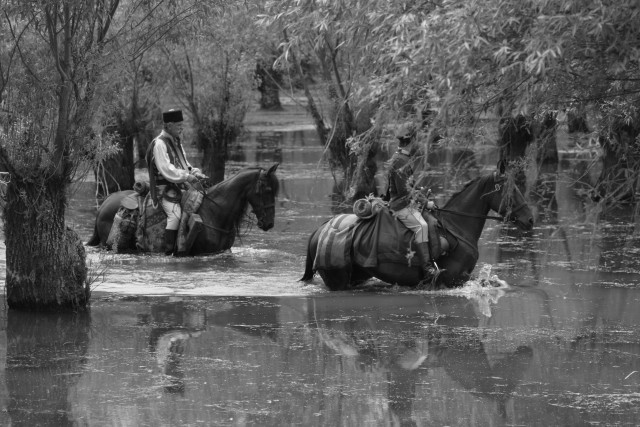
Father (Teodor Corban) and son (Mihai Comānoiu) hunt for a runaway slave in wickedly funny Aferim!
Romanian director Radu Jude won the Silver Bear as Best Director at the 2015 Berlin International Film Festival for Aferim!, his savagely funny blacker-than-black comic Western about bigotry, infidelity, and frontier justice in 1835 Wallachia. Lawkeeper Costandin (Teodor Corban) and his son, Ionitā (Mihai Comānoiu), are galloping through the local countryside, searching for runaway Gypsy slave Carfin (Cuzin Toma), who Boyar Iordache Cindescu (Alexandru Dabija) has accused of having an affair with his wife, Sultana (Mihaela Sîrbu). The surly Costandin leads the hunt, verbally cutting down everyone he meets, from random old women to abbots to fellow lawmen, with wicked barbs, calling them filthy whores, crows, and other foul names while spouting ridiculous theories about honor and religion; he even batters his son, saying he’s “a waste of bread” and that “if you slap him, he’ll die of grief.” It’s a cruel, cholera-filled time in which even the monks beat the poor, where Costandin regales a priest with the telling riddle, “Lifeless out of life, life out of lifeless,” which the priest thinks refers to the coming doomsday.
Cowritten by Jude (The Happiest Girl in the World, Everybody in Our Family) and novelist Florin Lăzărescu (Our Special Envoy, Numbness), who previously collaborated on the short film The Tube with a Hat, and shot in gloriously stark black-and-white by Marius Panduru (12:08 East of Bucharest; Police, Adjective), the Romanian / Bulgarian / Czech coproduction is an absurdist combination of Monty Python and the Holy Grail, Andrei Tarkovsky’s Andrei Rublev, Hal Ashby’s The Last Detail, and John Ford’s The Searchers, skewering everything in its path, either overtly or under its wide-reaching breath. Even Dana Pāpāruz’s costumes are a genuine riot, especially the boyar’s majestically ridiculous hat. But Aferim! is more than just a clever parody of period films and nineteenth-century Eastern European culture and social mores; it is also a brilliant exploration of the nature of racism, discrimination, misogyny, and the aristocracy that directly relates to what’s going on around the world today as well as how Romania has dealt with its own sorry past of enslaving the Romani people. Jude was inspired by real events and historical documents, setting the film immediately after the 1834 Russian occupation, which adds to its razor-sharp observations. “Aferim! is an attempt to gaze into the past, to take a journey inside the mentalities of the beginning of the nineteenth century — all epistemological imperfections inherent to such an enterprise included,” Jude says in his director’s statement. “It is obvious that such an effort would be pointless should we not believe that this hazy past holds the explanation for certain present issues.” Don’t miss this absolute gem of a film, which was Romania’s submission for the Academy Awards.
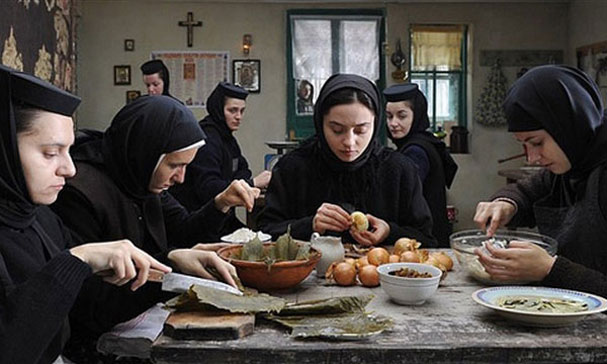
Voichita (Cosmina Stratan) must choose between her faith and her best friend in Cristian Mungiu’s Beyond the Hills
BEYOND THE HILLS (DUPA DEALURI) (Cristian Mungiu, 2012)
Sunday, November 24, 7:30
Monday, November 25, 12:40 filmforum.org
Inspired by a true story detailed in a pair of nonfiction novels by Romanian journalist Tatiana Niculescu Bran, Cristian Mungiu’s Beyond the Hills is a powerful, emotional study of love, friendship, dedication, devotion, and sexual repression. In a barren section of modern-day Romania, Alina (Cristina Flutur) arrives at a poverty-stricken Orthodox monastery, where her childhood friend Voichita (Cosmina Stratan) has become a nun. Both young women grew up in a poor orphanage, and both still have no real place in society. Alina has come to try to convince Voichita — possibly her former lover — to leave the flock and go with her to Germany, where they can live and work together freely. Early on, Voichita rubs a tired Alina’s bare back; when Alina turns over, Voichita just stops short of massaging her friend’s chest, the sexual tension nearly exploding in a scene of quiet beauty that speaks volumes about their relationship. Despite Alina’s pleading, Voichita, apparently filled with deep inner guilt, refuses to turn her back on the priest (Valeriu Andriuţă), whom all the nuns refer to as Pa, and her newfound vocation. Unable to accept her friend’s decision, Alina begins acting out in threatening ways to both herself and the true believers, leading to shocking, tragic consequences.
Mungiu’s feature-film follow-up to the 2007 Palme d’Or winner 4 Months, 3 Weeks and 2 Days is another harrowing examination of characters trapped in a devastating situation. The two-and-a-half-hour film seems to take place in a different era, far away from contemporary towns and cities, cell phones and even electricity. Mungiu, who won the Best Screenplay award at Cannes for the film, is careful not to condemn or belittle Pa, Ma (Dana Tapalagă), and their faith, but he doesn’t praise them either, leaving it up to viewers to decide for themselves. In their feature-film debuts, Flutur and Stratan, who are both from Mungiu’s hometown of Iasi and shared the Best Actress award at Cannes, are exceptional, their eyes filled with fear and longing as Alina and Voichita try to find a balance in their opposing worlds.
Luminița Gheorghiu plays a controlling, domineering mother in Călin Peter Netzer’s award-winning Child’s Pose
Luminita Gheorghiu, grand dame of the Romanian New Wave, was nominated for Best Actress at the European Film Awards for her devastating portrayal of a domineering mother in Călin Peter Netzer’s Child’s Pose. Gheorghiu (The Death of Mister Lazarescu;4 Months, 3 Weeks and 2 Days) stars as Cornelia Kerenes, an elegant, cigarette-smoking architect who immediately jumps into action when her son, Barbu (Bogdan Dumitrache), is involved in a terrible car accident, killing a child. Despite their recent estrangement — Cornelia and Barbu have rarely spoken since he married Carmen (Ilinca Goia) — Cornelia starts constructing a scenario, like designing one of her buildings, to keep Barbu out of jail. She and her surgeon husband, Reli (Florin Zamfirescu), along with her sister, Olga (Nataşa Raab), start calling in favors and doling out bribes while showing a stunning lack of concern for the family of the boy who Barbu killed. As the child’s funeral approaches, relationships come together and fall apart as parents try to deal with what has happened to their children. Winner of the Golden Bear at the Berlinale, Child’s Pose is a searing examination of class, corruption, and power.
Reminiscent of Lucrecia Martel’s The Headless Woman, in which María Onetto gives a mesmerizing performance as an Argentine upper-class wife and mother who looks the other way when it appears that she might have run over a local boy, Child’s Pose is a penetrating character study that centers around the wide gap between the rich and the poor. Early on in the film, Cornelia, who her husband at one point calls “Controlia,” sits down with her dour cleaning woman and offers her a pair of used shoes, expecting her to rejoice in such wonderful charity. The scene sets the stage for what occurs later, as Cornelia believes money is the primary route to Barbu’s freedom, but it’s a path littered with more than just one young child’s body. The taut, razor-sharp script was written by Netzer (Maria, Medal of Honor) and Răzvan Rădulescu, who has worked on such other Romanian New Wave films as The Death of Mister Lazarescu, Stuff and Dough, and Tuesday, After Christmas. In Cornelia, they have created a woman worthy of joining the pantheon of classic domineering cinematic mothers.
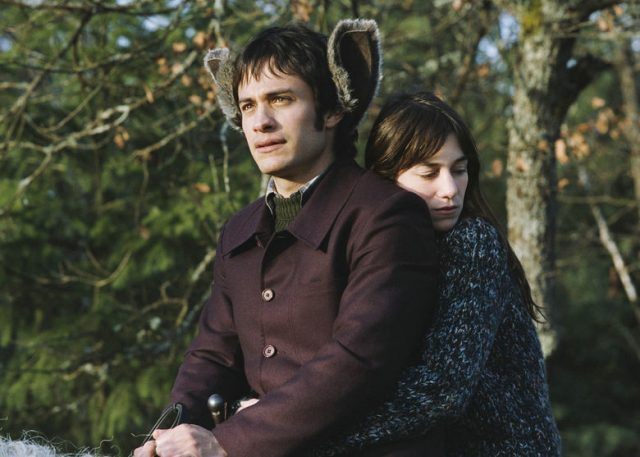
Gael García Bernal and Charlotte Gainsbourg star in Michel Gondry’s delightfully silly The Science of Sleep
CinéSalon: THE SCIENCE OF SLEEP (LA CIENCIA DEL SUEÑO) (LA SCIENCE DES RÊVES) (Michel Gondry, 2006)
French Institute Alliance Française, Florence Gould Hall
55 East 59th St. between Madison & Park Aves.
Tuesday, November 19, 4:00 & 7:30
Series continues Tuesday nights through December 17
212-355-6100 fiaf.org
The FIAF CinéSalon series “Charlotte Forever: Gainsbourg on Film,” an eight-movie tribute to the ever-charming and captivating Charlotte Gainsbourg, continues November 19 with eclectic auteur Michel Gondry’s feature-length debut as both writer and director. The Science of Sleep is a complex, confusing, kaleidoscopic stew that is as charming as it is frustrating. Gael García Bernal (The Motorcycle Diaries, Mozart in the Jungle) stars as the juvenile but endearing Stéphane, a young man in a silly hat who has trouble differentiating dreams from reality. The childlike Stéphane becomes friends with his new neighbor, Stephanie (Gainsbourg), who still has plenty of the child left inside her as well. Stéphane has a job his mother (Miou-Miou) got him, toiling for a small company that makes calendars, alongside the hysterical Guy (Alain Chabat), who can’t help constantly poking fun at coworkers Serge (Sacha Bourdo) and Martine (Aurélia Petit).
Gondry, who is also responsible for the brilliant Eternal Sunshine of the Spotless Mind as well as the highly entertaining Dave Chappelle’s Block Party and the bizarre Human Nature, uses low-tech green-screening and stop-motion animation to reveal Stéphane’s fantasy world, bringing to mind such masters as Jan Svankmajer and the Brothers Quay. Unfortunately, just as Stéphane can’t tell what’s real from what he’s dreaming, viewers will often have difficulty as well; some of the plot turns are downright infuriating, and Stéphane’s TV show teeters on the edge of embarrassing. But you’ll also be hard-pressed not to leave the theater feeling like a kid in a candy store. The Science of Sleep is screening at Florence Gould Hall at 4:00 and 7:30 on November 19; the celebration of César favorite Gainsbourg, who is the daughter of Serge Gainsbourg and Jane Birkin, runs through December 17 with such other works as Claude Miller’s L’effrontée, Lars von Trier’s Melancholia, and Franco Zeffirelli’s Jane Eyre.
Activist and hoarder Marion Stokes compiled 70,000 tapes over more than thirty years
RECORDER: THE MARION STOKES PROJECT (Matt Wolf, 2019)
Metrograph
7 Ludlow St. between Canal & Hester Sts.
Opens Friday, November 15
212-660-0312 metrograph.com recorderfilm.com
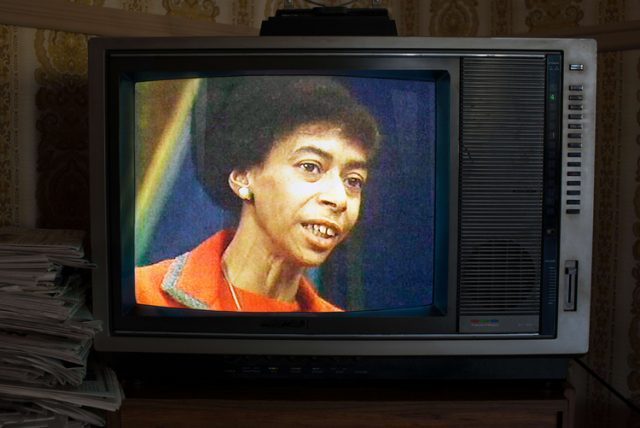
During the Iran hostage crisis that took place from 1979 to 1981, a Philadelphia woman named Marion Stokes became obsessed with news coverage and began taping as many primarily news-related programs as she possibly could, keeping as many as eight VCRs going at any one time. Her unusual story is documented in Matt Wolf’s irresistible Recorder: The Marion Stokes Project, which opens November 15 at Metrograph. Stokes was ahead of her time, creating her own kind of audiovisual time capsule, which ultimately comprised more than seventy thousand Betamax and VHS tapes made over four decades that presaged the 24/7 news overload and preponderance of alternative facts we are experiencing today. “Taping these programs for my mother was a form of activism. She wanted people to be able to seek the truth and check facts,” explains her son, Michael Metelits.
Marion Stokes proves to be quite a character in Matt Wolf documentary
Wolf also speaks with her chauffeur, Richard Stevens; her secretary, Frank Heilman; her nurse, Anna Lofton; her daughters, Mizzy Stokes and Anne Stokes Hochberg; and her ex-husband, Melvin Metelits, who all share details of her many idiosyncrasies. A former librarian and longtime Communist who considered defecting to Cuba, she also hoarded newspapers and magazines in her quest to archive as much of what was really going on in the world as she could. “A lot of craziness produces a lot of brilliance, and I think there’s something kind of brilliant about what Marion Stokes did. Whatever motivated her, this material needed to wind up in a situation where it could be shared,” Heilman says.
Wolf supplements the interviews with excerpts from Marion’s tapes as well as family photos and videos and clips of her on the public affairs program Input with the man who would become her second husband, John S. Stokes; they worked together at the Wellsprings Ecumenical Center. Marion was also obsessed with Star Trek, furniture, and Apple computers, which she wisely invested in. Much of what she recorded would have been lost forever, made at a time when not every television station kept everything they broadcast, and to see many of these reports now, complete with commercials, is utterly compelling, so unlike what we watch today, following shows and channels that keep us inside our carefully constructed bubbles.
But her nonstop taping and hoarding caused problems with her family as she became more and more tied down to her house, needing to be home to change the tapes every six hours. “I’m sure she came to value what was coming through the screens more than the kind of very problematic messy stuff that was happening in her real life,” one interviewee notes. Described as a mysterious and private woman who was controlling, Marion says on Input, “Who decides what’s normal? I think maybe a reexamination of what is normal is in order at this point.” Is it ever. Metrograph will host a series of Q&As with Wolf, moderated by Lynne Tillman, Scott Macaulay, Charlotte Cook, Melissa Lyde, Sierra Pettengill, Collier Meyerson, and Stuart Comer, at select screenings Friday through Wednesday.
BrandoCapote takes place in a Kyoto hotel that doubles as purgatory (photo by Miguel Aviles)
The Tank
312 West 36th St. between Eighth & Ninth Aves.
Tuesday – Sunday through November 24, $25 thetanknyc.org
In 1957, thirty-two-year-old writer and journalist Truman Capote was sent to Kyoto by the New Yorker to do a story on thirty-three-year-old actor Marlon Brando, who was in Japan making Sayonara, Joshua Logan’s movie based on James Michener’s novel about an air force pilot who falls in love with a Japanese dancer during the Korean War. Husband-and-wife team Reid and Sara Farrington use the resulting article, “The Duke in His Domain: Marlon Brando, on Location,” as the jumping-off point for the multimedia production BrandoCapote, continuing at the Tank through November 24. The seventy-minute show, set in the hotel where Capote is interviewing Brando, also incorporates elements of Capote’s 1965 nonfiction novel, In Cold Blood, an investigation into the senseless murder of the Clutter family in Kansas by Dick Hickock and Perry Smith, as well as the tragic circumstances surrounding Brando’s son Christian, daughter Cheyenne, and Cheyenne’s boyfriend, Drag Drollet.
As they have done in such previous dazzling works as The Passion Project,CasablancaBox,Gin & “It,” and A Christmas Carol, the Farringtons use film clips to propel the narrative, projected with pinpoint precision onto Japanese fans and umbrellas that the five-person cast open up and turn toward the audience. For example, a clip of Brando as Col. Kurtz in Apocalypse Now asking, “Are you an assassin?” is followed by Capote answering, “No no no, I’m a journalist!” The dialogue is a compelling, sometimes confusing patchwork, with some lines spoken live by the actors onstage — Rafael Jordan as Brando, Jennifer McClinton as Capote, Lynn R Guerra as Brando’s mother, Dodie, Laura K Nicoll as Cheyenne, and Cooper Howell as Christian — some from the film clips, and others prerecorded audio snippets (with Sara Farrington and Akiyo Komatsu delivering different vocal impressions of Capote), in which case it is sometimes lip-synced, causing a panoply of beguiling chaos. “He paused, seemed to listen, as though his statement had been tape-recorded and he were now playing it back,” Capote writes of Brando in the article.
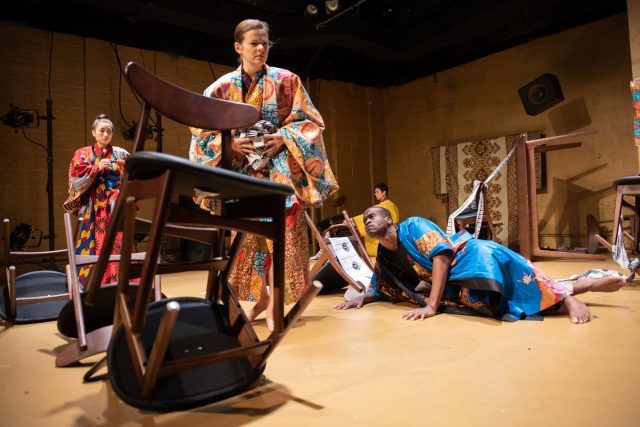
Clips from Marlon Brando movies are projected onto such objects as umbrellas to propel the plot of multidisciplinary work at the Tank (photo by Miguel Aviles)
Dressed in colorful kimono designed by Andre Joyner and constructed by Kelvin Gordon-El, the actors move to intricate choreography by Nicoll based on Japanese noh, bunraku, and kabuki traditions that repeats continually throughout the show, as if the director is yelling “Cut!” and the scene is being done over. “Sorry, sorry. Lemme start over. I’m gonna get this right,” Brando says after re-creating a violent scene from A Streetcar Named Desire. There are also excerpts from On the Waterfront, Mutiny on the Bounty, Julius Caesar, Last Tango in Paris, The Missouri Breaks, Sayonara, The Godfather, and other Brando films, many of which deal with childhood and the relationship between parents and children. “The son becomes the father, and the father the son,” Brando as Kal-El says to his infant son in a clip from Superman. “You are all my children,” Brando as Dr. Moreau tells his hideous creations in The Island of Doctor Moreau. Meanwhile, Brando threatens to kill his father if he ever beats his mother, a wanna-be actress, again. And after being called a “sissy” by other kids, Capote says of the bullies, “Buttoned up, boring, faceless nobodies — the kind of son my mother always wanted.”
The set is continually destroyed and resurrrected in Reid and Sara Farrington’s BrandoCapote (photo by Miguel Aviles)
Chairs and tables are overturned, carried offstage, then brought back on as the characters fold up and then ritualistically unfurl long black-and-white or red obi sashes, placing them carefully across the floor. Someone calls out, “Let’s get back to the interview,” and a sound glitch takes the action back to Capote in the hotel, which doubles as purgatory. It all comes off like clockwork, which is fascinating to experience. It is also repetitive in an abstract way, which can be both titillating and aggravating. But it’s always stimulating, both aurally and visually. “I’m not an actor,” Brando says self-effacingly. “I’m a mimic. Everyone is. And I’m not successful.” However, BrandoCapote is, in part by not merely mimicking its two famous celebrities but taking their story to another level.
Abstract artist Sean Scully is profiled in intimate documentary
UNSTOPPABLE: SEAN SCULLY AND THE ART OF EVERYTHING (Nick Willing, 2019)
Cinepolis Chelsea
260 West 23rd St. at Eighth Ave.
Thursday, November 14, 7:15
Festival runs November 6-15 www.docnyc.net seanscullystudio.com
“When I first met Sean, he told me, ‘I want to be the greatest abstract artist of my generation,’ and I thought, this is a lot of hubris. I didn’t know him then, and I believe him now,” says Sukanya Rajaratnam of the Mnuchin Gallery in New York about painter and sculptor Sean Scully in Unstoppable: Sean Scully and the Art of Everything. Don’t be surprised if you feel exactly the same way after you see Nick Willing’s bewitching film, making its North American premiere at DOC NYC on November 14. Born in Dublin in June 1945 and raised on the tough streets of South London where his family lived in squalor and he was in a gang, Scully was determined from early on to be more than just a successful artist, and he’s achieved his goal. “People want to see Scully like they want to see or Warhol or van Gogh, and that’s quite unique for an abstract painter to have risen above the fray and become an icon,” Hirshhorn chief curator Stéphane Aquin says.
Willing follows Scully through a whirlwind 2018 as the artist travels around the world, from his studios in Berlin, Bavaria, and Manhattan to gallery and museum shows in Washington DC, the National Gallery in London, Yorkshire Sculpture Park, De Pont Museum in the Netherlands, the Hugh Lane in Dublin, the State Russian Museum in St. Petersburg, San Cristobal in Mexico City, a church in Montserrat, the Walker Art Gallery in Liverpool, the Mnuchin Gallery on the Upper East Side, and Newcastle University, where he went to art school, as well as key places from his youth. It’s exhausting and electric watching the driven, dedicated Scully make these rounds while also creating new work, forcefully slashing at the canvas with his bold brushstrokes. Willing traces Scully’s evolving style, from his initial figuration to his use of grids and geometric patterns and his famous stripe paintings. “The presence of the vertical and horizontal grid in his work, for me, is indicative of a person who knows he has a volatile temperament and is seeking to control it,” explains his Newcastle tutor Bill Varley. Meanwhile, fellow Newcastle student Moira Kelly proclaims, “The stripes are delicious. The stripes are about experiences. The stripes are like poems.”
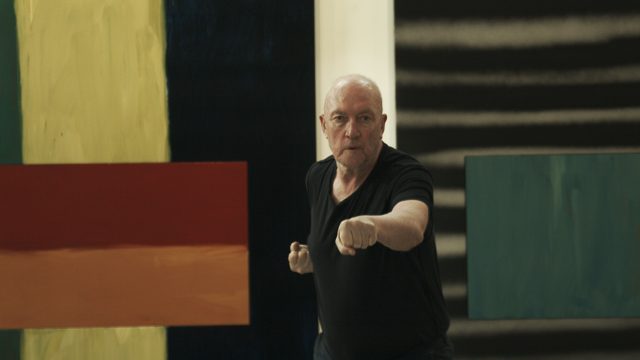
Sean Scully reveals his working process and more in Unstoppable: Sean Scully and the Art of Everything
Scully carefully manages his career, monitoring the market, giving generously to museums, participating in retrospectives and new shows, and delivering animated talks and lectures, but it’s about his legacy, not the money, and he doesn’t care one iota for trends or critics. “It’s not possible to discourage somebody like Martin Luther King or Bobby Kennedy; they believe so much in what they believe that they don’t mind if they get shot. I don’t mind either ’cause I’m doing what I believe, and that’s all there is to it,” he says, a tough, bald imposing figure of a man who looks like someone you would not want to get into a bar fight with. Writer and art critic Kelly Grovier notes, “Sean very much believes in the supernatural power of his paintings, that the works not only communicate a kind of truth but they actually have the power to affect change in this world . . . for the better.”
Willing also explores intimate details of Scully’s personal life, delving into his hardscrabble childhood; his relationship with his two ex-wives, Catherine Lee and Rosemary Henderson; the tragic loss of his first son, Paul; his distaste for Donald Trump and the American fascination with guns; and his life now with his third wife, Liliane Tomasko, and their son, Oisín. Scully usually works from instinct, attacking the canvas with his brush in ways that mimic the martial arts that he practices, but his deep love for Oisín has brought him back to figuration. He not only creates paintings of his son on the beach based on photos he has taken with his iPhone, he has also worked on a series depicting the US flag that replaces the stars in the upper left corner with a gun. I’ve seen several Scully shows over the last decade, including “Wall of Light” at Mnuchin in 2018, consisting of his magnificently meditative stripe paintings, and “Eleuthera” at the Albertina in Vienna, colorful, large-format oils of his son playing in the Bahamas. Unstoppable sheds new light on the artist, his work, his process, and his inspiration. “He’s a bit like the Ancient Mariner,” Grovier says. “He goes around the world, gallery to gallery, person to person, stopping almost anyone who will listen to tell them the great truth that his paintings portray.” It’s a gospel that Willing now spreads to an even wider audience.

 After being spurned by their aristocrat family and watching the wealthy D’Ascoynes turn their back on his mother even in death, Louis Mazzini (Dennis Price) decides that he is not going to let them get away with such awful treatment. So Louis, the tenth Duke of Chalfont, comes up with a plot to get rid of the eight D’Ascoynes standing between him and the dukedom. In Robert Hamer’s wickedly funny black comedy Kind Hearts and Coronets — screening at Film Forum November 27 through December 5 in a seventieth anniversary 4K restoration — each one of those haughty D’Ascoynes is played by Alec Guinness, young and old, male and female, to deservedly great acclaim.

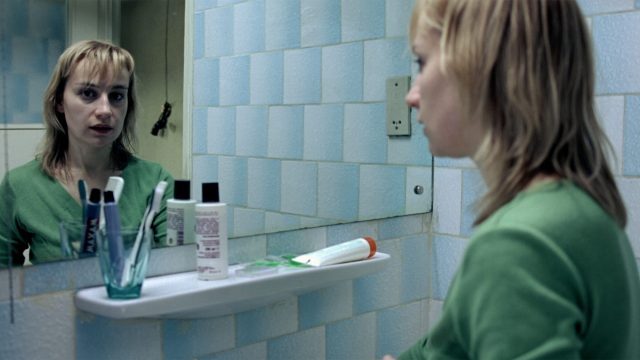
 Inspired by a true story detailed in a pair of nonfiction novels by Romanian journalist Tatiana Niculescu Bran, Cristian Mungiu’s Beyond the Hills is a powerful, emotional study of love, friendship, dedication, devotion, and sexual repression. In a barren section of modern-day Romania, Alina (Cristina Flutur) arrives at a poverty-stricken Orthodox monastery, where her childhood friend Voichita (Cosmina Stratan) has become a nun. Both young women grew up in a poor orphanage, and both still have no real place in society. Alina has come to try to convince Voichita — possibly her former lover — to leave the flock and go with her to Germany, where they can live and work together freely. Early on, Voichita rubs a tired Alina’s bare back; when Alina turns over, Voichita just stops short of massaging her friend’s chest, the sexual tension nearly exploding in a scene of quiet beauty that speaks volumes about their relationship. Despite Alina’s pleading, Voichita, apparently filled with deep inner guilt, refuses to turn her back on the priest (Valeriu Andriuţă), whom all the nuns refer to as Pa, and her newfound vocation. Unable to accept her friend’s decision, Alina begins acting out in threatening ways to both herself and the true believers, leading to shocking, tragic consequences.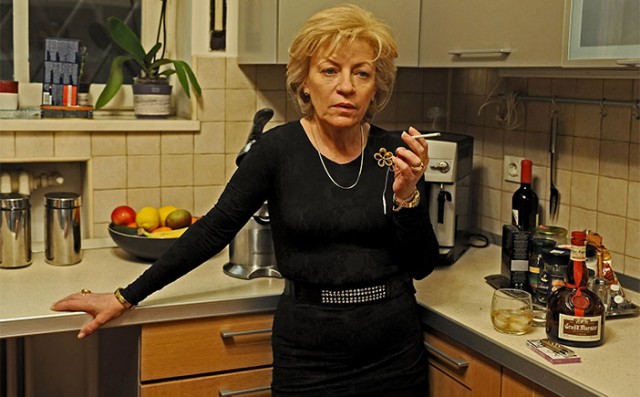
 The FIAF CinéSalon series “Charlotte Forever: Gainsbourg on Film,” an eight-movie tribute to the ever-charming and captivating Charlotte Gainsbourg, continues November 19 with eclectic auteur Michel Gondry’s feature-length debut as both writer and director. The Science of Sleep is a complex, confusing, kaleidoscopic stew that is as charming as it is frustrating. Gael García Bernal (The Motorcycle Diaries, Mozart in the Jungle) stars as the juvenile but endearing Stéphane, a young man in a silly hat who has trouble differentiating dreams from reality. The childlike Stéphane becomes friends with his new neighbor, Stephanie (Gainsbourg), who still has plenty of the child left inside her as well. Stéphane has a job his mother (Miou-Miou) got him, toiling for a small company that makes calendars, alongside the hysterical Guy (Alain Chabat), who can’t help constantly poking fun at coworkers Serge (Sacha Bourdo) and Martine (Aurélia Petit).