
ACADEMY AWARDS
Multiple locations
Admission: free – $225
www.oscars.org
The eighty-second annual Academy Awards plan to be bigger than ever, of course, hosted by those precocious twins, Steve Martin and Alec Baldwin, but that doesn’t mean they’ll be any better, especially with the Best Picture Oscar spread way too thin with ten nominees. The Super Bowl of the movie industry can be watched this year at locations all over the city, with fellow film lovers or loathers adding their own opinions as the night runs too long. The Oscar Viewing Party at 92YTribeca will have themed drink specials, interactive fashion commentary, and more with hosts Michelle Collins, Sara Benincasa, and Sara Schaeffer; eight bucks gets you inside and a complimentary glass of champagne. Admission is free to the Oscar Viewing Party at Comix, but you’ll have to RSVP quickly to kcrews@comixny.com if you want to get in and compete for prizes in trivia contests and partake of such food and drink specials as the Lovely Boneless Chicken Tenders, the Whoopi GoldBurger, the Hurt Liqueur, and the Precious: Based on the Novel Push by Sapphire Gin & Tonic. The Bell House in Brooklyn is holding the free WitStream Oscar Party, with comic emcees Gabe Liedman and Jenny Slate promising a pretty crazy evening. Crazy comedy is also the name of the game at the free Heeb Oscar-Watching Party at West 3rd Common, where Eliot and Ilana Glazer will MC the night, focusing on Jewish-related cinema with the folks from Heeb magazine and the Office of Cultural Affairs Consulate General of Israel. There’s no telling what might happen at the ninth annual Murray Hill Oscar Party at Joe’s Pub, with plenty of contests, audience best- and worst-dressed awards, impromptu live performances, and other glamorous nonsense from Murray Hill, Neal Medlyn, Cole Escola, Kate McKinnon, Robin Cloud, and Our Hit Parade (20-$25). Things will be a bit fancier and more serious at Oscar Night and the City at Alice Tully Hall. New York City’s official celebration will run you $150-$225 , starting with a cocktail reception with live music by the Juilliard Jazz Ensemble and including a copy of the official Academy Awards program. And if you can’t wait until Sunday night to see the Oscars, several statuettes are currently on view as part of Meet the Oscars at the Time Warner Center, including one that you can get your picture taken with.
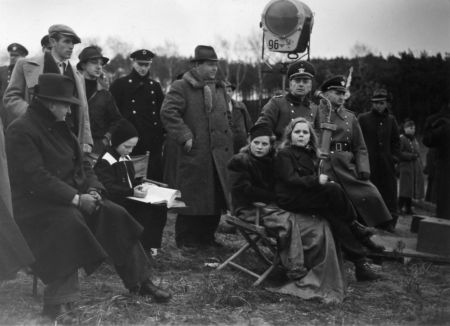
 In 1940, popular German director Veit Harlan made JEW SÜSS, a hate-filled anti-Semitic screed commissioned by Joseph Goebbels, the Nazis’ minister of propaganda. JEW SÜSS instantly became required viewing for the military, and the German public flocked to see the manipulative melodrama as well, helping shape the country’s thoughts and feelings about the Jewish question. Nearly seventy years later, Felix Moeller revisits the film in the compelling documentary HARLAN — IN THE SHADOW OF JEW SÜSS. Moeller combines footage of Harlan’s films, including extensive clips from JEW SÜSS, with home movies and old and new interviews with Harlan’s family, from the German writer-director’s wives, children, and grandchildren to niece and actress Christiane Kubrick, longtime wife of master filmmaker Stanley Kubrick. The reaction of the relatives, several of whom are led to a Munich museum exhibition about the film and its place in German history, is fascinating to watch — some defend Harlan and say he was forced into it all, others claim that Goebbels’s editing made the work seem worse than Harlan intended, and still others have changed their name to avoid being identified with the notorious filmmaker, but nearly all insist he himself was not anti-Semitic, pointing out that his first wife was Jewish (although she did leave him for unspecified reasons). WhIle Leni Riefenstahl is much more well known today for such Nazi propaganda films as TRIUMPH OF THE WILL (1935) and OLYMPIA (1938) — at least partly because she is a far more accomplished director — Harlan, who made such films as THE RULER (1937), YOUTH (1938), and THE IMMORTAL HEART (1939) before JEW SÜSS and THE GOLDEN CITY (1942), IMMENSEE (1943), and KOLBERG (1945) afterward (all told, he made twenty films under the Third Reich), was the one tried (twice) for war crimes, showing the impact his work had on the Holocaust. But Moeller, son of German director Margarethe von Trotta, doesn’t concentrate on JEW SÜSS itself or even its effect on the German people; instead, he focuses his attention directly at the film’s relationship to Harlan’s family, who discuss such themes as forgiveness, responsibility, and legacy through a unique historical lens.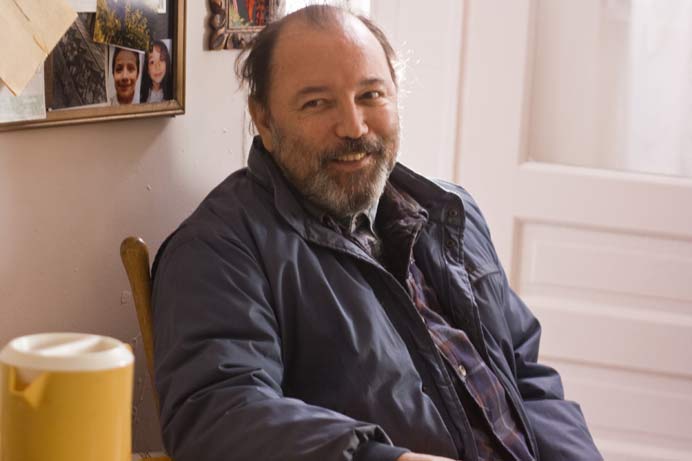
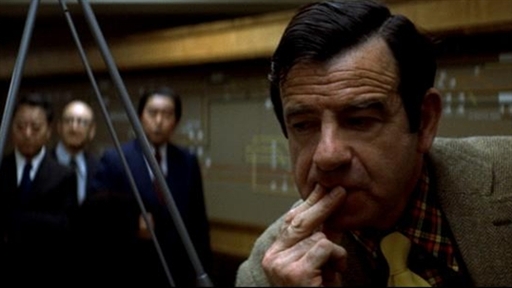
 Loosely adapted from the book by John Godey, THE TAKING OF PELHAM ONE TWO THREE wonderfully captures the cynicism of 1970s New York City. Four heavily armed and mustached men — Mr. Blue (Robert Shaw), Mr. Green (Martin Balsam), Mr. Gray (Hector Elizondo), and Mr. Brown (Earl Hindman), colorful pseudonyms that influenced Quentin Tarantino’s RESERVOIR DOGS — hijack an uptown 4 train, demanding one million dollars in one hour from a nearly bankrupt city or else they will kill all eighteen passengers, one at a time, minute by minute. The hapless mayor (Lee Wallace) is in bed with the flu, so Deputy Mayor Warren LaSalle (Tony Roberts) takes charge on the political end while transit detective Lt. Zachary Garber (a great Walter Matthau) and Inspector Daniels (Julius Harris) of the NYPD team up to try to figure out just how in the world the criminals expect to get away with the seemingly impossible heist. Directed by Joseph Sargent (SYBIL), the film offers a nostalgic look back at a bygone era, before technology radically changed the way trains are run and police work is handled. The film also features a very funny, laconic Jerry Stiller as Lt. Rico Patrone and the beloved Kenneth McMillan as the borough commander. The film was remade as a television movie in 1998, starring Edward James Olmos, Vincent D’Onofrio, and Lorraine Bracco, and as an embarrassingly bad big-budget bomb in 2009 by Tony Scott, who we’re hoping won’t ruin his upcoming remake of THE WARRIORS as well. The March 3 screening of the original TAKING OF PELHAM ONE TWO THREE at 92YTribeca will be hosted by Elliot Kalan and feature special guest Wyatt Cenac from THE DAILY SHOW.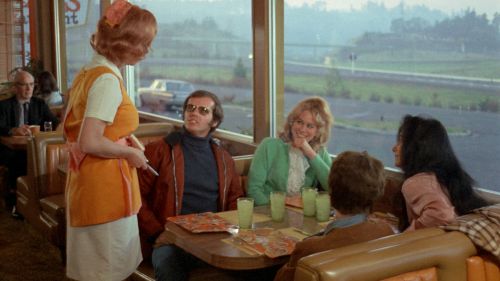

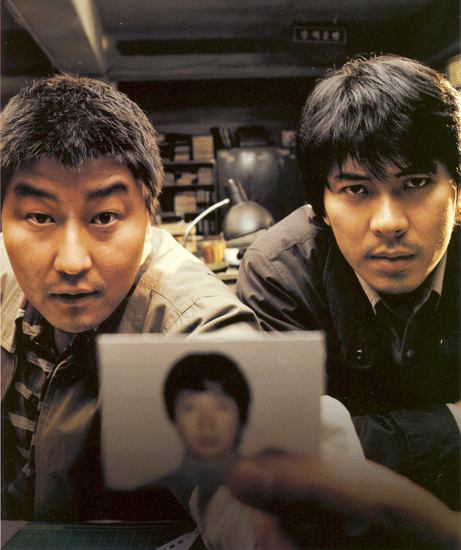
 Inspired by actual events, Bong Joon-ho’s MEMORIES OF MURDER is a psychological thriller set in a rural South Korean town. With a serial killer on the loose, Seoul sends experienced inspector Suh (Kim Sang-kyung) to help with the case, which is being bungled by local detectives Park (Song Kang-ho) and Cho (Kim Roe-ha), who consistently tamper with evidence, bring in the wrong suspects, and torture them in both brutal and ridiculously funny ways. But as the frustration level builds and more victims are found, even Suh starts considering throwing away the book and doing whatever is necessary to catch the killer. Bong’s first major success, earning multiple awards at film festivals around the world, MEMORIES OF MURDER is a well-paced police procedural that contains just enough surprises to overcome a few too many genre clichés. The film is beautifully shot by Kim Hyung-gu, from wide-open landscapes to a busy, crowded factory. But the film is dominated by Song’s (THE HOST, THIRST) big, round face, a physical and emotional wonder whether he’s goofing around with a prisoner or dead-set on catching a criminal.
 Several years after the government improperly disposes of chemical waste, a huge monster appears under a bridge on the Han River. The lazy, childlike Park Gang-du (Song Kang-ho), who works at his grandfather’s food stand on the shore — that is, when he’s not sleeping — tries desperately to save his young daughter, Hyun-seo (Ko A-sung), from the creature’s grasp, but when the monster runs off with her, Gang-du does everything in his limited power to try to get her back — if she’s even still alive. He gets help from his well-dressed brother and Olympian archer sister, who are determined to rescue their niece, but the creature has no intentions of just coughing her up. THE HOST wants to be more than just another monster movie, injecting humor and strong family bonds, but it never quite pulls itself together. For every great scene with the creature, there’s a silly scene with the family that misses the mark. Still, Song is a hoot to watch, and the special effects folks have created one heck of a cool monster.