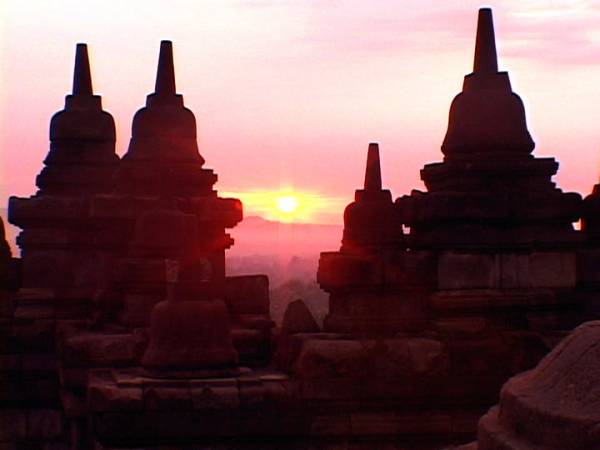
PRAJNA EARTH takes viewers to spectacular temples in Cambodia, Bali, and Java (photo by John Bush / Direct Pictures)
THE YATRA TRILOGY: PRAJNA EARTH (John Bush, 2005)
Asia Society
725 Park Ave. at 70th St.
Friday, April 30, free, 6:45 (free tickets available beginning at 6:00)
212-517-asia
www.journeyintobuddhism.com
www.asiasociety.org

The Asia Society’s presentation of John Bush’s Yatra Trilogy continues on April 30 with PRAJNA EARTH: JOURNEY INTO SACRED NATURE, the best of the three films that travel to sacred Buddhist locations in Southeast Asia. Screened in conjunction with the exhibition “Pilgrimage and Buddhist Art,” PRAJNA EARTH takes viewers to Cambodia, Bali, and Java, where Bush focuses more on the people, including male and female monks on pilgrimage and Balinese dancers, than he does in the other two films (DHARMA RIVER and VAJRA SKY OVER TIBET), although he also investigates some of the most remarkable spiritual structures on the face of the planet. Prajna, narrator Sharon Stone says, means “radiant wisdom,” and the places Bush visits are radiant indeed, from the amazing Angkor Wat and Angkor Tom in Cambodia to the stunning Saraswati Temple in Ubud to the massive mandala-shaped Borobudur and the breathtaking Prambanan in Java. Stone discusses various interconnected aspects of Buddhism, Hinduism, and animism, including nature, the spirit, and light and darkness, as Bush’s excellent camerawork reveals rarely seen hidden treasures, especially gorgeous interstitials that link the three primary stops. David Hykes’s harmonic chant score is supplemented with songs by Krishna Das. Bush will be on hand to introduce the free screening and will be back May 7 when the trilogy concludes with VAJRA SKY OVER TIBET (2006).
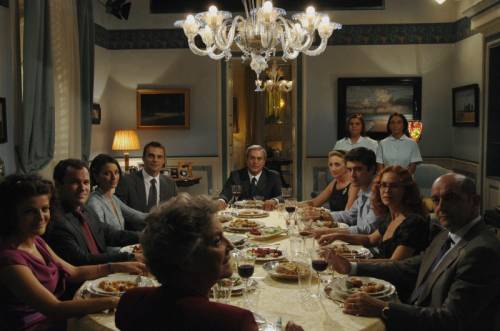
 Turkish-born Italian director Ferzan Ozpetek’s latest foray into family drama might be somewhat slighter than such earlier triumphs as HAMAM and LE FATE IGNORANTI, but this examination of a dysfunctional group of relatives in Lecce is still plenty of fun. Riccardo Scamarcio, looking like a young, brooding Ray Liotta, stars as Tommaso, a gay man who is ready to come out during a big dinner celebrating the expansion of the family pasta-making business, but his older brother, Antonio (Alessandro Preziosi), steals his thunder by coming out first, shocking everyone and giving their father, Vincenzo (Ennio Fantastichini), a heart attack. Antonio is kicked out, leaving Tomasso to take over his role in the factory when what he really wants is to return to Rome to be a writer and live with his lover, Marco (Carmine Recano). But as he works with the gorgeous but dangerous Alba (Nicole Grimaudo), he learns about responsibility, among a few other surprising things. Meanwhile, his grandmother (Ilaria Occhini) agonizes over a long-lost love, his quirky aunt, Luciana (Elena Sofia Ricci), searches for a husband, and his mother, Stefania (Lunetta Savino), continues to boss around the very dour maid, Teresa (Paola Minaccioni). LOOSE CANNONS feels a little too old-fashioned, and the plot takes too many sitcom-like twists, but there is real heat between Scamarcio and Grimaudo, and the story is told with such charm and good humor that it overcomes some of the more confusing aspects of its meta-narrative.