this week in film and television

ZEN & ITS OPPOSITE: ESSENTIAL (& TURBULENT) JAPANESE ART HOUSE

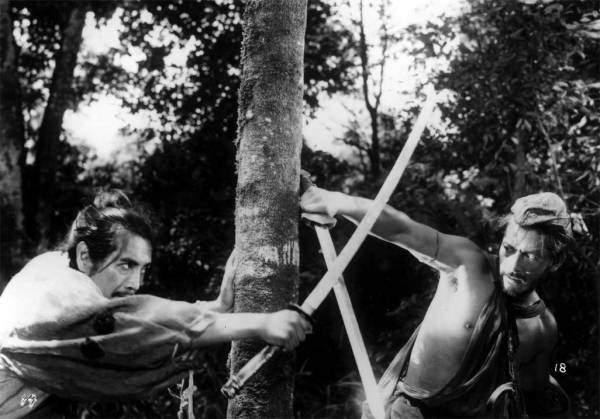
A quartet of ghost stories kicks off new film series at the Japan Society

MONTHLY CLASSICS: KWAIDAN (Masaki Kobayashi, 1964)
Japan Society
333 East 47th St. at First Ave.
Friday, October 15, $12, 7:30
Series runs through February 18
212-715-1258
www.japansociety.org

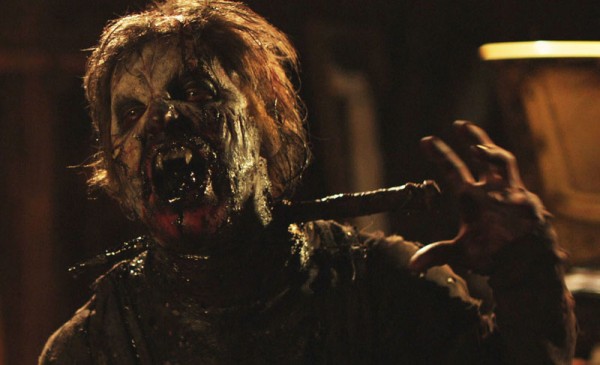
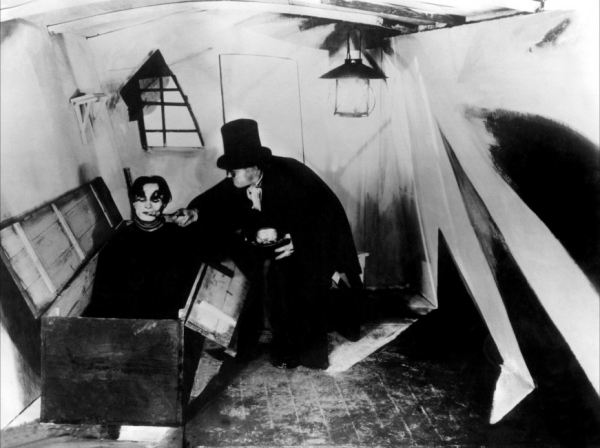
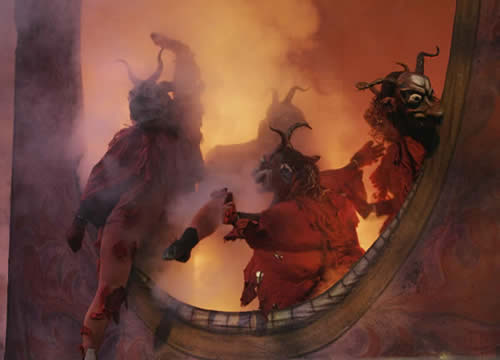
Masaki Kobayashi paints four marvelous ghost stories in this eerie collection that won a Special Jury Prize at Cannes. In “The Black Hair,” a samurai (Rentaro Mikuni) regrets his choice of leaving his true love for advancement. Yuki (Keiko Kishi) is a harbinger of doom in “The Woman of the Snow.” Hoichi (Katsuo Nakamura) must have his entire body covered in prayer in “Hoichi, the Earless.” And Kannai (Kanemon Nakamura) finds a creepy face staring back at him in “In a Cup of Tea.” Winner of the Special Jury Prize at Cannes, KWAIDAN is one of the greatest ghost story films ever made, four creepy, atmospheric existential tales that will get under your skin and into your brain. KWAIDAN kicks off the Japan Society’s “Zen & Its Opposite: Essential (& Turbulent) Japanese Art House,” comprising six films that illustrate the Six Planes of Existence, or the Six Paths of Samsara. The series continues on November 12 with ONIBABA (Kaneto Shindo, 1964), December 10 with FIRES ON THE PLAIN (Kon Ichikawa, 1959), January 12 with HELL (Nobuo Nakagawa, 1960), and February 18 with SWORD OF DOOM (Kihachi Okamoto, 1966).

PIPILOTTI RIST: HEROES OF BIRTH

Visitors get lost in a dreamlike immersive environment in Pipilotti Rist show at Luhring Augustine (photo by twi-ny/mdr)

Luhring Augustine
531 West 24th St. between Tenth & Eleventh Aves.
Through October 16
Admission: free
212-206-9100
www.luhringaugustine.com
www.pipilottirist.net
heroes of birth slideshow

In fall 2008, Swiss artist Pipolotti Rist transformed MoMA’s Marron Atrium into a meditative multimedia immersive environment with “Pour Your Body Out (7354 Cubic Meters),” a twenty-five-foot-high, two-hundred-foot-long site-specific video installation about the interrelationship between nature, humanity, and the animal kingdom that could be seen while resting in a specially designed central island. Rist has now transformed Chelsea’s Luhring Augustine gallery with “Layers Mama Layers,” an immersive environment in which film of grazing sheep and futuristic green laser swirls are projected onto both sides of rows of translucent sheets of fabric hanging from the ceiling. Visitors become part of the installation as they walk through the rows, the film beaming onto their bodies. Whereas the projections are sharp on the outside sheets, they become more and more diluted and abstract the closer to the center you get, with the people walking past turning into eerie, otherworldly shadows. Meanwhile, a hypnotic lullaby plays, furthering the dreamlike atmosphere. (Don’t start counting those sheep.)

Pipilotti Rist’s “Massachusetts Chandelier” lights up the back room at Luhring Augustine with glowing underwear (photo by twi-ny/mdr)

In the back gallery, Rist has installed “Massachusetts Chandelier,” a video sculpture composed of underwear she collected from friends and family, arranged as a large light, hanging from the ceiling, onto which she projects brightly colored images that makes it look alive. Be sure to check out the wallpaper as well, although you might have a bit of trouble explaining to children what one of the repeated images is. In the front room, “All or Nothing” is a small, three-panel video of the wallpaper, along with an altar of flowers and a watercooler where you can grab a drink. Rist’s work is always engaging, and “Heroes of Birth” is no exception, a fun show guaranteed to please.

ALEJANDRO JODOROWSKY NIGHT

Alejandro Jodorowsky takes viewers on quite an acid trip in surreal Western EL TOPO

RABBIT MOVIE NIGHTS: EL TOPO AND THE HOLY MOUNTAIN
Rabbitholestudio
33 Washington St., Brooklyn
Wednesday, October 13, 7:00
Admission: free (two beers for $3)
718-852-1500
www.rabbitholestudio.com

EL TOPO (Alejandro Jodorowsky, 1970)
Following the screening of several of his films and a personal appearance by the man himself at the Museum of Arts & Design, the New York City celebration of all things Alejandro Jodorowsky continues with a free double feature at Rabbitholestudio in DUMBO. It begins with the Chilean-born Mexican filmmaker’s acid Western EL TOPO, a psychedelic head trip that will blow your mind. Jodorowsky stars as the title character, a gunslinger traveling through a deserted landscape accompanied by his naked young son, who already knows his way around a firearm. After coming upon a town that has been decimated by a nasty group of marauders working for the Colonel, El Topo seeks violent revenge, eventually taking off with a woman and leaving his boy behind as he meets four masters on his path to proving he is the best there is. But soon El Topo is praying for redemption with a community of inbred cripples trapped in a cave. EL TOPO is a wild and bizarre journey through religious imagery, romance, and vengeance, a surreal spaghetti Western strained through the mad mind of Jodorowsky, widely hailed as the creator of the midnight movie. The film melds Bergman with Leone, Tod Browning’s FREAKS with Hiroshi Inagaki’s Samurai Trilogy, filtered through Kazuo Koike and Goseki Kojima’s LONE WOLF AND CUB. It’s like nothing you’ve ever seen before and, despite your better instincts, will lure you into the cult of Jodorowsky.

The beautiful weirdness never ends in Jodorowsky cult classic THE HOLY MOUNTAIN

THE HOLY MOUNTAIN (Alejandro Jodorowsky, 1973)
Rabbit Movie Night concludes with one of the strangest films ever made. Inspired by Rene Daumal’s MOUNT ANALOGUE: A NOVEL OF SYMBOLICALLY AUTHENTIC NON-EUCLIDEAN ADVENTURES IN MOUNTAIN CLIMBING, Alejandro Jodorowsky’s THE HOLY MOUNTAIN also involves symbolically non-Euclidean adventures in mountain climbing, funneled through Carlos Castaneda, Stanley Kubrick’s 2001: A SPACE ODYSSEY, and magic mushrooms and LSD galore. What passes for narrative follows a Jesus look-alike thief (Horacio Salinas) and an alchemist with a thing for female nudity (Jodorowsky) on the path to enlightenment; along the way they encounter the mysterious Tarot, stigmata, stoning, eyeballs, frogs, flies, cold-blooded murder, naked young boys, chakra points, life-size plaster casts, Nazi dancers, sex, violence, blood, gambling, turning human waste into gold, death and rebirth, and the search for the secret of immortality via representatives of the planets, each with their own extremely bizarre story to tell. Jodorowsky, who is credited with having invented the midnight movie with the acid Western EL TOPO (1970), literally shatters religious iconography in a kaleidoscopic whirlwind of jaw-droppingly gorgeous and often inexplicable imagery composed from a surreal color palette, set to a score by free jazz trumpeter Don Cherry and Archies keyboardist Ron Frangipane. (Frangipane also worked with John Lennon and Yoko Ono, who produced this film with their business manager, Allen Klein.) THE HOLY MOUNTAIN — which brings a whole new insight to Matthew Barney’s Cremaster Cycle — is filled with psychedelic mysticism centered around the human search for transcendence in a wilderness of the sacred and profane. Jodorowsky’s work can move you deeply, but don’t expect it to make much sense. Sit back and let in pour in and over you — you’ll feel it. You may hate it, but you’ll feel it. Although you’ll definitely hate the very end.

THE DARKNESS OF DAY: RECENT FILMS BY JAY ROSENBLATT

Jay Rosenblatt’s remarkable THE DARKNESS OF DAY will have its New York premiere October 13-18 at MoMA

MoMA Film
Museum of Modern Art
11 West 53rd St. between Fifth & Sixth Aves.
October 13-18
Tickets: $10, in person only, may be applied to museum admission within thirty days,
same-day screenings free with museum admission, available at Film and Media Desk
212-708-9400
www.moma.org
www.jayrosenblattfilms.com

Watching his films, it’s easy to see how Jay Rosenblatt was formerly a therapist and has a master’s degree in counseling psychology. Born in New York and based in San Francisco for many years, Rosenblatt makes what he calls “long shorts,” “diary films,” and “short shorts” composed primarily of found and archival footage and home movies. Combining the images with existing text and classical or original music, he creates mesmerizing, poetic, deeply philosophical works that explore the nature of life and loss. From October 13 to 18, MoMA will be presenting the New York premiere of Rosenblatt’s latest masterpiece, THE DARKNESS OF DAY (2009), a twenty-six-minute examination of suicide inspired by the self-inflicted deaths of two people he knew. Using footage rescued from school Dumpsters, Rosenblatt incorporates industrial and educational films about suicide, touching on such well-known cases as the Hemingway family and the first man to jump off the Golden Gate Bridge as well as that of a Japanese woman who leaped into a volcano, setting off a rash of copycats. Beverly Berning and Richard J. Silberg narrate the film, which includes readings from a suicide victim’s journal, in a steady monotone that is a trademark of Rosenblatt’s work. THE DARKNESS OF DAY is both fascinating and frightening, perhaps the most honest look at suicide we’ve ever seen.

AFRAID SO is one of five poignant films by Jay Rosenblatt being shown at MoMA

Four other films will be screened along with THE DARKNESS OF DAY. In I JUST WANTED TO BE SOMEBODY (2006), Rosenblatt follows orange juice spokeswoman Anita Bryant’s war against gays in the 1970s. The three-minute PRAYER (2001) was part of Underground Zero, a project spearheaded by Rosenblatt and frequent collaborator Caveh Zahedi in which some 150 independent filmmakers were asked to make short films in response to the events of September 11, 2001; Rosenblatt combines shots of Muslims praying with a score by Nikolay Rimsky-Korsakov. In the three-minute AFRAID SO (2006), Garrison Keillor reads from a poem by Jeanne Marie Beaumont that asks questions that all can be answered by the title while Rosenblatt shows related images; among the questions are “Is this going to hurt?,” “Will it leave a scar?,” “Are you contagious?,” and “Will I have to put him to sleep?” Rosenblatt opens up his own wounds in the multiple award-winning PHANTOM LIMB (2005), in which the producer, writer, director, and editor compares the death of his younger brother at the age of seven to the phantom limb syndrome experienced by people after losing an arm or a leg but still feeling it is there. Over a melancholic score featuring pieces by Arvo Pärt and Benjamin Britten, Rosenblatt intercuts home movies of him and his brother with narration about his family and new interviews with a man who experiences the phantom limb phenomenon, an expert on life after death, and a cemetery owner. PHANTOM LIMB is a beautiful yet harrowing film, a powerful journey into memory and loss. Despite their often very serious subject matter, Rosenblatt’s films are absolutely thrilling to watch, intellectually stimulating, visually vibrant, and emotionally powerful. Rosenblatt will be at MoMA to introduce the 7:00 program on October 13.

DAVID MAMET, A LIFE IN FILM

David Mamet will take a look back on his career in film at the New School

Tishman Auditorium, the New School
66 West 12th St. between Fifth & Sixth Aves.
Wednesday, October 13, $12-$18, 7:00
www.movingimage.us

On October 12, David Mamet’s 1977 behind-the-scenes play, A LIFE IN THE THEATRE, makes its Broadway debut, starring Patrick Stewart and T. R. Knight, joining Mamet’s RACE (with Eddie Izzard, Dennis Haysbert, Afton C. Williamson, and Richard Thomas) on the Great White Way. The next day, Mamet will be at the New School for a rare public conversation, but he will not be talking about his life in the theatre. Instead, the discussion, moderated by Museum of the Moving Image curator David Schwartz, will focus on Mamet’s career as the screenwriter and/or director of such films as HOUSE OF GAMES (1987), THINGS CHANGE (1988), HOMICIDE (1991), GLENGARRY GLEN ROSS (1992), THE SPANISH PRISONER (1997), THE WINSLOW BOY (1999), STATE AND MAIN (2000), HEIST (2001), SPARTAN (2004), and REDBELT (2008), most of which are built around unexpected twists and turns that stray from conventional mainstream Hollywood storytelling. Winner of a Tony, two Obies, and a Pulitzer Prize, Mamet has been nominated for Best Screenplay twice, for THE VERDICT (1982) and WAG THE DOG (1997). The special evening will also feature clips from throughout Mamet’s film career.

NEW YORK COMIC CON: SUCK

Jennifer finds a novel way to get a drink in rock and roll vampire comedy SUCK

Jennifer finds a novel way to get a drink in rock and roll vampire comedy SUCK

SUCK (Rob Stefaniuk, 2009)
New York Comic Con / Anime Festival
Javits Center
11th Ave. between 34th & 39th Sts.
Sunday, October 10, Room 1E02, free with festival admission, 3:30
www.newyorkcomiccon.com
www.suckthemovie.com

Writer, director, songwriter, and star Rob Stefaniuk (PHIL THE ALIEN) was well aware that he was daring critics and audiences to attack his sophomore effort by titling the vampire rock-and-roll horror comedy SUCK. Well, it doesn’t. SUCK, whcih is screening on Sunday afternoon at 3:30 at New York Comic Con, is a playful little piffle about the Winners, a loser of a group that is taking its last shot at the big time, going on a road trip from Toronto to New York City for a supposed CMJ showcase gig set up by their pitiful manager, Jeff (Kid in the Hall Dave Foley). But when bass player Jennifer (Jessica Paré) gets seduced and turned by master vampire Queeny (Dimitri Coats), the band starts getting popular, much to the chagrin of lead singer and songwriter Joey (Stefaniuk), who is not sure this is the best way to make it. Drummer Sam (Mike Lobel), guitarist Tyler (Paul Anthony), and Renfield-as-roadie Hugo (Alex Lifeson) have different ideas, as does afraid-of-the-dark vampire hunter Eddie Van Helsig (Malcolm McDowell). With teeth in neck – er, tongue in cheek – SUCK spoofs several genres in silly but fun ways, throwing in a little ROCKY HORROR here, some THIS IS SPINAL TAP there, and a dash of GET CRAZY over there, with hysterical guest appearances by Alice Cooper as a demonic bartender, Iggy Pop as a suburban record producer, Henry Rollins as an annoying radio host, and well-known vegan Moby as Beef Bellows, the lead singer of the Buffalo-based punk-rock band the Secretaries of Steak.

BUDRUS

Documentary shows Palestinians and Israelis coming together in nonviolent protest

BUDRUS (Julia Bacha, 2009)
Quad Cinema
34 West 13th St.
October 8-14
212-255-8800
www.justvision.org/budrus
www.quadcinema.com

Written, directed, and edited by Julia Bacha, who also served as one of the producers, BUDRUS has been having an impact at film festivals around the world, including Sydney, Dubai, San Francisco, London, Berlin, Jerusalem, and Tribeca. The documentary follows a small group of protesters in the village of Budrus, population 1,500, as they battle the Israeli military, which has been charged with protecting construction workers who are bulldozing the people’s lifeblood, hundreds of acres of olive trees, in order to put up the wall known as the separation barrier, isolating the Palestinians in the West Bank; the “red line” also goes right through the village’s cemetery. But local leader Ayed Morrar decides to try something relatively different for the Middle East, emphasizing nonviolence and even permitting women, including his fifteen-year-old daughter, to participate in their dangerous movement. The Popular Committee Against the Wall’s mission appears destined to fail until they are joined by Jews who believe that the Israeli government needs to reconsider where they are putting up the fence and allow the Palestinians to keep their land and preserve their history. Bacha talks to people on both sides of the struggle, including the Morrars as well as Israeli soldiers Doron Spielman and Yasmine Levi, who all speak honestly about their complex situation. Made by a team of Jews and Palestinians who have formed Just Vision, an organization dedicated to bringing to light nonviolent peacebuilding efforts in the Middle East, BUDRUS could have easily turned into propaganda, but in the end its agenda is something difficult to argue with. The film opens at the Quad on October 8, with Bacha and producer Avni Ronit participating in Q&As following the 8:10 show every night.