this week in film and television

IN BALANCHINE’S CLASSROOM

New documentary focuses on George Balanchine’s teaching methods (photo by Martha Swope)

IN BALANCHINE’S CLASSROOM (Connie Hochman, 2021)
Film Forum
209 West Houston St.
Opens Friday, September 17
212-727-8110
filmforum.org

This summer, dance fans have been treated to behind-the-scenes glimpses at the creative process of three legendary choreographers. First was Bill T. Jones in Rosalynde LeBlanc and Tom Hurwitz’s Can You Bring It: Bill T. Jones and D-Man in the Waters, followed by Alvin Ailey in Jamila Wignot’s Ailey. Now comes an exciting look at New York City Ballet cofounder George Balanchine in Connie Hochman’s In Balanchine’s Classroom, opening September 17 at Film Forum. Hochman, who trained at Balanchine’s School of American Ballet and danced with the Pennsylvania Ballet, has been working on the film since 2007, interviewing one hundred people who worked with Balanchine and gaining access to the archives of the George Balanchine Trust, incorporating rare, never-before-seen footage of Balanchine teaching his company in his unique style.

Several prominent former NYCB dancers share their experiences of the classes, in which Balanchine would focus on every minute aspect of movement, from the hands and the feet to the size of jumps. “He not only started a company; he changed the whole look of ballet,” says Gloria Govrin, artistic director of Eastern Connecticut Ballet. “It was more than just technique that he taught. It’s everything together that made the dancer,” Suki Schorer, senior faculty member of the School of American Ballet, explains. “The classroom was where he went to see how far he could make his dancers go,” Balanchine coach and stager Merrill Ashley notes. “He was our artistic father,” Edward Villella, founding artistic director of Miami City Ballet, says, pointing out how important it was for everyone to try to please him.

Hochman also speaks extensively with Balanchine-method coach and mentor Heather Watts and Jacques d’Amboise, the founder and president of National Dance Institute, who passed away in May at the age of eighty-six. (Sadly, twenty of Hochman’s subjects are no longer with us.) Photographs and film clips of all of the above show them dancing for the NYCB, interacting with Balanchine, and keeping his legacy alive by teaching such dancers as Tiler Peck, Stella Abrera, and Unity Phelan of NYCB, Calvin Royal III of ABT, and other professionals as well as young kids. “I think as teachers we have an obligation to share with the younger generation the way that he advocated, but it’s become the problem,” Ashley says. “We’re not Balanchine.”

There’s terrific, though grainy, black-and-white footage (and some later color) from such classic Balanchine ballets as Apollo, Prodigal Son, Serenade, Symphony in C, Orpheus, Agon, Jewels, and Stravinsky Violin Concerto while Hochman also explores Balanchine’s early years: He was born in St. Petersburg, Russia, in 1904, started dancing when he was nine, was hired as a choreographer by Serge Diaghilev for the Ballets Russes, was brought to American by Lincoln Kirstein, who cofounded the NYCB with Balanchine and helped fund the construction of the company’s home at the New York State Theater at Lincoln Center, and developed a fruitful working relationship with composer Igor Stravinsky. Balanchine is heard in numerous audio clips unearthed by Hochman. “I don’t accept the way it looks and it’s very difficult to discuss why,” he says. “I can’t say what inspires, if you use that high-class word, ‘inspiration.’ It’s your past, where you were born, what you’ve done in your life.”

All of the interview subjects agree that Balanchine could be extremely hard on his dancers, but he also gave them a freedom, appreciating them as individuals. They are also afraid of what might become of his ballets in the future, but Balanchine’s legacy seems safe in their capable hands. Film Forum will host three in-person Q&As opening weekend, with Hochman and Ashley on September 17 at 6:30 and September 19 at 5:20 and with Hochman and Villella on September 18 at 6:30. The 2021–22 NYCB season opens September 21 and will include Balanchine’s Serenade, Symphony in C, Western Symphony, Agon, La Valse, and The Nutcracker.

NYFF59: AMOS VOGEL CENTENARY RETROSPECTIVE

Dušan Makavejev’s WR: Mysteries of the Organism is part of NYFF centenary tribute to cofounder Amos Vogel

NEW YORK FILM FESTIVAL
Film Society of Lincoln Center
Howard Gilman Theater, Francesca Beale Theater
144 West 65th St. between Broadway & Amsterdam Ave.
September 25 – October 2
www.filmlinc.org/nyff2021

“This is a book about the subversion of existing values, institutions, mores, and taboos — East and West, Left and Right — by the potentially most powerful art of the century,” Amos Vogel writes in his seminal 1974 book, Film as a Subversive Art. “During half the time spent at the movies, the viewer sees no picture at all; and at no time is there any movement. Without the viewer’s physiological and psychological complicity, the cinema would not exist. The ‘illusion’ of film — so platitudinously invoked by journalists — is thus revealed as a far more intricate web of deception, involving the very technology of the film process and the nature of its victim’s perceptions. Could it be precisely during the periods of total darkness — 45 out of every 90 minutes we see — that our voracious subconscious, newly nourished by yet another provocative image, ‘absorbs’ the work’s deeper meaning and sets off chains of associations?”

When I was in college, a bunch of guys in my fraternity told me about a course they were signed up for, what they called “Monday Night at the Movies.” They couldn’t believe they could sit in a theater and watch movies while earning college credit. For me, it became a life-changing experience. Little did I know at the time — before the internet and social media — but the professor, Amos Vogel, was one of the most important figures in bringing experimental and foreign works to America, as founder of Cinema 16 and cofounder of the New York Film Festival. I was surprised when I was accepted into NYU’s master’s program in cinema studies but eventually realized that it was Professor Vogel’s recommendation that certainly had more than something to do with it. For years, I would see him at NYFF and remind him that without his help, I would not have been there, writing about film and other forms of art and culture, particularly those on the cutting-edge, pushing boundaries and setting off chains of associations.

The fifty-ninth edition of the New York Film Festival is honoring the centennial of Vogel’s birth — he was born in Vienna on April 18, 1921, and passed away on April 24, 2012 — with a special Spotlight sidebar of seven programs paying tribute to his legacy. “Cinema 16” re-creates a May 1950 presentation that includes Sidney Peterson’s The Lead Shoes, Lester F. Beck’s Unconscious Motivation, John Huston’s The Battle of San Pietro, and three shorts by Oskar Fischinger. The other programs are dedicated to films Vogel screened at NYFF from 1963 to 1968: Glauber Rocha’s Barravento; Jiří Menzel, Jan Němec, Evald Schorm, Věra Chytilová, and Jaromil Jireš’s five-part Pearls of the Deep; Tony Conrad’s The Flicker (which I remember well from class) paired with Peter Emmanuel Goldman’s Echoes of Silence (“The New American Cinema”); Lebert Bethune’s Malcolm X: Struggle for Freedom, Santiago Álvarez’s Now, and David Neuman and Ed Pincus’s Black Natchez (“The Social Cinema in America, 1967”); 12th and Oxford Street Film Makers’ The Jungle, Jaime Barrios’s Film Club, and Maxine Tsosie and Mary J. Tsosie’s The Spirit of the Navajo (“Personal Cinema”); and Dušan Makavejev’s WR: Mysteries of the Organism — a still from the film, of star Milena Dravić pushing her right arm through an empty picture frame, standing next to a bunny on a chair, adorns the cover of Vogel’s book — and Robert Frerck’s Nebula II (“Film as a Subversive Art”).

Vogel’s approach to film was intrinsically linked to his approach to life, from the political to the personal. After taking the class, I began questioning the status quo everywhere, looking at my daily existence through a new lens, an outlook that continues to this day. “Art can never take the place of social action, and its effectiveness may indeed be seriously impaired by restrictions imposed by the power structure, but its task remains forever the same: to change consciousness,” he writes in his book. “When this occurs, it is so momentous an achievement, even with a single human being, that it provides both justifications and explanations of subversive art. The subversive artist performs as a social being. For if it is true that developments in philosophy, politics, physics, and cosmology have affected the evolution of modern art, and if the subversion of the contemporary filmmaker is thus fed by art itself, it is also directly related to society as a whole.”

He presciently argues back in 1974, “Wherever [the artist] turns, he sees exploitation and magnificent wealth, heart-rending poverty and colossal waste, the destruction of races and entire countries in the name of democracy or a new order, the denial of personal liberties on a global scale, the corruption of power and privilege, and the growing international trend toward totalitarianism. . . . It is in this sense that the subject of this book will always remain on the agenda, and that these pages are but a rough draft; for the subject of this book is human freedom, and its guardians, at all times and under all conditions, are the subversives.”

In his introduction to Paul Cronin’s 2014 biography, Be Sand, Not Oil: The Life and Work of Amos Vogel, Werner Herzog, a longtime friend of Vogel’s, writes, “We are, as a race, aware of certain dangers that surround us. We comprehend that global warming and overcrowding of the planet are real dangers for mankind. We have come to understand that the destruction of the environment is another enormous danger, that resources are being wasted at an extraordinary rate. But I believe that the lack of adequate imagery is a danger of the same magnitude.”

Before taking in any of the NYFF programs, be sure to watch Cronin’s lovely 2004 documentary Film as a Subversive Art: Amos Vogel and Cinema 16, about Vogel (and his ever-present smile), his beloved wife, Marcia, their life in Greenwich Village, and his devotion to cinema, which you can stream for free above. It does not lack for adequate imagery.

NYFF59: THE FIFTY-NINTH NEW YORK FILM FESTIVAL

Denzel Washington and Frances McDormand star in Joel Coen’s NYFF59 opener, The Tragedy of Macbeth

FIFTY-NINTH NEW YORK FILM FESTIVAL
Film Society of Lincoln Center
Walter Reade Theater, Howard Gilman Theater, Francesca Beale Theater, Alice Tully Hall, Damrosch Park, and other venues
September 24 – October 10, $17-$25
www.filmlinc.org/nyff2021

For its fifty-ninth year, the New York Film Festival, running September 24 through October 10, returns in person, primarily at five venues at Lincoln Center but also with a handful of satellite screenings at Anthology Film Archives downtown, BAM Cinemas in Fort Greene, the Maysles Documentary Center in Harlem, and the Jacob Burns Film Center in Pleasantville.

The opening-night selection is the hotly anticipated The Tragedy of Macbeth, Joel Coen’s Shakespeare adaptation starring Denzel Washington and Frances McDormand as the ambitious couple seeking power at all costs. Jane Campion’s The Power of the Dog, a neo-Western based on a cult novel by Thomas Savage and with Kirsten Dunst, Jesse Plemons, and Benedict Cumberbatch, is the centerpiece choice. The closing-night selection is festival favorite Pedro Almodóvar’s Parallel Mothers, in which two women, played by Penélope Cruz and Milena Smit, meet in a maternity ward in a story about pain and trauma.

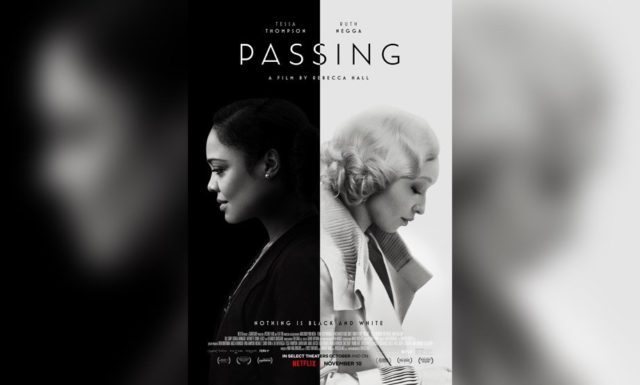
The main slate features a wide range of works from international directors; among the highlights are Mia Hansen-Løve’s Bergman Island, which takes place on Fårö, where Ingmar Bergman lived and worked; Gaspar Noé’s tender Vortex; Futura, an Italian omnibus by Pietro Marcello, Francesco Munzi, and Alice Rohrwacher; Paul Verhoeven’s Benedetta, about a real-life seventeenth-century nun; Radu Jude’s Golden Bear winner Bad Luck Banging or Loony Porn; Ryûsuke Hamaguchi’s Drive My Car, inspired by a Haruki Murakami short story; Rebecca Hall’s Passing, an adaptation of Nella Larsen’s 1929 Harlem Renaissance novel; Céline Sciamma’s Petite Maman, in which an eight-year-old girl deals with loss; Saul Williams and Anisia Uzeyman’s sci-fi punk musical Neptune Frost; and Hit the Road, the debut of Panah Panahi, son of fest fave Jafar Pahanhi.

Fans of Lou Reed can check out Todd Haynes’s new documentary, The Velvet Underground, about the revolutionary band, as well as Songs for Drella, Ed Lachman’s 1990 concert film of Reed and John Cale’s song cycle for Andy Warhol. Apichatpong Weerasethakul is back at the festival with Memoria, starring Tilda Swinton as an ex-pat botanist, and the short film Night Colonies, part of Currents Program 7: New Sensations. And unstoppable South Korean auteur Hong Sangsoo has a pair of Main Slate films, In Front of Your Face and Introduction.

Melvin Van Peebles’s Sweet Sweetback’s Baadasssss Song is part of NYFF59 Revivals

Among the other works in the Currents section, focusing on socially relevant fiction and nonfiction films, are Wang Qiong’s All About My Sisters, Denis Côté’s Social Hygiene, Shengze Zhu’s A River Runs, Turns, Erases, Replaces, and Claire Simon’s I Want to Talk About Duras. Revivals include Joan Micklin Silver’s Hester Street, Lynne Ramsay’s Ratcatcher, Melvin Van Peebles’s Sweet Sweetback’s Baadasssss Song, Miklós Jancsó’s The Round-Up, Mira Nair’s Mississippi Masala, Wendell B. Harris Jr.’s Sundance winner Chameleon Street, Jack Hazan and David Mingay’s Rude Boy starring the Clash, and Christine Choy’s Who Killed Vincent Chin?

Denis Villeneuve’s Dune leads the Spotlight section, along with Marco Bellocchio’s Marx Can Wait, Maggie Gyllenhaal’s directorial debut The Lost Daughter, Wes Anderson’s The French Dispatch, and Mike Mills’s C’mon C’mon, with Joaquin Phoenix. And finally, NYFF59 pays tribute to the centenary of cofounder Amos Vogel’s birth with a seven-program Spotlight sidebar consisting of cutting-edge, avant-garde, experimental shorts and features Vogel brought to Cinema 16 from 1947 to 1963 and the New York Film Festival between 1963 and 1968.

GREGG BORDOWITZ: I WANNA BE WELL / BENYAMIN ZEV’S SUCCOS SPECTACULAR!

Gregg Bordowitz, Pestsäule (after Erwin Thorn), mixed media, 2021 (photo by twi-ny/mdr)

GREGG BORDOWITZ: I WANNA BE WELL
MoMA PS1
22-25 Jackson Ave., Queens
Virtual performance lectures September 17-19, free with advance RSVP
Exhibition continues Thursday – Monday through October 11, $5-$10 (free for NYC residents)
www.moma.org
www.greggbordowitz.com

At the heart of the MoMA PS1 exhibition “Gregg Bordowitz: I Wanna Be Well” are two disparate images. On your way into the building itself and in the gallery, you will see a large banner declaring, “The AIDS Crisis Is Still Beginning.” Meanwhile, at the top of Bordowitz’s 2021 mixed-media sculpture Pestsäule (after Erwin Thorn), inspired by a seventeenth-century plague monument in Vienna as well as the murder of George Floyd, the AIDS epidemic, and the Covid-19 pandemic, is a blank protest sign, raised up by a man in a medical mask surrounded by a maelstrom of bodies, a murderous cherub, and sandbags on the floor, like a warped scene from Les Miz. “Hey Johnny, what are you rebelling against?” Mildred (Peggy Maley) asks Johnny (Marlon Brando) in the 1954 film The Wild One. “Whadda you got?” Johnny replies.

Born in Brooklyn in 1964 and raised in Queens — home base for the Ramones, whose 1977 song “I Wanna Be Well” from the Rocket to Russia album gives the exhibit its name — Bordowitz, who has been living with HIV/AIDS for more than three decades, was an early member of ACT UP (AIDS Coalition to Unleash Power), which was founded in 1987. He has been documenting his own life and the global AIDS crisis through film and video, poetry, sculpture, lectures, and poetry, much of which is on view at MoMA PS1 through October 11. His 2014 twenty-four-part poem Debris Fields lines the walls of the galleries, amid such works as self-portraits in mirror, Tom McKitterick’s black-and-white photographs of Bordowitz and others at AIDS protests in the late 1980s, the corner wall drawing and sculpture installation Kaisergruft (centered by the word Sympathy), and Drive, a repurposed vintage derby car stickered with Big Pharma logos.

The show also features several of Bordowitz’s films, including the 1993 autobiographical documentary Fast Trip, Long Drop, which deals with his contracting HIV, coming out to his parents, a friend getting breast cancer, and the tragic deaths of his grandparents; the 2001 documentary Habit, about the AIDS epidemic in South Africa; the five-minute The Fast That I Want video he made last year with Morgan Bassichis for his family’s virtual Yom Kippur; and the vastly entertaining Only Idiots Smile, a 2017 lecture commissioned for the New Museum presentation “Trigger: Gender as a Tool and a Weapon” and that, at only twenty-two minutes, is far too short as Bordowitz discusses his relationship with his father, Judaism, Eastern European men kissing on the lips, and homophobia.

You can see much more of Bordowitz this week when MoMA hosts several special events held in conjunction with “I Wanna Be Well.” On September 13 (and available on demand through September 27, for members only), “Modern Mondays: An Evening with Gregg Bordowitz and Jean Carlomusto” consists of a live discussion between the longtime friends, artists, collaborators, and activists, along with videos they made in the late 1980s for the Gay Men’s Health Crisis in New York City. From September 14 to 28, MoMA Film will stream Bordowitz’s 1996 reimagination of Nicolai Erdman’s 1932 long-banned play The Suicide, also for members only.

From September 17 to 19, Benyamin Zev’s Succos Spectacular! comprises a trio of livestreamed performances, free with advance RSVP, specifically taking place after Rosh Hashanah (the Jewish New Year), the ten Days of Awe (meditation and reflection), and Yom Kippur (the Day of Atonement) and before Sukkot (the Harvest Festival and the Feast of Tabernacles). The three shows — “The Rock Star” on Friday at 7:00, “The Rabbi” on Saturday at 7:00, and “The Comedian” on Sunday at 4:00 — feature Bordowitz as his alter ego, Benyamin Zev (his Hebrew name), a Jewish entertainer, stand-up comic, and tummler, hanging out in a Sukkah, joined by special guests and the klezmer ensemble Isle of Klezbos. “Any laughter is purely accidental,” Bordowitz says on the MoMA website. “My performances disturb, upset, and resist the pressures to conform and align genders and ethnicities within a fascist phantasy of American nationalism.” And finally, on October 2 at 5:00, in person and online, Bordowitz will launch his new book from Triple Canopy, Some Styles of Masculinity, at the Artbook @ MoMA PS1 Bookstore, where he will speak with poet, professor, and cultural theorist Fred Moten.

FIRE MUSIC: THE STORY OF FREE JAZZ

Sun Ra is one of the free jazz pioneers featured in Fire Music (photo by Baron Wolman / courtesy of Submarine Deluxe)

FIRE MUSIC: THE STORY OF FREE JAZZ (Tom Surgal, 2018)
Film Forum
209 West Houston St.
Opens Friday, September 10
212-727-8110
filmforum.org
www.firemusic.org

College is supposed to be a life-changing, career-defining experience. For me, there were two specific seminal moments, both of which took place in the classroom: discovering avant-garde film in a course taught by New York Film Festival cofounder Amos Vogel, author of Film as a Subversive Art, and being introduced to the free jazz movement, the radical response to bebop, in the History of American Music. Without those two flashpoints, it’s unlikely I would be writing a review of Tom Surgal’s Fire Music: The Story of Free Jazz all these years later.

Opening on September 10 at Film Forum, Fire Music takes a deep dive into free jazz, told with spectacular archival footage and old and new interviews with more than three dozen musicians who were part of the sonic upheaval, with famed jazz writer Gary Giddins adding further insight. Writer-director Surgal, who is also a drummer and percussionist, traces the development of free jazz chronologically, focusing on such groundbreaking figures as saxophonists Ornette Coleman, Eric Dolphy, John Coltrane, Albert Ayler, and Sam Rivers, pianist Cecil Taylor, and keyboardist and synth maestro Sun Ra. “It was terrifying for people,” Giddins says about the original reaction to free jazz, from audiences and musicians. “A lot of people were just, What the hell is this? This isn’t even music.”

There are snippets of live performances by Charlie Parker, Sun Ra Arkestra, Dolphy, Coltrane, Ayler, Max Roach, Don Cherry, Marion Brown, the Art Ensemble of Chicago, M’Boom, the Sam Rivers Trio, Globe Unity Orchestra, and others that set the right mood; this is not swing or bop but something wholly different — and dissonant — that requires an open mind and open ears, but it’s pure magic. “It was like a religion,” pianist Carla Bley remembers. Saxophonist John Tchicai explains, “Each individual could play in his own tempo or create melodies that were independent, in a way, from what the other players were playing. We had to break some boundary to be able to create something new.”

Surgal talks to the musicians about improvising without following standard chord progressions, the four-day October Revolution at the Cellar Café, trumpeter Bill Dixon starting the Jazz Composers’ Guild, pianist Muhal Richard Abrams cofounding the Association for the Advancement of Creative Musicians in Chicago, the formation of the Black Artists Group in St. Louis, the loft scene in New York City, the development of free jazz in New York, Los Angeles, the Midwest, and Europe, and the importance of the 1960 record Free Jazz by the Ornette Coleman Double Quartet, featuring Coleman, Cherry, Scott LaFaro, and Billy Higgins on the left channel and Dolphy, Freddie Hubbard, Charlie Haden, and Ed Blackwell on the right. Sadly, sixteen of the artists in the film have passed away since Surgal started the project; many others seen in clips died at an early age.

For these players, it was more than just fame and fortune; they were constantly called upon to defend free jazz itself. Taylor, who came out of the New England Conservatory, explains, “It seems to me what music is is everything that you do.” Pianist Misha Engelberg admits, “I am a complete fraud.” Meanwhile, Coleman trumpeter Bobby Bradford says of Ayler, “Here’s a saxophone player, man, that we all are thinking, we just broke the sound barrier — wow — and here’s a guy that’s gonna take us to another planet. Is that what we want to do?” As far as outer space is concerned, Sun Ra claims to be from Saturn.

John Coltrane is highlighted as the spiritual father of the free jazz movement (photo by Lee Tanner / courtesy of Submarine Deluxe)

Among the others who chime in are saxophonists Gato Barbieri, John Gilmore, Marshall Allen, Anthony Braxton, Oliver Lake, Noah Howard, Prince Lasha, and Archie Shepp, trombonists Roswell Rudd and George Lewis, trumpeter Wadada Leo Smith, pianists Burton Greene and Dave Burrell, drummers Rashied Ali, Barry Altschul, Thurman Barker, Warren Smith, Han Bennink, and Günter “Baby” Sommer, and vibesmen Karl Berger and Gunter Hampel, each musician unique and cooler than cool as great clips and stories move and groove to their own offbeat, subversive cacophony, brought together in a furious improvisation by editor and cowriter John Northrop, with original music by Lin Culbertson. Producers on the film include such contemporary musicians as Thurston Moore, Nels Cline, and Jeff Tweedy.

Surgal made Fire Music because he felt that the free jazz movement is largely forgotten today; his documentary goes a long way in showing how shortsighted that is. You don’t have to be in college to love this incredible music, and the film itself, which is a crash course in an unforgettable sound like no other.

(Film Forum will host an in-person Q&A with Surgal, Moore, and Smith at the 7:00 show on September 10 and with Surgal, Barker, and jazz writer Clifford Allen at the 7:00 screening on September 11.)

MOGUL MOWGLI

Riz Ahmed plays a rapper searching for his identity in Mogul Mowgli

MOGUL MOWGLI (Bassam Tariq, 2020)
Film Forum
209 West Houston St.
Opens Friday, September 3
212-727-8110
filmforum.org

There may be no more riveting, multidimensional actor, rapper, and activist working today than Oscar nominee and Emmy winner Riz Ahmed. Born and raised in London in a British Pakistani family, Ahmed rose to prominence as a suspected murderer in the HBO series The Night Of and made a major breakthrough playing a drummer who suddenly loses his hearing in the Academy Award–nominated Sound of Metal. For more than fifteen years, Ahmed has been releasing music, with his band, Swet Shop Boys (as Riz MC, with Heems), and as a solo act. It all comes together in his latest film, Mogul Mowgli, which opens September 3 at Film Forum.

Ahmed stars in and cowrote the tense drama with Karachi-born American director Bassam Tariq. Ahmed plays Zaheer, a rapper who goes by the name Zed and has just scored a huge gig opening for a popular rapper. But shortly before the tour kicks off, he gets hit with a baffling debilitating illness. With his career in jeopardy, he battles his hardworking religious father, Bashir (Alyy Khan); receives unconditional tenderness from his caring mother, Nasra (Sudha Bhuchar); is criticized by his brother, Bilal (musician, poet, and activist Hussain Manawer); reaches out to an ex-girlfriend, Bina (Aiysha Hart); argues with his friend and manager, Vaseem (Anjana Vasan); and is stupefied by the rising success of fellow rapper RPG (Nabhaan Rizwan), whose silly video “Pussy Fried Chicken” has gone viral.

All the while, Zed is haunted by memories from his childhood and hallucinations of a mysterious figure known as Toba Tek Singh (Jeff Mirza), whose face is covered by a ritual crown of rows of colorful fabric flowers. “People pay attention,” Toba Tek Singh tells him. “They drew a line in the sand. India and Pakistan. East and West. Us and them. I was born from this rupture. And I am the sickness from this separation. I am Toba Tek Singh!” The name refers to a city in Punjab and the title of a short story by Saadat Hasan Manto, about the troubles between India and Pakistan and a “Sikh lunatic” with a “frightening appearance” who “was a harmless fellow.” Ahmed also has a song called “Toba Tek Singh” on his March 2020 album, The Long Goodbye, in which he declares, “She wanna kick me out / but I’m still locked in / What’s my fucking name? / Toba Tek Singh.”

Riz Ahmed is a force to be reckoned with in Bassam Tariq’s debut narrative feature

Named after the Swet Shop Boys’ 2016 song “Half Moghul Half Mowgli,” Mogul Mowgli is a gripping film that deals with various dichotomies as laid out by Toba Tek Singh as Zed tries to find his place in a world that keeps letting him down. “The song’s about being torn between different sides of your identity, being descended from moguls and rich heritage, but living as Mowgli, lost in the urban jungle far away from the village that was once home,” Ahmed says in the film’s production notes. “That’s our experience in diaspora.”

In a concert scene, Zed raps, “Legacies outlive love,” which is at the center of his search for personal meaning, a concept he also explored in his arresting one-man show The Long Goodbye: Online Edition, livestreamed by BAM and the Manchester International Festival last December. (“I don’t belong here,” he says in the piece.) In addition, Ahmed gave a 2017 speech to the House of Commons on the importance of diversity and representation and has written about being typecast as a terrorist and profiled at airports.

Ahmed (Nightcrawler, ) and Tariq (These Birds Walk, Ghosts of Sugar Land), in his debut narrative feature, don’t make room for a lot of laughs in Mogul Mowgli, which passes the five-part Riz Test evaluating Muslim stereotypes in film and on television. It’s a powerful, personal work, made all the more poignant by Ahmed’s semiautobiographical elements and Tariq’s background as a documentary filmmaker. Ahmed is a force to be reckoned with; Anika Summerson’s camera can’t get enough of him, from his dark, penetrating eyes to his shuffling bare feet. Ahmed delivers a monumental performance that avoids clichés as it blazes across the screen. The 6:45 show at Film Forum on September 3 will be followed by a Q&A with Tariq in person and Ahmed on Zoom, moderated by filmmaker, critic, and curator Farihah Zaman; Tariq will also be at the 6:45 show on September 4 (moderated by Oscar nominee Shaka King) and the 4:40 screening on September 5.

WU TSANG: ANTHEM

Beverly Glenn-Copeland bares his heart and soul in Guggenheim installation Anthem (photo by twi-ny/mdr)

RE/PROJECTIONS: VIDEO, FILM, AND PERFORMANCE FOR THE ROTUNDA
Solomon R. Guggenheim Museum
1071 Fifth Ave. at 89th St.
Thursday – Monday through September 6, $18 – $25 (pay-what-you-wish Saturday 5:45-7:45)
212-423-3587
www.guggenheim.org
anthem online slideshow

Philly-born Canadian composer and Black trans activist Beverly Glenn-Copeland has had quite a wild ride the last few years. In 2017, his 1986 cassette, Keyboard Fantasies, melding ambient, jazz, classical, folk, world, and New Age sounds, was rediscovered and rereleased, followed by his 2004 album, Primal Prayer, originally recorded under the name Phynix. In 2019, Posy Dixon’s documentary Keyboard Fantasies: The Beverly Glenn-Copeland Story came out, followed by a brief tour that brought Glenn-Copeland and his band, Indigo Rising, to MoMA PS1 that December. Despite the newfound popularity, in 2020, shortly after the pandemic lockdown began, Glenn-Copeland — the musician added the last part of his name in honor of American composer Aaron Copland, and he prefers to go by Glenn — and his wife, artist Elizabeth Paddon, were nearly homeless, resorting to a GoFundMe page to raise nearly $100,000.

This year, a projection of the seventy-seven-year-old musician is appearing on an eighty-four-foot diaphanous curtain hanging from the top of the Guggenheim Museum to nearly the base of the rotunda, like an enormous living tapestry. Glenn-Copeland, a Buddhist, performs the century-old spiritual “Deep River” along with additional a cappella vocalizations; he also plays percussion and keyboards in the film-portrait, titled Anthem. A live version of the song appears on his 2020 compilation, Transmissions; it has previously been sung by Marian Anderson, Paul Robeson, Johnny Mathis, Bobby Womack, and many others — Chevy Chase delivered an excerpt in the first Vacation movie, and Denyce Graves sang an operatic version at the Capitol memorial service for Ruth Bader Ginsburg. Anthem is one of several projects in the Guggenheim series “Re/Projections: Video, Film, and Performance for the Rotunda,” which has also featured works by Ragnar Kjartansson, Christian Nyampeta, and others as the institution reconsiders how to present shows to the public during the coronavirus crisis and beyond.

Tsang bathes Glenn-Copeland in a warm blue light as she depicts the performer in full view as well as in close-up, singing into an old-fashioned microphone, playing the piano, and holding out his hands as if trying to embrace us. The Guggenheim’s bays are empty except for occasional small vertical speakers, which broadcast different sections of the music, and in a few places the projection passes through the translucent curtain and can be seen against the back wall. (Musician Kelsey Lu and DJ, producer, and composer Asma Maroof collaborated on the piece, with assistant curator X Zhu-Nowell.) Thus, as you make your way up and down the Guggenheim’s twisting path, you get different audio and visual perspectives, like Glenn-Copeland is wrapping his arms around you with a spiritual lullaby: “Deep River / My home is over Jordan / Deep River, Lord / I want to cross over into campground,” he sings.

“When I first heard Glenn’s music, I remember thinking to myself, it sounded like an anthem. And then I was — I immediately corrected myself,” Tsang, who calls the installation a “sonic sculptural space,” says in a Guggenheim video. “Like, oh, what kind of — it’s not that I’m so patriotic. It’s just his voice was sort of conjuring a place I wish I lived. It was giving me this tonal quality of, like, I wish that there was an anthem of a place that we could all exist in. And that, for me, is the world that Glenn kind of puts out there as a possibility.”

Continuing through September 6, Anthem is accompanied by a documentary that concentrates on the intimate personal relationship between Glenn and Elizabeth, but it doesn’t feel organic in conjunction with the installation. Also on view at the Guggenheim are “Off the Record,” consisting of works by Sarah Charlesworth, Glenn Ligon, Lisa Oppenheim, Adrian Piper, Lorna Simpson, Hank Willis Thomas, Carrie Mae Weems, and others inspired by official documentation; “The Hugo Boss Prize 2020: Deana Lawson, Centropy,” featuring the Rochester native’s sculpture, holograms, and photography exploring the African diaspora; and “Away from the Easel: Jackson Pollock’s Mural,” anchored by Pollock’s 1943 Mural, his largest painting ever, commissioned for Peggy Guggenheim for her East Sixty-First St. townhouse.