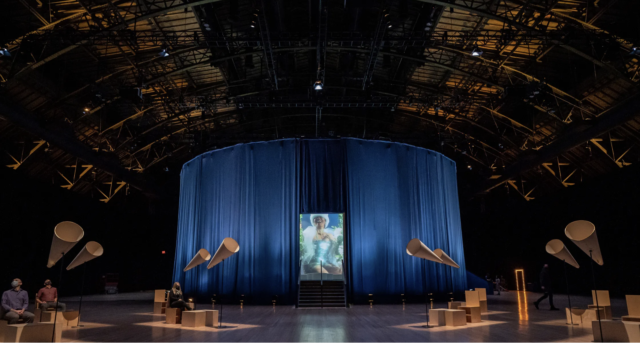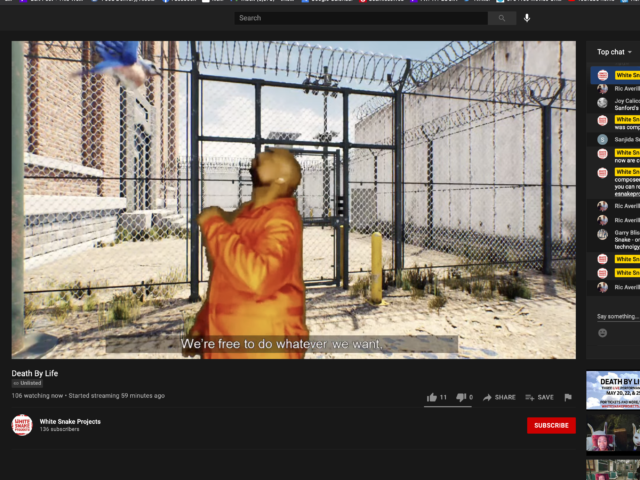
White Snake Projects’ Death by Life: A Digital Opera in One Act redefined what live online opera could be
On July 4, 2020, I published Part I of the twi-ny Pandemic Awards, hoping that it would be the first of hopefully only two such postings celebrating the amazing innovation and creativity in dance, film, theater, food, opera, art, literature, music, and other forms of entertainment made online since March 2020.
As the pandemic lockdown proceeded, I followed that up with Part II on January 1, 2021. And now, a year later, comes the third — and final — edition of twi-ny’s Pandemic Awards, honoring the best, and most unusual, online presentations of 2021. To see some of the video highlights from March 2020 through last May, check out the “twi-ny at twenty” anniversary gala here.
Even as the omicron variant tears through New York City and the world, entertainment venues are back open, and more people are visiting museums, theaters, sports venues, and other forms of indoor and outdoor entertainment. Meanwhile, there is still much happening exclusively online. This Week in New York will continue to track virtual and hybrid productions of all kinds from across the globe, in addition to live performances happening in the five boroughs, so keep following this space for the best, and the worst, in live and recorded in-person and virtual events.
Happy 2022 to all — may you and your friends, family, and loved ones stay safe and healthy!
BEST FUTURISTIC PLAY
Edward Einhorn’s Alma Baya, Untitled Theater Company No. 61, A.R.T./New York. Edward Einhorn delves into isolation and living in pods in this in-person/online show about what might happen next.
BEST IMMERSIVE HISTORICAL DRAMA
Arlekin Players Theatre, Witness. Igor Golyak uses Arlekin’s Zero Gravity Lab to place viewers aboard the MS St. Louis in this interactive exploration of antisemitism.
BEST SHORT PLAY SERIES BY ONE PLAYWRIGHT
Steppenwolf Now, “Three Short Plays by Tracy Letts”: Night Safari, The Old Country, The Stretch. Steppenwolf did exemplary online work during the pandemic lockdown, including this triple crown of short one-acts by Tracy Letts, featuring Rainn Wilson, Letts, and William Petersen and Mike Nussbaum voicing puppets in a diner.
BEST GIFT ACCOMPANYING AN ONLINE PLAY
Third Rail Projects, Return the Moon. Immersive site-specific theater experts Third Rail Projects sent viewers a package including an exquisite little cut-paper diorama in conjunction with its interactive virtual show.
BEST FILMED OUTDOOR PLAY
Amy Berryman’s Walden, TheaterWorks Hartford. Twin sisters and an Earth Advocate argue over the future of the planet in Amy Berryman’s superb play about loss, loneliness, and reconnection, filmed in front of a socially distanced live audience in the woods by the Connecticut River.
BEST ZOOM PLAY TAKING PLACE ON ZOOM
Jake Shore’s Adjust the Procedure, Spin Cycle and JCS Theater Company. Zoom fatigue had not quite settled in yet when Jake Shore’s play about a university facing a crisis over the course of several Zoom meetings was released.
BEST USE OF LIVE CHAT IN A PLAY
Arlekin Players Theatre, chekhovOS /an experimental game/. The audience gets to vote on which Chekhov play Arlekin will perform, then argue in the chat about anything they want, including the quality of the production itself, with administrators encouraging all responses.
BEST ACTOR
Jason Alexander, Rob Ulin’s Judgment Day, Barrington Stage Company; Wendy Wasserstein’s The Sisters Rosensweig, Spotlight on Plays. Jason Alexander was a riot in two virtual readings, as a greedy lawyer whose life is changed by a near-death experience in Judgment Day, which had an encore streaming in July, and as Mervyn Kant in Sisters, playing to his home camera with effusive glee.
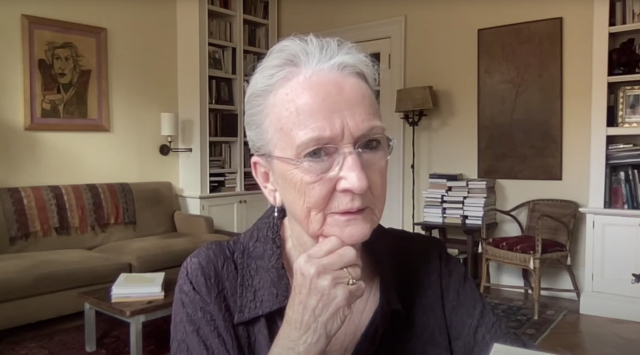
Kathleen Chalfant elegantly performs Joan Didion’s The Year of Magical Thinking for Keen Company benefit
BEST ACTRESS
Kathleen Chalfant, Joan Didion’s The Year of Magical Thinking, Keen Company; Karen Malpede’s Blue Valiant, Theatre Three Collaborative. Theater treasure Kathleen Chalfant read directly from the published book of Joan Didion’s poignant memoir with an exquisite elegance, performed from her home, lending it a mesmerizing intimacy. She went outside for Blue Valiant, a play about a horse and a mother’s relationship with her daughter that was written by Karen Malpede specifically for Chalfant, who was lovely acting alongside George Bartenieff as pianist Arthur Rosen gave life to the horse in an unusual way.
BEST ACTRESS IN A FILMED PLAY ON A STAGE
Charlayne Woodard, The Garden, Baltimore Center Stage. Charlayne Woodard, who presented a stellar online version of her one-woman show Neat for MTC, returned to the stage for her two-character play The Garden, in which she and Caroline Stefanie Clay starred as a daughter and a mother trying to reconnect after a series of tragic events.
BEST SUPPORTING ACTRESS IN A VIRTUAL PLAY
Elizabeth Heflin, Michael Gotch’s Tiny House, Westport Country Playhouse. Elizabeth Heflin was wonderful as a cynical mother visiting her daughter and her environmental-nut husband in the mountains on the Fourth of July, as fireworks fly.
BEST PLAYWRIGHT FINALLY GETTING HER DUE
Adrienne Kennedy, “The Work of Adrienne Kennedy: Inspiration & Influence,” Round House Theatre / McCarter Theatre Center. If you didn’t know much about hugely influential playwright Adrienne Kennedy, Round House Theatre and McCarter Theatre Center changed that with excellent virtual productions of He Brought Her Heart Back in a Box, Sleep Deprivation Chamber, Ohio State Murders, and Etta and Ella on the Upper West Side, along with a series of online discussions celebrating the now-ninety-year-old experimental legend.
BEST NONTHEATRICAL INDOOR LOCATION FOR A PLAY
Sharon Karmazin’s home, George Street Playhouse. George Street board member Sharon Karmazin generously turned over her house to the New Jersey company for excellent virtual filmed productions of Theresa Rebeck’s Bad Dates and Becky Mode’s Fully Committed, allowing each one-person show to shine.
BEST OLD-FASHIONED RADIO PLAY
Lucille Fletcher’s 1943 Sorry, Wrong Number, Keen Company. Keen Company made it feel like you were listening to the radio in 1943 with its audio production of while Lucille Fletcher’s Sorry, Wrong Number, in which Marsha Mason thinks she has overheard a murder plot and desperately wants to stop the potential killing.
BEST ILLUSTRATED SHORT PLAY
Rajiv Joseph’s Red Folder, Steppenwolf Now. Carrie Coon narrates Rajiv Joseph’s devilishly clever and insightful short Red Folder, a kind of graphic novel come to life about being different.
BEST PLAY FILMED WITH AN AUDIENCE
Ryan J. Haddad’s Hi, Are You Single?, Woolly Mammoth Theatre Company. Ryan J. Haddad’s autobiographical one-man show was recorded in front of a small, socially distanced audience of crew members at Woolly Mammoth; the moment when he is joined onstage by a man wearing a mask was as alarming as it was invigorating.
BEST PLAY ABOUT PARANOIA
X the Experience. Aaron Salazar and Jason Veasey’s interactive online show casts the viewer as a trainee for the mysterious conglomerate known as WE, which appears to disdain individuality in favor of a faceless collective, touching a nerve as vaccines started promising an eventual return to normalcy.
BEST SCIENTIFIC PLAY
Jake Broder’s UnRavelled. This virtual collaboration between the Global Brain Health Institute and Trinity College Dublin told the true story of a doctor who started channeling composer Maurice Ravel through extraordinary paintings that had her husband worried about her mental stability; the play was accompanied by a discussion featuring the doctor who treated her.
BEST USE OF SOCIAL MEDIA IN A PLAY
The Javaad Alipoor Company’s Rich Kids: A History of Shopping Malls in Tehran. Javaad Alipoor and Peyvand Sadeghian used Instagram Live to relate the true story of a 2015 fatal car accident in Tehran, going backward in time to explore government corruption, unchecked capitalism, climate change, and the impact social media has on the younger generation.
BEST SOCIAL DISTANCING IN A PLAY
Mike Bartlett’s Cock, Studio Theatre; Kelli Goff’s The Glorious World of Crowns, Kinks and Curls, Baltimore Center Stage. As companies started filming theatrical productions back on their stages, without an audience, they still kept the actors apart from one another, which was done intuitively in Mike Bartlett’s Cock and Kelli Goff’s The Glorious World of Crowns, Kinks and Curls, both of which are structured to involve touch and physical closeness.
STRANGEST ONLINE PLAY
Sloppy Bonnie: A Roadkill Musical (for the Modern Chick!), No Puppet Co., OZ Arts. Leah Lowe, Krista Knight, and Barry Brinegar add goofy cartoonish animation to the online version of this full-tilt campy musical about a road trip that leaves dead bodies in its wake, filmed live in front of a Nashville audience that can’t know what fun we are having watching it at home.
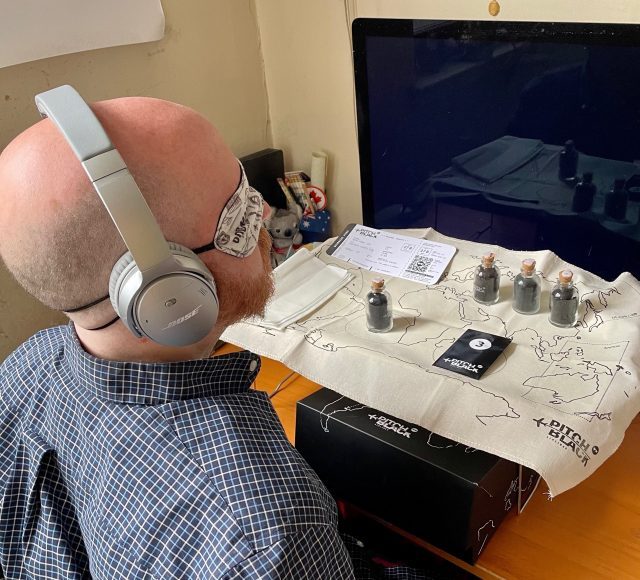
Odd Man Out offers a theatrical journey in a box to be experienced at home (photo by twi-ny/ees)
BEST AT-HOME INTERACTIVE EXPERIENCE
Martín Bondone’s Odd Man Out, Teatro Ciego and theatreC. Writer Martín Bondone and codirectors Carlos Armesto and Facundo Bogarín’s immersive memory play arrives at your home in a box containing elements for four of the senses as you listen on headphones while blindfolded, following the story of a blind musician returning to Argentina.
BEST COMEDY FILMED ON A STAGE
Terrence McNally’s It’s Only a Play, George Street Playhouse. After presenting two excellent online solo shows, Bad Dates and Fully Committed, filmed in a board member’s home, George Street Playhouse returned to its New Jersey stage for a stellar rendition of Terrence McNally’s hysterical comedy about theater that had me laughing out lout time and time again.
BEST SURPRISE ENDING OF A VIRTUAL PLAY
Christopher Chen’s Communion, American Conservatory Theater (A.C.T.). It would be unfair to reveal what Stacy Ross tells us at the conclusion of Christopher Chen’s online, interactive Zoom show, which comes complete with breakout rooms and is skillfully directed by Tony winner Pam MacKinnon.
BEST REVIVAL SERIES
MTC’s Curtain Call, The Niceties, Three Days of Rain, The Past Is the Past, Neat. Manhattan Theatre Club looked back in presenting virtual versions of past productions, in most cases reuniting the original casts, including the late Lisa Banes and Jordan Boatman in Eleanor Burgess’s The Niceties, about an allegation of racism at a prestigious university, as well as Patricia Clarkson, John Slattery, and Bradley Whitford in Richard Greenberg’s family mystery Three Days of Rain and Charlayne Woodard re-creating her one-woman autobiographical show Neat.
BEST MUSICAL FILMED ON A STAGE
Heather Christian’s Animal Wisdom, Woolly Mammoth and San Francisco’s American Conservatory Theater. Heather Christian reimagined her 2017 show, Animal Wisdom, for online viewing, recording it with her band onstage at DC’s Woolly Mammoth, incorporating aspects of the pandemic while Christian faces ghosts from her past.
BEST SITE-SPECIFIC INDOOR FILMED MUSICAL
Jason Robert Brown’s The Last Five Years, Out of the Box Theatrics, Holmdel Theatre Company, and Blair Russell. Jason Michael Webb’s adaptation of Jason Robert Brown’s 2001 two-character sung-through musical about the end and beginning and end of a relationship follows Nasia Thomas and Nicholas Edwards through a cramped New York City apartment as concepts of time and space are obliterated.
BEST REIMAGINING OF A ONE-WOMAN PLAY
Studio Theatre, Dael Orlandersmith’s Until the Flood. Studio Theatre associate artistic director Reginald L. Douglas reimagines Dael Orlandersmith’s gripping one-woman show about the police killing of Michael Brown as a piece for three Black women actors of different ages, who portray multiple characters as they move about the empty DC theater.
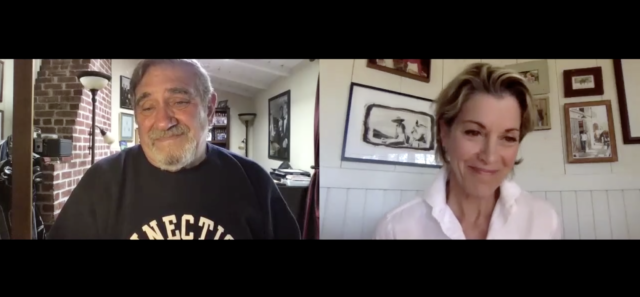
Dan Lauria and Wendie Malick are warm and welcoming in Sitting and Talking
BEST TWO-CHARACTER ZOOM PLAY ABOUT CONNECTING
Lia Romeo’s Sitting and Talking, Miles Square Theatre. Dan Lauria and Wendie Malick are delightful as two older single people attempting to connect through online dating, trying to dig themselves out of the loneliness they are both experiencing, and not just because of the pandemic.
BEST SOLO SHAKESPEARE PLAY
Patrick Page, All the Devils Are Here: How Shakespeare Invented the Villain, Shakespeare Theatre Company. Patrick Page gives a master class in Shakespeare, focusing on his many villains in this triumphant one-person show filmed onstage at STC.
BEST PODCAST PLAYS
Wallace Shawn’s Grasses of a Thousand Colors and The Designated Mourner, Gideon Media. The original casts of these two prescient plays by Wallace Shawn reunited for outstanding audio versions, with Julie Hagerty, Jennifer Tilly, Emily Cass McDonnell, Deborah Eisenberg, and Larry Pine joining Shawn.
BEST ONLINE FILM FESTIVAL
DOC NYC 2021. The twelfth annual DOC NYC festival went hybrid, presenting more than two hundred films online and in theaters that look at where we are as a society today, in the midst of a pandemic that has killed more than five million people around the world, including several important films about Covid-19 and how we have responded to it.
BEST INTERACTIVE FILM
Republique, the Interactive Movie. Created by director Simon Bouisson and writer Olivier Demangel, Republique puts the viewer in control of the action, choosing which of several unfolding scenes to watch during a terrorist attack in the Paris Metro.
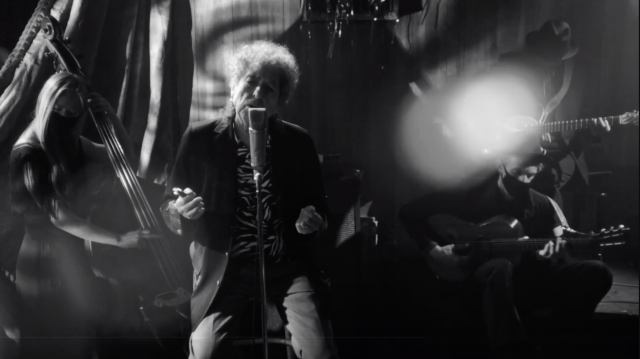
Bob Dylan’s bizarre Shadow Kingdom delighted and confounded fans
BEST INCOMPREHENSIBLE MUSIC PRESENTATION
Shadow Kingdom: The Early Songs of Bob Dylan. Leave it to the enigma that is Bob Dylan to present a virtual production that had fans wondering whether any of it was recorded live, as microphones hid Dylan’s mouth throughout and the unidentified masked musicians might or might not have been actually playing their instruments; the lively chat ranged from angry fans wanting their money back to devotees proclaiming it was the best twenty-five bucks they had spent during the pandemic.
BEST DUET
Dorit Chrysler and Alexander Calder, “Calder Plays Theremin,” Museum of Modern Art. Berlin-based composer and sound artist Dorit Chrysler activated two works in MoMA’s “Alexander Calder: Modern from the Start” exhibition by using four theremins and a Moog Model 15 analog synthesizer to create a gorgeous eight-minute suite in four movements.
BEST BIRTHDAY TRIBUTE TO A LATE ROCK STAR
“A Bowie Celebration: Just for One Day!,” Rolling Live Studios. Pianist Mike Garson transformed the annual David Bowie birthday tribute into a superstar online event, with Bowie songs performed by such Bowie acolytes as Yungblud, Michael C. Hall, Ian Hunter, Anna Calvi, Boy George, Trent Reznor, Perry Farrell, Macy Gray, Adam Lambert, Andra Day, Duran Duran, Peter Frampton, David Sanborn, Rick Wakeman, Ian Astbury, William Corgan, Gary Oldman, Gavin Rossdale, Joe Elliott, Bernard Fowler, Corey Glover, and Catherine Russell, among others.
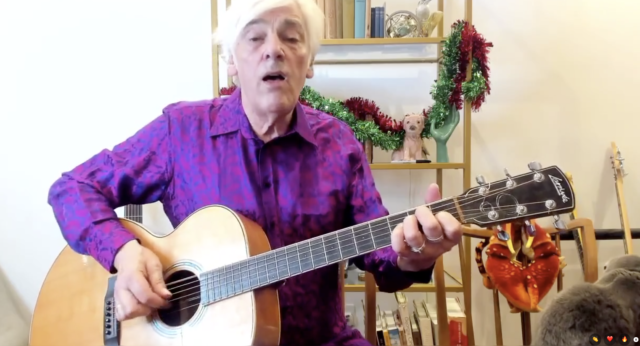
Robyn Hitchcock played a series of home gigs in Nashville and London, joined by his partner and pets (including Perry the lobster)
BEST INFORMAL AT-HOME MUSIC SERIES
Robyn Hitchcock, Live from Tubby’s House. Taking a page out of British raconteur Richard Thompson’s book, who performed living-room concerts from his Jersey home with his partner, singer-songwriter Zara Phillips, fellow British raconteur Robyn Hitchcock performed a series of home concerts from Nashville and London over Mandolin and StageIt, accompanied by his wife, singer-songwriter Emma Swift, her pup Daphne, and their beloved cats, Ringo Baez and Tubby Grossman, a follow-up to their 2020 Live from Sweet Home Quarantine shows.
BEST INDOOR DANCE FILMED ON A STAGE
Yin Yue Dance Company, Ripple, 92nd St. Y. Harkness Promise Award recipient Yin Yue’s Ripple, filmed live in front of an audience at 92Y’s Kaufmann Concert Hall, was a gorgeously flowing multipart work that was followed by a fascinating talk with the company.
BEST OUTDOOR DANCE FILMED ON A STAGE
STREB Extreme Action, Jacob’s Pillow. Elizabeth Streb and her Extreme Action team returned to Jacob’s Pillow for the first time in twenty years, presenting twelve repertory works filmed live on the outdoor stage in front of an audience, with Streb offering commentary between pieces, an excellent aperitif to the company’s stirring live show at Manhattan West.
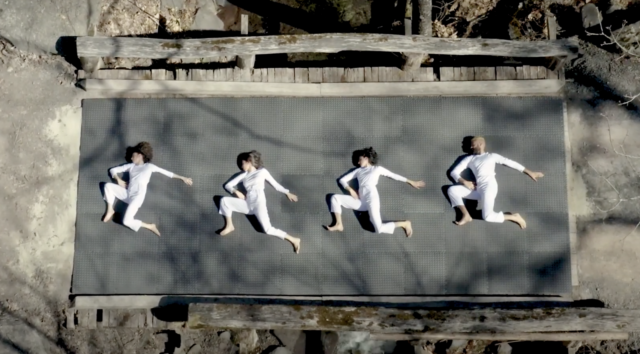
Stephen Petronio Co. remimagines Trisha Brown’s Group Primary Accumulation for its digital Joyce season
BEST OUTDOOR DANCE NOT ON A STAGE
Stephen Petronio Company, Accumulation, Joyce Digital Season. As part of its digital season at the Joyce, Stephen Petronio continued his Bloodlines program, in which he interprets seminal works by important choreographers, with a mesmerizing outdoor mixed-gender performance of Trisha Brown’s Group Primary Accumulation, filmed from high above, as if the four dancers are just another part of the natural world.
BEST DANCE ABOUT EMERGING FROM LOCKDOWN
Stefanie Batten Bland, Kolonial, Baryshnikov Arts Center. For her BAC digital commission, Stefanie Batten Bland contributed the filmed piece Kolonial, in which she and six other dancers try to burst out of a trapped isolation.
BEST ONLINE DANCE FESTIVAL
“WOMEN / CREATE! A Virtual Festival of Dance,” New York Live Arts. The ninth annual “WOMEN / CREATE!” festival went digital with impressive works by Karole Armitage, Meagan King, Sidra Bell, Jennifer Muller, Tatiana Desardouin, and Jacqulyn Buglisi, followed by a rousing discussion.
BEST BALLET FILMED ONSTAGE
George Balanchine’s Emeralds, San Francisco Ballet. I let out a gasp as the curtain rose on San Francisco Ballet’s glorious version of George Balanchine’s Emeralds, the most dancers I had seen onstage together since the pandemic lockdown had started, and then gasped over and over again at the beautiful production, with stunning costumes and spectacular movement.
BEST ONLINE ART PROGRAM
David Zwirner, Program; Hauser & Wirth, .Philip Guston: On Edge. David Zwirner’s all-day online symposium featured discussions with artists, critics, curators, filmmakers, designers, and others, including Barry Jenkins, Hilton Als, Emily Bode, and Peter Schjeldahl, along with visits to Zwirner galleries around the world. Meanwhile, in conjunction with its superb exhibition “Philip Guston 1969-1979,” Hauser & Wirth hosted “Philip Guston: On Edge,” a symposium at the SVA Theatre that included William Kentridge responding to Guston’s The Studio as well as other strong presentations by Trenton Doyle Hancock and Rachel Rossin and conversations with Charles Gaines, Art Spiegelman, Max Hollein, Massimiliano Gioni, George Condo, Katy Siegel, Randy Kennedy, and Jasmine Wahi.
BEST ART MEDITATION
Pace Gallery, Monday Meditation at the Rothko Chapel. Pace offered a lovely opportunity to reflect on life from wherever you were while watching a peaceful shot inside Houston’s nondenominational Rothko Chapel as part of its fiftieth anniversary.
BEST ONLINE ARTS DISCUSSION SERIES
The New Museum, “Grief and Grievance: Art and Mourning in America.” Even if you weren’t ready yet to venture into arts institutions, the New Museum supplemented its outstanding “Grief and Grievance” exhibition with a series of talks with more than a dozen of the participating artists, all of which are still available online for free.
BEST LIVESTREAMED OPERA
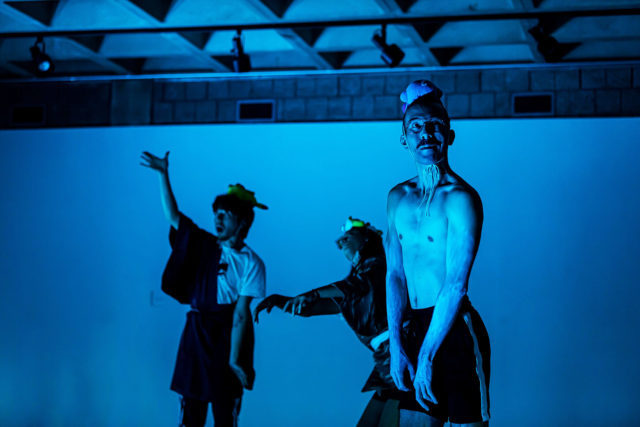
White Snake Projects, Death by Life: A Digital Opera in One Act and A Survivor’s Odyssey: The Journey of Penelope and Circe. Cerise Lim Jacobs’s activist opera company, White Snake Projects, continued its inspiring, barrier-breaking livestreamed digital presentations with Death by Life, which dealt with systemic racism and mass incarceration, and A Survivor’s Odyssey: The Journey of Penelope and Circe, an inventive take on Odysseus which places the power in the hands of the women characters.
BEST DIGITAL OPERA FILMS
Opera Philadelphia, Soldier Songs, The Island We Made, We Need to Talk, Blessed, Save the Boys. Opera Philadelphia redefined what opera could be in an online world during the pandemic lockdown, presenting a series of spectacular filmed operas about loneliness, legacy, and personal identity in these hard times; The Island We Made contained some of the most stunning visuals of the year.
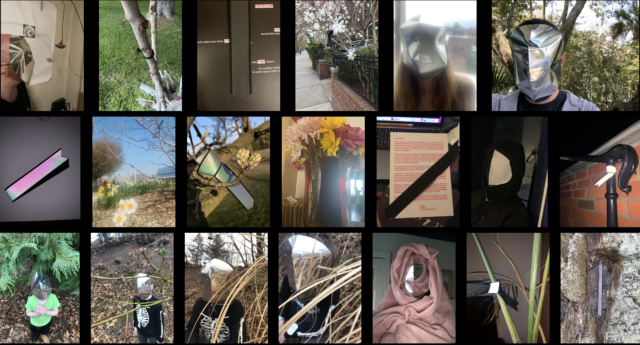
Audience members take photos of themselves using props sent to their home in The Wandering
BEST PARTICIPATORY OPERA
The Wandering, Actor and curator Calista Small, baritone and actor Jeremy Weiss, designer Charlotte McCurdy, theater artist Christine Shaw, filmmaker Lara Panah-Izadi, and animator Zach Bell took a unique look at the life of Austrian composer Franz Schubert in a multipart, multidisciplinary immersive production that included props sent to the at-home audience.
BEST OPERA MINISERIES
Boston Lyric Opera, Desert In. Boston Lyric Opera’s Desert In is a tantalizing and titillating eight-part soap opera that combines loss and loneliness with the supernatural, with Justin Vivian Bond as the lounge singer, Jon Orsini as the son, Jesus Garcia as Rufus, Edward Nelson as his new husband, Ion, Alan Pingarrón as Federico, Isabel Leonard as Cass, and Talise Trevigne as Sunny, all delighting in the delicious dastardly doings.
MOST ADVENTUROUS OPERA ADAPTATION
Boston Lyric Opera / Operabox.tv, The Fall of the House of Usher. Director James Darrah’s inventive virtual adaptation of Philip Glass and Arthur Yorinks’s 1988 opera, The Fall of the House of Usher, combined puppets, stop-motion animation, the refugee crisis, and a mysterious host in retelling Edgar Allan Poe’s classic tale of the demise of a once-prominent family.
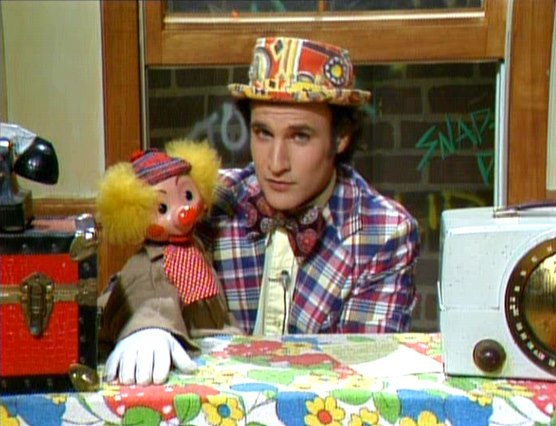
Uncle Floyd is back with Tuesday night watch parties of clips from old episodes
BEST VIRTUAL TV WATCH PARTY
This Was the Uncle Floyd Show. David Bowie, John Lennon, Iggy Pop, Paul Simon, and the Ramones were among the fans of The Uncle Floyd Show, a faux-kiddie program that ran on various outlets, from local cable access channels to NBC, from 1974 to 1998, a supremely low-budget panoply of improvised sketches, music parodies, beloved puppets, and appearances by internationally renowned rock stars; the shows were never rerun and will never be available on DVD, so Floyd and his right-hand man, Scott Gordon, are hosting fifty-minute livestreamed clip compilations over StageIt hosted by tech Luddite Uncle Floyd Vivino himself, with a rousing, worshipful chat featuring longtime fans and some of the original cast and crew members. Snap it, pal!!