Zhao Tao wanders through modern-day China in Jia Zhang-ke’s elegiac documentary
I WISH I KNEW (Jia Zhang-ke, 2010)
Film Society of Lincoln Center
Walter Reade Theater
70 Lincoln Center Plaza, 65th St. at Amsterdam Ave.
Sunday, February 20, 9:15
Series runs through March 3, $12 per screening, All Access Pass $129
212-875-6500
www.filmlinc.com
 Throughout his professional career, which began with the 1997 underground hit Pickpocket, Sixth Generation Chinese writer-director Jia Zhang-ke has shuttled easily between documentaries (Useless, 24 City) and narrative features (The World, Still Life) — and it’s not always obvious which is which, as his steady, poetic style is built on subtlety, slow rhythms, and an innate sense of realism (and he freely mixes fantasy and reality as well). His latest documentary, the Cannes Film Festival Un Certain Regard selection I Wish I Knew, adds elements of fiction to its compelling examination of the intimately personal side effects that resulted from the Chinese civil war and Cultural Revolution, as many people left Shanghai for Taipei and Hong Kong. Jia and interviewer Lin Xudong meet with elderly men and women who tell tragic stories of family and friends being murdered and executed by the government; an especially poignant scene is set at a community gathering where senior citizens dance to Dick Haymes’s version of the old standard “I Wish I Knew”; one of the interviewees sings into the camera, “I wish I knew someone like you could love me / I wish I knew you place no one above me / Did I mistake this for a real romance? / I wish I knew, but only you can answer,” which could be as much about a personal relationship as the revolution itself. Jia also talks with several filmmakers and actresses, from Hou Hsiao-hsien and Wang Toon to Huang Baomei, Rebecca Pan, and Wei Wei, illustrating how Shanghai has been depicted on film with clips from such movies as Hou’s Flowers of Shanghai, Xie Jin’s Huang Baomie, Wang’s Red Persimmon, Lou Ye’s Suzhou River, Wang Bing’s To Liberate Shanghai, Wong Kar-wai’s Days of Being Wild, and Michelangelo Antonioni’s Cina. As the nearly two-hour documentary reaches its conclusion, they interview younger people, including bestselling writer, blogger, and race-car champion Han Han, who don’t share the same conflicted memories of communism and the Cultural Revolution, instead praising an evolving modern-day capitalistic Shanghai that has brought them vast wealth, with no interest in the past of Deng Xiaoping, Mao Zedong, and Chiang Kai-shek. Throughout the film, Jia’s onscreen muse, Zhao Tao, who has appeared in six of his previous works, walks through contemporary Shanghai, pausing as she languidly looks out over the ever-changing city, where intensely poor neighborhoods are being torn down right around the corner from massive construction projects. Commissioned for the 2010 World Expo held in Shanghai, I Wish I Knew might not have been quite what the expo folk expected, but then again, they did give carte blanche to Jia, who never takes the easy way out, creating yet another complex, confusing, and controversial cinematic experience.
I Wish I Knew, which is scheduled to open in New York on April 29 (and will also screen at MoMA’s “Documentary Fortnight” series on February 24), is getting a sneak preview Sunday, February 20, as part of the annual Film Comment Selects series at Lincoln Center, highlighting little-seen works over the last year that either have not been officially released or shown only at film festivals. Running through March 3 at the Walter Reade Theater, the series also includes Alex Cox’s Straight to Hell Returns (with an appearance by Cox and an after-party with live music and free drinks), Sion Sono’s Cold Fish, Kim Ji-woon’s I Saw the Devil, Andy Warhol’s 1966 The Velvet Underground and Nico and 1967 The Velvet Underground in Boston, Claude Lanzmann’s Sobibor, Oct. 14, 1943, 4 p.m., and Peter Geyer’s Klaus Kinski: Jesus Christ the Savior.
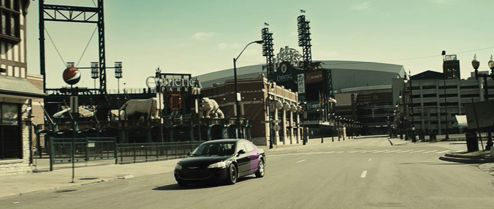
 The city of Baltimore has not exactly been depicted kindly in film and on television, with such series as Homicide: Life on the Street, The Wire, and The Corner: A Year in the Life of an Inner-City Neighborhood focusing on the rash of drugs and violence that have devastated the community, while native son John Waters has shown its wackier side in such films as Polyester and Hairspray. Born and raised in a suburb just inside the Baltimore city line, writer-director Matt Porterfield (Hamilton) has taken a different view in his second feature film, Putty Hill. When financing for his coming-of-age drama Metal Gods fell through, he decided to keep the cast and crew together and instead shoot a cinéma verité story about the after-effects of a young man’s drug overdose on a tight-knit community inspired by the one he grew up in. Not much is revealed about Cory as his funeral nears and life goes on, with his younger brother, Cody (Cody Ray), playing paintball with Cory’s friends; his uncle, Spike (Charles Sauers), tattooing customers in his apartment; and Spike’s daughter, Jenny (Sky Ferreira), returning to her hometown for the first time in several years and hanging out with her old friends like nothing much has changed. Working off a five-page treatment with only one line of scripted dialogue, Porterfield and cinematographer Jeremy Saulnier capture people just going on living, taking Cory’s death in stride; Porterfield interviews much of the cast, who share their thoughts and feelings in relatively unemotional ways. Shot on a minuscule budget in only twelve days, Putty Hill uses natural sound and light, nonprofessional actors, and real locations, enhancing its documentary-like feel, maintaining its understated narrative and avoiding any bombastic or sudden, big revelations. It’s a softly moving film, a tender tale about daily life in a contemporary American working-class neighborhood. The film opens today at Cinema Village and will include Q&As all weekend long, with such special guests as filmmakers Amos Poe (The Blank Generation), Jem Cohen (Benjamin Smoke), and Ross Kauffman (Born into Brothels), Yeasayer’s Chris Keating, film critics Jeronimo Rodriguez and Richard Brody, IFP’s Amy Dotson, and members of the cast and crew, followed by after-parties at Beauty Bar and Lit Lounge, with live performances by Co La, Dustin Wong, and Dope Body.