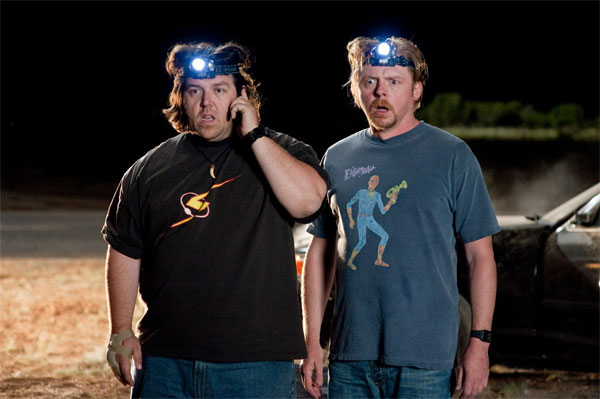
Goofy sci-fi geeks Nick Frost and Simon Pegg find more than they bargained for in PAUL
PAUL (Greg Mottola, 2011)
Opens Friday, March 18
www.whatispaul.com
 After having a blast with the zombie (Shaun of the Dead) and buddy-cop (Hot Fuzz) genres, cowriters Simon Pegg and Nick Frost look to the stars in their latest parody, Paul. Frost and Pegg play sci-fi writer Clive Gollings and illustrator Graeme Willy, respectively, geeky childhood friends who are in the midst of fulfilling a lifelong dream as they travel to San Diego for Comic Con, then set off on a road trip to such supposed UFO sites as Area 51, Roswell, and the Black Mailbox. Along the way, they meet a pair of gay-bashing rednecks (David Koechner and Jesse Plemons), a cool diner owner (Jane Lynch), and the Bible-thumping, shotgun-toting Moses Buggs (John Carroll Lynch) and his Bible-thumping daughter, Ruth (Kristen Wiig) — oh, and they pick up a cigarette-smoking hipster alien dude named Paul (voiced by Seth Rogen) who has escaped from the U.S. government. Rumbling cross-country in their RV, Clive, Graeme, Paul, and eventually Ruth are being hotly pursued by determined CIA agent Zoil (Jason Bateman) and Zoil’s two somewhat incompetent inferiors, Haggard (Bill Hader) and O’Reilly (Joe Lo Truglio), who aren’t sure what they’re after but are starting to believe it’s something big. The two legal British aliens and the illegal otherworldly alien begin to bond, but as Zoil closes in, they realize that this is no mere sci-fi story they’re in but the real thing. Paul is a hit-or-miss comedy that hits more than it misses, lovingly paying homage to the genre with references to such films and television shows as Close Encounters of the Third Kind, Alien, The X-Files, E.T.: The Extra-Terrestrial, Star Trek, Star Wars, and other faves. The road movie has its share of bumps, courtesy of director Greg Mottola, who previously helmed the overrated Superbad (2007) and the underrated Adventureland (2009), but Pegg and Frost are a hoot to watch, no matter what they’re doing.
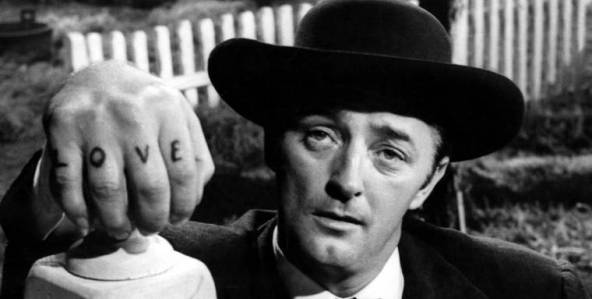
 Robert Mitchum stars in Charles Laughton’s lurid story of traveling preacher/con man/murderer Harry Powell, who has the word “love” tattooed on one set of knuckles and “hate” on the other. While in prison, Powell bunks with Ben Harper (Peter Graves), who got caught stealing $10,000 — but the only person who knows where the money is is Ben’s young son, John (Billy Chapin). When Preacher is released from jail, he shows up on the Harpers’ doorstep, ready to woo the widow Willa (Shelley Winters) — and get his hands on the money any way he can, including torturing John and his sister, Ruby (Gloria Castillo). Laughton’s only directorial effort is seriously flawed — the scenes in the beginning and end with Lillian Gish are wholly unnecessary and detract from the overall mood. Stanley Cortez’s cinematography is outstanding, featuring his unique use of shadows, the battle between light and dark (which plays off of several themes: old versus young, rich versus poor, good versus evil, and men versus women), and some marvelous silhouettes. The Night of the Hunter is screening March 18 at the Rubin Museum in conjunction with the Brainwave series of talks and will be introduced by actress Parker Posey. Andrei Tarkovsky’s Ivan’s Childhood follows on March 25 and Michael Powell and Emeric Pressburger’s The Red Shoes on April 8.

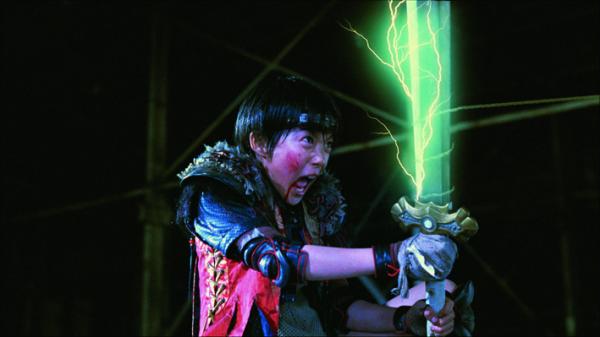
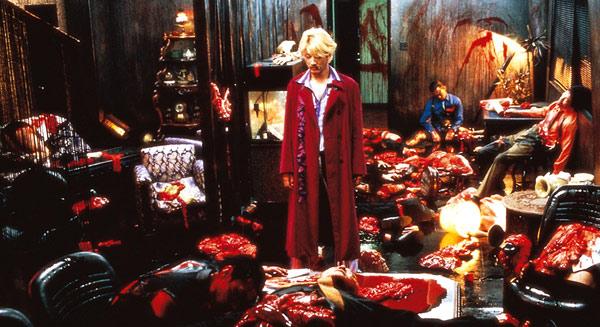
 Mixing in a liberal amount of Time Bandits with The Wizard of Oz, throwing in a little Hayao Miyazaki, and adding dashes of Raiders of the Lost Ark, The Lord of the Rings, Gremlins, Return of the Jedi, Labyrinth, and even Kill Bill, Takashi Miike has wound up with an entertaining fantasy film for both kids and adults. Known more for such ultraviolent, hard-to-watch frightfests as Audition and Ichi the Killer, Miike reveals his softer side in this genre film based on yokai manga by Shigeru Mizuki (who also plays the Demon King). Ryunosuke Kamiki is splendid as Tadashi, a young city boy taking care of his grandfather (Hiroyuki Miyasako) in a country village, where he is chosen at a local festival as the mythical Kirin Rider, the guardian of peace and friend of justice. Soon he finds himself in a real battle between good and evil, taking him from the heights of the Great Goblin’s mountain cave to the depths of a seedy underworld run by the very white Agi (Chiaki Kuriyama) and powerful mastermind Katou Yasunori (Etsushi Toyokawa). Joined by yokai spirits Kawahime (Mai Takahashi), Kawatarou (Sadao Abe), and the oh-so-cute Sunekosuri (we’d buy one of these in a second if they ever hit the market), Tadashi fights to save the human world, wielding his special sword against a phalanx of mechanical robots and other villainous creatures. At more than two hours, The Great Yokai War is at least twenty minutes too long and would have greatly benefited by the excision of one very silly subplot. But it is still a charming tale from the reigning master of horror. The Great Yokai War is screening for only $5 as part of the Film Society of Lincoln Center series “Shinjuku Outlaw: 13 from Takashi Miike,” being held March 16-20 in conjunction with Subway Cinema and also including such Miike films as Fudoh: The New Generation (1996), The Bird People in China (1998), Shangri-la (2002), and the awesome new 13 Assassins (2010). Miike was originally scheduled to appear at the Walter Reade Theater to introduce several screenings but has had to cancel because of the catastrophic events occurring in Japan.