this week in film and television

5 JAPANESE DIVAS: SISTERS OF THE GION

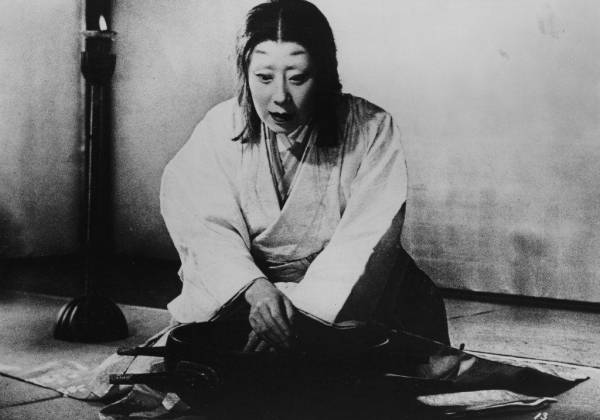
Omocha (Isuzu Yamada) refuses to be men’s playthings in Mizoguchi’s SISTERS OF THE GION

SISTERS OF THE GION (GION NO SHIMAI) (Kenji Mizoguchi, 1936)
Film Forum
209 West Houston St.
Monday, April 4, 6:30, 10:05
Series continues through April 21
212-727-8110
www.filmforum.org

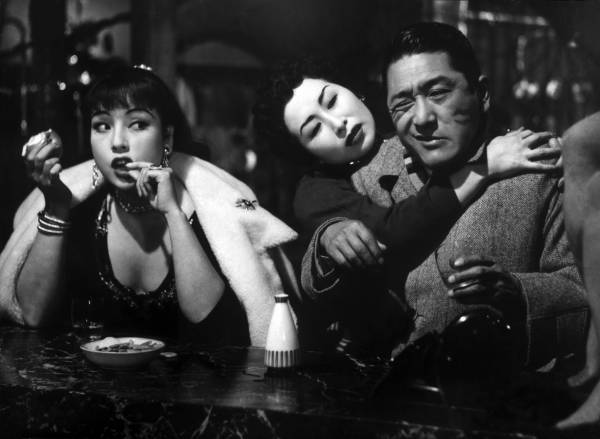
Based on the Russian novel Yama (The Pit) by Aleksandr Kuprin, protofeminist director Kenji Mizoguchi’s Sisters of the Gion offers a poignant look at the changing desires of women in twentieth-century Japan. In the Gion District, geisha have become one-man prostitutes, taking up with one wealthy patron at a time. When Furusawa (Benkei Shiganoya) loses his business, the bankrupt man turns away from his wife and instead goes to Umekichi (Yōko Umemura), who takes him in, believing that it is her responsibility. Her younger sister, Omocha (Isuzu Yamada), is furious, arguing that geisha, and women in general, should be more than just the playthings of men. She wants her sister instead to find a rich patron who can take care of her in style. Omocha is a manipulative woman, willing to lie to get what she thinks she and Umekichi deserve, but she is not doing it for evil reasons as much as she wants to change the plight of the geisha and give more power to women. But Umekichi cannot break free of the old-fashioned ways as Omocha plays games with successful businessman Jurakudo (Fumio Okura) and his assistant, Kimura (Taizō Fukami), devising a plot that threatens to tear everything apart. Mizoguchi fills Sisters of the Gion with long shots of narrow passageways as characters try to escape from their situations but are unable to. Made in 1936, just before a war that would change Japan’s views on houses of ill repute, the film is virtually timeless for most of its too-brief sixty-nine minutes, until one man decides to take actions into his own hands and suddenly cars and the nearby city shift the overall perspective. In the end, it’s about more than just money, although it’s definitely about that, but it’s also about respect, about common decency, and about humanity, as seen from all sides. Sisters of the Gion is screening April 4 with Yasujiro Ozu’s 1933 silent crime drama, Dragnet Girl, starring Kinuyo Tanaka, as part of Film Forum’s “5 Japanese Divas” series, featuring four weeks of films starring Yamada, Tanaka, Machiko Kyo, Setsuko Hara, and Hideko Takamine, who play strong, determined women in such classic works as Ozu’s Early Summer (1951) and Tokyo Story (1953), Hiroshi Teshigahara’s The Face of Another (1966), Mikio Naruse’s Okaasan (1952) and Flowing (1956), Akira Kurosawa’s The Idiot (1951) and Throne of Blood (1957), Keisuke Kinoshita’s Carmen Comes Home (1951) and Twenty-Four Eyes (1954), and Mizoguchi’s Ugetsu (1953), Sansho the Bailiff (1954), and Street of Shame (1956), among others.


UNSOUND FESTIVAL 2011

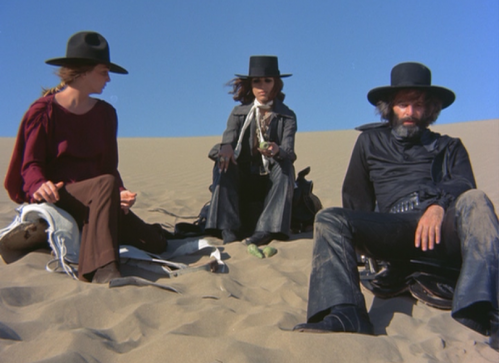
The Skull Defekts are headlining a special Unsound Festival show at Littlefield on April 6

Goethe-Institut, Wyoming Building (and other venues)
5 East Third St. between Bowery & Second Ave.
April 1-10, free – $30
www.unsound.pl/en
www.goethe.de

After a successful debut last year, the Unsound Festival is back with an amazing lineup of concerts, lectures, discussions, and film presentations that explore the past, present, and future of electronic music. Focusing primarily on European performers, the festival begins tonight at 8:00 with “Collaborations 1” ($12) at the Issue Project Room, with HATI + Z’ev, Anna Zaradny, MERCE, Dawid Szcsesny, and Aki Onda. Tomorrow at 5:00 at the Goethe-Institut, the BFI DVD project MisinforMation will screen for free, consisting of clips of public-information shorts rescored by Mordant Music. On April 3, sound artist Stephen Vitiello will give a free talk at 1:00 at the festival’s home base, the Goethe-Institut, about his High Line installation, “A Bell for Every Minute,” in addition to other of his public projects. On April 5 at the Walter Reade Theater, Clay Gold, Demdike Stare, Felix Kubin, Peter Kutin, Raime, and Rob Eggers collaborate on the five-channel horror-sound program Cinema for the Ear ($12). Among the many other participants in the festival are Deaf Center, Henryk Gorecki, Alan Howarth, Harald Grosskopf, Emeralds, Carlos Giffoni, C. Spencer Yeh, Robert Piotrowicz, Marcus Schmickler, COH, Instant Coffee, Lustmord, and Void ov Voices. There are plenty of other special events; below are some of our favorites.

Gospel of the Skull: On Sunday night at 8:00 at Littlefield ($10), the Skull Defekts will premiere songs from its latest disc, Peer Amid (Thrill Jockey). If you’re going to call yourself the Skull Defekts, you better play loud, crazy-ass music. Fortunately, this Swedish experimental rock group does just that on such songs as “No More Always,” “In Majestic Drag,” and “Fragrant Nimbus,” with Henrik Rylander, Joachim Nordwall, Jean-Louis Huhta, and Daniel Fagerstroem joined by Lungfish vocalist Daniel Higgs, who brings a whole new dimension to the group. Also on the bill is Thrill Jockey labelmate Zomes, the solo project of Lungfish guitarist Asa Osborne, who are touring behind their 2011 record Earth Grid, which was made on a cassette tape, and Polish-born German electronic percussion specialist Paul Wirkus.

Legendary electronic music pioneer Morton Subotnick will make two heavily anticipated appearances at the Unsound Festival

Unsound Labs: Nosferatu, Symphony of Fear: On April 4 at 7:30 ($15), BAMcinématek will screen F. W. Murnau’s classic 1922 horror film, Nosferatu, accompanied by a live score performed by acoustic doom creator Svarte Greiner and Wirkus.

Music for Solaris: On April 6 at 8:00 at Alice Tully Hall ($20-$25), the Unsound Festival New York Opening, held in conjunction with the Krakow festival Sacrum Profanum, celebrates the fiftieth anniversary of Stanislaw Lem’s 1961 novel, Solaris — famously turned into films in 1971 by Andrei Tarkovsky and 2002 by Steven Soderbergh — with a specially commissioned score by Ben Frost and Daniel Bjarnason performed by Sinfonietta Cracovia and with film manipulations by Brian Eno and Nick Robertson. Sinfonietta Cracovia will also play works by Steve Reich and Krzysztof Penderecki.

Morton Subotnick: American electronic music pioneer Morton Subotnick will take part in a pair of very cool events at the Unsound Festival. On April 7 at 7:30 (free), he will present “Modular Dreams” at the David Rubenstein Atrium, revisiting his 1967 debut record, the seminal Silver Apples of the Moon, with video supplied by Lillevan. (Atom™ is also on the bill.) On April 8 at 6:00 ($15), Subotnick will give the lecture and demonstration “The Transistor, the Tape Recorder, and the Credit Card: The Technological Big Bang” at the Greenwich House Music School, focusing on his groundbreaking work with the Buchla voltage-controlled modular synthesizer.

INSIDIOUS

INSIDIOUS seeks to be this generation’s POLTERGEIST

INSIDIOUS (James Wan, 2011)
Opens Friday, April 1
www.insidious-movie.com

James Wan was very clear what he intended with his latest film, declaring, “I want Insidious to be this generation’s Poltergeist.” Teaming up with the producers of the surprise hit Paranormal Acitivity, Wan and writer-actor Leigh Whannell, who previously collaborated on the first Saw movie (the good one), have come damn close to achieving their goal. Paying homage to such scary movies as The Exorcist, The Shining, and The Legend of Hell House while outright stealing from Tobe Hooper and Steven Spielberg’s 1982 Poltergeist, Wan and Whannell have delivered a PG-13 frightfest that will have audiences jumping out of their seats. Shortly after moving into a new house, Renai (Rose Byrne) and Josh (Patrick Wilson) are devastated when one of their children, Dalton (Ty Simpkins), suddenly slips into an unexplainable coma. Rose soon begins seeing strange things, including shadowy figures outside her window and in the baby’s room, so they move to another house, but it turns out that the ghosts aren’t attached to the physical structure; they’re after Dalton. Josh’s mother, Lorraine (Barbara Hershey), recommends the family bring in a psychic, and after Josh’s initial reluctance, Elise (Lin Shaye) and her two-person crew (Whannell and Angus Sampson) are making their way through the second house, using special equipment — including a hysterical gas mask — to get to the bottom of it all. And of course, they don’t like what they find. Insidious is a creepy, classic haunted-house flick filled with genuine shocks, red herrings, a silly back story, and a pretty stupid, unconvincing ending, but that doesn’t stop it from being a helluva lot of fun.

CIRCO

A Mexican family takes a hard look at its hard life in CIRCO

CIRCO (Aaron Schock, 2010)
IFC Center
323 Sixth Ave. at Third St.
Opens Friday, April 1
212-924-7771
www.ifccenter.com
www.firstrunfeatures.com/circo

Setting out to make a film about Mexican corn farmers, Aaron Schock was captivated by a traveling circus and instead decided to tell the fascinating story of the Ponce family. For more than a hundred years, seven generations of Ponces have operated a small circus that makes its way through rural Mexico, delivering such old-fashioned spectacles as contortionism, tightrope walkers, clowns, tiger taming, aerial acts, and the Globe of Death, primarily performed by members of the Ponce clan, including five children. They do everything themselves, from hammering in stakes to put the big top up to driving through local villages announcing their arrival, handing out free tickets to youngsters in the hopes that their parents will buy tickets in order to take them to the show. But what Schock reveals is that the Ponces’ Gran Circo Mexico is not a feel-good, DIY tale of a happy family living and working together in harmony; instead, Tino and his wife, Ivonne, are clashing over their very future. Whereas Tino is dedicated to keeping the family tradition alive, Ivonne wants to have a more normal life, with the kids going to school and making friends. While Tino has passed down the tricks of the trade, most of the Ponces cannot read or write and have received no formal education. And when his brother considers leaving the circus to be with a settled woman, Tino feels the strain of his responsibility even further, forced to decide between the family legacy or starting a whole new life. In his debut feature-length documentary, Schock, serving as director, producer, camera operator, cowriter, and sound man, portrays the difficult lives the Ponces lead, with little money and dwindling audiences, allowing the various family members to tell their moving stories while they prepare for the next performance. Just as Schock doesn’t take sides, audiences will understand Tino’s and Ivonne’s conflicting positions and will feel for both of them in this compelling study of a family in flux. Named Best Documentary at the 2010 Hamptons International Film Festival, Circo opens tonight at the IFC Center; Schock will be on hand to talk about the film Friday and Saturday nights at the 7:50 and 9:40 screenings and Sunday at 4:10.

CHINESE CINEMA CLUB: THREE TIMES

Shu Qi and Chang Chen enjoy a different kind of three-way in THREE TIMES

THREE TIMES (Hou Hsiao-hsien, 2005)
Museum of Chinese in America
215 Centre St. between Howard & Grand Sts.
Friday, April 1, $10, 7:00
212-619-4785
www.mocanyc.org

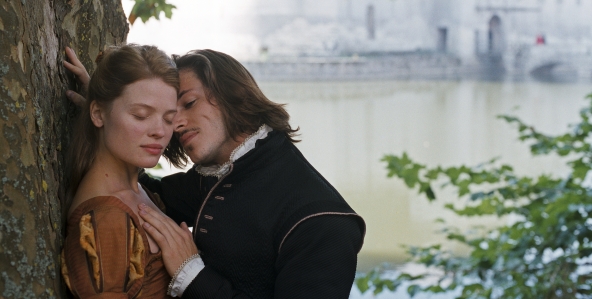
Hou Hsiao-hsien’s gorgeous Three Times is an evocative, poetic trilogy of tales about life and love in Taiwan, all starring the mesmerizing Shu Qi (Hou’s Millennium Mambo) and the stalwart Chang Chen (Wong Kar-wai’s 2046 and Happy Together). In A Time for Love, set in 1966 and featuring a repeated soft-rock soundtrack, Chen, about to leave for military service, meets May, a pool-hall girl, and promises to write to her even though they have only just met and barely said a word to each other. When he gets a furlough, he goes to the pool hall only to find that she’s on the move, so with Zen-like cool he tries to track her down. A Time for Freedom, a silent film with interstitial dialogue and period music, takes place in an elegant brothel in 1911, where Mr. Chang regularly visits a beautiful courtesan. But while she dreams of him buying out her contract and marrying her, he seems intent on helping out another couple instead. Hou concludes the trilogy with A Time for Youth, set in fast-paced modern-day Taipei, as Jing, an epileptic singer, and Zhen, a motorcycle-riding photographer, embark on a passionate, nearly wordless affair that has serious consequences for their significant others. Three Times is a rare treat for cineastes, an intelligent though overly long study of relationships between men and women in a changing Taiwan over the last hundred years, focusing on character, time and place, and the art of filmmaking itself. Three Times is screening April 1 at 7:00 as part of the Museum of Chinese in America’s Chinese Cinema Club and will be followed by a discussion with editor Leo Goldsmith, moderated by artist and curator Daryl Chin.

MoMA PS1: SATURDAY SESSIONS AND MORE

Visitors can exhibit their success and failures at PS 1’s latest Saturday Session (David Lamelas, “Limit of a Projection I,” spotlight in darkened room, 1967, collection Walker Art Center, T. B. Walker Acquisition Fund, 2009)

MoMA PS1
22-25 Jackson Ave. at 46th Ave.
Saturday Sessions free with museum suggested donation of $10 (free with MoMA ticket within thirty days of MoMA visit)
Museum open Thursday through Monday from 12 noon – 6:00 pm
718-784-2084
www.ps1.org

Since the beginning of the year, MoMA PS1 has been hosting “Saturday Sessions,” a series of programs on Saturday afternoons with guest curators putting together special events. On April 2, Triple Canopy and Dalkey Archive Press present “An Afternoon of Failure,” celebrating the release of the Review of Contemporary Fiction’s “Failure” issue, with “attempted readings” by Eileen Myles, Helen DeWitt, Sam Frank, Travis Jeppesen, and Keith Gessen, “mangled covers of pop songs” by US Girls, “a malfunctioning tribute” to American literary classics by Elevator Repair Service, and Derek Lucci trying to resurrect William Gaddis. These works of fiction offer a direct counterpoint to several of the current exhibits at PS1, which turn the concept of participatory reality art and so-called truth inside out and upside down.

In “Only the Lonely” (through August 8), New York-based photographer and filmmaker Laurel Nakadate puts herself front and center as she meets strangers in parking lots and on the road and goes back to these older men’s rooms, taking pictures and videos with them, often involving her shedding much of her clothing. Laced with an overriding fear of potential danger that never happens, Nakadate’s work comments on femininity, loneliness, sexuality, and desire, centering on human contact that is disappearing in this age of social media. The exhibition also features the premiere of her overwhelming “365 Days: A Catalogue of Tears,” comprising photographs Nakadate took of herself crying every day for a year. The pictures line both sides of a long hallway and continue into a back room; just as we all find ourselves watching intensely personal videos posted on YouTube, it is difficult to take your eyes off of these intimate, private, yet clearly staged portraits. Nakadate might bare her body, but she does it with a knowing, tongue-in-cheek candor; interestingly, in her more recent work, she is no longer the main subject, instead directing other women in short films and feature-length narratives.

Laurel Nakadate catalogs her tears and more in intimate exhibition at PS1 (photo by twi-ny/mdr)

The viewer becomes more than just the subject in “The Talent Show” (through April 4), a collection of multimedia installations and performance pieces in which some artists let others help create the work, from making a drawing for Adrian Piper’s “Information” to coming up with slogans for Gillian Wearing’s “Signs that say what you want them to say and not Signs that say what someone else wants you to say” to placing the viewer at the center of the work, where they can stand in the spotlight of David Lamelas’s “Limit of a Projection I,” act for the camera while being beamed onto a screen in Peter Campus’s “Shadow Projection,” or posing atop Piero Manzoni’s “Base Magica — Scultura vivente.” Amie Siegel combines YouTube videos of people singing the same song, while Sophie Calle investigates the men and women listed in an address book she found. Presaging reality television, Hannah Wilke documented the last two and a half years of her battle with cancer on film, resulting in a stirring sixteen-channel installation that holds nothing back. PS1 pays tribute to other early female video pioneers in “Modern Women: Single Channel,” comprising seminal work by such cutting-edge artists as Lynda Benglis, Dara Birnbaum, VALIE EXPORT, Joan Jonas, Pipilotti Rist, and Carloee Schneeman, many of whom frequently turned the cameras on themselves well before there was any such thing as American Idol, Survivor, or The Amazing Race. And finally, Feng Mengbo gives the controls over to visitors for “Long March: Restart,” an enormous two-walled video game that mixes Super Mario Bros. and Street Fighter II with Chinese militaristic propaganda imagery, allowing the player to succeed or fail in full view of others.

DENEUVE: A CHRISTMAS TALE

A CHRISTMAS TALE concludes BAMcinématek’s “Deneuve” series in high style

A CHRISTMAS TALE (UN CONTE DE NOËL) (Arnaud Desplechin, 2008)
BAMcinématek
BAM Rose Cinemas
30 Lafayette Ave. between Ashland Pl. & St. Felix St.
Thursday, March 31, 6:30, 9:30
718-636-4100
www.bam.org

One of the best films of 2008, A Christmas Tale (Un Conte de Noël) is yet another extraordinary work from French filmmaker Arnaud Desplechin (La Sentinelle, Esther Kahn). Desplechin, who examined family dysfunction in the masterful Kings and Queen (one of the best films of 2006), brings back much of that film’s cast in A Christmas Tale. Catherine Deneuve stars as Junon, the family matriarch who has just discovered she has leukemia and is in need of a bone-marrow transplant. Although it is rare for children to donate bone marrow to their mother (or grandmother), Junon insists that they all take the test to see if they are compatible. Soon they gather at Junon and Abel’s (Jean-Paul Roussilon) house for the holidays: oldest daughter Elizabeth (Anne Consigny), a dark and depressed woman whose teenage son, Paul (Emile Berling), has been institutionalized with mental problems and whose husband, Claude (Hippolyte Girardot), is rarely home; Ivan (Melvil Poupaud), the youngest son, a carefree sort married to Sylvia (Chiara Mastroianni, Deneuve’s real-life daughter), whom Junon strongly distrusts; and black sheep Henri (Mathieu Almaric), the middle child who was initially conceived primarily to save Abel and Junon’s first son, Joseph, who ended up dying of the same leukemia that Junon has contracted. Henri, who shows up with a new girlfriend, the very direct Faunia (Emmanuelle Devos), is a philandering ne’er-do-well who is deeply estranged from Elizabeth and not close with his mother, leading to much strife as Christmas — and a possible transplant — nears. Desplechin, who wrote the script with Emmanuel Bourdieu, once again has created powerful, realistic characters portrayed marvelously by his extremely talented cast; despite the family’s massive dysfunction, you’ll feel that even spending more than two and a half hours with them is not enough. A Christmas Tale concludes BAMcinématek’s month-long “Deneuve” series in high style.