
LOVE CRIMES OF KABUL goes inside a women’s prison in Afghanistan to tell a series of fascinating stories
LOVE CRIMES OF KABUL (Tanaz Eshaghian, 2011)
Film Society of Lincoln Center, Walter Reade Theater
165 West 65th St. at Amsterdam Ave.
Monday, June 20, 6:30; Tuesday, June 21, 8:45; Wednesday, June 22, 4:00
Series runs through June 30
212-875-5601
www.filmlinc.com
www.hrw.org
 Iranian-American documentarian Tanaz Eshaghian (I Call Myself Persian, Be Like Others) and cinematographer Kat Patterson gained remarkable access to Afghanistan’s Badam Bagh women’s prison for their fascinating HBO film, Love Crimes of Kabul. Having its U.S. premiere at the twenty-second Human Rights Watch Film Festival, Love Crimes focuses on the intriguing stories of three imprisoned women. Eighteen-year-old Sabereh was arrested after her father turned her in for allegedly having sex with her seventeen-year-old neighbor, Abbas, even though lab reports show she is still a virgin. The twenty-year-old and pregnant Kareema turned in herself and her fiancé, Firuz, in the hopes of forcing him to marry her. And twenty-three-year-old Aleema is in jail because she ran away from her abusive husband and took shelter with Zia and her son, both of whom were arrested as well for attempting to sell her; meanwhile, Zia is trying to convince Aleema to marry her son in order to save them all from shame. Approximately half of the 125 female inmates at Badam Bagh have been incarcerated for either having premarital sex, running away from home, or committing adultery, many of them facing upwards of fifteen to twenty years for their actions. The women are remarkably open and honest, making their own cases to the camera while condemning those of their fellow inmates. Eshaghian captures Kareema speaking to her mother through the prison gates as they discuss the possibility of her father making a financial deal with Firuz and his family. Forty-five-year-old Naseema, the elder spokesperson of the group, proudly talks about having killer her husband, whom she claims deserved it because of his penchant for adultery, including with a seven-year-old girl. And the prison guards regularly defend the laws that essentially make certain kinds of love a crime in Afghanistan. Although she is not allowed into a wedding ceremony or two of the trials, Eshaghian does film one of the trials; she also photographs Firuz’s parents talking to her very directly while in bed, and Aleema holds nothing back when discussing her divorce and her unwillingness to marry Zia’s son, primarily because she claims he couldn’t afford to keep her in the lifestyle she wants. Eshaghian presents the facts and the myriad opinions without embellishment, letting these deeply personal and inherently infuriating stories speak for themselves, revealing a frighteningly old-fashioned society that is doing everything it can to prevent the freedom of women to make their own choices. Part of the “Migrants’ and Women’s Rights” section of the Human Rights Watch Festival, which also includes “Times of Conflict and Responses to Terrorism,” “Human Dignity, Discrimination, and Resources,” and “Truth, Justice, and Accountability,” Love Crimes of Kabul will be shown June 20-22, with all three screenings followed by a discussion with Eshaghian. The festival, which runs through June 30, features nineteen films from twelve countries that deal with human rights issues around the world.




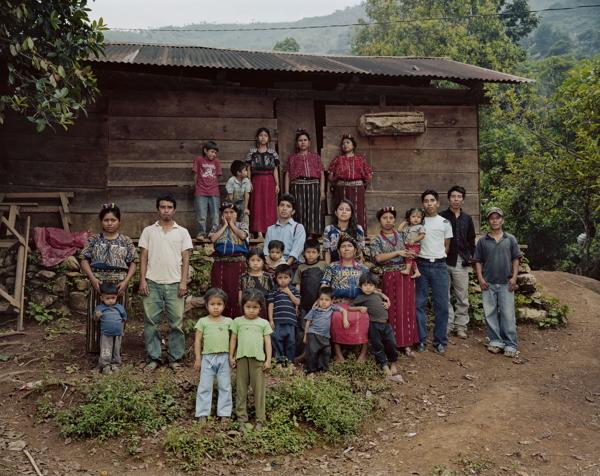
 The opening-night selection of the twenty-second Human Rights Watch Film Festival, Granito: How to Nail a Dictator is an illuminating, if at times overly self-referential, examination of the power of documentary filmmaking. In 1982, Pamela Yates and Newton Thomas Sigel made When the Mountains Tremble, which told the inside story of civilian massacres of the indigenous Maya people as government forces and guerrilla revolutionaries fought in the jungles of Guatemala; one of the film’s subjects, Rigoberta Menchú, became an international figure and went on to win the Nobel Peace Prize. “When I made that film, I had no idea I was filming in the middle of a genocide,” Yates says at the beginning of Granito. A quarter-century after When the Mountains Tremble, Yates was contacted by lawyer Almudena Bernabeu, who asked Yates to comb through her reels and reels of footage to find evidence of the Guatemalan genocide and help bring charges again dictator Ríos Montt, whom Yates had met with back in 1982. In researching the case, Yates speaks with Menchú, forensic archivist Kate Doyle, journalist liaison Naomi Roht-Arriaza, forensic anthropologist Fredy Peccerelli, Spanish national court judge Santiago Pedraz, victims’ rights leader and genocide survivor Antonio Caba Caba, and Gustavo Meoño, a founding member of the Guerrilla Army of the Poor, each of whom sheds light on the proceedings from various different angles, from digging up bones in mass graves to discussing redacted documents that reveal U.S. involvement in Guatemala. Several of them are risking their lives by both continuing to fight the government and appearing on camera. Part of the “Truth, Justice, and Accountability” section of the Human Rights Watch Festival, which also includes “Times of Conflict and Responses to Terrorism,” “Human Dignity, Discrimination, and Resources,” and “Migrants’ and Women’s Rights,” Granito, which Yates directed with Peter Kinoy and Paco de Onís and is her sixth film to be shown at the festival, is a compelling look at how individuals can make a difference. The music is often overly melodramatic, and Yates does seem to like to show herself both in outtakes from her first film and in serious poses in the new film, but its ultimate point overrides those tendencies. Granito will be shown June 17 at 7:00 and June 18 at 1:00; both screenings will be followed by a discussion with the filmmakers as well as subjects Kate Doyle, Alejandra Garcia, and Fredy Peccerelli. The June 17 screening will also be followed by a reception, while the June 18 screening will be followed by a special presentation of When the Mountains Tremble (1982). The festival, which runs June 16-30, features nineteen films from twelve countries that deal with human rights issues around the world. Keep watching twi-ny for further select reviews.
 Winner of the Palme D’Or at the 2007 Cannes Film Festival, Cristian Mungiu’s 4 Months, 3 Weeks and 2 Days is a harrowing look at personal freedom at the end of the Ceausescu regime in late-’80s Romania. Anamaria Marinca gives a powerful performance as Otilia, a young woman risking her own safety to help her best friend, Gabita (Laura Vasiliu), out of a difficult, dangerous situation. Their lives get even more complicated when they turn to Bebe (Vlad Ivanov) to take care of things. Cinematographer Oleg Mutu, who shot Cristi Puiu’s brilliant The Death of Mr. Lazarescu, keeps the camera relatively steady for long scenes, without cuts, pans, dollies, or zooms, as the actors walk in and out of view, giving the film a heightened level of believability without looking like a documentary. Set in a restrictive era with a burgeoning black market, 4 Months goes from mystery to psychological drama to thriller with remarkable ease — and the less you know about the plot, the better. Four Months is screening at MoMA on June 17 & 18 as part of the series “In Focus: IFC Films,” which continues with such films as Gus Van Sant’s Paranoid Park (2008), Lukas Moodysson’s Together (2001), Hirokazu Koreeda’s Nobody Knows (2004), and a sneak peek at Errol Morris’s Tabloid (2010).