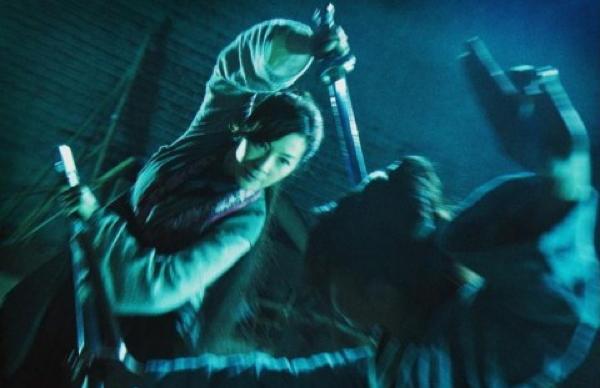
Michelle Yeoh is resplendent as the star of Su Chao-pin’s awesome REIGN OF ASSASSINS
REIGN OF ASSASSINS (JIANYU JIANGHU) (Su Chao-pin, 2010)
Film Society of Lincoln Center, Walter Reade Theater
165 West 65th St. at Amsterdam Ave.
Sunday, July 10, $13, 1:00
212-875-5601
www.filmlinc.com
www.subwaycinemanews.com
 A hit at the 2010 Venice Film Festival, Reign of Assassins is a tense, exciting, and deeply romantic wuxia film from Taiwanese writer-director Su Chao-pin and Hong Kong codirector John Woo. During the Ming Dynasty, a secret gang of assassins known as the Dark Stone is trying to capture both halves of the remains of the enlightened monk Bodhi, which are thought will bring the owner great power when reunited. But after a bloody attack on a minister’s residence, Drizzle (Kelly Lin) takes off with half of the desiccated skeleton, leaving her cohorts, including Lei Bin (Shawn Yue), the Magician (Leon Dai ), and their leader, the Wheel King (Wang Xueqi), dead set on finding her. But Drizzle, whose sword specialty is the water-shedding technique that can bend her blade around a person’s body before stabbing them, decides to change her life, getting a new face (and new portrayer, the great Michelle Yeoh) and name, Zeng Jing, and moving to a Nanjing village where she sells cloth at an outdoor market and falls for a local courier, Jiang Ah-sheng (Jung Woo-sung). But her past is always close behind, and after she is forced to display her remarkable martial arts skills during a supposed bank robbery — actually an attempt to capture the other half of the monk’s remains, believed to belong to banker Zhang Dajing (You Liping), the Dark Stone, with new member Turquoise (Barbie Hsu), who has a penchant for using her body to get what she wants, head for Nanjing for a final showdown. Heavily influenced by Crouching Tiger, Hidden Dragon, Su’s Reign of Assassins is more than just a successful genre exercise; his excellent script features well-drawn characters, intriguing back stories, and, at its heart, a beautiful romance. There are plenty of bloody swordfights, courtesy of action director Stephen Tung, and humor supplied by Zeng Jing and Ah-sheng’s matchmaking landlord, Auntie Cai (Paw Hee-ching). The Malaysian-born Yeoh, the glamorous star of such action films as Butterfly and Sword, Once a Cop, and Crouching Tiger, Hidden Dragon, is resplendent as Zeng Jing, lighting up the screen whether flirting with Ah-sheng or battling an army of evildoers. Su does a marvelous job of keeping the narrative strong and tight despite having to deal with a multitude of languages on the set, from Korean and Mandarin to English and Cantonese. The amiable Su, who previously directed the ghost story Silk (2006) and the comedy Better than Sex (2003) and whose next venture is an alien sci-fi film, is being honored at the 2011 New York Asian Film Festival with showings of BTS as well as several movies that he wrote; he will participate in a Q&A following the July 10 screening of the awesome Reign of Assassins.
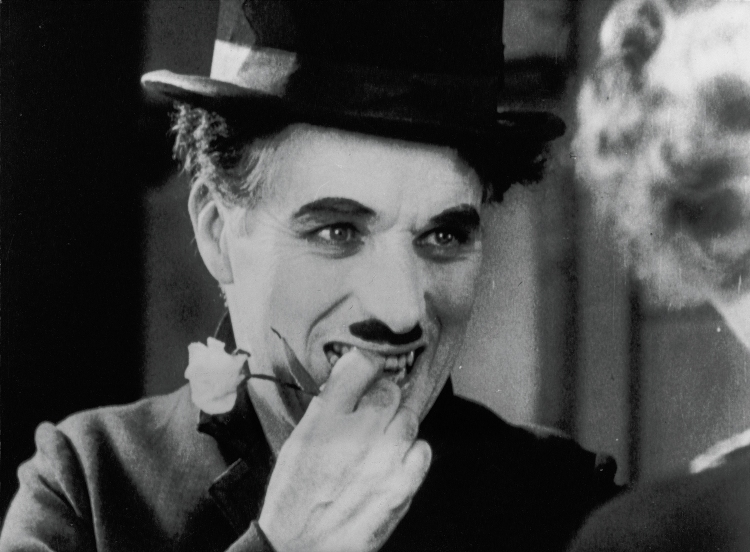
 A genuine American treasure, City Lights is one of Charlie Chaplin’s most thoroughly entertaining masterpieces. Serving as writer, director, editor, producer, and composer, Chaplin also stars as the Little Tramp, a destitute man who instantly falls in love upon seeing a blind Flower Girl (Virginia Cherrill). When she mistakes him for a millionaire with a fancy car, he decides to pretend to be rich so she might like him, but when he actually becomes pals with the business tycoon (Harry Myers), he thinks he might eventually be able to get the money for her to get a new operation that could restore her eyesight. The only problem is that the millionaire, who parties wildly with the Little Tramp every evening, taking him to ritzy nightclubs and even giving him his car at one point, remembers nothing the next morning, and doesn’t want anything to do with him. It all leads to an unforgettable conclusion that pulls at the heartstrings. Despite the availability of sound, Chaplin chose to make City Lights a silent picture, although he did incorporate sound effects and, in one section, distorted speech. Although the film features several hysterical slapstick bits, including the opening, when the Little Tramp is sleeping on a statue entitled “Peace and Prosperity” as it is unveiled, and a scene in which he saves the millionaire from a suicide attempt, virtually every minute comments on the social reality of depression-era America and the widening gap between the rich and the poor. Metaphors abound as the Little Tramp tries his best to maintain a smile and search out love during the bleakest of times. City Lights is screening July 10 and August 7 & 21 at Symphony Space, kicking off its Chaplin series, consisting of eight programs showing Chaplin films in high-definition for the first time ever on the big screen; the weekend series also includes multiple screenings of Monsieur Verdoux, Limelight, Modern Times, The Great Dictator, and other classics.

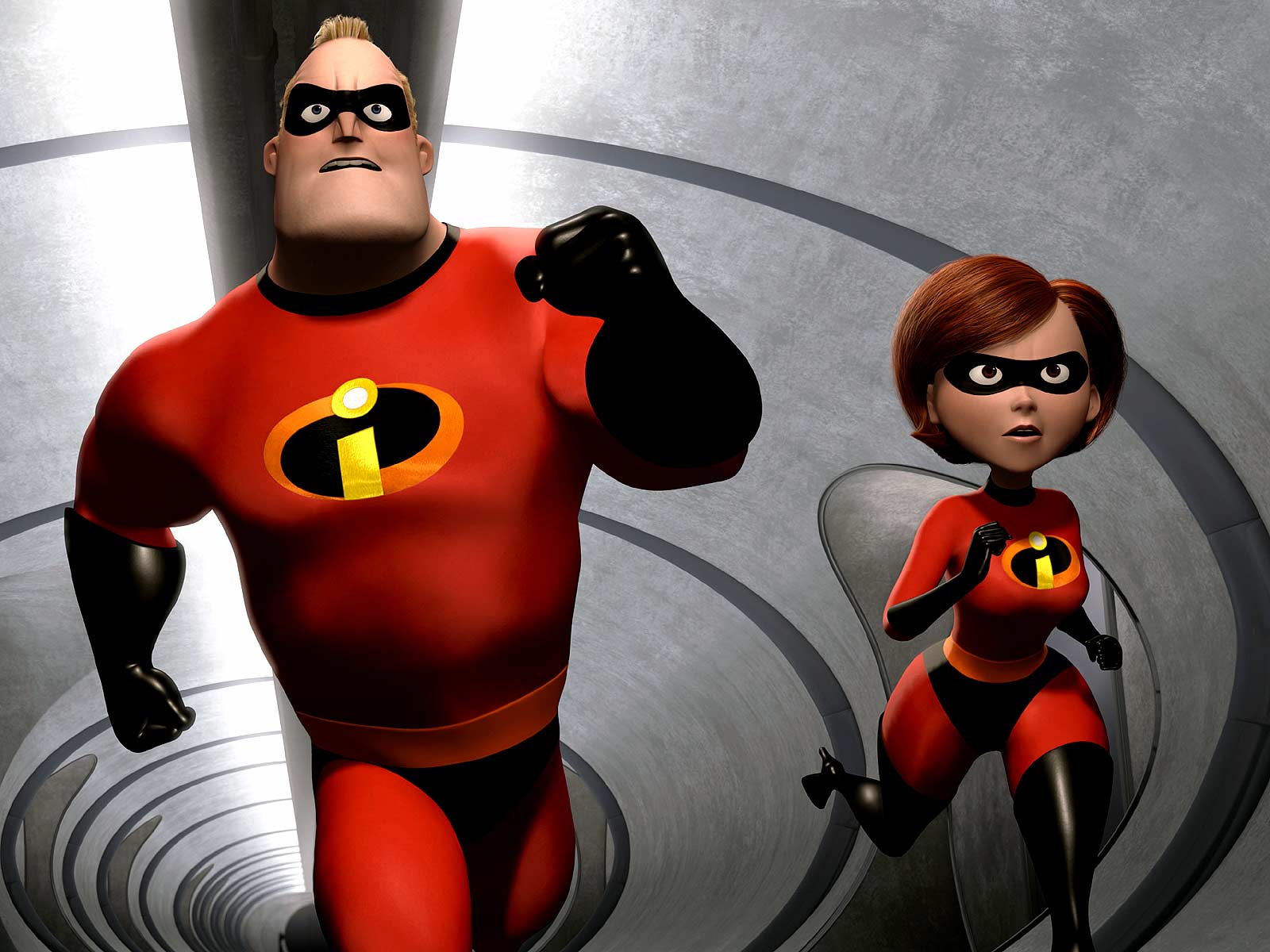
 The Incredibles, which nabbed the Best Animated Feature Oscar, is yet more fun from Pixar, John Lasseter’s remarkably creative studio that previously brought us Toy Story, A Bug’s Life, Monsters Inc.., and Finding Nemo. After the crime-fighting family the Incredibles are sued into early retirement and given a new identity in harmless suburbia, Bob/Mr. Incredible (Craig T. Nelson) can’t stop protecting the world from evildoers, sneaking away from his suspicious wife, Helen/Elastigirl (Holly Hunter), to work with Lucius/Frozone (Samuel L. Jackson) in defeating evil. But he meets more than he bargained for in Syndrome (Jason Lee), a piece of his past resurrected to destroy him. Other recognizable voices include Wallace Shawn as Gilbert Huph, writer Sarah Vowell as Violet, John Ratzenberger as Underminer, and Elizabeth Peña as Mirage; writer/director Brad Bird (The Iron Giant) voices fashion designer Edna ‘E’ Mode. The Incredibles kicks off the big finale of MoMA’s Pixar Revisited series, which also includes the terrific Ratatouille (Brad Bird, 2007), screening with Gary Rydstrom’s short Lifted on July 8 at 8:00; the thrilling Up (Pete Docter, 2009), being shown with the Peter Sohn short Partly Cloudy on July 9 at 5:00; and the brilliant Wall-E (Andrew Stanton, 2008), screening with the Doug Sweetland short Presto on July 9 at 8:00.