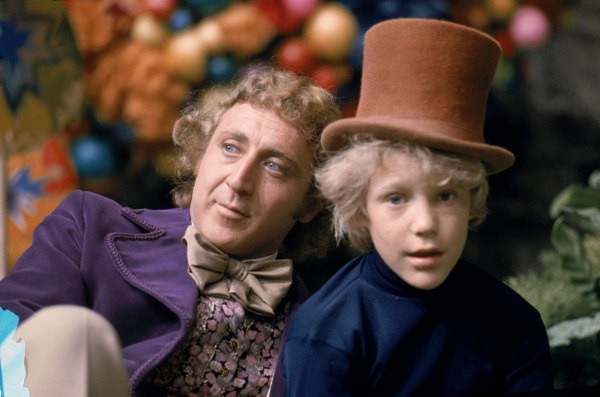
Willy Wonka (Gene Wilder) offers the experience of a lifetime to young Charlie Bucket (Peter Ostrum) in classic family film
WILLY WONKA & THE CHOCOLATE FACTORY (Mel Stuart, 1971)
Film Society of Lincoln Center
Elinor Bunin Munroe Film Center amphitheater
144 West 65th St. at Amsterdam Ave.
Sunday, December 4, 11:00 am, and Saturday, December 17, 4:00 pm, $6
Series continues through December 18
212-875-5601 www.filmlinc.com
Based on a 1964 Roald Dahl novel, Willy Wonka & the Chocolate Factory is a fanciful frolic through a children’s wonderland, filled with fear, trepidation, love, and lots of candy, both sweet and sour. Charlie Bucket (Peter Ostrum, in his only film appearance) lives with his dirt-poor family in a ramshackle room, where Grandpa Joe (Jack Albertson) can’t even get out of bed. But when goodhearted Charlie finds one of the golden tickets that will allow him to join a once-in-a-lifetime tour of Willy Wonka’s chocolate factory, Grandpa Joe is suddenly up and about, singing and dancing, and so will you be. Among the other kids with the golden tickets are the spoiled Veruca Salt (Julie Dawn Cole), the selfish Violet Beauregarde (Denise Nickerson), the tube-loving Mike Teevee (Paris Themmen), and the rather sloppy Augustus Gloop (Michael Bollner). As they are led through this dreamland by the unpredictable Willy Wonka (Gene Wilder), they encounter chocolate rivers, bubble machines that make people float, and small Oompa Loompas who are quick to clean up any messes. The soundtrack of this thoroughly entertaining, charming family film includes “The Candy Man Can,” “(I’ve Got a) Golden Ticket,” “Pure Imagination,” and, of course, “Oompa Loompa, Doompa-Dee-Do.” The film was remade by Tim Burton in 2005 starring Johnny Depp as Wonka with mixed results, but you can catch the original at the Elinor Bunin Munroe Film Center for a mere six bucks on December 4 and 17 as part of the Film Society of Lincoln Center’s “Family Films” series, which also includes a pair of other Dahl tales, James and the Giant Peach (Henry Selick, 1996) and Matilda (Danny DeVito, 1996).
Caesar has had quite enough in PLANET OF THE APES reboot
RISE OF THE PLANET OF THE APES (Rupert Wyatt, 2011)
MoMA Film
Museum of Modern Art
11 West 53rd St. between Fifth & Sixth Aves.
Saturday, December 3, 8:00
Series runs through January 26
Tickets: $12, in person only, may be applied to museum admission within thirty days, same-day screenings free with museum admission, available at Film and Media Desk beginning at 9:30 am
212-708-9400 www.moma.org www.apeswillrise.com
Director Rupert Wyatt and writers Rick Jaffa and Amanda Silver reimagine Pierre Boulle’s original Planet of the Apes story in the exciting and inventive reboot Rise of the Planet of the Apes. Taking elements from the first five Apes films, especially the fourth flick, Conquest of the Planet of the Apes, the new blockbuster is a more science-based thriller that delves into the evolutionary (and devolutionary) nature of humans and animals. James Franco stars as Will Rodman, a scientist working on the anti-Alzheimer’s drug ALZ-112 for Gen-Sys, a big pharmaceutical company run by Steven Jacobs (David Oyelowo). After a demonstration for potential investors goes terribly wrong, Jacobs orders all of the ALZ-112 test subjects to be destroyed, but the baby of the primary subject survives and is brought home by Will, who raises Caesar (a motion-captured Andy Serkis) as if the chimpanzee were his own child, with the help of his scientist girlfriend, Caroline (Slumdog Millionaire’s Freida Pinto) and his father (John Lithgow), who was suffering from Alzheimer’s but is seeing remarkable improvement as Will secretly treats him with the controversial drug. As Caesar grows up, he gains insight into the state of the world, especially how apes are forced to literally live like caged animals, and soon he is ready to do something about it. Rise of the Planet of the Apes is no mere remake or summer popcorner capitalizing on the fame of the series (for that, see Tim Burton’s terrible 2001 disaster); instead, it is a moving, thoughtful study of the development of mammalian intelligence and the very basic need to be free. Wyatt (The Escapist) moves things along at a slow pace in the first half of the film, allowing Caesar’s character to blossom, leading to a believable revolution that culminates in an action-packed showdown on the Golden Gate Bridge. Serkis, who previously played such motion-capture characters as Gollum and King Kong, breathes remarkable life and emotion into Caesar, so much so that there is Oscar buzz around his performance. Rise earns its already respected place in the Apes pantheon, a worthy addition that honors the past while paving the way for a promising future.
Although it is not a remake or a sequel, Rise does fit within the Apes mythology, and it includes numerous tributes to its predecessors: Gen-Sys head Jacobs is named for the producer of the five original films, Arthur P. Jacobs; Gen-Sys chimp handler Robert Franklin (Tyler Labine) is a subtle nod to the director of the first film, Franklin J. Schaffner; the circus orangutan Maurice pays tribute to Maurice Evans, who played the orangutan Dr. Zaius in the original; the chimp Cornelia is a sly combination of favorite characters Cornelius and Dr. Zira from the first flicks; and Brian Cox as John Landon and Tom Felton as Dodge, his son, remember original Apes astronauts Landon (Robert Gunner) and Dodge (Jeff Burton). In addition, at one point a television monitor shows a clip of Charlton Heston playing Julius Caesar, and one of the most famous lines from the original makes an appearance in this reboot, which ends with more than a hint that sequels are to follow. Rise of the Planet of the Apes is screening December 3 at 8:00 at the Museum of Modern Art as part of MoMA’s “The Contenders 2011” series, which focuses on either underlooked films and/or those that MoMA believes will stand the test of time.
You can see today’s performance of RODELINDA either live at the Met or live in HD at a number of local theaters
Metropolitan Opera House, Lincoln Center
150 West 66th St.
Saturday, December 3, 12:30
Wednesday, December 7, 7:30
Saturday, December 10, 8:00
Tickets: $30 – $330 www.metoperafamily.org
First presented by the Metropolitan Opera in 2004 and specifically staged for Renée Fleming, Rodelinda, Handel’s Baroque delight about a deposed king, his nefarious usurper, a sister torn between love and betrayal, an innocent young son, and his loyal long-suffering queen, includes the requisite mistaken identity, hair-raising escapes, and stunning arias by characters who really could be doing something else besides stopping to sing for fifteen minutes in the middle of the action. Stephen Wadsworth’s stunning production makes full use of the Met’s stupendous ability to move backdrops and entire stages as characters slowly pace and Thomas Lynch’s scenery moves around them, through an eighteenth-century Italian countryside castle, a rustic courtyard, and a destroyed monument. An especially excellent introduction to the Baroque repertoire, this outstanding version of Rodelinda will be performed at the Met on December 3, 7 and 10 with a cast that also features Stephanie Blythe, Andreas Scholl, Iestyn Davies, Joseph Kaiser, and Shenyang, conducted by Harry Bicket. If you can’t make it to the Met today, you can catch this afternoon’s 12:30 show live in HD at BAM Rose Cinemas, the Walter Reade Theater at Lincoln Center, the Ziegfeld, and other locations, with encore screenings January 4 at 6:30. Upcoming “The Met: Live in HD” presentations include Gounod’s Faust on December 10, Jeremy Sams’s new The Enchanted Island on January 21, Wagner’s Götterdämmerungon on February 21, and Verdi’s Ernani on February 25.
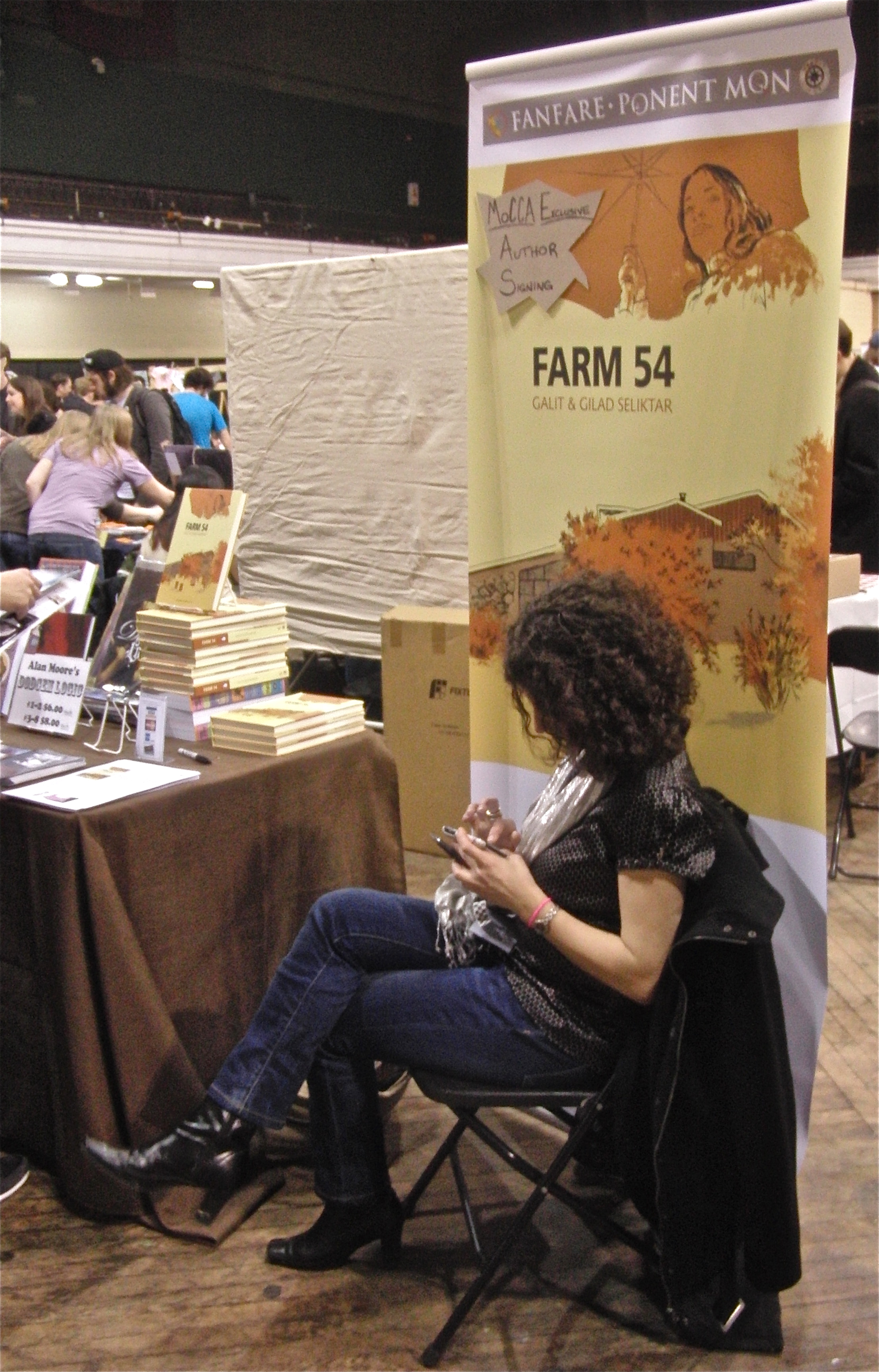
The charming Galit Seliktar will be signing copies of her highly praised FARM 54, written with her brother, Gilad, at the Fanfare / Potent Mon booth at 4:00 & 7:00 (photo by twi-ny/mdr)
Our Lady of Mt. Carmel Church
275 North Eighth St. at Havemeyer St.
Saturday, December 3, free, 12 noon – 9:00 www.comicsandgraphicsfest.com
The third annual Brooklyn Comics and Graphics Festival returns today to Our Lady of Mt. Carmel Church in Williamsburgh, featuring an impressive lineup of guests, exhibitors, and special events from 12 noon to 9:00. Admission is free to see such industry favorites as Chip Kidd, David Mazzuchelli, Adrian Tomine, John Porcellino, Sam Henderson, Mark Newgarden, Lisa Hanawalt, Kim Deitch, Brian Ralph, Gary Panter, Dash Shaw, and MAD’s Jack Davis, along with such exhibitors as Acti-i-vate, Drawn & Quarterly, Fanfare / Potent Mon, Fantagraphics, the Jack Kirby Museum, Rabid Rabbit, Top Shelf, and dozens of others. Programming highlights include a Q&A with Davis at 1:30, a “Gestural Aesthetics” panel at 2:30 with Austin English, Dunja Jankovic, and Frank Santoro, moderated by Bill Kartalopoulos (who, with Desert Island and PictureBox, created the festival), “Chip Kidd and David Mazzuchelli: Comics by Design” at 3:30, also moderated by Kartalopoulos, “Phoebe Gloeckner: A Life and Other Stories” at 5:00 with Gloeckner and Nicole Rudick, “The Language in Comics” at 6:00 with Porcellino, Gabrielle Bell, and David Sandlin, moderated by Myla Goldberg, and “C.F. and Brian Ralph in Conversation” at 7:00, moderated by Tom Spurgeon. In conjunction with the festival, a film series continues through Sunday at the Spectacle Theater on South Third St., with the Eyeworks Festival of Experimental Animation showcase at 7:30 and The Idea (Berthold Bartosch, 1932) and The Adventures of Prince Achmed (Lotte Reiniger, 1926), with live music by Chips and Salsa, at 9:30 ($5 per screening, $8 for both). In addition, “Pictures and Performance: A Melodrama,” consisting of multimedia works by Kartalopoulos, Ben Katchor, Shana Moulton, R. Sikoryak, and others, will take place at the Brick Theater at 3:00 on Sunday (free admission).
A CHRISTMAS CAROL
Abrons Arts Center, Henry Street Settlement
466 Grand St. at Pitt St.
Thursday – Sunday through December 18, $20
212-352-3101 www.abronsartscenter.org www.reidfarrington.com
Combining intricately choreographed movement with film projection and live theatrical elements, Reid Farrington retells classic tales in unique, entertaining ways. In Gin & “It,” he deconstructed and reconstructed Alfred Hitchcock’s 1948 thriller, Rope, with actors playing characters in the movie as well as behind-the-scenes personnel who change the set and capture parts of the film on translucent screens. In The Passion Project, Laura K. Nicoll gave a dazzling performance as the tortured protagonist of Carl Th. Dreyer’s 1928 silent epic, The Passion of Joan of Arc, moving within a ten-foot-by-ten-foot square and reaching for various wood-framed screens that pick up scenes from the film.
The New York City-based Farrington has turned to a holiday favorite for his current project, A Christmas Carol, in which Nicoll, Christopher Loar, John Forkner, Jennifer L. Reed, and Sandrine Hudi re-create the seasonal ghost story using images from thirty-five different cinematic versions of Charles Dickens’s classic tale of Ebenezer Scrooge, Jacob Marley, and the Cratchit family. As he prepared for the opening of the multimedia production, which runs Thursdays through Sundays at the Abrons Arts Center through December 18, Farrington answered a few questions for twi-ny about A Christmas Carol, his unusual staging technique, and who might get the Farrington treatment next.
twi-ny: In September, you gave a sneak-peek preview of A Christmas Carol and advised us to come to an early performance in case the production got shut down for copyright violation. Is that a legitimate fear you have?
Reid Farrington: That fear sort of waxes and wanes in me on a day-to-day basis. There are a lot of ways that I’ve historically gotten around this — there are of course fair use and parody laws, which, if it came to it, I’d be falling under. But if I were in violation, there’s nothing like the threat of being shut down to sell tickets.
twi-ny: The show features clips from dozens of versions of A Christmas Carol. Were there any you were unable to get?
Reid Farrington: I had initially intended to use all seventy film versions of A Christmas Carol for this piece — there are in fact seventy I uncovered. But this started to become impossible because some of the versions are, of course, adaptations with dialogue so far removed from the original that it would be unrecognizable to the viewer if I only used a clip. For example, I found a disturbing little [VH1 original movie] called A Diva’s Christmas with Vanessa Williams — which would just gum up the works (on so many levels). So I had to place a loose restriction on myself of using only Christmas Carols that dance around Dickens’s original text. My piece uses about thirty-five films total.
Laura K. Nicoll and Reid Farrington are teaming up again for A CHRISTMAS CAROL
twi-ny: Do you have a particular favorite?
Reid Farrington: My favorite version is hands down Scrooged with Bill Murray. It manages to weave original text around modern adaptation perfectly.
twi-ny: How did you originally come up with your unique staging technique, which involves actors capturing projections on framed canvases?
Reid Farrington: I have always been obsessed with the idea of actually walking into a movie. There’s that image from so many movies (or maybe just one?) of a little kid putting his hand through a screen — I forget what it’s from, but that’s it. I think that’s the spark that led to this obsession of having live actors interact with screen images. That flexible reality is so exciting to me.
I also love the sparseness of a projection surface. It makes the work look easier than it is. There are no wires in a projection surface, no gears, no visible computer, nothing. It’s a simple dance of light. The wires, gears, computer, and tech are hidden somewhere above our heads — very like an old movie house. The staging and actors’ movement then comes naturally out of that dance of light. It’s hard to prep how the staging will look until the actors are engaged with that light in rehearsal. This I find really exciting too.
twi-ny: You’ve now taken on Hitchcock, Dreyer, and Dickens; who will get the Farrington treatment next?
Reid Farrington: I have been dreaming of Muhammad Ali and Joe Frazier fight footage and really dancing and exploding those images. I also have an idea that my wife, playwright Sara Farrington, and I have been banging around for a while involving the big film noir movies of the 1940s. Sara is obsessed with Double Indemnity, and I think it would be a great movie to explode too.
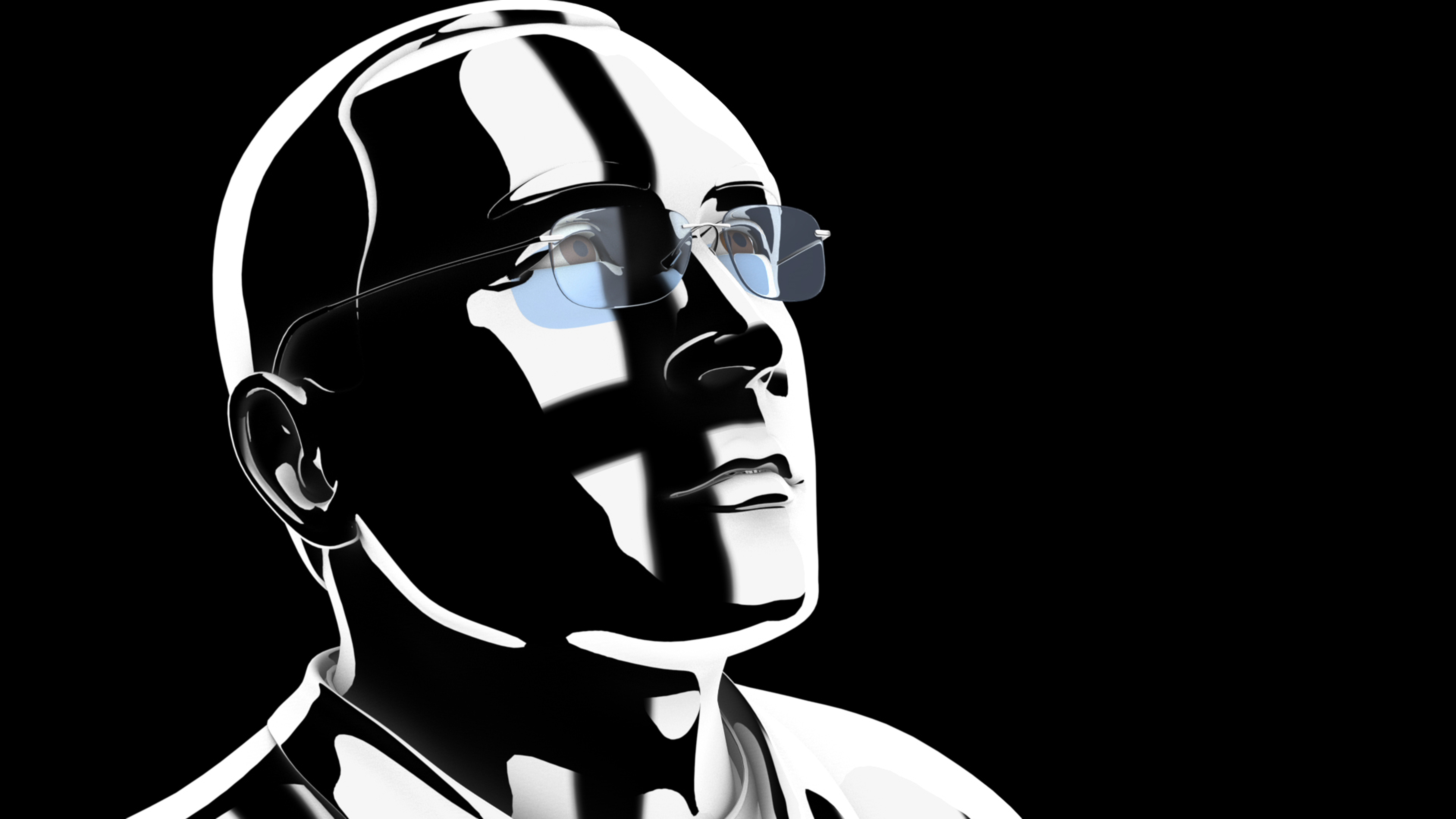
Cyril Tuschi seeks to uncover the truth behind Mikhail Khodorkovsky and his controversial imprisonment in compelling documentary (courtesy of Kino Lorber)
On October 25, 2003, Russian oligarch Mikhail Khodorkovsky was arrested for tax fraud and has been in prison ever since. The controversial story of the eight-billion-dollar man is told in German director Cyril Tuschi’s political-thriller documentary Khodorkovsky. Combining Michael Moore’s rugged determination to meet with GM CEO Roger Smith in Roger & Me with a police-procedural narrative, Tuschi (Slight Changes in Temperature and Mind) desperately tries to speak with the imprisoned Khodorkovsky, but for most of the film he only gets to communicate him through letters while instead talking with his first wife, his mother, his son, former business partners, spies, and various politicians, some of whom share illuminating details about the life and career of the seemingly equally loved and despised socialist-turned-capitalist and others who adamantly refuse to say anything about the onetime head of the Yukos oil company, perhaps out of fear of retribution. Khodorkovsky is alternately shown to be a philanthropic businessman who founded the Open Russia Foundation charitable project and a ruthless tyrant whose giant ego resulted in his publicly butting heads with former Russian president Vladimir Putin, the reason why many think he is in jail — and might never get out. Tuschi supplements the film with black-and-white constructivist animation of Khodorkovsky, placing him firmly in between socialism and capitalism as he seeks to lead Russia into a new age. Featuring music by Estonian composer Arvo Pärt and narration by Jean-Marc Barr and Harvey Friedman, Khodorkovsky paints a fascinating portrait of contemporary Russia as well as of one of its most enigmatic and mysterious figures. Tuschi and Khodorkovsky’s son Pavel will be at Film Forum on November 30 to talk about the documentary and its subject following the 7:50 screening.
For the twenty-third annual World AIDS Day, which provides “an opportunity for people worldwide to unite in the fight against HIV, to show their support for people living with HIV, and to commemorate people who have died,” artists and filmmakers Jim Hodges, Carlos Marques da Cruz, and Encke King have joined together to make the hour-long Untitled, a montage that documents the history of AIDS activism, inspired by the life and career of influential artist Félix González-Torres, who died of AIDS in 1996. The film will be screened for free at museums and other arts venues all over the country as part of Day With(out) Art / World AIDS Day. The film will be shown at a number of venues in New York City, including the IFC Center, where Creative Time will host a panel discussion at 7:45 (advance RSVP required) with Malik Gaines, Shanti Avirgan, and Che Gossett, moderated by Nato Thompson. You can also catch the film at the FLAG Art Foundation in Chelsea, the Whitney, La Galleria at La MaMa, the Museum of Arts & Design, Housing Works, the New Museum, the School of Visual Arts, the Gladstone Gallery (in conjunction with Hodges’s current exhibit), the Brooklyn Museum, Exit Art (with guest speakers Zachary Barnett and Dr. Demetre Daskalakis), the Grey Art Gallery, and at Participant Inc. on the Lower East Side, where Justin Vivian Bond, whose exhibition “The Fall of the House of Whimsy” is on view there through December 18, will perform a song accompanying the screening. In addition, Visual AIDS has put together an extensive resource guide about the film, including “Suggestions for Engagement,” an HIV/AIDS timeline and alphabetical vocabulary, important links, and other information “in an effort to honor the sense of endlessness that Untitled suggests [and] for provoking both public and private conversation.”
 Based on a 1964 Roald Dahl novel, Willy Wonka & the Chocolate Factory is a fanciful frolic through a children’s wonderland, filled with fear, trepidation, love, and lots of candy, both sweet and sour. Charlie Bucket (Peter Ostrum, in his only film appearance) lives with his dirt-poor family in a ramshackle room, where Grandpa Joe (Jack Albertson) can’t even get out of bed. But when goodhearted Charlie finds one of the golden tickets that will allow him to join a once-in-a-lifetime tour of Willy Wonka’s chocolate factory, Grandpa Joe is suddenly up and about, singing and dancing, and so will you be. Among the other kids with the golden tickets are the spoiled Veruca Salt (Julie Dawn Cole), the selfish Violet Beauregarde (Denise Nickerson), the tube-loving Mike Teevee (Paris Themmen), and the rather sloppy Augustus Gloop (Michael Bollner). As they are led through this dreamland by the unpredictable Willy Wonka (Gene Wilder), they encounter chocolate rivers, bubble machines that make people float, and small Oompa Loompas who are quick to clean up any messes. The soundtrack of this thoroughly entertaining, charming family film includes “The Candy Man Can,” “(I’ve Got a) Golden Ticket,” “Pure Imagination,” and, of course, “Oompa Loompa, Doompa-Dee-Do.” The film was remade by Tim Burton in 2005 starring Johnny Depp as Wonka with mixed results, but you can catch the original at the Elinor Bunin Munroe Film Center for a mere six bucks on December 4 and 17 as part of the Film Society of Lincoln Center’s “Family Films” series, which also includes a pair of other Dahl tales, James and the Giant Peach (Henry Selick, 1996) and Matilda (Danny DeVito, 1996).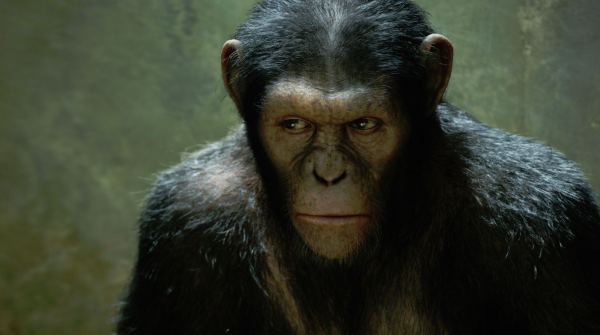
 Director Rupert Wyatt and writers Rick Jaffa and Amanda Silver reimagine Pierre Boulle’s original Planet of the Apes story in the exciting and inventive reboot Rise of the Planet of the Apes. Taking elements from the first five Apes films, especially the fourth flick, Conquest of the Planet of the Apes, the new blockbuster is a more science-based thriller that delves into the evolutionary (and devolutionary) nature of humans and animals. James Franco stars as Will Rodman, a scientist working on the anti-Alzheimer’s drug ALZ-112 for Gen-Sys, a big pharmaceutical company run by Steven Jacobs (David Oyelowo). After a demonstration for potential investors goes terribly wrong, Jacobs orders all of the ALZ-112 test subjects to be destroyed, but the baby of the primary subject survives and is brought home by Will, who raises Caesar (a motion-captured Andy Serkis) as if the chimpanzee were his own child, with the help of his scientist girlfriend, Caroline (Slumdog Millionaire’s Freida Pinto) and his father (John Lithgow), who was suffering from Alzheimer’s but is seeing remarkable improvement as Will secretly treats him with the controversial drug. As Caesar grows up, he gains insight into the state of the world, especially how apes are forced to literally live like caged animals, and soon he is ready to do something about it. Rise of the Planet of the Apes is no mere remake or summer popcorner capitalizing on the fame of the series (for that, see Tim Burton’s terrible 2001 disaster); instead, it is a moving, thoughtful study of the development of mammalian intelligence and the very basic need to be free. Wyatt (The Escapist) moves things along at a slow pace in the first half of the film, allowing Caesar’s character to blossom, leading to a believable revolution that culminates in an action-packed showdown on the Golden Gate Bridge. Serkis, who previously played such motion-capture characters as Gollum and King Kong, breathes remarkable life and emotion into Caesar, so much so that there is Oscar buzz around his performance. Rise earns its already respected place in the Apes pantheon, a worthy addition that honors the past while paving the way for a promising future.