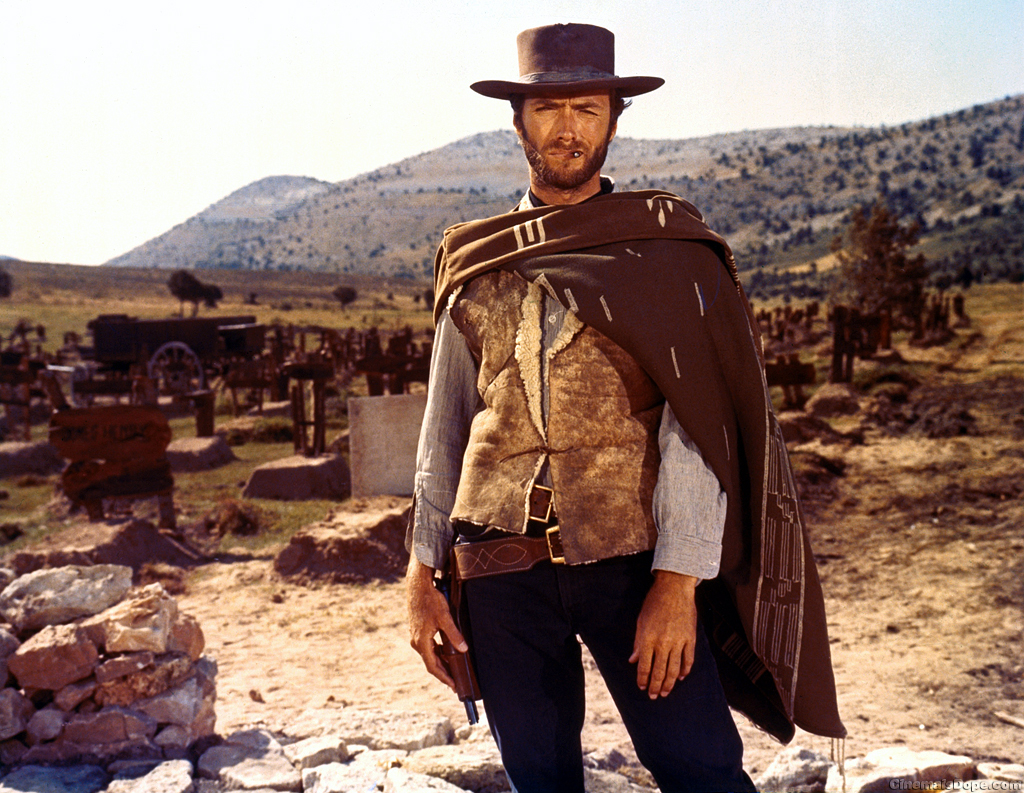
Clint Eastwood is the Good in classic Sergio Leone operatic oater
THE GOOD, THE BAD AND THE UGLY (Sergio Leone, 1966)
Museum of the Moving Image
35th Ave. at 36th St., Astoria
Friday, February 10, $12, 7:00
Series runs through March 17
718-777-6800
www.movingimage.us
 One of the all-time-great spaghetti Westerns, Sergio Leone’s dusty three-hour operatic oater stars Clint Eastwood as the Good (Blondie), Lee Van Cleef as the Bad (Angel Eyes), and Eli Wallach as the Ugly (Tuco Benedicto Pacifico Juan Maria Ramirez, whose list of criminal offenses is a riot), three unique individuals after $200,000 in Confederate gold buried in a cemetery in the middle of nowhere. Nearly 20 minutes of never-before-seen footage added to the film a few years ao, with Wallach and Eastwood overdubbing brand-new dialogue, so if you haven’t seen it in a while, it might just be time to catch it again, this time on the big screen as part of the Museum of the Moving Image’s “See It Big!” series. Ennio Morricone’s unforgettable score and Torino delli Colli’s gorgeous widescreen cinematography were also marvelously enhanced; their work in the scene when Tuco first comes upon the graveyard will make you dizzy with delight. And then comes one of the greatest finales in cinema history. The Good, the Bad and the Ugly is screening at the museum on February 10 at 7:00, with the series continuing with such classics as Samuel Fuller’s Forty Guns on February 19 (introduced by Dan Callahan), The Sound of Music on March 3, North by Northwest on March 9-10, Andrei Tarkovsky’s The Mirror on March 11 (introduced by Geoff Dyer), and Touch of Evil on March 16-17.
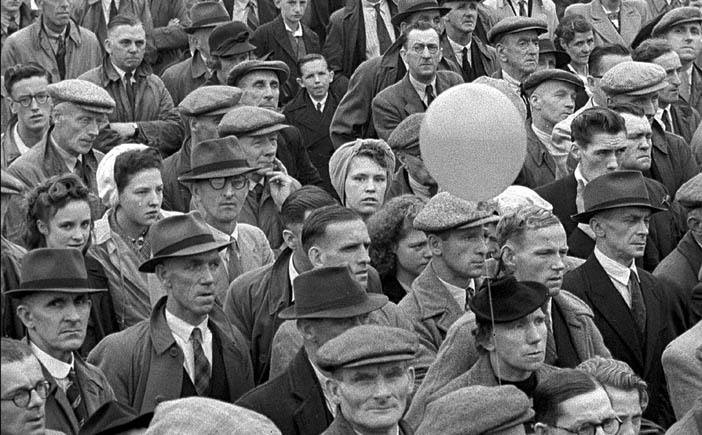
 Avant-garde filmmaker Bill Morrison (Decasia) collaborated with Icelandic musician and composer Jóhann Jóhannsson in the elegiac The Miners’ Hymn, a tribute to the now-gone collieries, or coal mines, of Northeast England. The fifty-two-minute documentary opens with new aerial shots of the locations where the Durham coal mines were, since replaced by luxury housing and megastores. The film shows the birth and death dates of several collieries going back to the nineteenth century, then seamlessly blends into archival black-and-white footage of the miners at work underground, the community coming together for a local fair, and a union rally during a strike that includes a confrontation with the police. There is no text and no narration in The Miners’ Hymn; instead, Morrison’s savvy editing of the found footage, consisting of both moving pictures and still photographs primarily acquired through the British Film Institute and the BBC, brings the old-fashioned town and its old-fashioned ways to vibrant life even though they roll across the screen in slow motion. Jóhannsson’s score punctuates the proceedings with an occasional brassy flare when not sounding more funereal. Despite the lack of text and narration, Morrison’s point of view is clear and all too obvious, paying homage to something that has been lost, and he is never quite able to make an emotional or personal connection with the viewer. However, The Miners’ Hymns contains remarkable footage that still manages to tell an important story, even if it is one-sided and lacking at least a little more historical context. The Miners’ Hymns is playing February 8-14 at Film Forum, along with Morrison’s short films Release (2010), featuring footage of Al Capone’s release from prison, Outerborough (2005), which looks at the Brooklyn Bridge, and The Film of Her (1996), a documentary about a Library of Congress copyright office employee who finds a vault full of old paper movies. Morrison will be at Film Forum for the 8:00 show on February 8, which will also feature live violin by Todd Reynolds.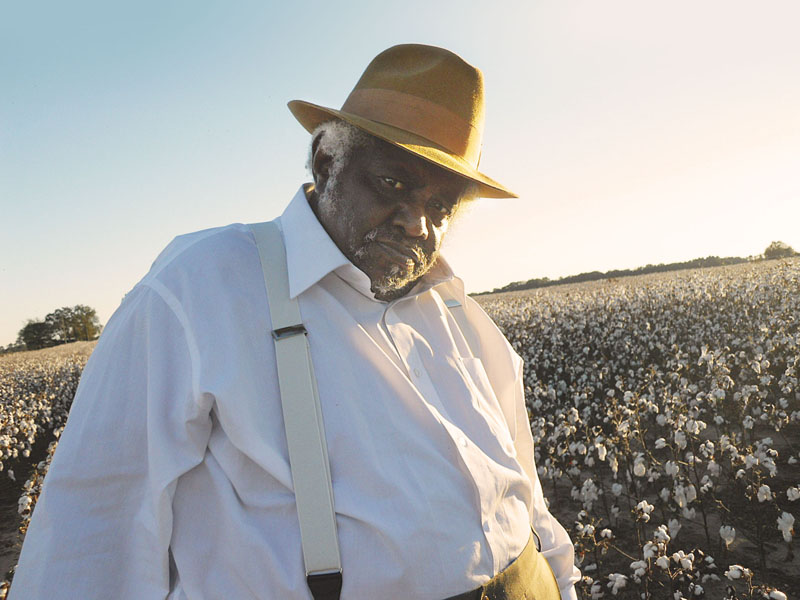
 Born in 1945 in rural Georgia to a mother who abandoned him when he was three months old, Winfred Rembert grew up picking cotton, dropped out of high school, spent time in jail and on a chain gang, and lost nearly all his teeth. But it was his years behind bars that turned him into a new man, as he learned to read and write and developed a unique art style that soon had him carving out the tales of his life on leather. Longtime journalist, producer, and writer Vivian Ducat tells Rembert’s amazing story in her engaging feature-length debut, All Me: The Life and Times of Winfred Rembert. Ducat follows the oversized Rembert, who regularly bubbles over with joy, as he returns for a show in Cuthbert, Georgia, and prepares for a big opening in New York City. “I know he’s here for a reason,” his sister Lorraine says in the film. “To help people and to be a witness through his art.” Throughout All Me, Rembert discusses many of his works, in which he uses indelible dyes on carved leather, in great detail, each one representing a part of his life, focusing on being a poor black man in a white-dominated society. It is quite poignant late in the film when he points out that his art seems to be most appreciated by whites even though it is meant as a visual history for blacks. But what really makes the documentary work is not just that Rembert is such an enigmatic, larger-than-life figure but that his art is exceptional, his self-taught, folksy style reminiscent of such forebears as Romare Bearden and Jacob Lawrence, capturing a deeply personal, intensely intimate part of the black experience in twentieth-century America. Rembert, one of the most fascinating characters you’re ever likely to come upon, will be at the Pelham Fritz Recreation Center on February 9 at 1:00 with Ducat and producer Mark Urman for a free screening of All Me, and what should be an enlightening Q&A afterward. (Rembert and Uman will also be at the Montclair Art Museum on February 16 at 7:00 as part of the fifth annual Montclair African American Film Festival, which is also free.) And if you’re as captivated by Rembert’s story as we are, you can see more of his work in his “Amazing Grace” exhibition, running through May 5 at the
 Longtime music video and photography editor Laura Israel’s debut feature documentary, Windfall, is filled with a lot of hot air. In the exposé, Israel delves into the battle over the potential installation of multiple wind turbines in the poor farming village of Meredith in upstate New York, where Israel has a small cabin. Several years ago, developers started approaching Meredith residents, many of whom had moved there to escape the crowded, polluted madness of the big city and bond with nature, and offered them money in order to start placing four-hundred-foot-tall wind turbines, weighing more than a thousand tons apiece, on their property. As some people signed on, others looked askance at the corporations’ proposals, leading to ongoing fights over the safety, aesthetic look, and overall value of the green alternative energy source, pitting friend against friend, neighbor against neighbor. Israel places herself firmly on the side that wants to ban wind turbines from Meredith, a conceit that results in a clearly biased documentary that plays more like a presentation to be shown at a local town hall meeting than in movie theaters around the country. Israel is successful, however, in revealing several unexpected side effects of wind turbines, including affecting the physical and mental health of families who live near them. “I started to tell my friends back in New York City what I had found out about potential negative aspects of industrial wind energy. I was shouted at, called a NIMBY (not in my backyard) and a whiner,” Israel states in a production note. “I realized that if people won’t even question the status quo when it comes to this issue, then it really requires further scrutiny and in fact would be a great reason to make a film.” While it might be “a great reason to make a film,” Windfall, winner of the Viewfinders Grand Jury Prize at the 2010 DOC NYC festival, ends up being far from a great film, although it does achieve one of its main goals of urging people to think twice before jumping on some green bandwagons.
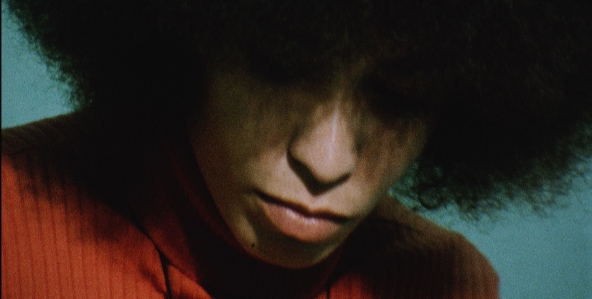
 From 1967 to 1975, a group of more than two dozen Swedish journalists came to America to document the civil rights movement. More than thirty years later, director and cinematographer Göran Hugo Olsson discovered hours and hours of unused 16mm footage — the material was turned into a program shown only once in Sweden and seen nowhere else — and developed it into The Black Power Mixtape 1967-1975, a remarkable visual and aural collage that focuses on the Black Panthers and the Black Power movement, a critical part of American history that has been swept under the rug. Olsson and Hanna Lejonqvist have seamlessly edited together startlingly intimate footage of such seminal figures as Eldridge Cleaver, Bobby Seale, Huey P. Newton, Dr. Martin Luther King, Jr., and Stokely Carmichael, including a wonderfully personal scene in which Carmichael interviews his mother on her couch. But the star of the film is the controversial political activist Angela Davis, who allowed the journalists remarkable access, particularly in a jailhouse interview shot in color. (Most of the footage is in black and white.) Davis also adds contemporary audio commentary, sharing poignant insight about that tumultuous period, along with Abiodun Oyewole of the Last Poets, singer Erykah Badu, professor, poet, and playwright Sonia Sanchez, Roots drummer Ahmir Questlove Thompson (who also composed the film’s score with Om’Mas Keith), and rapper Talib Kweli, who discusses specific scenes in the film with a thoughtful grace and intelligence. The Black Power Mixtape 1967-1975 is an extraordinary look back at a crucial moment in time that has long been misunderstood, if not completely forgotten. The Black Power Mixtape 1967-1975 is screening on February 3 as part of the Bronx Museum of the Arts’ free First Fridays program honoring Black History Month and will be followed by a Q&A with coproducer Joslyn Barnes. There will also be performances by GIF, Latasha N. Nevada Diggs, Mahogany L. Browne, and M.C. K~Swift, and the galleries will remain open until 10:00, giving visitors plenty of time to check out the exhibition “Urban Archives: Emilio Sanchez in the Bronx” and the Acconci Studio long-term installation “Lobby-for-the-Time-Being.”