Everything is not quite kosher in Mike Dowse’s GOON, which explores the bloodier side of the great sport of hockey
GOON (Mike Dowse, 2012)
Opens Friday, March 30
www.magnetreleasing.com
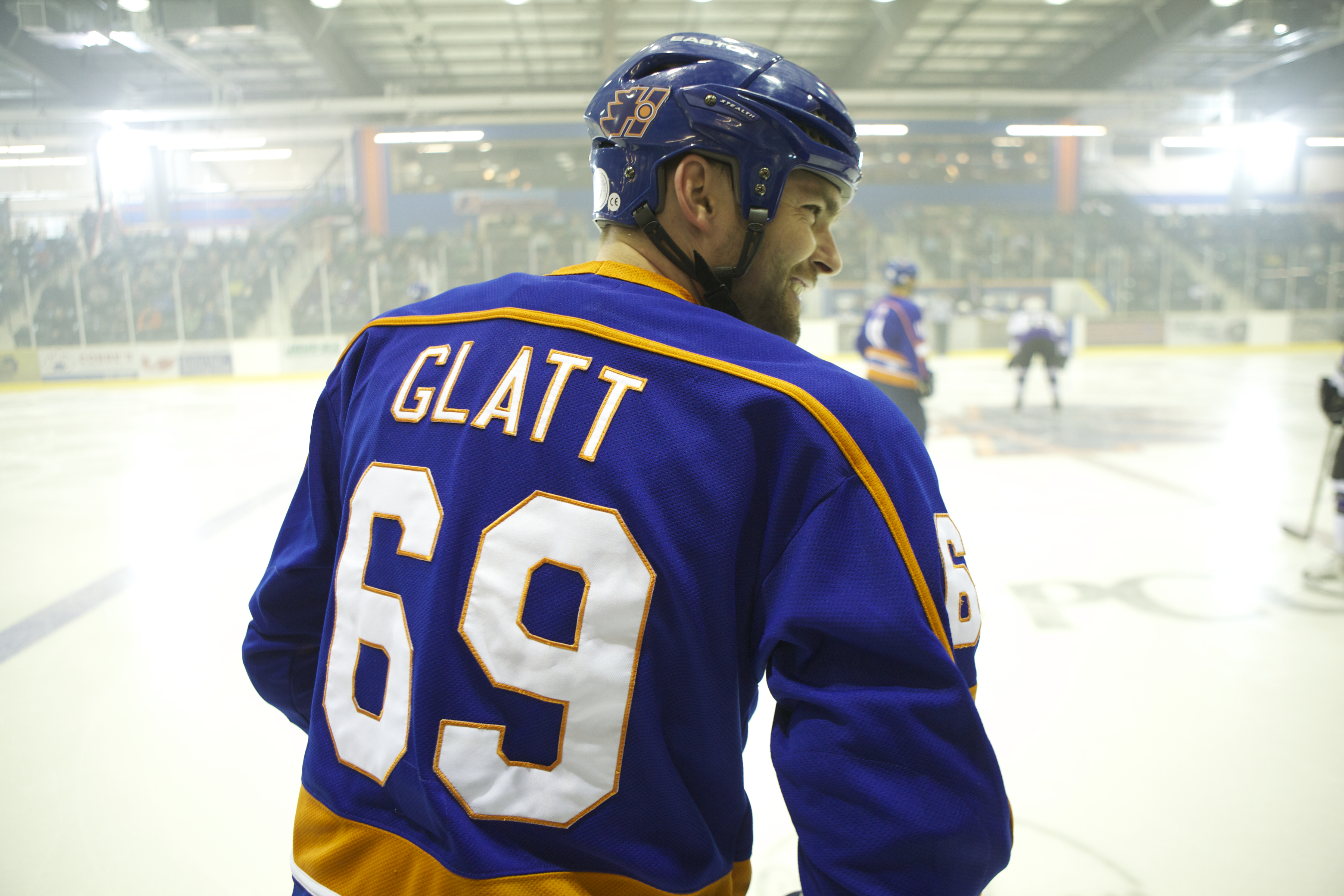
 Mike Dowse’s ultraviolent hockey comedy, Goon, comes along at a pivotal moment in the history of the NHL. More than ever before, the league is disciplining most kinds of physical contact that result in injuries, particularly concussions, following the early death of three current and former enforcers last summer. Fighting, however, has been allowed to continue, regularly argued that fisticuffs are necessary in order to avoid other, more vicious attacks on the ice. Somehow Dowse and cowriters Evan Goldberg (Superbad, Pineapple Express) and Jay Baruchel manage to skirt the more serious issues, making a very funny, extremely lowbrow movie that truly honors the sport that it loves so much while celebrating the bloodier aspects of the game. Seann William Scott (American Pie) stars as Doug Glatt, a none-too-swift Jewish bouncer whose parents (Eugene Levy and Ellen David) could not be more disappointed in him. When a minor-league hockey coach sees Glatt lay out one of his players who jumped into the crowd, he decides to turn Glatt into a hockey goon — but first he has to teach him how to skate. Soon Glatt is promoted to a better league, where his fists make him an instant star and lead to a growing fan club headed by his best friend, Pat (Baruchel), and Eva (Alison Pill), a self-admitted slut whom Glatt immediately falls for. As Glatt’s team starts winning, the hockey world prepares for the ultimate showdown between the up-and-coming Glatt and living legend Ross “the Boss” Rhea (noted thespian Liev Schreiber), a nasty player who wants to go out with one last bang before he retires. You don’t have to know much about hockey to get a kick out of Goon, which was inspired by real-life enforcer Douglas Smith’s book, Goon: The True Story of an Unlikely Journey into a Minor Hockey League, as well as the escapades of minor league fighter Mike Bajurny and Baruchel’s own father, who played on a Jewish youth team when he was a kid. The film is filled with offensive jokes that sometimes teeter on that fine line between funny and homophobic, but such locker-room talk is ultimately trumped by the film’s endearing good nature that makes it likable even when it crosses various lines of ethics and taste. There have been fewer than twenty movies made about hockey, from the classic (Slap Shot) to the solid (Miracle, The Rocket), to the absurd (Youngblood, MVP: Most Valuable Primate). Goon might not be in the same league as Slap Shot, but it can stand its ground and duke it out with the best of the rest. (Stick around for the closing credits, which include video of some of Smith’s greatest battles.)
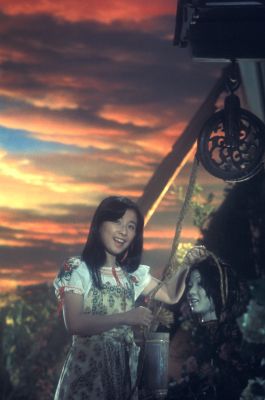
 One of the craziest movies ever made, Nobuhiko Obayashi’s 1977 cult classic, House (Hausu), is truly one of those things that has to be seen to be believed. House is a psychedelic black horror comedy musical about Gorgeous (Kimiko Ikegami) and six of her high school friends who choose to spend part of their summer vacation at Gorgeous’s aunt’s (Yoko Minamida) very strange house. Gorgeous, whose mother died when she was little and whose father (Saho Sasazawa) is about to get married to Ryoko (Haruko Wanibuchi), brings along her playful friends Melody (Eriko Ikegami), Fantasy (Kumiko Oba), Prof (Ai Matsubara), Sweet (Masayo Miyako), Kung Fu (Miki Jinbo), and Mac (Mieko Sato), who quickly start disappearing like ten little Indians. House is a ceaselessly entertaining head trip of a movie, a tongue-in-chic celebration of genre with spectacular set designs by Kazuo Satsuya, beautiful cinematography by Yoshitaka Sakamoto, and a fab score by Asei Kobayashi and Mickie Yoshino. The original story actually came from the mind of Obayashi’s eleven-year-old daughter, Chigumi, who clearly has one heck of an imagination. Oh, and we can’t forget about the evil cat, a demonic feline to end all demonic felines. The film was released theatrically in 2010 prior to its appearance on DVD from Janus, the same company that puts out such classic fare as Federico Fellini’s Amarcord, Akira Kurosawa’s Rashomon, Jacques Tati’s M. Hulot’s Holiday, François Truffaut’s Shoot the Piano Player, Jean Renoir’s The Rules of the Game, and Jean-Luc Godard’s Vivre sa Vie, so House has joined some very prestigious company. And who are we to say it doesn’t deserve it?

 Citizen Kane is the best-made film we have ever had the pleasure to watch — again and again and again — and it is even more brilliant on the big screen. A young, brash, determined Orson Welles created a masterpiece unlike anything seen before or since — a beautifully woven complex narrative with a stunning visual style (compliments of director of photography Gregg Toland) and a fabulous cast of veterans from his Mercury radio days, including Everett Sloane, Joseph Cotten, Ray Collins, Paul Stewart, and Agnes Moorehead. Each moment in the film is unforgettable, not a word or shot out of place as Welles details the rise and fall of a self-obsessed media mogul. The film is prophetic in many ways; at one point Kane utters, “The news goes on for twenty-four hours a day,” foreseeing today’s 24/7 news overload. And it doesn’t matter if you’ve never seen it and you know what Rosebud refers to; the film is about a whole lot more than just that minor mystery. Like every film Welles made, Citizen Kane was fraught with controversy, not the least of which was a very unhappy William Randolph Hearst seeking to destroy the negative of a film he thought ridiculed him. Kane won only one Oscar, for writing — which also resulted in controversy when Herman J. Mankiewicz claimed that he was the primary scribe, not Welles. The film lost the Oscar for Best Picture to John Ford’s How Green Was My Valley, but it has topped nearly every greatest-films-of-all-time list ever since. Citizen Kane will be screening March 30 at 9:30 as part of the Rubin Museum series “You Must Remember This,” focusing on memory in conjunction with its current