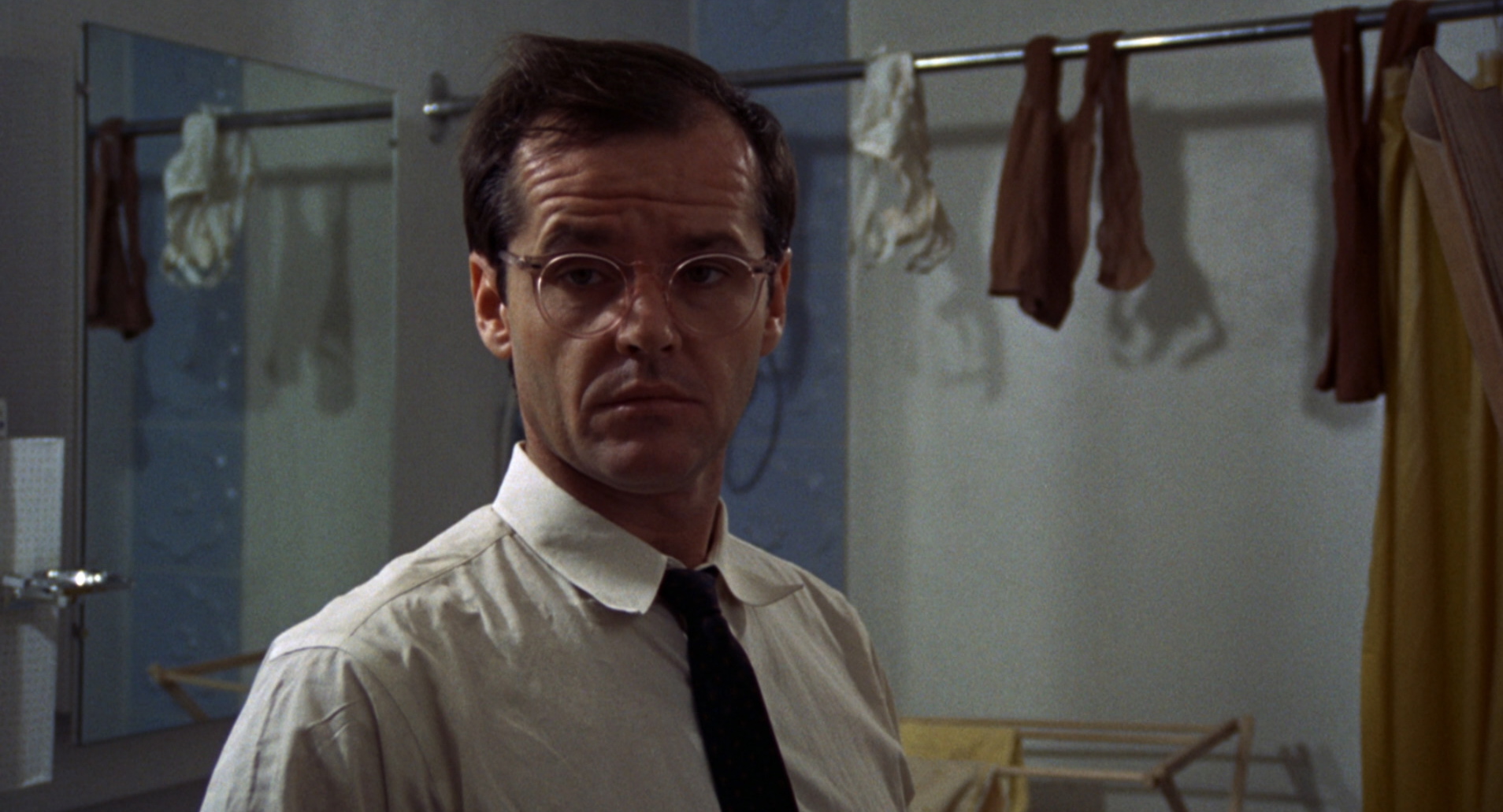
An intense Philly DJ (Jack Nicholson) doesn’t exactly find the American dream in THE KING OF MARVIN GARDENS
NEW YORK FILM FESTIVAL: THE KING OF MARVIN GARDENS (Bob Rafelson, 1972)
Walter Reade Theater
165 West 65th St. at Amsterdam Ave.
Sunday, September 30, $20, 8:30
Festival runs September 28 – October 14
212-875-5601
www.filmlinc.com
 Steeped in 1970s Vietnam War-era angst, Bob Rafelson’s The King of Marvin Gardens examines nothing less than the impending demise of the American dream. Rafelson’s follow-up to Five Easy Pieces stars Jack Nicholson as David Staebler, a Philly DJ who is introduced in a long, dark scene, shot in one take, in which he delivers a fascinating monologue about his grandfather (Charles Lavine) choking on fish bones, setting the stage for this unusual tale about family. David is contacted by his older brother, Jason (Bruce Dern), a small-time hustler caught in a jam in a decaying Atlantic City. Jason has big plans for them, hoping to open a resort casino in Hawaii, along with his girlfriend, Sally (Ellen Burstyn), and younger companion, Jessica (Julia Anne Robinson), whom they are grooming to become Miss America. But a local gangster, Lewis (Scatman Crothers), might have something to say about their future. Nicholson plays David with a calm, introspective, intensely creepy demeanor that provides fine contrast to Dern’s Jason, a loud, up-front, far more outgoing figure. But as brash as Jason is, Dern sometimes has him make major statements with just a quick move of his eyes. Written by Rafelson and journalist and lyricist Jacob Brackman, the film is beautifully shot by master cinematographer László Kovács, who bathes the Atlantic City boardwalk in luridly depressing colors as four unique characters come together in rather strange ways. The King of Marvin Gardens is screening in DCP on September 30 as part of the New York Film Festival Masterworks sidebar, with Rafelson in person to talk about the film, which is now celebrating its fortieth anniversary.
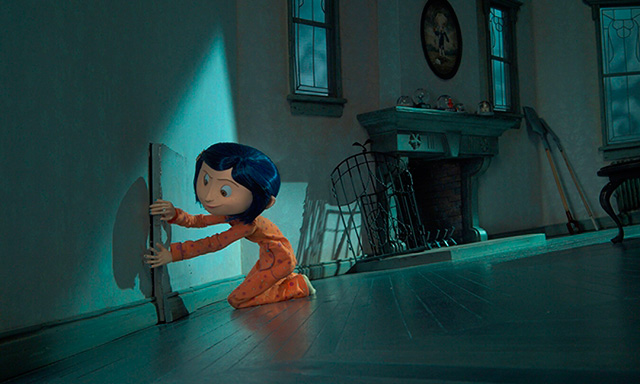
 Coraline Jones (voiced by Dakota Fanning) is an adventurous eleven-year-old in search of some fun and excitement in her new creaky home in Oregon. She finds just what she thinks she was looking for when a rodent introduces her to a hidden passageway that leads to an alternate universe, where replicas of her parents (Teri Hatcher and John Hodgman) are more interested in her and give her whatever she wants. However, this button-eyed Other Mother and Other Father have other plans for her and her real family as well. Written and directed by Henry Selick, Coraline lacks the frantic, nonstop energy of his breakthrough film, Tim Burton’s The Nightmare Before Christmas, but it is still a fun, creepy trip down the Narnia-esque rabbit hole. Combining his trademark stop-motion animation (James and the Giant Peach) with breathtaking stereoscopic 3-D that adds remarkable depth to the images, Selick does a marvelous job bringing to life the popular children’s novel by Newbery Medal-winning author Neil Gaiman (Sandman), who wrote the book for his young daughters. (Full disclosure: In another part of our life, we work for the company that publishes Gaiman’s children’s books, including Coraline.) The supporting cast of characters includes former music-hall divas Miss Spink and Miss Forcible (the Absolutely Fabulous British comedy team of Jennifer Saunders and Dawn French), the wise Cat (Keith David), mouse circus leader Mr. Bobinsky (Ian McShane), and local boy Wybie Lovat (Robert Bailey Jr.), who was created specifically for the movie. Be sure to stick around for one last cool 3-D effect at the end of the credits. Coraline is screening on September 28 and 29 at 1:00 as part of the Museum of the Moving Image’s “Film After Film” series, a collection of works selected by J. Hoberman focusing on how digital technology is changing the way movies are both made and viewed.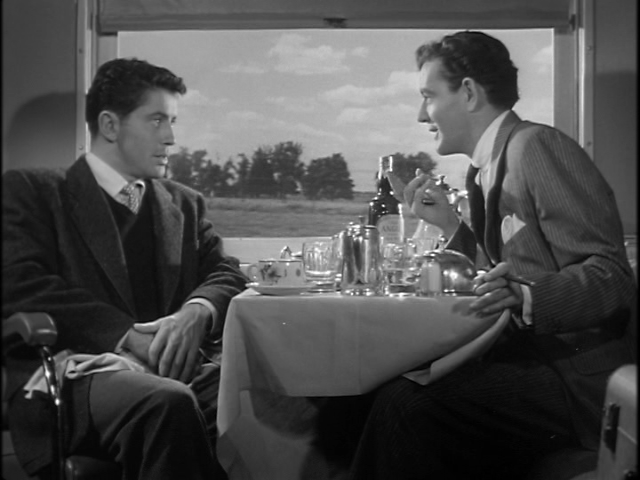
 The Rubin Museum’s Cabaret Cinema series “Happiness Is . . .” continues with one of Alfred Hitchcock’s most multilayered, complex tales, the 1951 psychological double-murder thriller Strangers on a Train. Shortly after introducing himself to amateur tennis star Guy Haines (Farley Granger) on a train, mama’s boy Bruno Anthony (an appropriately creepy Robert Walker) concocts a supposedly foolproof plan in which Bruno will kill Guy’s unfaithful wife, Miriam (Laura Elliott), so Guy can marry his socialite girlfriend, Anne Morton (Ruth Roman), one of the daughters of a U.S. senator (Leo G. Carroll). In return, Guy will kill Bruno’s father (Jonathan Hale). Bruno believes he has devised the perfect crisscross murder, with neither man having a clear motive and nothing for the cops to find to link them together. While Bruno is serious, Guy thinks he’s just a loon (Walker had in fact been recently released from a psychiatric clinic after suffering a nervous breakdown and died at the age of thirty-two before the film even opened), but after the psychopathic Bruno actually does kill Miriam — photographed in an unforgettable way by cinematographer Robert Burks, shown in a pair of broken eyeglasses — he starts shadowing Guy, insisting he keep his part of the bargain and kill Mr. Anthony, something Guy never intended on doing. Soon the cops are involved, along with a broken alibi, a key, and a critical cigarette lighter, leading to a spectacular conclusion on a merry-go-round. Loosely based on Patricia Highsmith’s debut novel and featuring an early screenplay written by Raymond Chandler (whose name was kept in the credits for marquee value despite Hitchcock’s famous — and literal — trashing of his contribution), Strangers on a Train is a powerful, tense mystery built around the idea of the double; from the opening scene of two pairs of shoes — immediately equating, and differentiating between, the two protagonists, as if they were two parts of the same person — to Hitchcock’s appearance carrying a double bass, to Anne’s younger sister, Babs (Patricia Hitchcock, Alfred’s daughter), wearing the same glasses as Miriam, to Bruno’s declaration, upon ordering two double scotches and relating them to tennis, “The only kind of doubles I play,” the film is filled with mirroring or directly opposing elements. As with Hitchcock’s Rope, which also starred Granger, Strangers on a Train also has a clear homosexual subtext; in real life Walker was straight while Granger was bisexual. Shot in a dark black-and-white that adds to the chilling effects, Strangers on a Train is one of Hitchcock’s best, a fully realized, frightening film that ends in a big way. The Rubin Museum screening on September 29 will be introduced by chef and musician Molly Neuman. “All in all,” Granger wrote in his 2007 autobiography, Include Me Out: My Life from Goldwyn to Broadway, “working on Strangers on a Train was my happiest filmmaking experience,” giving it extra reason to be included in this series that looks at different kinds of happiness in the movies.