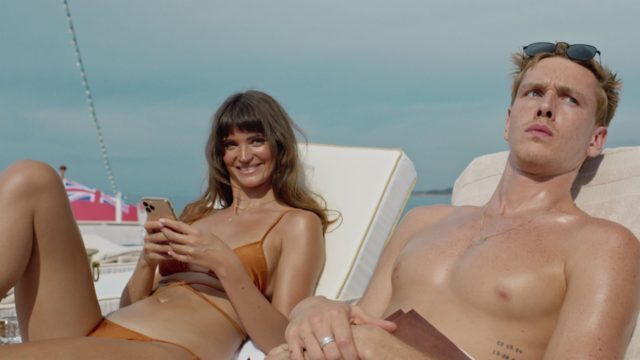
Yaya (Charlbi Dean) and Carl (Harris Dickinson) just want to keep enjoying the good life in Triangle of Sadness
TRIANGLE OF SADNESS (Ruben Östlund, 2022)
New York Film Festival, Film at Lincoln Center
Saturday, October 1, Alice Tully Hall, 9:00
Sunday, October 2, Alice Tully Hall, 2:15
Monday, October 3, Walter Reade Theater, 2:30
Monday, October 3, Museum of the Moving Image, 6:00 www.filmlinc.org
About halfway through Ruben Östlund’s brilliant Palme d’Or–winning satire Triangle of Sadness, I let out a sharp, loud laugh that made the people sitting around me wonder if I was okay. I was fine, and there were many more chuckles, snickers, giggles, guffaws, howls, and snorts to come, and not just from me.
In his previous films, Force Majeure and Palme d’Or winner The Square, the Swedish auteur has shown that he never lacks for subtlety as he skewers the lifestyles of the rich but not necessarily famous, mixing fear with farce, pushing both about as far as they can go without breaking.
In Triangle of Sadness, named for the small frown of worry wrinkles between a person’s eyebrows, Östlund channels Luis Buñuel’s The Discreet Charm of the Bourgeoisie and The Exterminating Angel, Monty Python’s The Meaning of Life (the “Autumn Years” segment with Mr. Creosote), and Lina Wertmüller’s romantic class comedy Swept Away . . . by an Unusual Destiny in the Blue Sea of August, resulting in an outrageously over-the-top condemnation of the privilege born of war and colonialism.
The protagonists are semi-successful male model Carl (Harris Dickinson) and female model and social media influencer Yaya (Charlbi Dean), two extremely beautiful people who are at the center of each of the three parts of the 149-minute film. In the first section, Carl auditions for a runway job and the couple argue over who is going to pick up the check after a fancy dinner. In the second chapter, they mostly enjoy their free luxury cruise aboard a yacht even when all hell breaks loose. And in the finale, they have to figure out how far they will go just to stay alive.
Along the way, they meet a fantastic mélange of characters, including vacuous fashion reporter Lewis (Thobias Thorwid), gluttonous Russian capitalist Dimitry (Zlatko Burić), toilet cleaner Abigail (Dolly de Leon), chief ship steward Paula (Vicki Berlin), ridiculously rich single man Jorma Björkman (Henrik Dorsin), ridiculously rich single woman Vera (Sunnyi Melles), ridiculously rich and demure British couple Clementine (Amanda Walker) and Winston (Oliver Ford Davies), the mysterious Nelson (Jean-Christophe Folly), and alcoholic yacht captain Thomas Smith (Woody Harrelson).
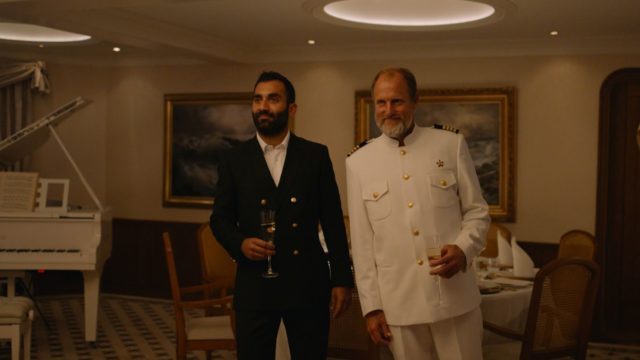
Darius (Arvin Kananian) and Captain Smith (Woody Harrelson) try to keep their balance in Palme d’Or winner
Dickinson (See How They Run,Where the Crawdads Sing) and Dean (Spud,Black Lightning) are magnetic together as flawed glitterati who exist in their own reality, until they don’t. (A star in the making, South African actress and model Dean died tragically this past August at the age of thirty-two.) Burić and Harrelson are a riot as their friendship blossoms amid booze and debates over Karl Marx, capitalism, and socialism. As a bonus, the yacht in the film is the Christina O, which was formerly owned by Aristotle Onassis and Jackie Kennedy. The rest of the large cast plays the dark humor with exquisitely calm, mannered demeanors.
Östlund, who has also written and directed Gitarrmongot,Involuntary, and Play, holds nothing back in Triangle of Sadness; the film could use a bit of trimming here and there, but that’s not his style. He puts it all out there, full steam ahead, damn the torpedoes. (The French title is Sans filtre, or “Without Filter.”) Both Force Majeure and The Square left indelible images in my head, and the same is true with his latest film, which still has me breaking out into laughter when I recall several key moments, such as Dimitry boasting, “I sell shit”; ship steward Alicia (Alicia Eriksson) trying not to say no to a demanding passenger; Captain Smith leaning sideways right before the captain’s dinner, next to his stable second in command, Darius (Arvin Kananian); and Abigail asking fellow survivors who’s in charge. It’s all so much unrelenting madness even as it hits you over the head with its political philosophy.
Triangle of Sadness screens October 1-3 at the New York Film Festival, with Östlund, de Leon, and Burić participating in Q&As following the shows on the first two days at Alice Tully Hall. The film opens in theaters October 7.
Taming the Garden follows the uprooting of a mighty oak across land and sea
TAMING THE GARDEN (Salomé Jashi, 2021)
New Plaza Cinema @Macaulay Honors College
35 West Sixty-Seventh St.
Opens Friday, September 30 newplazacinema.org tamingthegarden-film.com
“I think that I shall never see / A poem lovely as a tree,” Joyce Kilmer wrote in the beloved “Trees,” concluding, “Poems are made by fools like me, / But only God can make a tree.”
Eccentric billionaire and former Georgia prime minister Bidzina Ivanishvili is a kind of unseen god hovering over Salomé Jashi’s profoundly poetic documentary, Taming the Garden. The gorgeously shot film, which evokes the large-scale landscape photography of Edward Burtynsky, is a cinéma verité work that follows the moving of a glorious oak from its native home in the Caucasus to Shekvetili Dendrological Park, where Ivanishvili collects and replants trees that he likes.
Jashi, a former journalist born in Tbilisi, Georgia, in 1981, tells us virtually none of this; she traces the journey with no commentary, no interstitial text, no detailed information about what we are watching. Instead, Jashi, serving as director, writer, producer, and cinematographer (with Goga Devdariani), has us accompany the mighty tree as it ventures across land and sea, first carefully dug up by a somewhat ragtag group of workers, then transported by flatbed and a barge to its ultimate destination.
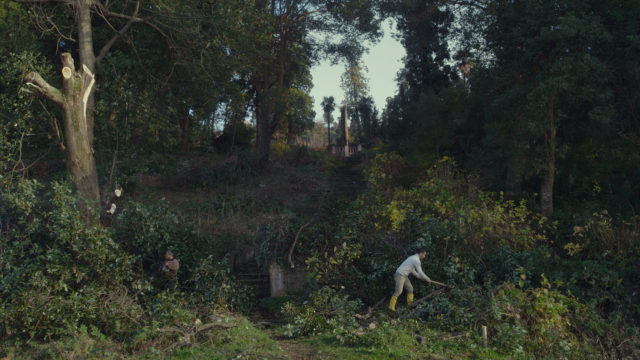
The beautifully photographed Taming the Garden features scenes that evoke painting and still photography
But in order to arrive there, the tree leaves behind a controversial wake. It is so tall and wide that it often can’t make it through the streets of small towns without other trees that line the blocks having to be severely trimmed or cut down themselves. Ivanishvili offers those trees’ owners money in exchange for chopping down the living, breathing trees; he also improves the quality of the roads the tree travels over. The residents of these villages argue over the decisions they are faced with, mostly speaking Mingrelian.
“Why do these trees have to suffer? Just so Ivanishvili can have his tree!” one declares. “They’re forcing me to do something bad,” another says, feeling he has no choice but to take the cash and let a tree on his property be chainsawed into timber. “They say they’d rather have a tree than a road!” a man complains. “Who gives a fuck about trees!”
“What is there to cry about?” a villager says to an elderly woman who remembers having planted a sapling more than half a century before; she is now in tears as she watches it come down. Someone else shouts out in wonder, “That man really likes trees!”
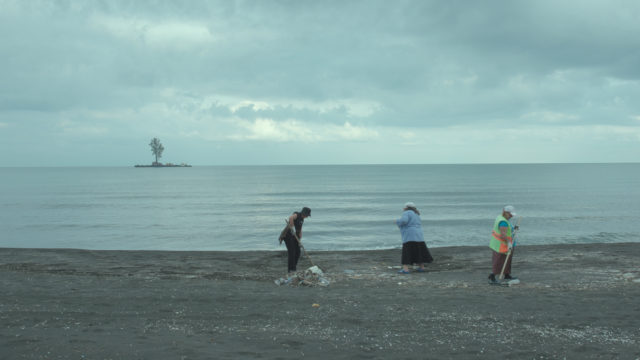
Beautifully edited by Chris Wright and featuring a natural soundscape by Philippe Ciompi accompanied by music by Karlheinz Stockhausen (“Waage”), Solage, Clément Janequin, and Ute Wassermann (“Strange Songs for Voice and Bird Whistles”), Taming the Garden is a visual and aural marvel. It is filled with images you are likely not soon to forget: the oak floating on a barge in the distance on the Black Sea; rusty piping being pushed into the dirt below the tree; dripping water that evokes the shadows of roots and branches growing; men clearing a path in a lush green landscape reminiscent of a Dutch painting; and the leaves at the top of the tree blowing in the breeze as it is driven down a street, as if moving from Great Birnam Wood to Dunsinane Hill at the end of Macbeth.
At one point a woman, standing in the street as others take cellphone video of the chopping down of a tree, makes the sign of the cross. “A tree that looks at God all day, / And lifts her leafy arms to pray,” Kilmer wrote in his 1914 poem. With Taming the Garden, Jashi (The Dazzling Light of Sunset,Bakhmaro) has created a deeply sensitive and eloquent cinematic experience that deals with one man’s power as it relates to the concepts of home and displacement. “Everything we do in this life will be weighed up in the next life,” one man philosophizes. Joyce Kilmer couldn’t have said it any better.
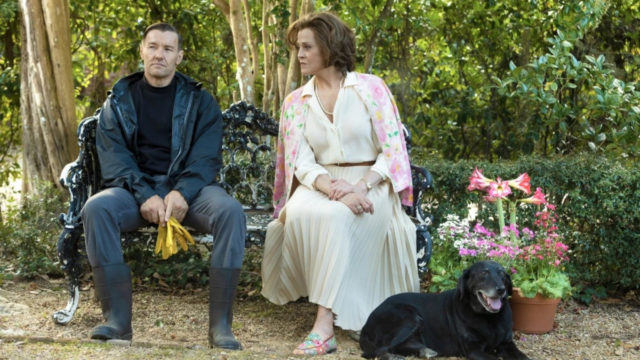
Paul Schrader will discuss his latest film, Master Gardener, in free talk at NYFF60
NYFF60: FREE TALKS
New York Film Festival 60
Elinor Bunin Munroe Amphitheater, 144 West 65th St. between Broadway & Amsterdam Ave.
October 1-15, free tickets available one hour before showtime
212-875-5601 www.filmlinc.org/nyff2022
If you don’t act immediately, it is often difficult to get tickets to the New York Film Festival’s most hotly anticipated events, appearances by superstars and internationally renowned directors at New York, US, North American, and world premieres. But there are more than a dozen free talks, lectures, panel discussions, and game-playing events that are first-come, first-served, at the Elinor Bunin Munroe Amphitheater at Lincoln Center; free tickets are distributed an hour prior to the talk, one per person. This year’s lineup includes Noah Baumbach, Nan Goldin, Paul Schrader, Cauleen Smith, Alice Diop, Frederick Wiseman, Nancy Savoca, Laura Poitras, Elvis Mitchell, Mia Hansen-Løve, Kelly Reichardt, and Molly Haskell, which is not too shabby. Below is the full schedule; you can also catch these events on YouTube later.
Saturday, October 1
Deep Focus: Noah Baumbach, White Noise, 6:00
Special Events — Cinephile Game Night: NYFF60 Edition, 8:00
Sunday, October 2
Deep Focus: Paul Schrader, Master Gardener, 2:00
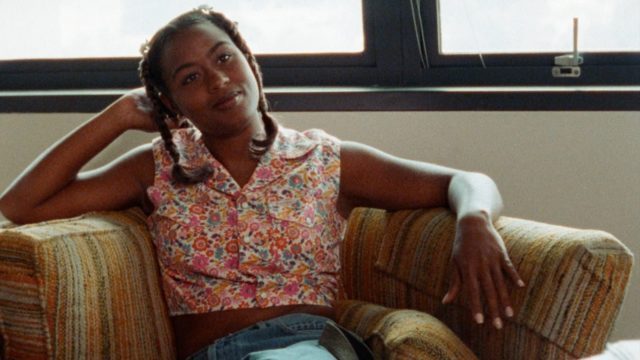
The 2022 Amos Vogel Lecture, with Cauleen Smith, followed by a Q&A with Jacqueline Stewart, 6:00
Monday, October 3
Roundtables: “Politics of Desire,” with Joao Pedro Rodrigues (Will-o’-the-Wisp), Ruth Beckermann (Mutzenbacher), Elisabeth Subrin, and Isabel Sandoval (Maria Schneider, 1983), 4:00
Crosscuts: Alice Diop & Frederick Wiseman, 6:00
Special Events — IndieWire Presents: Screen Talk Live, with Eric Kohn and special guests, 6:30
Special Events — Cinephile Game Night: NYFF60 Edition, 8:00
Cauleen Smith, whose Drylongso (above) screened an the 1998 New York Film Festival, will deliver the 2022 Amos Vogel Lecture
Thursday, October 6
Roundtables: “Missing Movies,” presentation and workshop with Amy Heller, Dennis Doros, Nancy Savoca, Rich Guay, Ira Deutchman, and Maya Cade, 6:00
Saturday, October 8
Roundtables — “Film Comment Live: On the Critical Attitude,” with hosts Devika Girish and Clinton Krute and guest Laura Poitras (All the Beauty and the Bloodshed), Elvis Mitchell (Is That Black Enough for You?!?), Tiffany Sia (What Rules the Invisible), and Alain Gomis (Rewind & Play), 1:00
Crosscuts: Mia Hansen-Løve (One Fine Morning) & Charlotte Wells (Aftersun), 4:00
Deep Focus: Nan Goldin, 7:00
Sunday, October 9
Crosscuts: Joanna Hogg (The Eternal Daughter) & Kelly Reichardt (Showing Up), 6:00
Special Events — Cinephile Game Night: NYFF60 Edition, 8:00
Tuesday, October 11
Deep Focus: Annie Ernaux, 6:00
Thursday, October 13
Special Events: “Inclusive Visions,” with a wine-tasting presentation by Dr. Hoby Wedler, hosted by Michele Spitz, 6:00
Saturday, October 15
Roundtables — “Film Comment Live“: Festival Report, with Devika Girish, Clinton Krute, Kelli Weston, Phoebe Chen, Molly Haskell, and others, 6:00
Noah Baumbach’s White Noise opens NYFF60 on September 30
NYFF60
Alice Tully Hall, 1941 Broadway at 65th St.
Walter Reade Theater, 165 West 65th St. at Amsterdam Ave.
Elinor Bunin Munroe Film Center: Francesca Beale Theater, Howard Gilman Theater, Amphitheater, 144 West 65th St. between Broadway & Amsterdam Ave.
September 30 – October 16
212-875-5601 www.filmlinc.org/nyff2022
Martin Scorsese, Tilda Swinton, Noah Baumbach, Carey Mulligan, Zoe Kazan, Paul Schrader, Sigourney Weaver, Joel Edgerton, Frederick Wiseman, Whoopi Goldberg, John Douglas Thompson, Claire Denis, Cate Blanchett, Nina Hoss, Kelly Reichardt, Luca Guadagnino, Chloë Sevigny, Mia Hansen-Løve, Léa Seydoux, Laura Poitras, James Ivory, Park Chan-wook, Jerzy Skolimowski, Elvis Mitchell, Gabrielle Union, Robert Downey Jr., Sarah Polley, Jeremy Pope, Claire Foy, Rooney Mara, Judith Ivey, Jeremy Strong, Anne Hathaway — those are only some of the directors and actors who will be participating in Q&As and introductions at the sixtieth New York Film Festival, taking place at Lincoln Center from September 30 through October 16. Below is the full list of special guests, which feature award winners from around the world as well as up-and-coming filmmakers.
Friday, September 30
Main Slate Opening Night North American Premiere: White Noise (Noah Baumbach, 2022), Q&A with Noah Baumbach & cast, Alice Tully Hall, 6:00
Main Slate Opening Night North American Premiere: White Noise (Noah Baumbach, 2022), introduced by Noah Baumbach, Walter Reade Theater, 6:15
Main Slate Opening Night North American Premiere: White Noise (Noah Baumbach, 2022), introduced by Noah Baumbach, Alice Tully Hall, 9:30
Main Slate Opening Night North American Premiere: White Noise (Noah Baumbach, 2022), introduced by Noah Baumbach, Walter Reade Theater, 9:45
Saturday, October 1
Main Slate U.S. Premiere: Corsage (Marie Kreutzer, 2022), Q&A with Marie Kreutzer and Vicky Krieps, 12:00
Currents U.S. Premiere: The Unstable Object II (Daniel Eisenberg, 2022), Q&A with Daniel Eisenberg, 12:15
Currents U.S. Premiere: Queens of the Qing Dynasty (Ashley McKenzie, 2022), Q&A with Ashley McKenzie, 12:30
Main Slate: Descendant (Margaret Brown, 2022), Q&A with Margaret Brown, 1:30
Main Slate North American Premiere: Master Gardener (Paul Schrader, 2022), Q&A with Paul Schrader, Sigourney Weaver, and Joel Edgerton, 3:00
Currents North American Premiere: The Dam (Ali Cherri, 2022), Q&A with Ali Cherri, 3:30
Main Slate North American Premiere: A Couple (Frederick Wiseman, 2022), Q&A with Frederick Wiseman, 4:30
Spotlight World Premiere: Till (Chinonye Chukwu, 2022), Q&A with Chinonye Chukwu, Danielle Deadwyler, and Whoopi Goldberg, 5:45
Revivals: Le Damier (Balufu Bakupa-Kanyinda, 1996), new restoration, Q&A with Balufu Bakupa-Kanyinda, 6:00
Revivals: Black God, White Devil (Glauber Rocha, 1964), new 4K restoration, introduced by Luiz Oliveira, 7:30
Main Slate: Triangle of Sadness (Ruben Östlund, 2022), Q&A with Ruben Östlund and Dolly de Leon, 9:00
Currents Opening Night U.S. Premiere: Will-o’-the-Wisp (João Pedro Rodrigues, 2022), Q&A with João Pedro Rodrigues, 9:15
Sunday, October 2
Spotlight World Premiere: Till (Chinonye Chukwu, 2022), Q&A with Chinonye Chukwu, Danielle Deadwyler, Jalyn Hall, John Douglas Thompson, Jayme Lawson, Tosin Cole, Keith Beauchamp, and Deborah Watts, 11:00 am
Revivals World Premiere: Drylongso (Cauleen Smith, 1998), 4K restoration, Q&A with Cauleen Smith, 12:45
Main Slate North American Premiere: A Couple (Frederick Wiseman, 2022), Q&A with Frederick Wiseman, 1:00
Main Slate: Triangle of Sadness (Ruben Östlund, 2022), Q&A with Ruben Östlund and Dolly de Leon, 2:15
Currents North American Premiere: Mutzenbacher (Ruth Beckermann, 2022), Q&A with Ruth Beckermann, 3:00
Main Slate North American Premiere: Stars at Noon (Claire Denis, 2022), Q&A with Claire Denis and Joe Alwyn, 5:45
Currents Opening Night U.S. Premiere: Will-o’-the-Wisp (João Pedro Rodrigues, 2022), Q&A with João Pedro Rodrigues, 5:45
Main Slate U.S. Premiere: Corsage (Marie Kreutzer, 2022), Q&A with Marie Kreutzer and Vicky Krieps, 6:00
Currents U.S. Premiere: Queens of the Qing Dynasty (Ashley McKenzie, 2022), Q&A with Ashley McKenzie, 6:15
Main Slate: Descendant (Margaret Brown, 2022), Q&A with Margaret Brown, 8:30
Main Slate U.S. Premiere: De Humani Corporis Fabrica (Véréna Paravel and Lucien Castaing-Taylor, 2022), Q&A with Véréna Paravel and Lucien Castaing-Taylor, 9:00
Currents North American Premiere: The Dam (Ali Cherri, 2022), Q&A with Ali Cherri, 9:15
Monday, October 3
Main Slate: TÁR (Todd Field, 2022), Q&A with Todd Field, Cate Blanchett, Nina Hoss, Mark Strong, Sophie Kauer, and Hildur Guonadóttir, 5:30
Main Slate U.S. Premiere: De Humani Corporis Fabrica (Véréna Paravel and Lucien Castaing-Taylor, 2022), Q&A with Véréna Paravel and Lucien Castaing-Taylor, 6:15
Main Slate U.S. Premiere: Saint Omer (Alice Diop, 2022), Q&A with Alice Diop, 8:30
Main Slate North American Premiere: Stars at Noon (Claire Denis, 2022), Q&A with Claire Denis and Joe Alwyn, 9:00
Tuesday, October 4
Main Slate North American Premiere: Scarlet (Pietro Marcello, 2022), Q&A with Pietro Marcello, 5:45
Main Slate North American Premiere: Stars at Noon (Claire Denis, 2022), introduced by Claire Denis, 6:00
Main Slate U.S. Premiere: Saint Omer (Alice Diop, 2022), Q&A with Alice Diop, 6:15
Main Slate: TÁR (Todd Field, 2022), introduced by Todd Field, 8:30
Currents North American Premiere: Mutzenbacher (Ruth Beckermann, 2022), Q&A with Ruth Beckermann, 9:00
Revivals: No Fear No Die (Claire Denis, 1990), world premiere of 4K restoration, introduced by Claire Denis and Isaach De Bankole, 9:15
Wednesday, October 5
Main Slate U.S. Premiere: Pacifiction (Albert Serra, 2022), Q&A with Albert Serra, 5:30
Spotlight U.S. Premiere: Exterior Night (Marco Bellocchio, 2022), introduced by Fabrizio Gifuni and Fausto Russo Alesi, 5:45
Revivals North American Premiere: The Mother and the Whore (Jean Eustache, 1973), new 4K restoration, Q&A with Françoise Lebrun and Charles Gillibert, 6:15
Main Slate North American Premiere: Showing Up (Kelly Reichardt, 2022), Q&A with Kelly Reichardt and Hong Chau, 9:15
Thursday, October 6
Main Slate North American Premiere: Alcarràs (Carla Simón, 2022), Q&A with Carla Simón, 6:00
Main Slate North American Premiere: Scarlet (Pietro Marcello, 2022), Q&A with Pietro Marcello, 6:15
Main Slate North American Premiere: Showing Up (Kelly Reichardt, 2022), Q&A with Kelly Reichardt and Hong Chau, 6:15
Revivals North American Premiere: The Mother and the Whore (Jean Eustache, 1973), new 4K restoration, introduced by Françoise Lebrun and Charles Gillibert, 6:30
Spotlight: Bones and All (Luca Guadagnino, 2022), Q&A with Luca Guadagnino, Taylor Russell, and Chloë Sevigny, 9:00
Main Slate U.S. Premiere: Pacifiction (Albert Serra, 2022), Q&A with Albert Serra, 9:00
Friday, October 7
Currents Program 1: Field Trips, Q&As with Nicolás Pereda, Natalia Escobar, Simon(e) Jaikiriuma Paetau, and Simon Velez, 1:15
Currents Program 2: Fault Lines, Q&As with Ellie Ga, 1:30
Currents Program 3: Action Figures, Q&As with Sara Cwynar, Diane Severin Nguyen, Fox Maxy, and Riccardo Giacconi, 3:45
Currents Program 4: Vital Signs, Q&As with Mary Helena Clark, Joshua Solondz, and Jordan Strafer, 4:00
Main Slate Centerpiece Selection: All the Beauty and the Bloodshed (Laura Poitras, 2022), Q&A with Laura Poitras, 6:00 & 9:15
Currents Program 5: After Utopia, Q&As with Meriem Bennani and Josh Kline, 6:15
Spotlight World Premiere: A Cooler Climate (James Ivory & Giles Gardner, 2022), Q&A with James Ivory and Giles Gardner, 6:30
Main Slate North American Premiere: Alcarràs (Carla Simón, 2022), Q&A with Carla Simón, 8:45
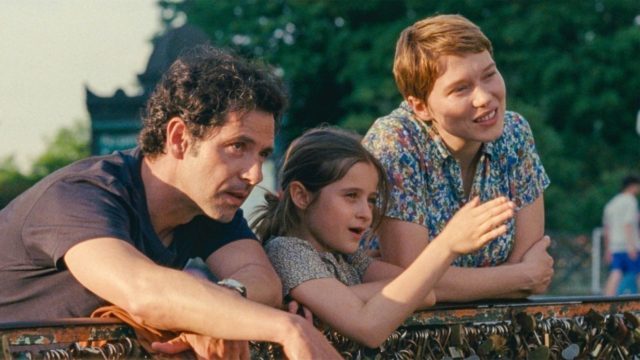
Léa Seydoux stars in Mia Hansen-Løve’s One Fine Morning
Saturday, October 8
Main Slate: Aftersun (Charlotte Wells, 2022), Q&A with Charlotte Wells, Paul Mescal, and Frankio Corio, 12:00
Currents Program 6: Inside Voices, Q&As with Kim Salac, Mackie Mallison, Thuy-Han Nguyen-Chi, Courtney Stephens, Sheilah ReStack, and Angelo Madsen Minax, 12:00
Currents Program 1: Field Trips, Q&As with Nicolás Pereda, Natalia Escobar, Simon(e) Jaikiriuma Paetau, and Simon Velez, 2:15
Currents Program 7: Ordinary Devotion, Q&As with Simon Liu, Alexandra Cuesta, and Pablo Mazzolo, 2:45
Currents Program 2: Fault Lines, Q&As with Ellie Ga, 4:30
Main Slate: One Fine Morning (Mia Hansen-Løve, 2022), Q&A with Mia Hansen-Løve and Léa Seydoux, 6:15
Main Slate U.S. Premiere: Enys Men (Mark Jenkin, 2022), Q&A with Mark Jenkin and Mary Woodvine, 6:30
Currents Program 8: Time Out of Mind, Q&A with Tiffany Sia, 7:00
Currents World Premiere: Slaughterhouses of Modernity (Heinz Emigholz, 2022), Q&A with Heinz Emigholz, 8:15
Currents: Rewind & Play (Alain Gomis, 2022), Q&A with Elisabeth Subrin and Alain Gomis, 9:00
Main Slate: Decision to Leave (Park Chan-wook, 2022), Q&A with Park Chan-wook and Park Hae-il, 9:00
Sunday, October 9
Main Slate U.S. Premiere: No Bears (Jafar Panahi, 2022), introduced by by Mina Kavani, 12:00
Main Slate: One Fine Morning (Mia Hansen-Løve, 2022), Q&A with Mia Hansen-Løve and Léa Seydoux, 12:00
Currents Program 7: Ordinary Devotion, Q&As with Simon Liu, Alexandra Cuesta, and Pablo Mazzolo, 1:00
Currents Program 5: After Utopia, Q&A with Josh Kline, 1:30
Main Slate: Decision to Leave (Park Chan-wook, 2022), Q&A with Park Chan-wook and Park Hae-il, 2:45
Main Slate U.S. Premiere: Unrest (Cyril Schäublin, 2022), Q&A with Cyril Schäublin, 3:00
Currents World Premiere: Slaughterhouses of Modernity (Heinz Emigholz, 2022), Q&A with Heinz Emigholz, 3:15
Currents Program 4: Vital Signs, Q&As with Mary Helena Clark, Joshua Solondz, and Jordan Strafer, 3:45
Spotlight World Premiere: Is That Black Enough for You?!? (Elvis Mitchell, 2022), Q&A with Elvis Mitchell, 5:30
Main Slate U.S. Premiere: R.M.N. (Cristian Mungiu, 2022), Q&A with Cristian Mungiu, 6:00
Currents Program 6: Inside Voices, Q&As with Kim Salac, Mackie Mallison, Thuy-Han Nguyen-Chi, Courtney Stephens, Sheilah ReStack, and Angelo Madsen Minax, 6:00
Main Slate U.S. Premiere: Enys Men (Mark Jenkin, 2022), Q&A with Mark Jenkin and Mary Woodvine, 8:30
Currents U.S. Premiere: Dry Ground Burning (Joana Pimenta & Adirley Queirós, 2022), Q&A with Joana Pimenta and Adirley Queirós, 8:45
Main Slate: Aftersun (Charlotte Wells, 2022), Q&A with Charlotte Wells and Paul Mescal, 9:00
Monday, October 10
Main Slate U.S. Premiere: R.M.N. (Cristian Mungiu, 2022), Q&A with Cristian Mungiu, 12:00
Spotlight North American Premiere: The Super 8 Years (Annie Ernaux and David Ernaux-Briot, 2022), Q&A with Annie Ernaux and David Ernaux-Briot, 12:30
Main Slate U.S. Premiere: Unrest (Cyril Schäublin, 2022), Q&A with Cyril Schäublin, 1:00
Currents North American Premiere: Human Flowers of Flesh (Helena Wittmann, 2022), Q&A with Helena Wittmann, 2:45
Spotlight: “Sr.” (Chris Smith, 2022), Q&A with Chris Smith, Robert Downey Jr., Susan Downey, and Kevin Ford, 3:00
Currents Program 9: New York Shorts, Q&As with Jamil McGinnis, Sarah Friedland, Charlotte Ercoli, Alex Ashe, and Lloyd Lee Choi, 3:15
Spotlight: Women Talking (Sarah Polley, 2022), Q&A with Sarah Polley, Claire Foy, Rooney Mara, Judith Ivey, and Sheila McCarthy, 6:15
Currents Program 3: Action Figures, Q&As with Sara Cwynar, Diane Severin Nguyen, Fox Maxy, and Riccardo Giacconi, 6:30
Main Slate U.S. Premiere: Stonewalling (Huang Ji, Ryuji Otsuka, 2022), Q&A with Huang Ji and Ryuji Otsuka, 8:15
Currents U.S. Premiere: Dry Ground Burning (Joana Pimenta & Adirley Queirós, 2022), Q&A with Joana Pimenta and Adirley Queirós, 8:30
Currents: Rewind & Play (Alain Gomis, 2022), Q&A with Elisabeth Subrin and Alain Gomis, 8:45
Main Slate: The Eternal Daughter (Joanna Hogg, 2022), Q&A with Joanna Hogg and Tilda Swinton, 9:00
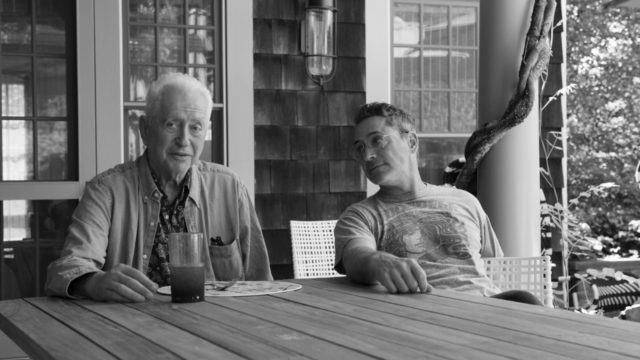
Chris Smith’s “Sr.” explores the life and times of Robert Downey Sr.
Tuesday, October 11
Spotlight: “Sr.” (Chris Smith, 2022), Q&A with Chris Smith, Robert Downey Jr., Susan Downey, and Kevin Ford, 3:00
Currents North American Premiere: Tales of the Purple House (Abbas Fahdel, 2022), Q&A with Abbas Fahdel, 5:15
Main Slate U.S. Premiere: Stonewalling (Huang Ji, Ryuji Otsuka, 2022), Q&A with Huang Ji and Ryuji Otsuka, 5:30
Main Slate: The Eternal Daughter (Joanna Hogg, 2022), Q&A with Joanna Hogg and Tilda Swinton, 6:15
Main Slate: All That Breathes (Shaunak Sen, 2022), Q&A with Shaunak Sen, 6:30
Main Slate U.S. Premiere: EO (Jerzy Skolimowski, 2022), Q&A with Jerzy Skolimowski, 9:00
Spotlight North American Premiere: The Super 8 Years (Annie Ernaux and David Ernaux-Briot, 2022), Q&A with Annie Ernaux and David Ernaux-Briot, 9:00
Main Slate North American Premiere: Trenque Lauquen (Laura Citarella, 2022), Q&A with Laura Citarella, 9:00
Currents North American Premiere: Human Flowers of Flesh (Helena Wittmann, 2022), Q&A with Helena Wittmann, 9:15
Wednesday, October 12
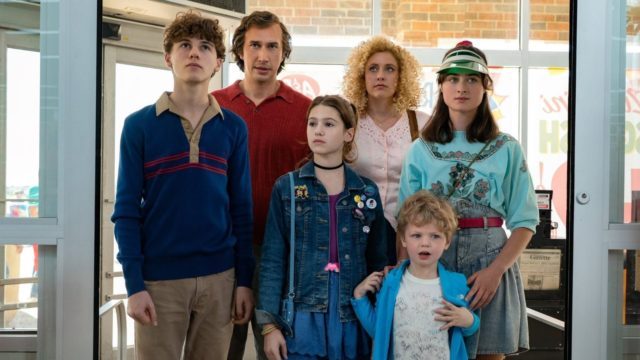
Main Slate NYFF 60th Anniversary Celebration: Armageddon Time (James Gray, 2022), Q&A with James Gray, Jeremy Strong, Anne Hathaway, Banks Repeta, and Jaylin Webb, 6:00
Currents: Remote (Mika Rottenberg & Mahyad Tousi, 2022), Q&A with Mika Rottenberg and Mahyad Tousi, 6:15
Currents Program 9: New York Shorts, Q&As with Jamil McGinnis, Sarah Friedland, Charlotte Ercoli, Alex Ashe, and Lloyd Lee Choi, 6:30
Spotlight World Premiere: Personality Crisis: One Night Only (Martin Scorsese and David Tedeschi, 2022), Q&A with David Tedeschi and Martin Scorsese, 9:00
Main Slate: All That Breathes (Shaunak Sen, 2022), Q&A with Shaunak Sen, 9:00
Currents North American Premiere: The Adventures of Gigi the Law (Alessandro Comodin, 2022), Q&A with Alessandro Comodin, 9:15
Thursday, October 13
Main Slate U.S. Premiere: No Bears (Jafar Panahi, 2022), introduced by by Mina Kavani, 3:15
Spotlight World Premiere: She Said (Maria Schrader, 2022), Q&A with Maria Schrader, Carey Mulligan, Zoe Kazan, Jodi Kantor, and Megan Twohey, 6:00
Main Slate U.S. Premiere: Return to Seoul (Davy Chou, 2022), Q&A with Davy Chou and Park Ji-Min, 6:15
Currents North American Premiere: The Adventures of Gigi the Law (Alessandro Comodin, 2022), Q&A with Alessandro Comodin, 6:15
Main Slate U.S. Premiere: EO (Jerzy Skolimowski, 2022), Q&A with Jerzy Skolimowski, 6:45
Currents: Remote (Mika Rottenberg & Mahyad Tousi, 2022), Q&A with Mika Rottenberg and Mahyad Tousi, 9:00
Main Slate NYFF 60th Anniversary Celebration: Armageddon Time (James Gray, 2022), Q&A with James Gray and Jeremy Strong, 9:00
Currents: Three Tidy Tigers Tied a Tie Tighter (Gustavo Vinagre, 2022), Q&A with Gustavo Vinagre, 9:15
Friday, October 14
Currents: Three Tidy Tigers Tied a Tie Tighter (Gustavo Vinagre, 2022), Q&A with Gustavo Vinagre, 3:45
Main Slate NYFF 60th Anniversary Celebration: Armageddon Time (James Gray, 2022), introduced by James Gray, 6:00
Spotlight World Premiere: Personality Crisis: One Night Only (Martin Scorsese and David Tedeschi, 2022), Q&A with David Tedeschi, 9:00
Main Slate Closing Night Selection U.S. Premiere: The Inspection (Elegance Bratton, 2022), Q&A with Elegance Bratton, Jeremy Pope, Gabrielle Union, and Raúl Castillo, 6:00 & 9:00
Main Slate U.S. Premiere: No Bears (Jafar Panahi, 2022), introduced by Mina Kavani, 8:45
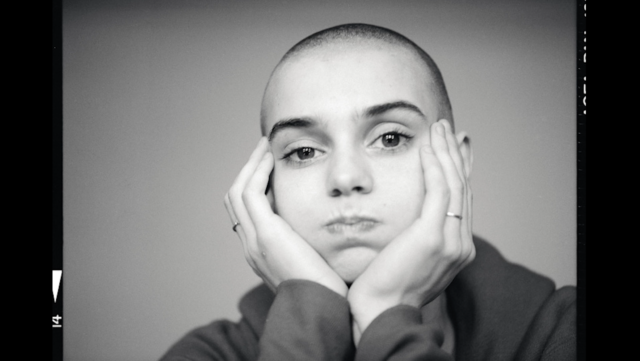
Sinéad O’Connor explores her past and her legacy in Nothing Compares documentary
NOTHING COMPARES (Kathryn Ferguson, 2022)
Cinema Village
22 East 12th St. between University Pl. & Fifth Ave.
Opens Friday, September 23
212-529-6799 www.cinemavillage.com www.sho.com/nothing-compares
On October 16, 1992, I was at Madison Square Garden for the Bobfest, an all-star concert celebrating the thirtieth anniversary of Bob Dylan’s first album for Columbia Records. The lineup included Johnny and June Carter Cash, Lou Reed, Willie Nelson, Tracy Chapman, Kris Kristofferson, Tom Petty and the Heartbreakers, Chrissie Hynde, Neil Young, George Harrison, and many others. But the thing that most people remember about the one-of-a-kind concert — especially those of us who were there — was the reaction when the one-of-a-kind Sinéad O’Connor took the stage.
Two weeks earlier, the twenty-five-year-old Irish activist singer-songwriter had torn up a photograph of Pope John Paul II on Saturday Night Live after performing a haunting solo version of Bob Marley’s “War,” a political song whose lyrics come from a 1963 speech by Ethiopian emperor Haile Selassie. At MSG, O’Connor was met with an eerie mix of joyous applause and a building, ominous booing. She stood frozen for a moment, then Kristofferson came out and famously told her, “Don’t let the bastards get you down.” Instead of playing Dylan’s “I Believe in You,” O’Connor reprised “War,” then exited.
I remember being so upset at how she was treated that I wrote my first and only letter to the editor, which was printed in the Daily News, defending her actions. I quickly received several anti-Semitic phone calls from anonymous “bastards.”
O’Connor’s appearance at the Bobfest serves as the frame for the new Showtime documentary Nothing Compares, opening September 23 at Cinema Village before streaming on the cable channel beginning September 30. The film is appropriately unusual and bends genre traditions, in homage to its iconoclastic subject. Director Kathryn Ferguson focuses on O’Connor’s life and career up to 1993, eschewing all that came after, from more albums and tours to an autobiography and her conversion to Islam. We hear a lot from her first husband, record producer John Reynolds, and about their son, Jake, but no mention is made of her subsequent three marriages and three more children.
O’Connor honestly and unabashedly shares critical insight on pivotal events that influenced who she was and what she became, but her contemporary self is mostly not seen, only heard. It’s not until the very end that we get to see her in the present day, with her band, perform an old song specially chosen for the film. In addition, all the other interviewees, from her music teacher and longtime friend to directors, journalists, and fellow musicians, are also heard but not seen on camera. This is a film about Sinead 1.0.
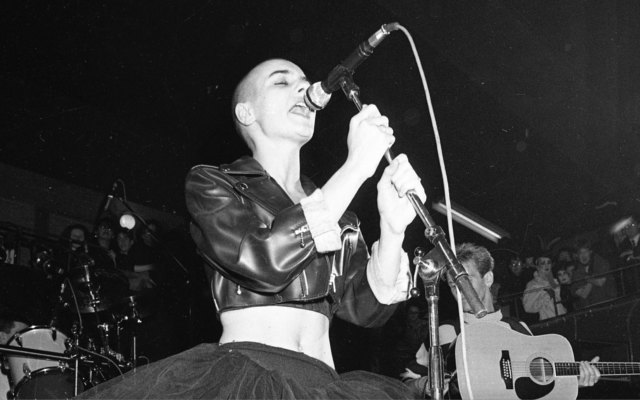
Sinéad O’Connor belts out an early song in the archival-heavy Nothing Compares
Ferguson (Taking the Waters,Space to Be), who will be at Cinema Village for a Q&A following the 5:00 screening on September 23, keeps the Dublin born and raised O’Connor front and center, in a barrage of archival news clips, family photographs, behind-the-scenes recording footage, staged re-creations, and more (courtesy editor Mick Mahon), as O’Connor delves into the horrible abuse she experienced at the hands of her mother (which was ignored by her father), the poor education she received from nuns, her refusal to get an abortion despite demands from her record company, her condemnation of the church because it was turning its back on pedophilia, her support for mental health programs, her insistence the national anthem not be played before a New Jersey gig, and her boycotting of awards shows because of misogyny and racism in the music industry and society at large.
“There was no therapy when I was growing up. So the reason I got into music was therapy,” she tells Ferguson, who previously directed music videos for O’Connor. “Which is why it was such a shock to become a pop star; it’s not what I wanted. I just wanted to scream.”
The film explores her swift rise from her debut album, 1987’s The Lion and the Cobra, to 1990’s I Do Not Want What I Haven’t Got and 1992’s Am I Not Your Girl?, with detailed looks at such songs as “Troy” (a testament that was her first song truly about herself), “Mandinka,” and “Black Boys on Mopeds.” (The Prince estate did not give Ferguson permission to use “Nothing Compares 2 U” in the film, so we only see the video without hearing the music.) Stardom was not easy for her, but she became an international icon fighting the power, particularly for young girls and women, well ahead of her time. “The powers that be weren’t ready for her,” Chuck D says. Kathleen Hanna was influenced by watching O’Connor’s “feminist performance art” on television — the controversial SNL appearance.
O’Connor resisted being stereotyped or talked down to because she was an attractive woman with a shaved head who liked to dress provocatively, and both her attitude and her looks rattled well-known talk-show hosts thirty years ago.
“I just knew that I didn’t want any man telling me who I could be or what I could be or what to sound like,” she declares. “I came from a patriarchal country where I’m being told everything I can and can’t do because I’m a girl. I figured, well, if I didn’t take it from the system, and I didn’t take it from my daddy, I ain’t taking it from anybody else.”
O’Connor’s voice today is deep and mature, not immediately recognizable. She makes no apologies for the choices she made, and she remains firm in her beliefs in fighting social injustice. Her legacy shines through, even given the difficult times, which continue. She offers a compelling, profoundly personal explanation about why she ripped up the photograph of the pope and shares her thoughts on how she came to be regarded as a powerful, influential public figure.
“I didn’t mean to be strong. I wasn’t thinking to myself, I must be strong. I didn’t know I was strong,” she says. “I did suffer through a lot because everybody felt it was okay to kick the shit out of me. I regret that I was so sad because of it. I regret that, that I spent so many years very isolated and lonely, really.”
The song she was scheduled to sing at the Bobfest, “I Believe in You” from 1978’s Slow Train Coming, contains the following stanza: “They show me to the door / They say don’t come back no more / ’Cause I don’t be like they’d like me to / And I walk out on my own / A thousand miles from home / But I don’t feel alone / ’Cause I believe in you.” After all these years, O’Connor is still doing things her own way, not about to be shown to the door by anyone.
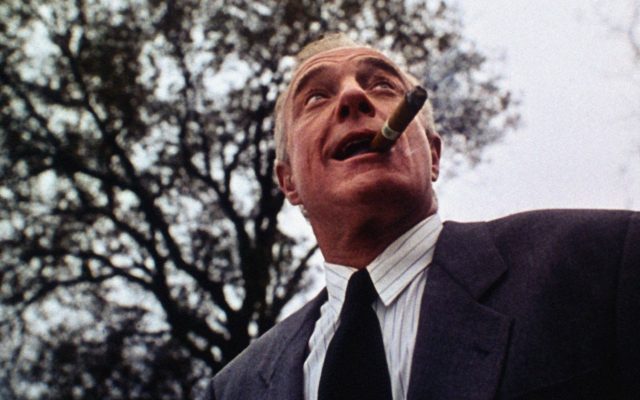
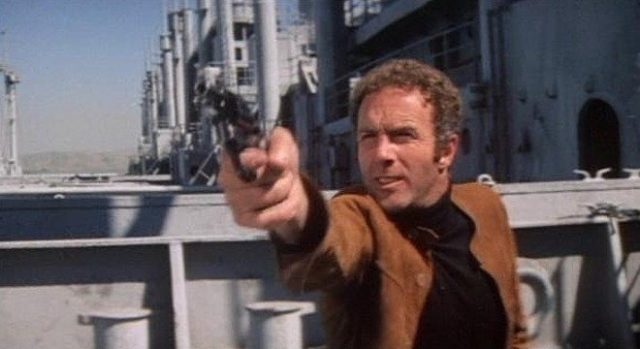
James Caan puffs on a cigar in Wes Anderson’s Bottle Rocket
THE CAAN FILM FESTIVAL
Museum of the Moving Image
35th Ave. at 36th St., Astoria
September 16 – October 9
718-777-6800 movingimage.us
“Actors have bodyguards and entourages not because anybody wants to hurt them — who would want to hurt an actor? — but because they want to get recognized. God forbid someone doesn’t recognize them,” James Caan once said. He might not have been after fame and fortune, but he quickly became one of the most recognizable men in Hollywood history.
There was an outpouring of grief when Caan died this past July at the age of eighty-two. The Bronx-born, Sunnyside-raised actor appeared in more than ninety films and two dozen television shows, and when he was onscreen, it was impossible to take your eyes off him; he commanded the audience’s attention whether he was the star or making a cameo. Despite his critical and popular success, he was nominated for only one Oscar, for The Godfather, and one Emmy, for Brian’s Song.
The Killer Elite is part of MoMI tribute to James Caan
The Museum of the Moving Image pays tribute to Caan with its fourth not-quite-annual Caan Film Festival, running September 16 to October 9 and consisting of twelve of his films, from Howard Hawks’s 1966 El Dorado with John Wayne and Robert Mitchum and Curtis Harrington’s 1967 Games to Wes Anderson’s 1996 Bottle Rocket and Jon Favreau’s 203 Elf. Caan is his trademark tough guy with a conscience in Sam Peckinpah’s 1975 The Killer Elite, Michael Mann’s 1981 Thief, and Karel Reisz’s intense 1974 The Gambler while showing other sides of himself in Mark Rydell’s 1977 Harry and Walter Go to New York, Rob Reiner’s 1990 Misery, Rydell’s 1973 Cinderella Liberty, and Graham Baker’s 1988 Alien Nation, in which he teams up with a cop from another planet. It all kicks off with The Godfather, Francis Ford Coppola’s 1972 masterpiece that is as powerful as ever, as is Caan’s blazing performance as Sonny Corleone, the role he will always be most recognized for, entourage or not.
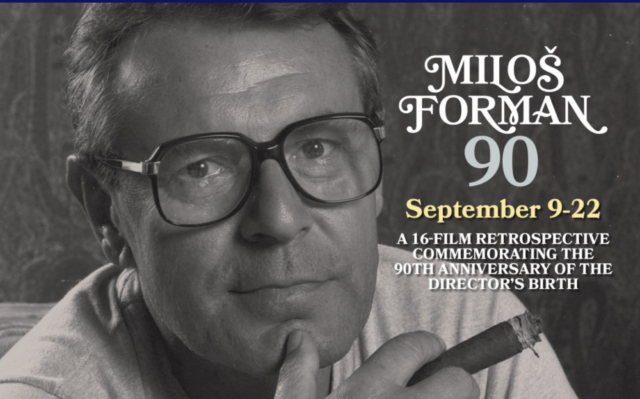
MILOŠ FORMAN 90
Film Forum
209 West Houston St.
September 9-22
212-727-8110 filmforum.org
Upon the death of master Czech filmmaker Miloš Forman in 2018 at the age of eighty-six, film curator and producer Irena Kovarova wrote in Czech Film magazine, “When Miloš Forman was a young boy, he and his parents dressed up in their Sunday best and headed over to the cinema in Čáslav for the future filmmaker’s first moviegoing experience. They took their seats and the opera Bartered Bride began on screen — as a silent film. In Forman’s telling of this story, he would always pause when delivering the paradox of this moment. Then he would continue, revealing that to his great delight, the audience, knowing the opera by heart, began to sing along. From that moment on, cinema was forever fixed in his mind as a communal experience. Miloš Forman was a remarkable storyteller. For the screen and in person. You’d hear him tell the same stories from his career on many occasions, but you’d never see him bored with his own words. They were perfectly crafted and he was incredibly generous with his audience. He knew the story worked and he was there to bring his listeners joy with his delivery, which in turn warmed his heart. He was a man larger than life: his baritone voice strong, and his r’s rolled and resounding. One believed when in his presence that his first love was for people, and he made sure that everyone around him could feel it.”
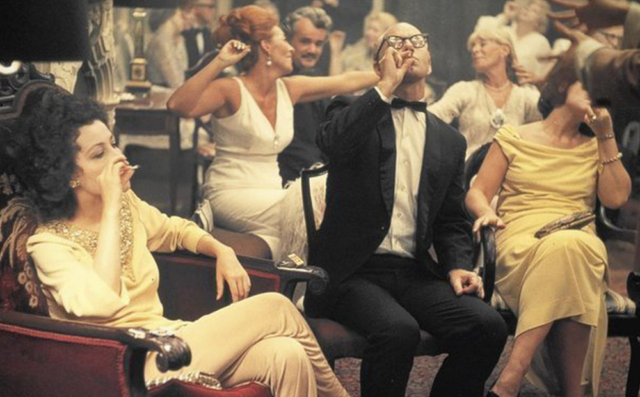
Miloš Forman celebration at Film Forum takes off with Taking Off
Kovarova is serving as the consultant on the Film Forum series “Miloš Forman 90,” celebrating the ninetieth anniversary of the director’s birth in Caslav. The two-week festival consists of all twelve of his feature films, from 1964’s Black Peter to 2006’s Goya’s Ghosts, in addition to several documentaries (Czechoslovakia, 1967) and Alfréd Radok’s 1956 Old Man Motor Car, in which Forman makes a brief appearance. Radok was a major influence on Forman; the two went on to work together at the multimedia theater company Laterna Magika.
The series boasts such beloved classics as One Flew Over the Cuckoo’s Nest,Ragtime, and Amadeus in addition to Man on the Moon,Hair, and Valmont. Kovarova will introduce the September 15 showing of Audition, the September 17 screenings of Old Man Motor CarThe Firemen’s Ball, and the September 20 screening of Věra Chytilová’s 1982 documentary, Chytilová versus Forman. Producer Michael Hausman will introduce the 1968 counterculture favorite Taking Off (starring Buck Henry!) on September 9 at 8:30; screenwriter Michael Weller will introduce Ragtime on September 11 at 3:40; screenwriters Scott Alexander and Larry Karaszewski will introduce the 6:00 screening of Man on the Moon on September 12 and, on the same day, participate in a Q&A following the 8:30 screening of The People vs. Larry Flynt; producer Paul Zaentz will introduce the September 16 screening of Amadeus and the September 19 screening of Goya’s Ghosts.