ATHENA FILM FESTIVAL
Barnard College
117th St. & Broadway
February 7-10, $12 per screening, $65 all access pass ($20 for students)
www.athenafilmfestival.com
The third annual Athena Film Festival returns to Barnard College this week, consisting of four days that celebrate women and leadership with film screenings, workshops, panel discussions, and other special events. Created by Kathryn “Kitty” Kolbert, director of the Athena Center for Studies at Barnard, and Melissa Silverstein, founder of Women and Hollywood, the festival runs February 7-10, presenting such shorts, features, and documentaries, primarily by and about women, as Sara Lamm and Mary Wigmore’s Birth Story: Ina May Gaskin and the Farm Midwives, which examines birthing methods from the 1970s to the present; Cecilia Peck’s Brave Miss World, about a former Miss World fighting for victims of physical and sexual abuse; Margarethe von Trotta’s Hannah Arendt, a biopic about the highly influential political philosopher and writer; and Bonnie McFarlane’s Women Aren’t Funny, in which stand-up comedian McFarlane and her comedian husband, Rich Vos, explore the world of women in comedy. Most of the screenings will be followed by Q&As with the filmmakers, subjects, and experts in the field, including Fishman, Peck, McFarlane, Fran Drescher, and many others. Among the free, ticketed talks are “A Hollywood Conversation with Gale Anne Hurd,” honoring this year’s winner of the Laura Ziskin Lifetime Achievement Award, and “In Her Voice: Women Directors Talk Directing,” with directors Gini Reticker, Agnieszka Vosloo, Aviva Kempner, Courtney Hunt, Jodie Markell, and Emily Abt. This year’s Athena Award winners are director and distributor Ava DuVernay, film critic Molly Haskell, Film Society of Lincoln Center executive director Rose Kuo, and Paley Center for Media president and CEO Pat Mitchell. Kolbert and Silverstein recently discussed the festival and its growing impact via e-mail.
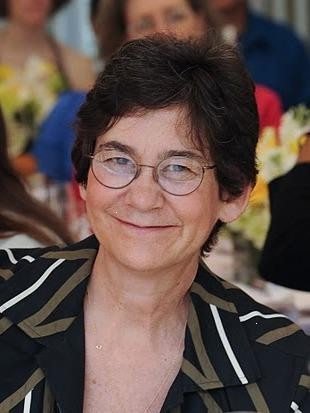
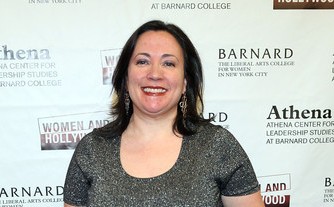
Kitty Kolbert (above) and Melissa Silverstein (below) are cofounders of the Athena Film Festival
twi-ny: The third annual Athena Film Festival begins on February 7. What did you learn from the first two years, and how has that affected this year’s event?
KK & MS: We learned that there was a real hunger for a conversation about women’s leadership and that film is a wonderful media to jump-start that conversation. We learned how important it is for women and girls to have role models and also for men to see women leading in a wide variety of circumstances. We also learned that talking about women’s leadership should not be like taking medicine, so we look for movies that get the point across with humor and with inspiration.
twi-ny: What has been the general reaction of the film industry to the festival? Do you see the overall attitude toward women, in all aspects of the business, changing, or is it still an old (white) boys network?
KK & MS: There are women working at all levels of the business, but most of the top leaders and decision makers continue to be men. Amy Pascal [of Sony] is still the only female studio chief. It’s changing but very slowly.
twi-ny: Melissa, a few weeks ago you wrote on “Women and Hollywood” about the sexist treatment of Kathryn Bigelow in the media over various Zero Dark Thirty controversies, explaining that it “smells like shit.” It’s one thing to help develop more woman writers, editors, directors, actors, producers, techs, etc., but what can be done about the media’s role in all of this?
MS: One of the things we need to do is to keep talking about these issues. Kathryn Bigelow is a unique situation, and her experience lends to a much-needed conversation about the status of women directors in Hollywood. When there is only one woman and she gets treated the way she does people notice.
twi-ny: This year’s Laura Ziskin Lifetime Achievement Award is going to Gale Anne Hurd. Are women like Ms. Hurd and the late Ms. Ziskin anomalies in the film world, or do you see a new generation of such talented women on the horizon?
KK & MS: Producing is one of the places where you see amazing women making movies at all levels of the business. Gale Anne is one of the best, and she has had an amazingly prolific career making films that break stereotypes. She’s at the top of her class and other producers both male and female should learn from her, especially how she has been able to transition between TV and film because that is vital nowadays.
twi-ny: Kitty, along those lines, do you envision a time when leadership programs for women, such as the Athena Center, will be unnecessary?
KK: We have a very long way to go. In the U.S., women are leaders in only 18-22% of most industries. Among Fortune 500 companies and in Hollywood it is much less. And of course it varies considerably across the globe. I certainly believe that there will be plenty of work ahead for the next several generations.
twi-ny: What are some of the films at this year’s festival that you’re most looking forward to?
KK & MS: We have a particularly strong lineup this year. We are so unique because we have films that have wide distribution, such as Beasts of the Southern Wild and Brave, to films that many people would not be able to see. We hope your readers will come spend the weekend with us.
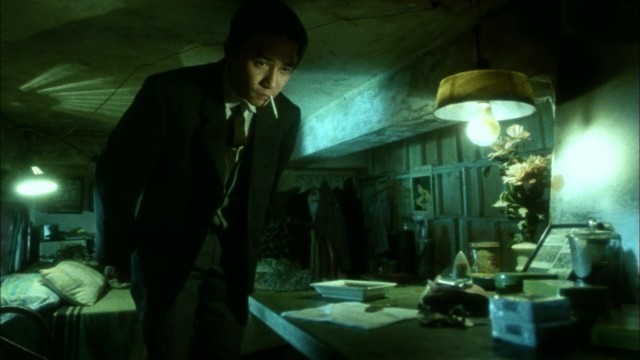
 Wong Kar-wai’s second film, Days of Being Wild, following the surprising success of his debut feature, As Tears Go By, was a popular failure, as Hong Kong audiences were not yet ready for his introspective, character-driven, nonlinear style. (However, it did win five Hong Kong Film Awards, including Best Picture and Best Actor.) Days is Wong’s first film with master cinematographer Christopher Doyle, who has since shot all of Wong’s work, including Chungking Express, Fallen Angels, Happy Together, and In the Mood For Love. The late Leslie Cheung, who jumped out a hotel window in 2003, stars as Yuddy, a disaffected, beautiful youth who lures in women and then, after they fall in love with him, verbally mistreats them and cheats on them. Among his conquests are the gorgeous Su-Lizhen (Maggie Cheung), often shot in magnificent close-up, and the trampy Mimi (Carina Lau), who is jealous of Su, who takes comfort in telling her tale of woe to local police officer Tide (Andy Lau). Meanwhile, Yuddy, who was raised by a former prostitute, is obsessed with finding his birth mother, two facts that just might be part of the reason he treats women as he does. Set in 1960, the film’s leitmotif involves time and memory, with clocks ticking loudly and lots of long, lingering looks. The story goes a bit haywire in the latter sections, although the ending is a gem. (Look for Tony Leung there.) Days of Being Wild is screening for free February 6 at the Mid-Manhattan Library as part of the series “Three Auteurs of World Cinema: Wong Kar-wai,” which continues February 13 with Happy Together and February 20 with In the Mood for Love.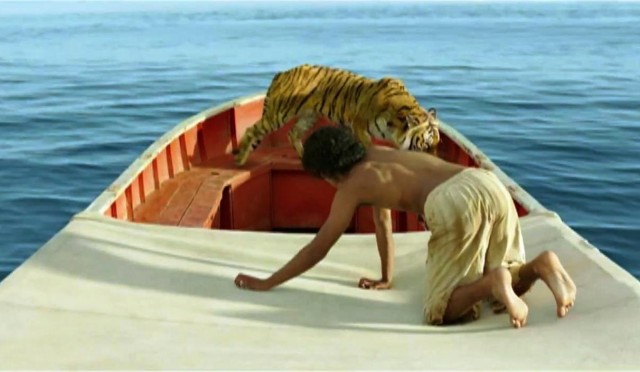
 Based on Canadian author Yann Martel’s 2001 award-winning bestseller, Life of Pi has been adapted into an up-and-down movie that moves between the terribly boring “real” world and a man’s wildly thrilling tale of adventure on the high seas as a teenager. Rafe Sprall plays a novelist desperate for an idea to replace his abandoned book, so he has been pointed in the direction of Piscine “Pi” Patel (Indian movie star Irrfan Khan of Slumdog Millionaire). Pi proceeds to tell the writer about his childhood growing up in his family’s zoo, a time when the young boy (played through the years by Gautam Belur, Ayush Tandon, and Suraj Sharma) explored various religions, including Christianity, Hinduism, and Islam, in his search for a supreme being and meaning. But while his family is on a freighter on their way to a new life in Canada, the ship sinks, leaving Pi alone on a lifeboat with a zebra, a hyena, an orangutan, and a Bengal tiger named Richard Parker from the zoo. As Pi desperately struggles to survive, he develops a unique relationship with the tiger, having been taught by his father (Adil Hussain) that no matter how much he might think the tiger can gain emotional understanding and compassion, he is still a vicious killer.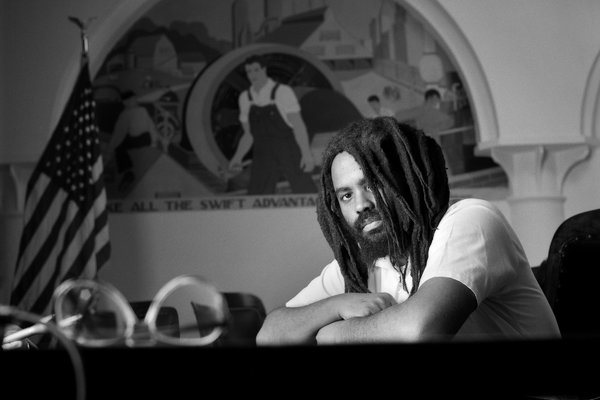
 In Stephen Vittoria’s overly reverential documentary Mumia: Long Distance Revolutionary, actors, activists, journalists, writers, and others celebrate the life and career of the former Wesley Cook, who changed his name to Mumia Abu-Jamal and helped found the Philadelphia wing of the Black Panther Party. The two-hour film begins with right-wing media mouths and the owner of Geno’s Steaks decrying the left’s embracing of Abu-Jamal, who was convicted in 1982 of killing Philadelphia police officer Daniel Faulkner. Denied access to Abu-Jamal in prison, Vittoria uses staged re-creations, archival footage, radio interviews, and such actors as Giancarlo Esposito, Ruby Dee, and Peter Coyote reading from his many books in order to portray him as a dedicated and talented journalist who became a feared target of FBI head J. Edgar Hoover and controversial Philly mayor Frank Rizzo, ultimately being set up for a murder he did not commit. Vittoria does not delve into the details of the case, instead exploring the man himself, with stories from Abu-Jamal’s sister Lydia Barashango, comedian and activist Dick Gregory, wrongly incarcerated boxer Rubin “Hurricane” Carter, philosopher Cornel West, Pulitzer Prize-winning writer Alice Walker, fellow investigative journalist Juan Gonzalez, radical activist Angela Davis, and radio host Amy Goodman, who has broadcast numerous phone interviews with Abu-Jamal, whose 1982 death sentence was commuted to life in prison last year. Mumia: Long Distance Revolutionary is completely one-sided, showing anyone against the golden-throated Abu-Jamal to be crazy as the filmmakers glorify its subject. However, it does reveal the City of Brotherly Love to be a frightening hotbed of violence and racism, even if that is not necessarily news. “Philadelphia has a veneer of liberalism and this whole Quaker mystique,” explains Temple associate professor and journalist Linn Washington. “The reality is it has been this ruthlessly racist city — really from its inception.” Mumia: Long Distance Revolutionary works better when it examines the social history of the civil rights movement and the Black Panthers as covered by Abu-Jamal but falters when it treats his writings as if they were Shakespearean soliloquies. Vittoria will be present at Cinema Village to participate in several Q&As opening weekend, following the 6:30 and 9:00 screenings on Friday and 4:00 and 6:30 shows on Saturday and Sunday.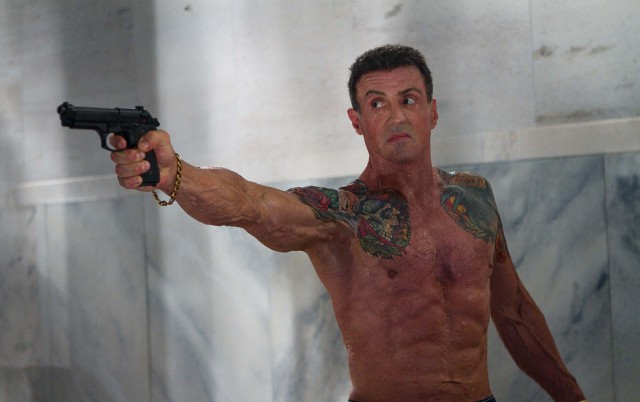
 Back in the 1970s and ’80s, writer and director Walter Hill displayed a knack for the buddy film along with works steeped in local atmosphere. The former was evident in Hard Times, a gritty bare-knuckle fight drama pairing Charles Bronson and James Coburn, and 48 Hrs., the action comedy that brought together cop Nick Nolte and convict Eddie Murphy, while the latter was exemplified by the highly stylized Streets of Fire and the New York City epic The Warriors. Hill tries to combine the two in his first feature film in a decade, Bullet to the Head, with ultimately disappointing results. Based on the graphic novel Du Plomb Dans la Tête written by Matz and illustrated by Colin Wilson, the action thriller teams a dour Sylvester Stallone as old-fashioned hit man Jimmy Bobo with Sung Kang as young by-the-book DC detective Taylor Kwon. The two men scour the streets of New Orleans as they climb the ladder of a well-connected criminal organization responsible for the brutal murders of their partners, with Bobo leaving behind a trail of dead bodies for which Kwon promises to arrest him once they solve the case. While Bobo’s favorite weapons are guns and violence, Kwon’s is his cell phone, as he regularly calls home base to get valuable information that his companion would rather just beat out of someone. As they continue to uncover a major conspiracy, they meet up with Christian Slater as a dirty lawyer and Adewale Akinnuoye-Agbaje (Oz’s Adebisi) as a hobbled mastermind, but their most potent enemy is Keegan, a vicious mercenary killer played by Game of Thrones’ Jason Momoa. The first half of Bullet to the Head works pretty well as director Hill and screenwriter Alessandro Camon (The Messenger) establish the characters and set the stage for the big showdown, but the second half devolves into a complete mess, the story falling apart with gaping plot holes, nonsensical scenes that go nowhere, and far too much violence for the sake of violence. Bobo’s joking with Kwon grows more and more racist, and the subplot involving Bobo’s daughter, Lisa (The L Word’s Sarah Shahi), is seriously misused. Bullet to the Head could have been a whole lot of stupid fun; instead it just turns out to be a whole lot of stupid.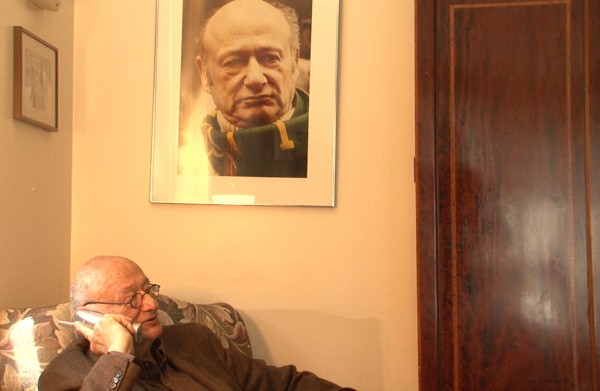
 A bunch of people have a whole lot to say about Ed Koch in a new documentary about the charming yet irascible former three-term mayor of New York City, but none of them goes on quite so eloquently as Hizzoner himself. Longtime journalist and first-time filmmaker Neil Barsky delves into the man behind the legend, the upstart politician who helped save New York from the debt- and crime-ridden 1970s through, among other things, the sheer force of his immense will. Barsky combines new interviews with such political journalists as Michael Goodwin, Sam Roberts, and Wayne Barrett, along with former comptroller Carl McCall and the Rev. Calvin O. Butts, to paint a portrait of Koch as both mensch and meanie, a bully who always speaks his mind and never backs down from a challenge. Barsky and editor Juliet Weber include archival photographs and old film footage of Koch in the 1960s and early 1970s as he first takes on Democratic Party boss Carmine DeSapio, then runs for city council and Congress before getting into a heated seven-person race for mayor in 1977, continually asking along the way, “How’m I doing?” The present-day Koch is filmed tinkering around in his small kitchen, breaking the Yom Kippur fast with his family, and relaxing in his office, sharing his views on his legacy, his battles with the black community over Sydenham Hospital, and even questions of his sexuality — but only up to a point — that have followed him throughout his career. Although Barsky claims in his director’s statement that “with the exception of one former governor and one former mayor, virtually everyone we reached out to agreed to be interviewed,” the film suffers in that it does not exactly boast an all-star lineup of pundits talking about Koch — but it of course has Koch himself, and that is more than enough. And finally, in true Ed Koch fashion, the man who always had to be the center of attention has managed to do so one last time, passing away on the opening day of the film, dying at the age of eighty-eight on February 1.
 Film Forum’s excellent “New Yawk New Wave” series, consisting of more than three dozen independent shorts, features, and documentaries made in and about the Big Apple, came to a close on January 31, setting the stage for one of the most influential and important — and vastly entertaining — works to ever come out of the city,