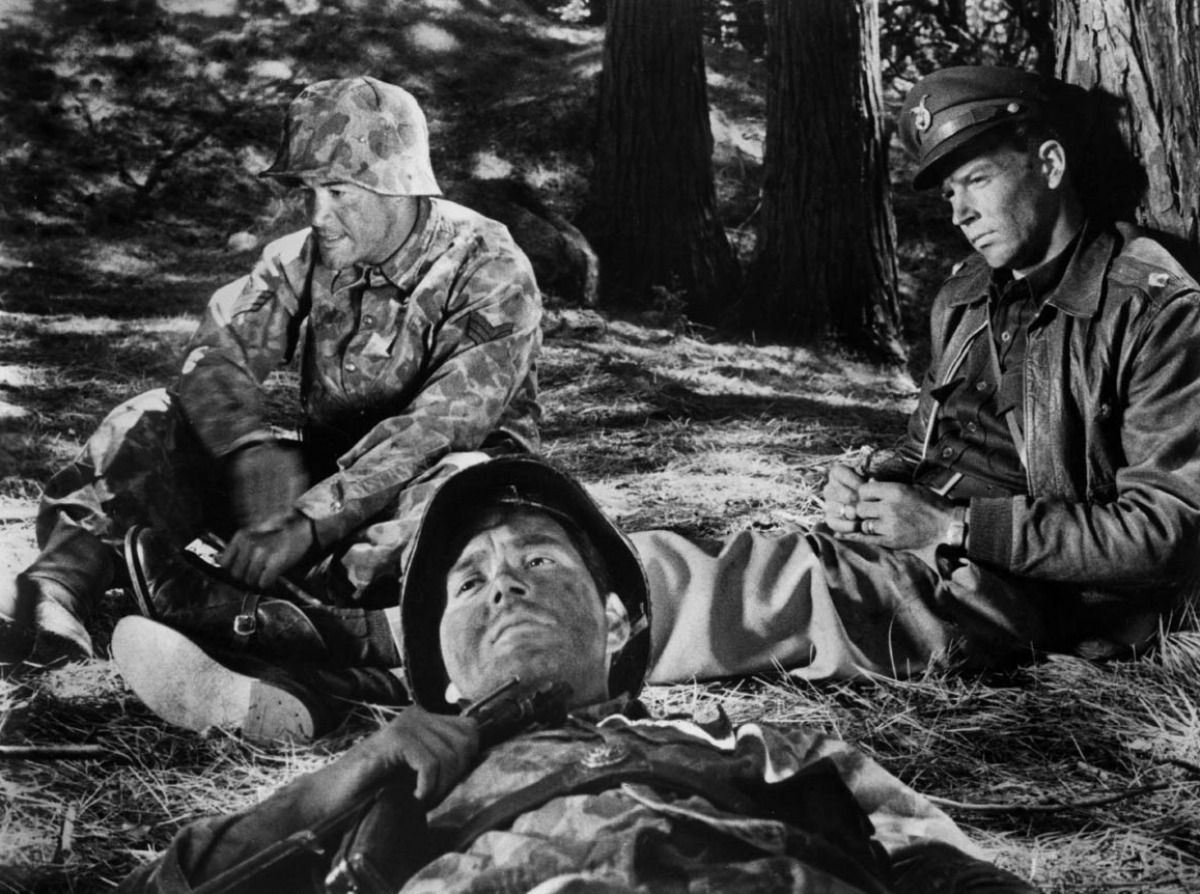
Stanley Kubrick’s first film, FEAR AND DESIRE, is screening at IFC retrospective
FEAR AND DESIRE (Stanley Kubrick, 1953)
IFC Center
323 Sixth Ave. at West Third St.
March 20-25
Series runs March 20-28
212-924-7771
www.ifccenter.com
 The IFC Center is preparing for the March 29 theatrical release of Rodney Ascher’s documentary Room 237, which delves into metamysteries surrounding Stanley Kubrick’s The Shining, with the terrific series “The Films of Stanley Kubrick,” screening every one of the Bronx-born ex-pat’s feature works, most of which are being projected in DCP. Kubrick’s 1953 seldom-seen psychological war drama, Fear and Desire, will be shown March 20-25 in high definition. His first full-length film, made when he was twenty-four, Fear and Desire is a curious tale about four soldiers (Steve Coit, Kenneth Harp, Paul Mazursky, and Frank Silvera) trapped six miles behind enemy lines. When they are spotted by a local woman (Virginia Leith), they decide to capture her and tie her up, but leaving Sidney (Mazursky) behind to keep an eye on her turns out to be a bad idea. Meanwhile, they discover a nearby house that has been occupied by the enemy and argue over whether to attack or retreat. Written by Howard Sackler, who was a high school classmate of Kubrick’s in the Bronx and would later win the Pulitzer Prize for The Great White Hope, and directed, edited, and photographed by the man who would go on to make such war epics as Paths of Glory, Full Metal Jacket, and Dr. Strangelove, or How I Learned to Stop Worrying and Love the Bomb, Fear and Desire features stilted dialogue, much of which is spoken off-camera and feels like it was dubbed in later. Many of the cuts are jumpy and much of the framing amateurish. Kubrick was ultimately disappointed with the film and wanted it pulled from circulation; instead it was preserved by Eastman House in 1989 and restored twenty years later, which is good news for film lovers, as it is fascinating to watch Kubrick learning as the film continues. His exploration of the psyche of the American soldier is the heart and soul of this compelling black-and-white war drama that is worth seeing for more than just historical reasons. “There is a war in this forest. Not a war that has been fought, nor one that will be, but any war,” narrator David Allen explains at the beginning of the film. “And the enemies who struggle here do not exist unless we call them into being. This forest then, and all that happens now, is outside history. Only the unchanging shapes of fear and doubt and death are from our world. These soldiers that you see keep our language and our time but have no other country but the mind.” Fear and Desire lays the groundwork for much of what is to follow in Kubrick’s remarkable career, all of which can be seen March 20-28 at IFC.

 All work and no play makes Jack a not-so-quite dull boy in Stanley Kubrick’s classic horror story, based on the Stephen King novel. One of the all-time-great frightfests, The Shining is a truly scary movie about a writer named Jack Torrance (Jack Nicholson at his overacting best) who has agreed to become the caretaker of the old Overlook Hotel in Colorado during the snowy winter when the enormous mountain resort closes down for the season. He is joined by his perpetually nervous wife, Wendy (Shelley Duvall), and their young son, Danny (Danny Lloyd), who seems to have brought along his invisible friend, Tony, who speaks through Danny’s finger. Between taking care of the Overlook and working on his novel, Jack finds a whole bunch of other folks to hang out with, people who have populated the place during the ritzy establishment’s golden age, including a strange woman in room 237. Kubrick plays with horror conventions as he seeks to scare the crap out of the audience, something he accomplishes time and time again as Jack grows more disturbed, Wendy’s shrieks become more and more ear piercing and annoying, and Danny’s visions get more and more bloody. No matter how many times you’ve seen it, it still gets you, even when you know exactly what’s lurking around that corner. Only those who went to the film during its opening weekend, as we did, got to see the two-minute finale that Kubrick cut out immediately thereafter, which involved the iconoclastic director riding his bicycle to various theaters, armed with a pair of scissors. A DCP projection of The Shining is being shown March 20-28 as part of the IFC Center series “The Films of Stanley Kubrick,” which is screening every one of the Bronx-born ex-pat’s feature works in preparation for the March 29 theatrical release of Rodney Ascher’s Room 237, which delves into the many metamysteries surrounding the making of The Shining.
 Longtime Hollywood script supervisor Jules Stewart makes her directorial debut with the lurid, manipulative prison drama K-11. Goran Visnjic stars as Raymond Saxx Jr., a confused man who suddenly finds himself behind bars, in a crazy cellblock filled with men gallivanting as women, led by Mousey (Kate del Castillo), as well as the big, dangerous Detroit (low-budget legend Tommy “Tiny” Lister). Ray is befriended by the gentle, innocent Butterfly (Portia Doubleday), while dirty prison guard Lt. Gerald Johnson (D. B. Sweeney) threatens to have his way with Saxx, who does not know why he has been incarcerated at first and then pleads his innocence when the details of his arrest become known. K-11 is a mess from the very start, with odd slow motion and a frustrating narrative that purposely holds back information in ridiculous ways. There is also a whole lot of crying, in addition to rape, violence, and genre clichés galore. The film also loses any hope of credibility by casting numerous women as men who dress and identify as women, causing unnecessary confusion and losing the trust of the audience. The filmmakers had aspirations that K-11 would be some kind of adult, prison-set Alice in Wonderland. It’s not. And yes, that voice on the phone speaking to Ray is Kristen Stewart, Jules’s daughter.
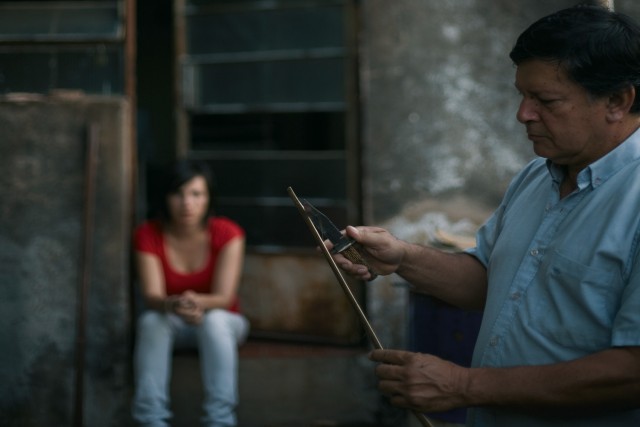
 When she was a girl in Asunción, Paraguay, Renate Costa Perdomo had an uncle, Rodolfo Costa, who died under mysterious circumstances. For several days, he lay naked and dead on the floor of his apartment, his closet empty of all clothing. When Perdomo asked her family what her uncle died of, she was told “sadness.” After attending film school, Perdomo decided to get to the bottom of the story, making her feature-length documentary debut with the intimate, moving 108 (Cuchillo de Palo). Shot with a beautiful poetic beauty by Carlos Vásquez, the film follows Perdomo as she speaks with relatives, neighbors, and friends of her uncle’s who slowly reveal that he lived a second life, one in which he was known as Héctor Torres, a gay dancer who was persecuted for the way he was, arrested under Alfredo Stroessner’s repressive regime and included on a famous public list of 108 homosexuals. Perdomo explains that the number, 108, is still filled with meaning in Paraguay, where some people refuse to use it as an address or in a telephone number. Perdomo speaks at length with her father, a silversmith who has no problem discussing his old-fashioned feelings about homosexuality. Perdomo also meets some of the people who knew Hector, including men who identify as women, some of whom will only speak in secrecy. 108 is more than just a personal journey; it is a compelling exploration of lingering bigotry and biases, made by a woman who is unafraid to share the truth, about both her family and her native country, with a world that needs to know about these kinds of stories. 108, which has been winning awards at international festivals since 2010, is finally getting its U.S. theatrical release, running March 18-24 at the Maysles Cinema as part of Livia Bloom’s “Documentary in Bloom” series.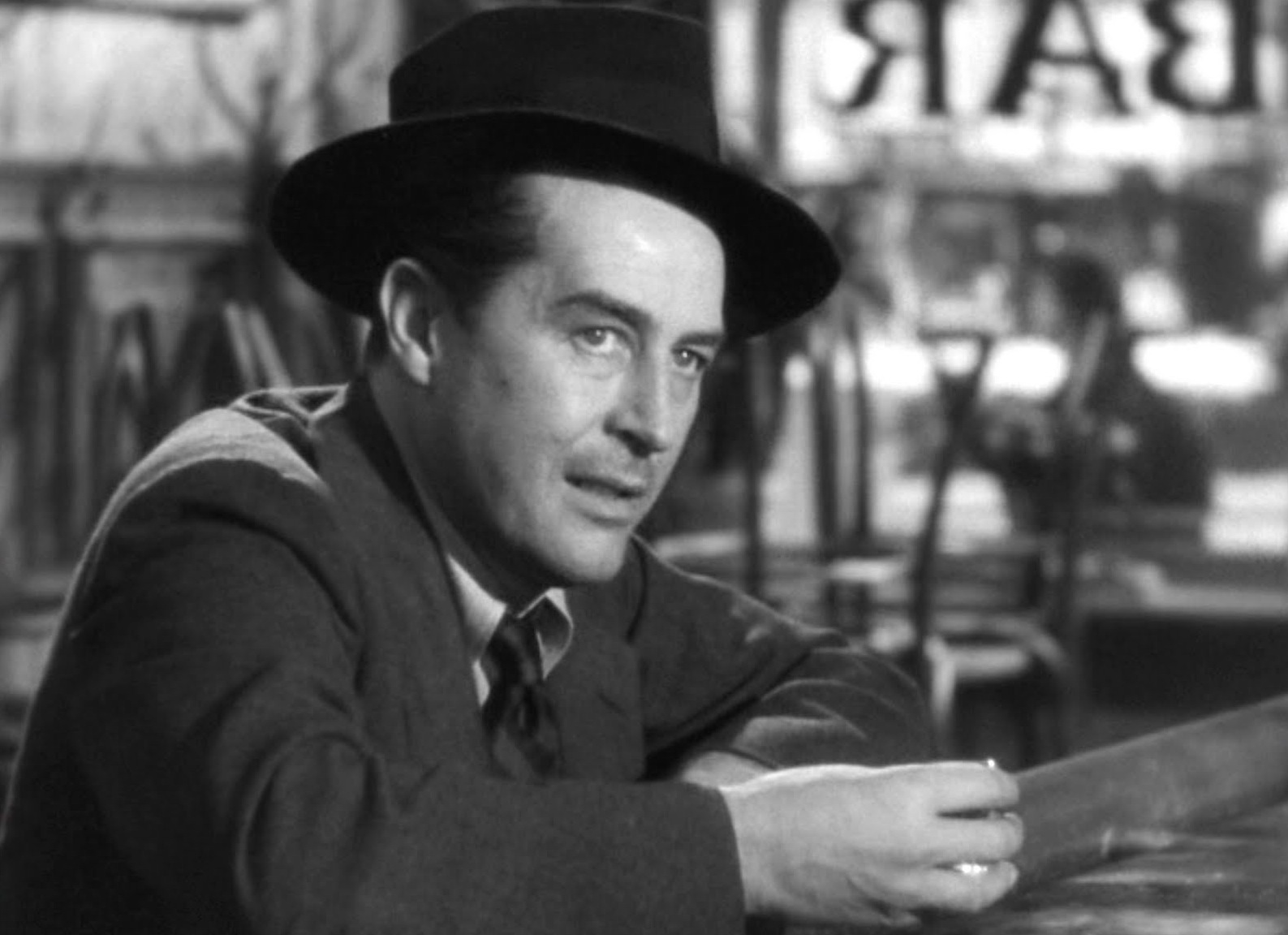
 Ray Milland won an Oscar as Best Actor for his unforgettable portrayal of Don Birnam in Billy Wilder’s The Lost Weekend, starring as a would-be writer who can see life only through the bottom of a bottle. Having just gotten sober, he is off to spend the weekend with his brother (Phillip Terry), but Don is able to slip away from his girlfriend, Helen (Jane Wyman), and his sibling and hang out mostly with Nat the bartender (Howard Da Silva) and plenty of inner demons. One of the misunderstood claims to fame of Wilder’s classic drama is that it was shot in P. J. Clarke’s on Third Ave.; although the bar in the film was based on Clarke’s, the set was re-created in Hollywood, which doesn’t take anything away from this heartbreaking tale that will not have you running to the nearest watering hole after you see it. The Lost Weekend, which won three other Academy Awards — Best Screenplay (Wilder and Charles Brackett), Best Director (Wilder), and Best Picture — is screening March 18 at 7:25 at Film Forum and will be introduced by Blake Bailey, author of the new biography Farther & Wilder: The Lost Weekends and Literary Dreams of Charles Jackson (Knopf, March 13, 2013, $30), about the author of such books as The Lost Weekend and The Fall of Valor, and will be followed by a book signing. Bailey, who has also written biographies of John Cheever and Richard Yates, is currently working on a major bio of Philip Roth; the new documentary