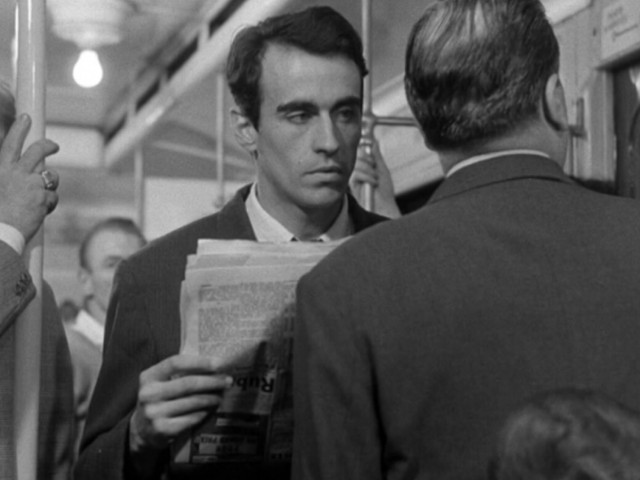
Real-life sisters Dior and Oumoul Kâ play fictional sisters facing a family crisis in TALL AS THE BAOBAB TREE
TALL AS THE BAOBAB TREE (GRAND COMME LE BAOBAB) (Jeremy Teicher, 2012)
Museum of the Moving Image
35th Ave. at 36th St., Astoria
Saturday, August 3, free with museum admission, 2:00
Festival runs August 2-4
718-777-6800
www.movingimage.us
www.tallasthebaobabtree.com
 The 2013 Human Rights Watch Film Festival came to a close this past June 23 with Jeremy Teicher’s heart-wrenching Tall as the Baobab Tree, an involving, powerful, yet gentle drama about a Senegalese family trapped by tradition in a modernizing world. Real-life sisters Dior and Oumoul Kâ star as Coumba and Debo, close siblings who live in the tiny rural village of Sinthiou Mbadane (where they actually are from). When their older brother, Silèye (Alpha Dia), falls out of a baobab tree and breaks his leg, their father (Mouhamed Diallo) doesn’t have enough money to pay for the necessary medical care so he instead sends Coumba out to do Silèye’s job of herding the cows and decides to sell off eleven-year-old Debo to suitors for marriage. Their mother (Mboural Dia) is unwilling to stand up to her husband, so Coumba hatches a plan in which her friend Amady (Cheikh Dia), who has a crush on her, will watch the herd for her secretly while she heads into the city and gets a job until she makes enough money to help Silèye heal and prevent Debo from having to marry so young. Unfortunately, not everything goes quite as planned. But through it all, no matter how difficult things get, all of the characters maintain their faith, praising peace and continually saying, “God is great.”
Teicher came up with the idea for Tall as the Baobab Tree when he was a student working on This Is Us, a documentary for the nonprofit organization CyberSmart Africa in which the children of Sinthiou Mbadane created brief digital stories about their lives. Teicher, who directed Tall as the Baobab Tree and cowrote it with Alexi Pappas, chose to focus on the very real African problem of forced marriage of young girls between the ages of eight and twelve, collaborating closely with the nonprofessional actors selected from the village, allowing their own stories to meld together, blending fact and fiction. Another central issue is the importance of education, particularly for girls, as Debo clearly would rather follow in Coumba’s footsteps and prepare for university instead of becoming a child bride. The narrative unfolds slowly and calmly, with no overemotional, melodramatic moments or any soapbox preaching, while the tender mood is enhanced by cinematographer Chris Collins’s lush photography and Salieu Suso’s Kora-based score. The first feature ever filmed in the Puular language, Tall as the Baobab Tree is screening August 3 at 2:00 at the Museum of the Moving Image as part of the Rural Route Film Festival, with Teicher present to talk about the work, which will be preceded by Ross Whitaker’s Home Turf and Laska Jimsen’s Beaver Creek Yard. The festival, which is dedicated to films made about environments away from urban centers, runs August 2-4 and also features a Les Blank tribute, a DCP restoration of Werner Herzog’s Fitzcarraldo, Diego Rougier’s Salt, Marlo Poras’s The Mosuo Sisters, and Veit Helmer’s Baikonur, in addition to live performances in the museum’s new courtyard by the Frontier Needs Heroes, Gimagua, Vlada Tomova’s Bulgarian Voices Trio, and the Spookfish.
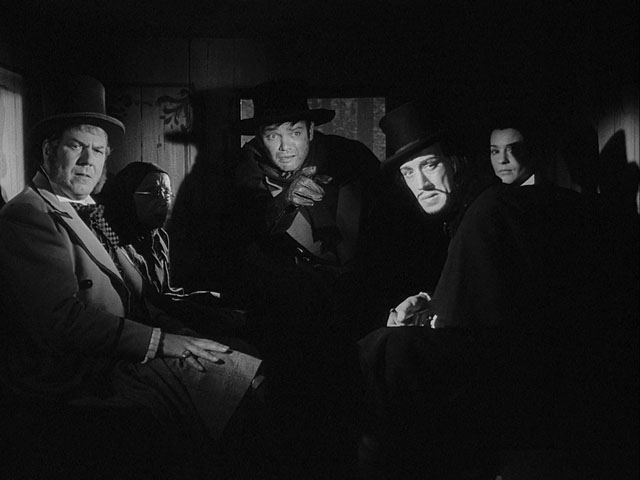
 Ingmar Bergman’s darkly comic 1958 film The Magician is one of the Swedish auteur’s lesser-known, underrated masterpieces, an intense yet funny, and fun, work about art, science, faith, death, and the power of the movies themselves. When Vogler’s Magnetic Health Theater comes to town, the local triumvirate of Dr. Vergérus (Gunnar Björnstrand), police commissioner Starbeck (Toivo Pawlo), and Consul Egerman (Erland Josephson) brings the traveling troupe in for questioning, forcing them to spend the night as guests in Egerman’s home. The three men seek to prove that mesmerist Albert Emanuel Vogler (Max von Sydow), his assistant, Mr. Aman (Ingrid Thulin), a witchy grandmother (Naima Wifstrand), and their promoter, Tubal (Åke Fridell), are a bunch of frauds. The interrogations delve into such Bergmanesque topics as science vs. reason, good vs. evil, life and death, and the existence of God. As various potions are dispensed to and tricks played on a staff that includes maid Sara (Bibi Andersson), cook Sofia Garp (Sif Ruud), and stableman Antonsson (Oscar Ljung) in addition to Starbeck’s wife (Ulla Sjöblom) and Egerman’s spouse (Gertrud Fridh), a series of romantic rendezvous take place, along with some genuine horror, leading to a thrillingly ambiguous ending.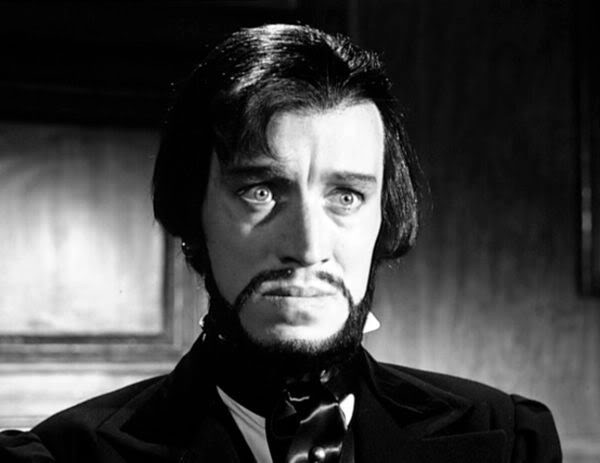

 In the new documentary When Comedy Went to School, Mickey Freeman describes what it’s like to “die” onstage, that terrible feeling of experiencing flop sweat while bombing in front of a live audience. Unfortunately, this film is dead on arrival, dripping wet. Made by Mevlut Akkaya (director and producer), Ron Frank (director, producer, and editor), and Lawrence Richards (writer and producer), the thankfully short film, which clocks in at a mere seventy-seven minutes, purports to tell the history of the Catskill comedians at such resorts as Kutsher’s, Grossinger’s, and the Concord. The filmmakers speak with such comic giants as Jerry Lewis, Sid Caesar, Mort Sahl, Dick Gregory, Jackie Mason, and Jerry Stiller, who describe what it was like in the Borscht Belt’s heyday of the 1950s and 1960s. There are also plenty of archival clips of those men as well as Rodney Dangerfield, Woody Allen, Henny Youngman, Milton Berle, Bob Hope, and Lenny Bruce (however, very few from actual Catskills performances), with additional commentary from Joe Franklin, Larry King, and Hugh Hefner. But timing is everything in comedy, something When Comedy Went to School is sorely lacking; the film drags and sputters as Akkaya, Frank, and Richards — onscreen host and narrator Robert Klein is the poor soul relegated to reading the increasingly dull script — try to delve into the social and historical aspects of the Catskills, from the comedians themselves to the people who owned the resorts and the families that went there year after year, but it’s slow moving, repetitive, and, worst of all, boring. Although some of the comedians have interesting anecdotes — Lewis steals the show with his insights on the relationship between performer and audience — most of it falls flat, reminiscent of the old vaudeville convention of bringing out the weakest act to clear the house after the stars are done. When Comedy Went to School runs July 31 to August 6 at the JCC in Manhattan and the IFC Center, with Akkaya, Frank, and Richards on hand to talk about the film at the 7:05 show on opening night at IFC; the trio will be back at IFC for the 7:05 screening on August 1, joined by Klein and Cory Kahaney.


 In such unique films as Rushmore, The Royal Tenenbaums, and The Darjeeling Limited, black-comedy master Wes Anderson has created a bizarre collection of characters who seem to live in their own alternate realities. In his latest, Moonrise Kingdom, Anderson has once again assembled an oddball assortment of men, women, and children in a terrifically clever and entertaining fairy tale all its own. Tired of being abused by his fellow Khaki Scouts and dismissed by his foster parents, twelve-year-old orphan Sam Shakusky (Jared Gilman) runs away from Camp Ivanhoe on the island of New Penzance, much to the chagrin of dedicated scout master Randy Ward (Edward Norton). Meanwhile, twelve-year-old loner Suzy Bishop (Kara Hayward) is fed up with her life as well, which she mostly spends listening to Benjamin Britten, reading fairy tales (fictitious stories made up by Anderson), watching the world through a pair of ever-present binoculars, and despising her parents (Bill Murray and Frances McDormand). Afraid of what might have happened to the children, the local police officer, Captain Sharp (Bruce Willis), gets involved, as does a stern woman from social services (Tilda Swinton) and, eventually, a very different kind of scout, Cousin Ben (Jason Schwartzman). The proceedings are overseen by a narrator (Bob Balaban) who ends up being more than just an omniscient presence. Moonrise Kingdom is an absolute gem of a film, an exciting, original tale about growing up told in a fabulously funny deadpan manner that combines slapstick humor with wildly ironic elements, filled with the endless wonders of childhood, although it is most definitely not for children. Newcomers Gilman and Hayward appear wise beyond their years in the lead roles, with outstanding support from an all-star cast, most prominently Norton as the by-the-book scout master on a mission. Written by Anderson with Roman Coppola and featuring a lovely score by Alexandre Desplat, Moonrise Kingdom is screening July 31 at Hudson River Park’s Pier 63 as part of the free River Flicks for Grown-Ups series, which continues through August 21 with such other 2012 movies as The Avengers and The Hunger Games. For a day-by-day listing of free summer movie screenings throughout New York City, go