this week in film and television

VICE PRESENTS THE FILM FOUNDATION SCREENING SERIES: THE RED SHOES

Boris Lermontov (Anton Walbrook) and Victoria Page (Moira Shearer) contemplate their future in Michael Powell and Emeric Pressburger’s THE RED SHOES

Boris Lermontov (Anton Walbrook) and Victoria Page (Moira Shearer) contemplate their future in Michael Powell and Emeric Pressburger’s THE RED SHOES

THE RED SHOES (Michael Powell & Emeric Pressburger, 1948)
Nitehawk Cinema
136 Metropolitan Ave.
Tuesday, August 27, $16, 9:30
718-384-3980
www.nitehawkcinema.com

Michael Powell and Emeric Pressburger’s The Red Shoes is a lush, gorgeous examination of the creative process and living — and dying — for one’s art. Sadler’s Wells dancer Moira Shearer stars as Victoria Page, a young socialite who dreams of becoming a successful ballerina. She is brought to the attention of ballet master Boris Lermontov (Anton Walbrook) and soon is a member of his famed company. Meanwhile, composer Julian Craster (Marius Goring), whose music was stolen by his professor and used in a Lermontov ballet, also joins the company, as chorus master. As Vicky and Julian’s roles grow, so does their affection for each other, with a jealous Lermontov seething in between. Inspired by Sergei Diaghilev and the Ballets Russes, The Red Shoes is a masterful behind-the-scenes depiction of the world of dance, highlighted by the dazzlingly surreal title ballet, which mimics the narrative of the central plot. Based on the Hans Christian Andersen fairy tale, the fifteen-minute ballet takes viewers into a completely different fantasy realm, using such cinematic devices as jump cuts and superimposition as the drama unfolds well beyond the limits of the stage. To increase the believability of the story and make sure the dance scenes were effective, Powell and Pressburger enlisted players from the international dance community; the film’s cast includes Russian choreographer and dancer Léonide Massine as Lermontov choreographer Grischa Ljubov, French prima ballerina Ludmilla Tchérina as Lermontov star Irina Boronskaja, and Australian dancer Robert Helpmann as Ivan Boleslawsky; Helpmann also served as the film’s choreographer.

Victoria Page (Moira Shearer) gets immersed in a surreal ballet in classic dance drama THE RED SHOES

Victoria Page (Moira Shearer) gets immersed in a surreal ballet in classic dance drama THE RED SHOES

Brian Easdale won an Oscar for his score, which ranges from sweet and lovely to dark and ominous, with an Academy Award also going to Hein Heckroth’s stunning art direction and Arthur Lawson’s fabulous set design. The film was photographed in glorious Technicolor by Jack Cardiff. Upon meeting Vicky, Lermontov asks, “Why do you want to dance?” to which she instantly responds, “Why do you want to live?” No mere ballet film, The Red Shoes is about so much more. The Red Shoes is being shown August 27 at 9:30 as part of Nitehawk Cinema’s monthly Vice Presents: The Film Foundation Screening Series, which consists of works that have been restored and preserved by Martin Scorsese’s Film Foundation; the series continues September 24 with Stanley Kubrick’s Paths of Glory, with all films including a prerecorded introduction by Scorsese and followed by an after-party with free Larceny Bourbon. In addition, a portion of the ticket sales goes to the Film Foundation.

THE ART OF THE SCORE: FILM WEEK AT THE PHILHARMONIC

There shouldn’t be much sleeping when the scores of films by Alfred Hitchcock (above, with composer Bernard Herrmann) and Stanley Kubrick take center stage at the Philharmonic

There shouldn’t be much sleeping when the scores of films by Alfred Hitchcock (above, with composer Bernard Herrmann) and Stanley Kubrick take center stage at the Philharmonic

Avery Fisher Hall
10 Lincoln Square, Broadway at 64th St.
September 17-21, $45-$125
www.nyphil.org

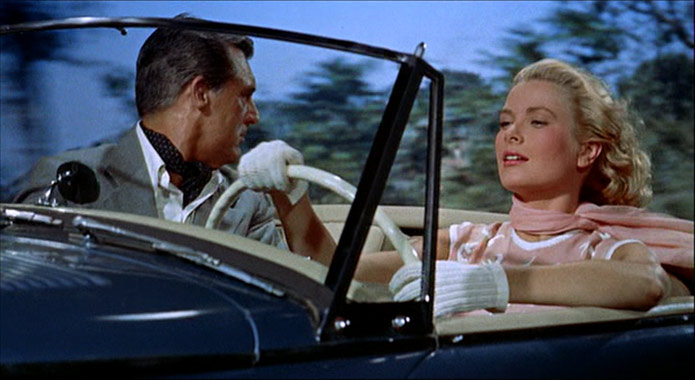
Perhaps no two directors used music as effectively as Alfred Hitchcock and Stanley Kubrick, the former employing original compositions to build unwavering suspense, the latter including famous classical pieces to immerse viewers in magical atmospheres. The New York Philharmonic will pay tribute to both men during “The Art of the Score: Film Week at the Philharmonic,” as the orchestra performs the scores while film clips are shown on the big screen at Avery Fisher Hall. Curated by artistic director Alec Baldwin, “The Art of the Score” begins September 17-18 with “Hitchcock!,” comprising music by Lyn Murray (To Catch a Thief), Bernard Herrmann (Vertigo, North by Northwest), Dimitri Tiomkin (Strangers on a Train, Dial M for Murder), and Charles Gounod (“Funeral March of a Marionette,” the theme from Alfred Hitchcock Presents), conducted by Constantine Kitsopoulos; the first night will be hosted by Baldwin, the second by Sam Waterston. The Philharmonic then focuses on Kubrick’s epic 2001: A Space Odyssey on September 20-21, consisting of works by György Ligeti (“Atmosphères,” “Lux aeterna,” “Aventures,” “Kyrie” from Requiem), Richard Strauss (“Also sprach Zarathustra”), and Johann Strauss II (“On the Beautiful Blue Danube”), conducted by Alan Gilbert and featuring the Musica Sacra Chorus, directed by Kent Tritle. The final event, “Mind, Music, and the Moving Image,” being held on September 21 at the Gerald W. Lynch Theatre, in which Baldwin speaks with filmmakers Joel and Ethan Coen, their regular composer, Carter Burwell, and neuroscientest Aniruddh D. Patel, has already sold out.

IGNORANCE

Susan Sarandon will discuss “The Path Itself” with the Gyalwang Drukpa as part of Rubin Museum series on “Ignorance”

Susan Sarandon will discuss “The Path Itself” with the Gyalwang Drukpa as part of Rubin Museum series on “Ignorance”

Rubin Museum of Art
150 West 17th St. at Seventh Ave.
September 25 – December 27, $15 – $45 (Acoustic Cash $85, Cabaret Cinema free with $7 bar purchase)
212-620-5000
www.rmanyc.org

Last fall, the Rubin Museum examined the concept of happiness through specially introduced film screenings, live performances, and a series of talks pairing artists with scientific and philosophical experts. This fall the museum and its mad-genius programmer, Tim McHenry, tackle a different kind of bliss: ignorance. In 1742, British poet Thomas Gray concluded his “Ode on a Distant Prospect of Eton College” thusly: “Since sorrow never comes too late, / And happiness too swiftly flies. / Thought would destroy their paradise. / No more; where ignorance is bliss, / ’Tis folly to be wise.” More than two centuries earlier, Gautama Buddha explained in the Sutta Nipata that “it is ignorance that smothers, and it is carelessness that makes it invisible. The hunger of craving pollutes the world, and the pain of suffering causes the greatest fear.” The Rubin’s “Ignorance” series, which explores the idea that “what you don’t know could hurt you,” begins September 25 with artist Ernesto Pujol and cultural critic Carol Becker discussing “Ignorance and Ritual,” followed September 26 with lama the Gyalwang Drukpa and actress Susan Sarandon delving into “The Path Itself” and September 27 with psychologist Daniel Gilbert and cartoonist Tim Kreider investigating “Delusion.” Among the other highlights are writer Neil Gaiman and multimedia artist Laurie Anderson sitting down for “Fantasy and Fact,” director Mira Nair and anthropologist Christopher Pinney getting into “Allegory and Illusion,” and playwright Neil LaBute and actor Alec Baldwin rapping about “Ignorance in the Information Age.” Live music includes Holly Near on September 27, Rosanne Cash and Cory Chisel on October 18, and Toshi Reagon on November 8. The Friday-night film programs kicks off September 6 with drama critic John Heilpern introducing Kind Hearts and Coronets and continues with such other beauties as actor and photographer Joel Grey introducing Cabaret, comedian Rachel Dratch introducing Lord of the Flies, and multidisciplinary performance artist John Kelly introducing Shadow of a Doubt. Nineteenth-century British preacher Charles Haddon Spurgeon wrote, “The doorstep to the temple of wisdom is the knowledge of our own ignorance”; this Rubin series should throw that door wide open.

EXPO 1: NEW YORK

“ProBio” looks at the future with “dark optimism” at MoMA PS 1 (photo by Matthew Septimus)

“ProBio” looks at the future with “dark optimism” at MoMA PS 1 (photo by Matthew Septimus)

MoMA PS1
22-25 Jackson Ave. at 46th Ave.
Thursday – Monday through September 2, suggested admission $10 (free with paid MoMA ticket within fourteen days), 12 noon – 6:00
718-784-2084
www.momaps1.org

The presentation of MoMA PS1’s summer exhibition, “Expo 1: New York,” smartly echoes how climate change, technology, and evolution have impacted the progression and devastation of the natural world in the twenty-first century. The show began in May with a series of modules in various locations, with some of those individual parts, including “Rain Room” at MoMA, Olafur Eliasson’s Icelandic glacier installation “Your waste of time” at PS1, Adrián Villar Rojas’s “La inocencia de los animales (The innocence of animals)” PS 1 lecture hall, and the VW Dome on Rockaway Beach, now having gone extinct, disappearing like the melting ice caps. But the show, which promotes Triple Canopy’s concept of a “dark optimism” for the future of humanity and the planet, still has several worthwhile displays at its primary hub at PS 1, examining its mission statement that “we live in a time that is marked by both the seeming end of the world and its beginning, being on the brink of apocalypse but also at the onset of unprecedented technological transformation.” Curators Klaus Biesenbach and Hans Ulrich Obrist reach back fifteen years for Meg Webster’s “Pool,” which PS 1 founder Alanna Heiss originally commissioned in 1998, a swampy water environment that could not exist without the coming together of natural materials and man-made electronic elements. Downstairs in the basement, the Cinema is offering up recent film, video games, and online content from the YouTube generation; the upcoming schedule includes the video games “Journey” and “Proteus,” Sterling Ruby’s Transient Trilogy, Althea Thauberger’s Northern, and Khavn de la Cruz’s Kalakala and Mondomanila or: How I Fixed My Hair After a Rather Long Journey, with the director on hand to discuss his work (and provide live piano accompaniment for the former). Organized by Josh Kline, “ProBio” takes a futuristic look at the intersection of technology and the human body, with intriguing cutting-edge works by such artists as Alisa Baremboym, Antoine Catala, Carissa Rodriguez, and Georgia Sagri; watch out for those Roomba-like robots scouring the floor. One offsite project still remains, Marie Lorenz’s “The Tide and Current Taxi,” which visitors can hail in New York harbor. As always at MoMA PS 1, the many rooms hold little surprises, so be sure to explore so you can also catch pieces by Charles Ray, Matthew Barney, Zoe Leonard, Steve McQueen, Mark Dion, Chris Burden, Pierre Huyghe, Agnes Denes, Ugo Rondinone, and others. And for the final week of “Expo 1,” a77’s communal courtyard installation “Colony” is taken over by Glenn O’Brien, who will be hosting “TV Party Goes to Camp.”

SUMMER HD FESTIVAL 2013

The Met will be screening recent productions of operas for free on Lincoln Center Plaza August 24 – September 2 (photo by Chris Lee)

The Met will be screening recent productions of operas for free on Lincoln Center Plaza August 24 – September 2 (photo by Chris Lee)

Lincoln Center Plaza
Broadway at 64th St.
August 24 – September 2, free, 8:00
www.metoperafamily.org

Over the last several years, the Metropolitan Opera has been expanding its reach, presenting HD screenings of its productions, both live and previously recorded, on television and in movie theaters around the country, and more recently it has instituted the Free Summer HD Festival, holding free first-come, first-served screenings outside on Lincoln Center Plaza, by the fountain. This year’s series comprises ten operas recorded between 2008 and 2013, beginning August 24 with Willy Decker’s version of Verdi’s La Traviata, featuring Natalie Dessay, Matthew Polenzani, and Dimitri Hvorostovsky, conducted by Fabio Luisi. Mary Zimmerman’s staging of Donizetti’s Lucia di Lammermoor will be shown August 25, with Anna Netrebko, Piotr Beczala, Mariusz Kwiecien, and Ildar Abdrazakov, conducted by Marco Armiliato, followed August 26 by Robert Lepage’s take on Thomas Adès’s The Tempest, starring Audrey Luna, Isabel Leonard, Alan Oke, Alek Shrader, and Simon Keenlyside, conducted by Adès. The nightly festival continues with Renée Fleming in Verdi’s Otello, Jean-Pierre Ponnelle’s production of Mozart’s La Clemenza di Tito, James Levine conducting Berlioz’s La Damnation de Faust, the 2013 Met premiere production of David McVicar’s version of Donizetti’s Maria Stuarda, Netrebko in Massenet’s Manon, and the return to Sweden of Verdi’s Un Ballo in Maschera, then concluding September 2 with Luisi conducting Liudmyla Monastyrksa in Sonja Frisell’s staging of Verdi’s Aida.

FUN CITY — NEW YORK IN THE MOVIES 1967-75: MIDNIGHT COWBOY

MIDNIGHT COWBOY

Oscar nominees Jon Voight and Dustin Hoffman try to make it in the big city in John Schlesinger’s powerful and moving MIDNIGHT COWBOY

MIDNIGHT COWBOY (John Schlesinger, 1969)
Museum of the Moving Image
35th Ave. at 36th St., Astoria
Sunday, August 25, free with museum admission, 5:00
Series runs through September 1
718-777-6800
www.movingimage.us

Dustin Hoffman and Jon Voight star as the worst hustlers ever in John Schlesinger’s masterful Midnight Cowboy. The only X-rated film to win a Best Picture Oscar, Midnight Cowboy follows the exploits of Joe Buck, a friendly sort of chap who leaves his small Texas town, determined to make it as a male prostitute in Manhattan. Wearing his cowboy gear and clutching his beloved transistor radio, he trolls the streets with little success. Things take a turn when he meets up with Enrico Salvatore “Ratso” Rizzo (Hoffman), an ill, hobbled con man living in a condemned building. The two loners soon develop an unusual relationship as Buck is haunted by nightmares, shown in black-and-white, about his childhood and a tragic event that happened to him and his girlfriend, Crazy Annie (Jennifer Salt), while Rizzo dreams of a beautiful life, depicted in bright color, without sickness or limps on the beach in Miami. Adapted by Waldo Salt (Serpico, The Day of the Locust) from the novel by James Leo Herlihy, Midnight Cowboy is essentially a string of fascinating and revealing set pieces in which Buck encounters unusual characters as he tries desperately to succeed in the big city; along the way he beds an older, wealthy Park Ave. matron (Sylvia Miles), is asked to get down on his knees by a Bible thumper (John McGiver), gets propositioned in a movie theater by a nerdy college student (Bob Balaban), has a disagreement with a confused older man (Barnard Hughes), and attends a Warholian party (thrown by Viva and Gastone Rosilli and featuring Ultra Violet, Paul Jabara, International Velvet, Taylor Mead, and Paul Morrissey) where he hooks up with an adventurous socialite (Brenda Vaccaro). Photographed by first-time cinematographer Adam Holender (The Panic in Needle Park, Blue in the Face), the film captures the seedy, lurid environment that was Times Square in the late 1960s; when Buck looks out his hotel window, he sees the flashing neon, with a sign for Mutual of New York front and center, the letters “MONY” bouncing across his face with promise. The film is anchored by Harry Nilsson’s Grammy-winning version of “Everybody’s Talkin’,” along with John Barry’s memorable theme. Iconic shots are littered throughout, along with such classic lines as “I’m walkin’ here!” Midnight Cowboy, which was nominated for seven Oscars and won three (Best Picture, Best Adapted Screenplay, and Best Director) is screening August 25 at 5:00 as part of the Museum of the Moving Image series “Fun City: New York in the Movies 1967-75,” which is guest curated by J. Hoberman and continues through September 1 with such other Big Apple fare as The Taking of Pelham One Two Three, Born to Win, Dog Day Afternoon, and Taking Off.

CENTRAL PARK CONSERVANCY FILM FESTIVAL 2013

The game is over, and WEST SIDE STORY has won the battle for favorite classic

The game is over, and WEST SIDE STORY has won the battle for favorite classic

Central Park
Landscape between Sheep Meadow & 72nd St. Cross Dr.
August 22-26, free, DJs at 6:30, film at 8:00
www.centralparknyc.org

For this year’s Central Park Conservancy Film Festival, the programming was left to the will of the people, who got to select from four pictures in five categories. The results are in, and the movies will be screened August 22-26 on the landscape between Sheep Meadow and the 72nd St. Cross Dr. The series begins on Thursday with Classics night, as West Side Story, garnering 3,617 votes, beat out Funny Lady, Dr. Strangelove, or How I Stopped Worrying and Learned to Love the Bomb, and On the Waterfront. Friday’s Family selection is Hook (2,212), which triumphed over Kung Fu Panda, An American Tail, and Annie. Saturday’s Rom-Com is Silver Linings Playbook (3,731), which came out on top over When Harry Met Sally, The Gay Divorcee, and Love Jones. Horror rules the day on Sunday night, with The Shining (2,656) scaring off Psycho, Frankenstein, and Christine. The festival concludes on Monday night with Adventure winner Raiders of the Lost Ark (3,055), which ran away from Goldfinger, The Matrix, and The Fifth Element. Each program kicks off with a DJ spinning tunes at 6:30, with the films beginning at 8:00. Admission, and popcorn, is free; lawn chairs are not allowed.