LOCAL COLOR — ZIPPER: CONEY ISLAND’S LAST WILD RIDE (Amy Nicholson, 2012)
Nitehawk Cinema
136 Metropolitan Ave. between Berry St. & Wythe Ave.
Wednesday, October 30, 9:30
718-384-3980
www.zipperfilm.com
www.nitehawkcinema.com
This past August, Amy Nicholson’s compelling, bittersweet documentary Zipper: Coney Island’s Last Wild Ride opened to wide acclaim during an extended run at the IFC Center. Winner of a Special Jury Prize at the 2012 DOC NYC festival, Zipper follows the fate of Eddie Miranda’s Zipper amusement park ride as a microcosm of the controversial rezoning and commercialization plans that threaten to change Coney Island forever. In her director’s statement, Nicholson, a longtime marketing creative director in New York City who has taken the film, her third documentary, all over the country, explains, “I have two ambitions for Zipper. First, to expose how and why the ‘poor people’s Riviera’ became the prize in a fight between a billionaire developer and a billionaire mayor. Second, to remind the world of Coney Island’s true character, so that other great cultural icons might be valued more for their sense of place than for their real estate.” Her next stop is Nitehawk Cinema in Williamsburg, where she’ll take part in a Q&A following a special “Local Color” screening on October 30 at 9:30. As an added bonus, each attendee gets a free Coney Island beer. In anticipation of the Nitehawk event, Nicholson recently discussed with twi-ny the Zipper, the advertising business, the future of Coney Island, and more.
twi-ny: What was the genesis of the Zipper project?
Amy Nicholson: Believe it or not, I was looking for the Jumble in the Daily News when I came across an article about the Zipper leaving Coney Island and my heart sank. I loved that ride as a kid; it’s the quintessential crazy carnival contraption and the perfect symbol of all that’s great about a place like Coney Island. Originally I was just going to do a short homage to the Zipper, but I got sucked into the politics of why Eddie Miranda and a lot of other small operators were leaving. The more I looked into it, the bigger it got.
twi-ny: What kind of personal connection did you have with Coney Island prior to starting the project? How would you say it has changed since then?
Amy Nicholson: I have lived in New York since the late ’80s and my best friend and I would go down to Coney Island on hot summer nights and just hang out and people watch. It’s really the best place in the world to soak up that beach/carnival/melting pot atmosphere. As Joey says in the film, “Once you get the sand in your shoes….”
(Sidebar about riding the Zipper in Coney: Eddie’s Zipper was an older hydraulic model, which meant it used a lot of oil. If the temperature was hot during the day — and cooler at night — the Zipper would spin a lot more aggressively as the oil cooled. The loader, Freddie, and I made a pact to ride on the last night after the very last shot, but when he chickened out, so did I. Apparently the conditions were perfect for making the Zipper spin like crazy that day and he said there had been a lot of barfing!)
twi-ny: How would you say it has changed since the late ’80s?
Amy Nicholson: Coney Island is a really addicting place for so many reasons. I can never sum it up as well as the guys do in the last scenes of Zipper. But I can tell you for certain that’s been the biggest change. The complexion of the place is very different now and not in a good way. There are still a few of the old guard there, but the rest is either an empty lot or new construction that feels soulless. The new rides are nice, but Coney Island is well on its way to being sterilized.
twi-ny: Has anything changed in the rezoning/development fight since the film was released?
Amy Nicholson: When the film leaves off at the end of 2009, Bloomberg was just reelected to a third term. A deal was made with Thor Equities to purchase about half of their property for around $100 million, and the city leased newly created parkland to a single operator. Since then, Thor has built one retail building and Central Amusements International has brought in new rides, primarily in areas where there were rides before the fight began. There have been some nice improvements, but there are still plenty of empty lots and none of the promised affordable housing or hotels have materialized. Nor is Coney Island year-round — the reason the public was told the rezoning had to happen. We are also coming up on the one-year anniversary of Sandy, which did some horrific damage, but almost all of the rides and games survived. The final super[title] of the film that states what the resolution was after all the years of battling still stands.
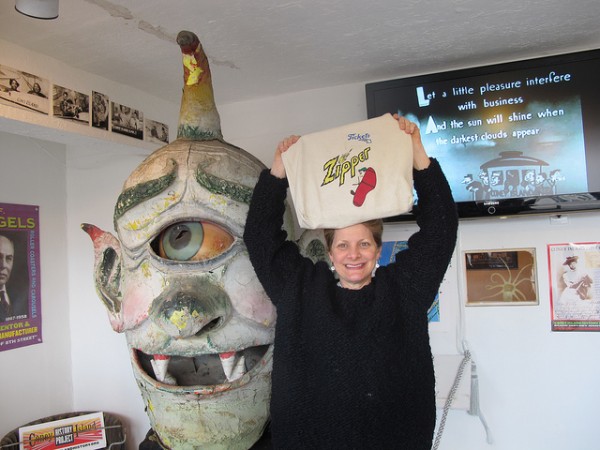
ZIPPER director Amy Nicholson celebrates documentary at Coney Island History Project
twi-ny: How do you think documentaries like yours can make a difference in such battles?
Amy Nicholson: I think documentaries like mine not only serve as a record of history, but I hope they exposed the truth about how politics and the constant need for growth can change cities far too quickly and not necessarily for the better. As a regular citizen, you would have had to follow the story for six years, digging around, attending meetings, and asking questions. It’s a lot to ask for a busy public, and in the end, the public process is pretty much a joke. So on the most basic level, you can watch Zipper and see the whole story unfold in seventy-seven minutes and at least walk away with a basic understanding of why there’s an Applebee’s in Coney Island now.
twi-ny: You’ve shown the film all over the country. How do audiences in other cities react to such a New York story? Coney Island has a unique legend, but most of those people have probably never been there.
Amy Nicholson: The film speaks to people everywhere because there has been such an increase in development like this where cities decide to proactively stimulate economic growth with developer incentives. The easiest way to do that is to change the zoning. Right now, Los Angeles is doing exactly what New York did with a huge zoning overhaul. It hasn’t escaped anyone’s attention that small businesses everywhere are being displaced by chains.
And then there are the sweetest older people everywhere we go who attend the screenings and they just want to relive a little bit of their Brooklyn childhood. When we get compliments on how well we captured the feeling of the place, that’s when I think we’ve been successful. That’s the best.
twi-ny: You’ve spent a lot of years in advertising. What kind of impact do you think that has on your filmmaking style, as well as the film’s promotion?
Amy Nicholson: Well, in this case it gave me a fairly keen understanding of the attempted branding of both Coney Island and Brooklyn. (In the case of Brooklyn, the city has been far too successful!) It definitely gave me the radar to know when I was being sold something. I could feel it in the interviews, and twice I found “talking points” left behind in the rooms we were in. As far as how it applies to the marketing of the film, I can’t take all the credit. Coney Island was the most amazing place visually. And I had help. That best friend who I went to Coney with on hot summer nights is also an amazing designer. We just did our best attempt to bring it to life.
twi-ny: You’ve previously made Beauty School and Muskrat Lovely. Do you have any plans yet for your next film?
Amy Nicholson: I have to recover financially from this one first (we could not get funding), but I have a few ideas rolling around in my head. Stay tuned….
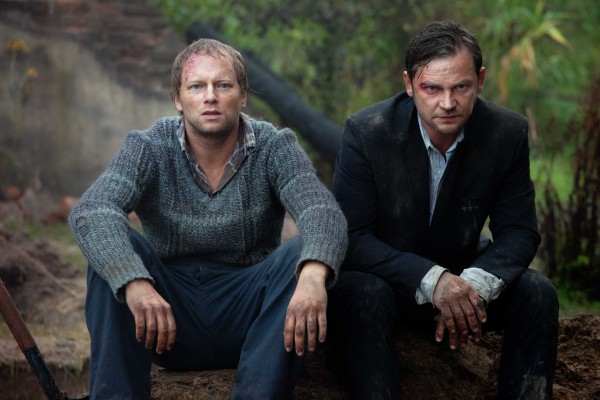
 Polish writer-director Władysław Pasikowski digs up a deeply disturbing and controversial part of his country’s past in the gripping drama Aftermath. When Franek Kalina (Ireneusz Czop), who left his family’s small farming village twenty years earlier, in 1980, comes home to spend the summer helping out his brother, Józek (Maciej Stuhr), he is surprised to find that his younger sibling has become a hated outcast. It turns out that Józek has been uncovering Jewish gravestones, which the townspeople and even the church have been using to pave roads and for various other architectural purposes. He’s been gathering them in the middle of his wheat field, building a cemetery that has outraged the villagers. They become even angrier — and more dangerous — when Franek, who, like his brother, has never before shown any sympathy for the Jews, starts investigating what really happened there sixty years ago, a dark, dirty secret that everyone else is determined will remain buried. In Aftermath, Pasikowski (Kroll, Pigs) adds horror-genre tropes to a Holocaust tale not seen on film before while evoking such wide-ranging fiction and nonfiction works as Marian Marzynski’s Shtetl, Clint Eastwood’s High Plains Drifter, and Tobe Hooper’s Poltergeist. Aftermath is a thriller that is not so much about good and evil but about guilt, responsibility, and the choices people make, and then have to live with. Inspired by a true story documented by historian Jan T. Gross in Neighbors: The Destruction of the Jewish Community in Jedwabne, Poland, which stirred up major controversy when it was published in 2000, Aftermath has led to a heated polemic battle between the right and the left in Poland, as well as death threats against Stuhr, who was named Best Actor by the Polish Film Academy for his portrayal of the conflicted Józek. An important, well-made film that is able to avoid being swallowed by the swirling debate surrounding it, Aftermath opens November 1 at Lincoln Plaza and Cinema Village.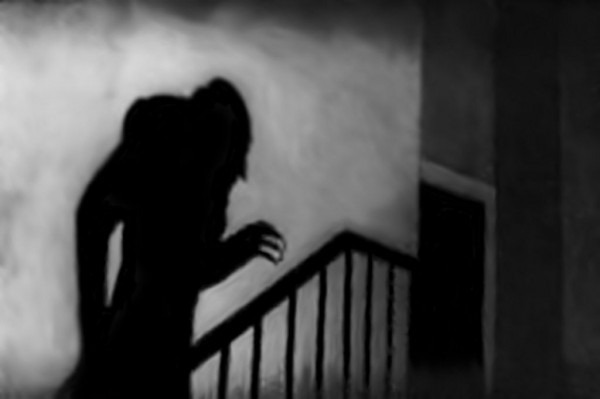
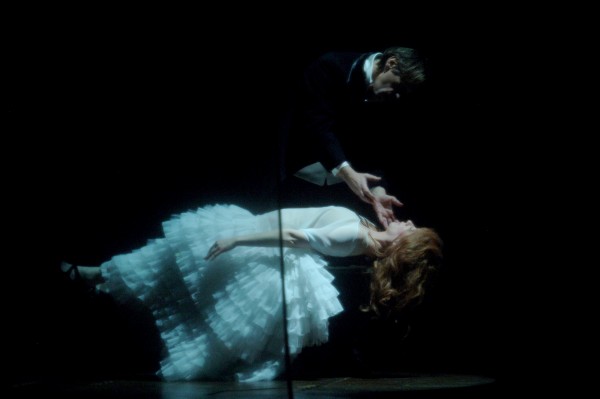
 In F. W. Murnau’s classic horror film, Max Schreck stars as Count Orlok, a creepy, inhuman-looking Transylvanian who is meeting with real estate agent Thomas Hutter (Gustav von Wangenheim) in order to buy a house in Germany. Hutter soon learns that the count has a taste for blood, as well as lust for his wife, Ellen (Greta Schröder), whom he has left behind in Germany. When Count Orlok, a bunch of rats, and a group of coffins filled with Transylvanian earth head out on a ship bound for Wisborg, the race is on to save Ellen, and Germany. Murnau’s Nosferatu is set in an expressionist world of liminal shadows and fear, as he and cinematographers Fritz Arno Wagner and Günther Krampf continually place the menacing Orlok in oddly shaped doorways that help exaggerate his long, spiny fingers and pointed nose and ears. Unable to acquire the rights from Bram Stoker’s estate to adapt the Gothic horror novel Dracula into a film, writer Henrik Galeen (The Golem, The Student of Prague) and director Murnau (Sunrise, The Last Laugh) instead made Nosferatu, paring down the Dracula legend, changing the names of the characters, and tweaking the story in various parts. Upon its 1922 release, they were sued anyway, and all prints were destroyed except for one, ensuring the survival of what became a defining genre classic. In 1979, German auteur Werner Herzog (Woyzeck, Fitzcarraldo) paid tribute to the earlier film with Nosferatu the Vampyre, a near scene-by-scene homage to Murnau’s original but with Stoker’s character names restored, as the book was by then in the public domain. Hans Erdmann’s complete score no longer exists, so numerous musical compositions have accompanied screenings and DVD/VHS releases over the years; at Film Forum, pianist Steve Sterner will offer his take on November 4 at 7:30.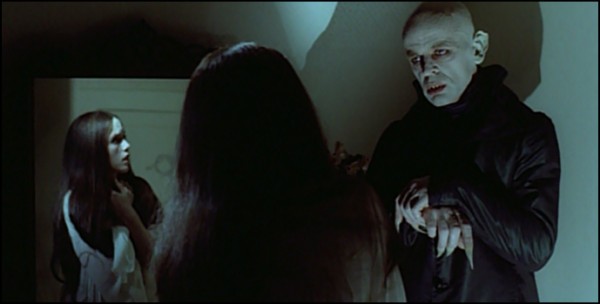
 Nearly sixty years after Murnau battled the Stoker estate, Herzog remade Nosferatu with an all-star cast featuring Bruno Ganz as real estate agent Jonathan Harker, Isabelle Adjani as his wife, Lucy, and Klaus Kinski as Count Dracula. Shot in flat colors by Jörg Schmidt-Reitwein and set to a score by German electronica band Popol Vuh, Herzog’s Nosferatu follows the same path as Murnau’s, as Jonathan Harker travels to Transylvania to have the count sign a contract, discovers that Dracula likes blood and sleeps in a coffin, then tries to save his wife when the count and thousands of (purportedly mistreated) rats sail to Wismar, renewing fears of plague. Kinski plays the count as a sad, lonely figure who no longer belongs in the modern world. He’s desperate for human contact, and his castle has seen much better days. Kinski often seems to be shot in black-and-white, surrounded by color, as if he were from another time, except for his shockingly red lipstick. It’s a virtuoso performance that is significantly more nuanced than Schreck’s, which is a more direct take on the character. Both films are gems; Film Forum is showing a new 35mm print of the rare German-language version of Herzog’s remake through November 7; on November 4 you can see them both, with separate paid admission.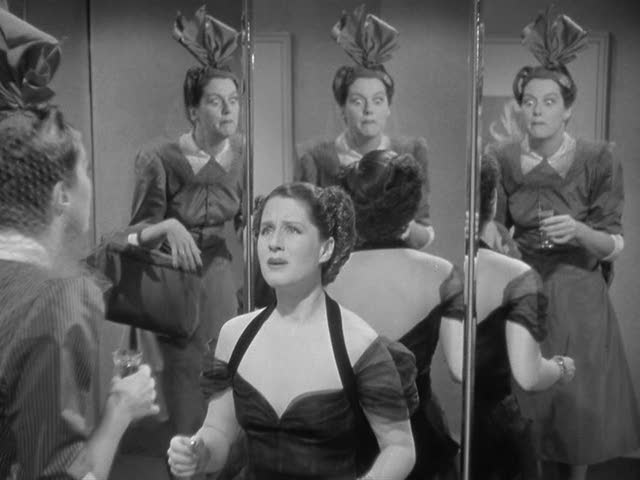
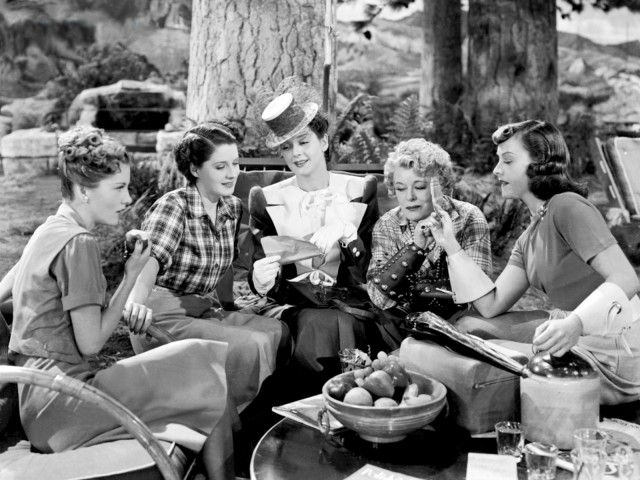
 One of the cattiest movies ever made, The Women is a screwball comedy that has the distinction of not having a single man in it; it was even written by Anita Loos and Jane Murfin, based on Clare Booth’s 1936 Broadway play, and helmed by George Cukor, who is often considered “the women’s director.” Set in Manhattan, the film follows the intrigue and gossip surrounding a group of socialite women who yap yap yap all day long while shopping in ritzy stores, eating in fancy restaurants, and getting their nails done in high-end salons. Their attention is suddenly turned to the sweetly innocent Mary Haines (Norma Shearer) when it is believed that her husband, Stephen, is having an affair with conniving perfume salesperson Crystal Allen (Joan Crawford). Mary’s supposed best friends, Sylvia Fowler (Rosalind Russell), Edith Potter (Phyllis Povah), and Peggy Day (Joan Fontaine), at first keep the story from her, but as the facts continue to pile up, Mary considers heading to Reno to get a quickie divorce, even as her mother (Lucile Watson) tells her to just live with the deception, as most women do. In Reno, Mary stays at a ranch with other wives trying to get out of their marriages, including a boisterous, oft-wed countess (Mary Boland), a tough-talking chorus girl (Paulette Goddard), and a few surprises. As the women discuss life and love, wealth and poverty, heartache and motherhood — Mary is desperate to protect her daughter, also named Mary (Virginia Weidler), from the nasty proceedings — relationships twist and turn, loyalty is questioned, and the possibility of true love is clouded in doubt.