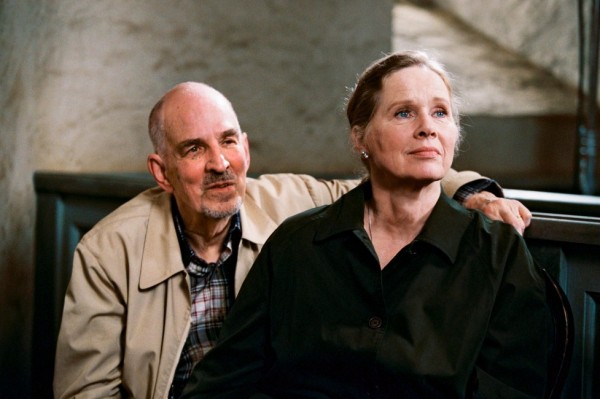
Liv Ullmann discusses her long personal and professional relationship with Ingmar Bergman in intimate documentary
LIV AND INGMAR: PAINFULLY CONNECTED (Dheerai Alkolkar, 2012)
Film Society of Lincoln Center, Elinor Bunin Munroe Film Center
144 West 65th St. between Broadway & Amsterdam Ave.
December 13-19
212-875-5601
www.filmlinc.com
www.livandingmar.com
 Two-time Oscar-nominated Norwegian actress Liv Ullmann intimately and poetically discusses her five-decade-long personal and professional relationship with Swedish director Ingmar Bergman in Dheerai Alkolkar’s beautifully rendered Liv & Ingmar. Ullmann returns to Bergman’s house on Faro Island as she openly and honestly shares details of their long involvement, which began in 1965 when they were filming Persona; Ullmann was twenty-five, Bergman forty-six. Each was married and ended up leaving their spouse for what became a tumultuous five-year affair, after which they remained friends and colleagues, ultimately making twelve films together between 1966 and 2004. Alkolkar and cinematographer Hallvard Bræin zoom in on Ullmann’s expressive face as her memories go from love, loneliness, rage, and pain to longing and friendship. Alkolkar intersperses related film clips, behind-the-scenes footage, home movies, and snapshots as Ullmann walks along the beach and reads from her 1977 memoir, Changing; the film also features Samuel Fröler in voice-over reading from Bergman’s letters and autobiography, The Magic Lantern. Among the works featured prominently are Shame and Scenes from a Marriage, which eerily evoke Ullmann and Bergman’s real-life relationship. Liv & Ullmann serves as a lovely coda to this lasting partnership, which continues in its own unique way even after Bergman’s death in 2007 at the age of eighty-nine. In conjunction with the theatrical release of the film at Lincoln Center, the Film Society will also be screening nine works starring Ullmann and directed by Bergman: Shame, The Passion of Anna, Cries and Whispers, Face to Face, Scenes from a Marriage, Saraband, Hour of the Wolf, Persona, and Autumn Sonata.
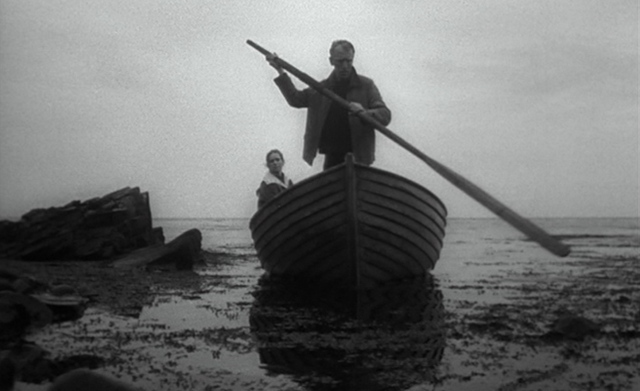
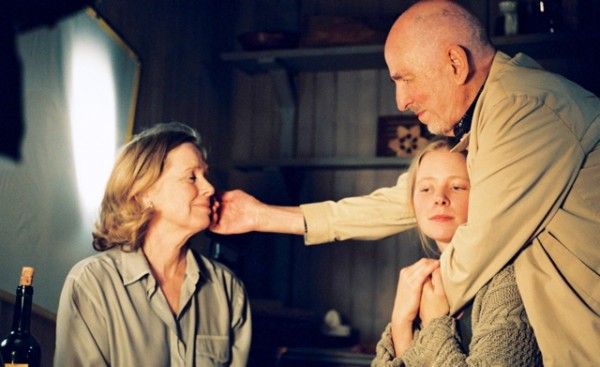
 In Saraband, masterful writer-director Ingmar Bergman returns to the story of Marianne (Liv Ullmann) and Johan (Erland Josephson), first brought to life in the heartbreaking Scenes from a Marriage in 1973. Marianne, who hasn’t seen her ex-husband in thirty years, suddenly decides to pay the aging recluse a visit, resurrecting emotions both good and bad. Shot digitally, what purports to be Bergman’s swan song looks more like a TV movie than a theatrical release; in fact, it was made for Swedish television, as was the earlier work, but this one contains far less energy. While there are moments of brilliance, there are also scenes of mediocrity and mundanity that fall flat. The framing device of having Marianne speaking directly to the camera as she looks at old photos detracts from the overall impact as well. But it is great to see Josephson and Ullmann together again. The most fascinating new character, and one that fits well in the Bergman oeuvre, could very well be Henrik (Borje Ahlstedt), a complex, scary man with serious problems between him and his father as well as with his daughter, Karin (Julia Dufvenius). Saraband is screening December 14 and 18 at the Elinor Bunin Munroe Film Center as part of the Film Society of Lincoln Center series “Liv & Ingmar: The Films,” being held in conjunction with the theatrical release of Dheeraj Akolkar’s poetic new documentary, Liv & Ingmar; the festival continues with such other Ullmann/Bergman pairings as The Passion of Anna, Face to Face, Cries and Whispers, and Scenes from a Marriage.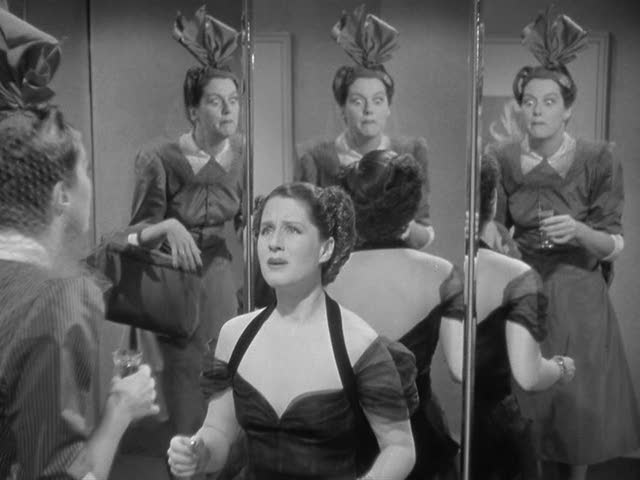
 One of the cattiest movies ever made, The Women is a screwball comedy that has the distinction of not having a single man in it; it was written by Anita Loos and Jane Murfin, based on Clare Booth’s 1936 Broadway play, and helmed by George Cukor, who is often considered “the women’s director.” (Even the animals in the film are female.) Set in Manhattan, the film follows the intrigue and gossip surrounding a group of socialite women who yap yap yap all day long while shopping in ritzy stores, eating in fancy restaurants, and getting their nails done in high-end salons. Their attention is suddenly turned to the sweetly innocent Mary Haines (Norma Shearer) when it is believed that her husband, Stephen, is having an affair with conniving perfume salesperson Crystal Allen (Joan Crawford). Mary’s supposed best friends, Sylvia Fowler (Rosalind Russell), Edith Potter (Phyllis Povah), and Peggy Day (Joan Fontaine), at first keep the story from her, but as the facts continue to pile up, Mary considers heading to Reno to get a quickie divorce, even as her mother (Lucile Watson) tells her to just live with the deception, as most women do. In Reno, Mary stays at a ranch with other wives trying to get out of their marriages, including a boisterous, oft-wed countess (Mary Boland), a tough-talking chorus girl (Paulette Goddard), and a few surprises. As the women discuss life and love, wealth and poverty, heartache and motherhood — Mary is desperate to protect her daughter, also named Mary (Virginia Weidler), from the nasty proceedings — relationships twist and turn, loyalty is questioned, and the possibility of true love is clouded in doubt.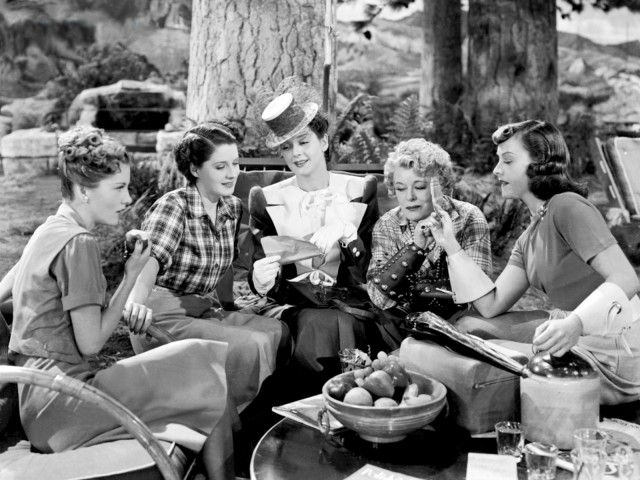
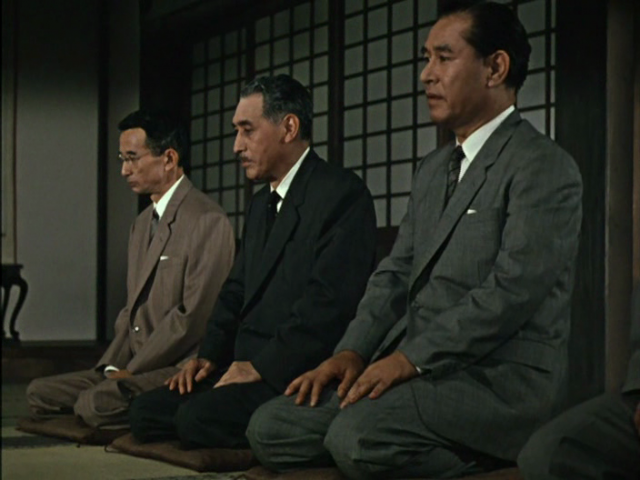
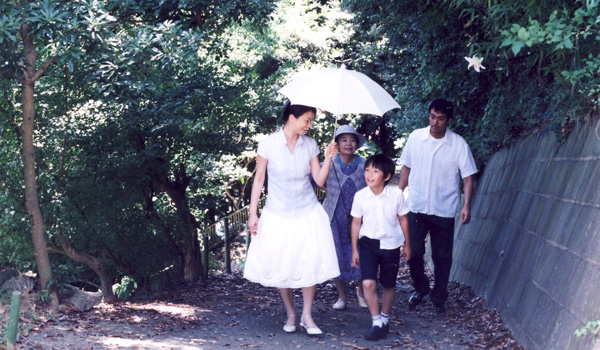
 Flawlessly written, directed, and edited by Hirokazu Kore-eda (Maborosi, Nobody Knows), Still Walking follows a day in the life of the Yokoyama family, which gathers together once a year to remember Junpei, the eldest son who died tragically. The story is told through the eyes of the middle child, Ryota (Hiroshi Abe), a forty-year-old painting restorer who has recently married Yukari (Yui Natsukawa), a widow with a young son (Shohei Tanaka). Ryota dreads returning home because his father, Kyohei (Yoshio Harada), and mother, Toshiko (Kirin Kiki), are disappointed in the choices he’s made, both personally and professionally, and never let him escape from Junpei’s ever-widening shadow. Also at the reunion is Ryota’s chatty sister, Chinami (You), who, with her husband and children, is planning on moving in with her parents in order to take care of them in their old age (and save money as well). Over the course of twenty-four hours, the history of the dysfunctional family and the deep emotions hidden just below the surface slowly simmer but never boil, resulting in a gentle, bittersweet narrative that is often very funny and always subtly powerful. The film is beautifully shot by Yutaka Yamazaki, who keeps the camera static during long interior takes — it moves only once inside the house — using doorways, short halls, and windows to frame scenes with a slightly claustrophobic feel, evoking how trapped the characters are by the world the parents have created. The scenes in which Kyohei walks with his cane ever so slowly up and down the endless outside steps are simple but unforgettable. Influenced by such Japanese directors as Mikio Naruse, Yasujiro Ozu, and Shohei Imamura, Kore-eda was inspired to make the film shortly after the death of his parents; although it is fiction, roughly half of Toshiko’s dialogue is taken directly from his own mother. Still Walking is a special film, a visual and psychological marvel that should not be missed. It’s screening December 11-12 as part of the Film Society of Lincoln Center festival “Ozu and His Afterlives,” which honors the 110th anniversary of the master filmmaker’s birth and the 50th anniversary of his death; he died on his birthday at the age of sixty in 1963. The series features Ozu’s