South Park dudes Trey Parker and Matt Stone employ puppets to lay waste to international terrorism in TEAM AMERICA
MIDNITE SCREENINGS — TEAM AMERICA: WORLD POLICE (Trey Parker, 2004)
Nitehawk Cinema
136 Metropolitan Ave. between Berry St. & Wythe Ave.
Friday, July 4, and Saturday, July 5, 12:05 am
718-384-3980
www.nitehawkcinema.com
www.teamamericamovie.com
 Nothing is off limits for South Park dudes Trey Parker and Matt Stone in this marionette musical actioner that mixes Top Gun, Mission: Impossible, and The Matrix with that old classic television puppet show Thunderbirds. Kim Jong Il is determined to unleash his weapons of mass destruction on an unsuspecting world, and it is up to Team America and its newest member, actor Gary Johnston, formerly of the hit musical Lease, to stop the North Korean leader’s heinous plan. But Team America is a reckless bunch that has a tendency to destroy major cities and landmarks (the Eiffel Tower, the Sphinx) as it attempts to take out terrorists. Meanwhile, love threatens to complicate the success of their mission. Parker and Stone skewer international politics, the military, celebrity, and the media in this very dirty, very funny flick; among their victims are Alec Baldwin, Susan Sarandon, Sean Penn, Peter Jennings, Hans Blix, George Clooney, and, mercilessly, Matt Damon and Ben Affleck. There’s lots of blood and gore, a very hot puppet sex scene, and the best description ever about the three kinds of people in the world. Although it often misses its target or goes way too far — it could have been a classic like South Park: Bigger Longer & Uncut — it’s still a good way to spend a late night out at the movies, especially while honoring America during the July Fourth holiday. Team America: World Police is screening at 12:05 am on Friday and Saturday night as part of Nitehawk Cinema’s Independence Day Weekend, which also includes Steven Spielberg’s Jaws and Tim Burton’s Mars Attacks!

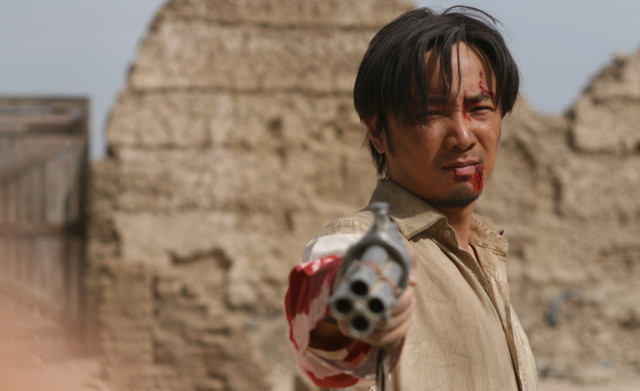
 Finally getting its North American premiere after being banned in its home country of China, Ning Hao’s No Man’s Land is a violently beautiful black comedy that takes on modernization and commercialization with tongue firmly and riotously rooted deep in cheek. Xu Zhen stars as Pan Xiao, a young hotshot lawyer, if he does say so himself, who gets a vicious falcon poacher (Duo Bujie) off for killing a cop. The poacher promises to wire Pan his fee, but the lawyer instead demands collateral in the form of the red car the poacher bought for his dead wife. Pan then sets out for home, riding across the Gobi desert in Xinjiang in northwest China, but things don’t go too well for him, as he keeps getting involved with strange, dangerous, ever-more-surreal men and women, from a pair of truck drivers transporting hay (Wang Shuangbao and Sun Jianmin) to an extortionist gas station owner (Yan Xinming) and his back-room prostitute (Yu Nan) to another falcon poacher (Huang Bo) who can’t avoid getting the crap beaten out of him time and time again. But Pan keeps trying to persevere, believing he is better than everyone around him, but it takes him quite a while to learn his lesson, if he ever really does.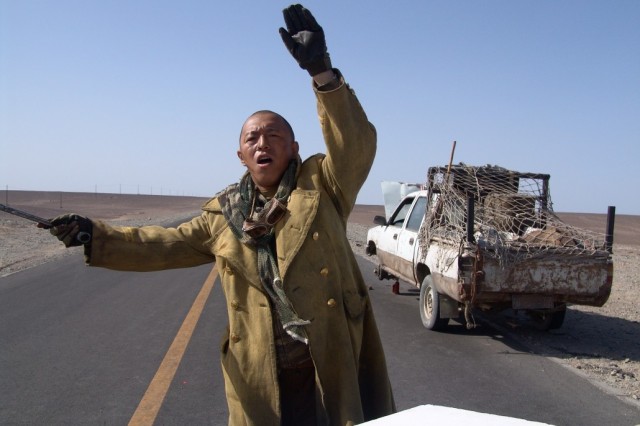
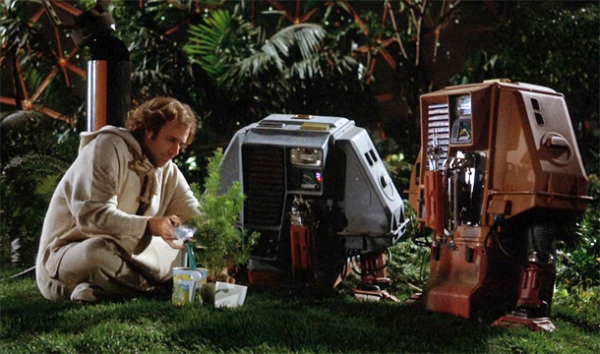
 Special effects master Douglas Trumbull, who worked on such sci-fi classics as 2001: A Space Odyssey, Close Encounters of the Third Kind, and Blade Runner, made his feature directorial debut with the environmentally prescient Silent Running. Bruce Dern stars as Freeman Lowell, one of four men stationed on the space terrarium Valley Forge, which is charged with protecting forests that can no longer grow on Earth. While it’s just another assignment for John Keenan (Cliff Potts), Marty Barker (Ron Rifkin), and Andy Wolf (Jesse Vint), it’s become an obsession for Lowell, who sleeps under a “Conservation Pledge” on the wall next to his bed and only eats food from his massive garden. But when the captain of the Berkshire (voiced by Joseph Campanella) informs them that the forests must be destroyed and they are to return home, Lowell takes matters into his own hands, fighting to protect what he has helped create. Soon he is alone on the Valley Forge, tending to the forest with drones Huey (Cheryl Sparks) and Dewey (Mark Persons), as Louie (Steven Brown) is no longer with them. At first Lowell thinks he is in his own private paradise, but extreme loneliness awaits him, along with some other shocks. Written by Deric Washburn and Michael Cimino (The Deer Hunter) and Steven Bochco (Hill Street Blues, L.A. Law), the low-budget Silent Running is a deserving cult classic, a worthy influence on such films and television shows as WALL-E, Moon, Mystery Science Theater 3000, and Red Dwarf. Emerging from the late-1960s Flower Power movement, the film’s ecological theme is boosted by environmentally friendly folk songs sung by Joan Baez, with overly melodramatic music by Peter Schickele. Dern gives a beautifully nuanced performance as Lowell, going from calm and meditative to distressed and angry in a heartbeat, and his paternal relationship with Huey and Dewey is both heartwarming and heartbreaking. A film that could only be made in the 1970s, with bright, bold colors and cheesy futuristic sets, Silent Running is screening June 28 at 7:00 as part of the Museum of the Moving Image’s “See It Big! Science Fiction (Part Two)” series, which continues through July 12 with such other sci-fi flicks as Alain Resnais’s Je T’Aime, Je T’Aime, Stanley Kubrick’s 2001: A Space Odyssey in 70mm, and Tim Burton’s Mars Attacks!