this week in film and television

CAHIERS DU CINÉMA’S TOP PICKS: GOODBYE FIRST LOVE

Sullivan (Sebastian Urzendowsky) and Camille (Lola Créton) experience the pleasure and pain of young romance in GOODBYE FIRST LOVE

CINÉSALON: GOODBYE FIRST LOVE (UN AMOUR DE JEUNESSE) (Mia Hansen-Løve, 2011)
French Institute Alliance Française, Florence Gould Hall
55 East 59th St. between Madison & Park Aves.
Tuesday, June 24, $13, 4:00 & 7:30
212-355-6100
http://www.fiaf.org
www.ifcfilms.com

French filmmaker Mia Hansen-Løve’s third film is an infuriating yet captivating tale that runs hot and cold. Goodbye First Love begins in Paris in 1999, as fifteen-year-old Camille (Lola Créton) frolics naked with Sullivan (Sebastian Urzendowsky), her slightly older boyfriend. While she professes her deep, undying lover for him, he refuses to declare his total dedication to her, instead preparing to leave her and France for a long sojourn through South America. When Camille goes home and starts sobbing, her mother (Valérie Bonneton), who is not a big fan of Sullivan’s, asks why. “I cry because I’m melancholic,” Camille answers, as only a fifteen-year-old character in a French film would. As the years pass, Camille grows into a fine young woman, studying architecture and dating a much older man (Magne-Håvard Brekke), but she can’t forget Sullivan, and when he eventually reenters her life, she has some hard choices to make. Créton (Bluebeard) evokes a young Isabelle Huppert as Camille, while Urzendowsky (The Way Back) is somewhat distant as the distant Sullivan. There is never any real passion between them; Hansen-Løve (All Is Forgiven, The Father of My Children) often skips over the more emotional, pivotal moments, instead concentrating on the after-effects and discussions. While that works at times, at others it feels as if something crucial was left out, and not necessarily with good reason. Still, Créton carries the film with her puppy-dog eyes, lithe body, and a graceful demeanor that will make you forgive her character’s increasingly frustrating decisions. Goodbye First Love is screening June 24 at 4:00 and 7:30 as part of the FIAF CinéSalon series “Cahiers due Cinéma’s Top Picks”; the later screening will be introduced by Richard Peña, and both showings will be followed by a wine reception.

SEE IT BIG! SCIENCE FICTION (PART TWO): SOLARIS

Reality gets twisted up in outer space in Andrei Tarkovsky’s SOLARIS

Reality gets twisted up in outer space in Andrei Tarkovsky’s SOLARIS

SOLARIS (Andrei Tarkovsky, 1972)
Museum of the Moving Image
35th Ave. at 36th St., Astoria
Sunday, June 22, free with museum admission of $12, 2:00
Series continues through July 12
718-777-6800
www.movingimage.us

In Andrei Tarkovsky’s Solaris, the Russian 2001: A Space Odyssey, Natalya Bondarchuk and Donatus Banionis star as a different kind of couple caught up in something very strange that is going on in outer space, unexplainable to both the characters in the film and the people in the audience. Banionis plays Dr. Kris Kelvin, a psychologist who is sent to the Solaris space station to decide whether to put an end to the solaristics project that Burton (Vladislav Dvorzhetsky) complicated twenty years before. What he discovers is one death, two possibly insane men, and his supposedly dead wife (Bondarchuk). Ambiguity reigns supreme in this gorgeously shot (in color and black-and-white by cinematographer Vadim Yusov) and scored (by Eduard Artemyev) film that, while technically science fiction, is really about the human conscience, another gem from master Russian director Tarkovsky (Ivan’s Childhood, Andrei Rublev, Nostalghia). See it whether or not you’ve checked out Steven Soderbergh’s underrated remake with George Clooney and Natascha McElhone. Based on Stanislaw Lem’s novel, Solaris is screening June 22 at 2:00 as part of the Museum of the Moving Image’s “See It Big! Science Fiction (Part Two)” series, which continues through July 12 with such other sci-fi flicks as Alain Resnais’s Je T’Aime, Je T’Aime, Douglas Trumbull’s Silent Running and Brainstorm in 70mm, and Stanley Kubrick’s 2001: A Space Odyssey, also in 70mm

A SUMMER’S TALE

A SUMMER’S TALE

Margot (Amanda Langlet) and Gaspard (Melvil Poupaud) contemplate love and friendship in Éric Rohmer’s A SUMMER’S TALE

A SUMMER’S TALE (CONTE D’ÉTÉ) (Éric Rohmer, 1996)
IFC Center, 323 Sixth Ave. at Third St., 212-924-7771
Lincoln Plaza Cinema, 1886 Broadway between 62nd & 63rd Sts., 212-757-2280
Opens Friday, June 20
www.bigworldpictures.org

French New Wave auteur Éric Rohmer’s 1996 A Summer’s Tale, the third of his seasonal 1990s stories following A Tale of Winter and A Tale of Springtime and preceding the finale, A Tale of Autumn, is a bittersweet romance about the follies of young love. In a seaside Breton resort town in the 1970s, musician and mathematician Gaspard (Melvil Poupaud) awaits the arrival of his girlfriend, Lena (Aurélia Nolin), who has not been answering his phone calls or returning his letters. He strikes up a perhaps platonic relationship with waitress-ethnologist Margot (Amanda Langlet), whose boyfriend is off in the Peace Corps. When Gaspard makes a move on Margot, she instead encourages him to go out with the free-spirited Solene (Gwenaëlle Simon). Soon Gaspard finds himself lost among three beautiful women, forced to make choices that he’s clearly not ready for. Strikingly photographed by Rohmer favorite Diane Baratier in a subdued, ’70s-style palette, A Summer’s Tale is a charmingly insightful and frustrating exploration of young love, desire, and commitment in which a group of attractive twentysomethings are caught between just wanting to have some fun and plotting out their future. It’s ironic that Gaspard is a mathematician, as he seems to have trouble as soon as he gets to the number three. Meanwhile, it’s appropriate that the ever-wise and knowing Margot (played with a captivating and alluring ease by Pauline at the Beach star Langlet) is an ethnologist, as she carefully studies Gaspard and others as she makes her way through life. Rohmer made A Summer’s Tale when he was seventy-five; the former editor of Cahiers du cinéma would go on to direct four more films before his death in 2010 at the age of eighty-nine. After eighteen years, A Summer’s Tale, which premiered at Cannes in 1996, is finally getting its U.S. theatrical release, opening June 20 at the IFC Center and Lincoln Plaza in a new HD restoration, a lovely way to kick off the summer movie season.

COHERENCE

COHERENCE

A dinner party turns into a struggle for survival in experimental COHERENCE

COHERENCE (James Ward Byrkit, 2014)
Village East Cinemas
181-189 Second Ave. at 12th St.
Opens Friday, June 20
212-529-6799
www.coherencethemovie.com
www.villageeastcinema.com

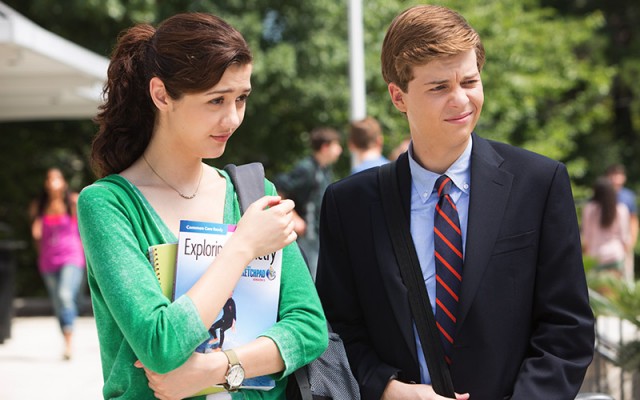
A dinner party enters The Twilight Zone as a comet approaches and inexplicable things start happening in James Ward Byrkit’s inventive directorial debut, Coherence. Inspired by Ray Bradbury’s “The Monsters Are Due on Maple Street,” Christopher Nolan’s Inception, and other sci-fi classics (and reminiscent of Todd Berger’s 2012 underappreciated It’s a Disaster!), Byrkit’s has created an intriguing experimental film about love and life, relationships and survival, shot in five nights in his own living room with no script. When the power goes out in every house but one in the neighborhood, Hugh (Hugo Armstrong) and Amir (story conceiver Alex Manugian) go to investigate, but when they return, it’s hard for everyone else to believe what they claim to have seen, especially when they open the box that they found. Soon everyone is questioning what is real and what is not as their very existence is held up to theoretical existential mirrors and their discussion turns to Schrödinger’s cat, quantum decoherence, and other complex ideas. The story does get convoluted at times but never gets completely incoherent as Hugo, Amir, Em (Emily Foxler), Kevin (Maury Sterling), Laurie (Lauren Maher), Lee (Lorene Scafaria), Mike (Buffy the Vampire Slayer’s Nicholas Brendon, whose character claims to have starred on Roswell), and Beth (Elizabeth Gracen) try to figure out just what the hell is going on. One of the reasons why the film works is that the actors know only so much more than the audience. Coherence is mostly improvised; each actor occasionally received a notecard from Byrkit (who cowrote, storyboarded, and provided multiple voices in Gore Verbinski’s Rango) advising them of a specific line to say or general theme to explore but leaving most of the details up to them. Thus, the actors didn’t know where the narrative would lead either, which allowed them to express genuine shock or surprise at the numerous plot twists. It’s a unique conceit that adds to the fun, but it takes expert editing by Lance Pereira and handheld shooting by Nic Sadler and Arlene Muller to keep it all together. Coherence is a gripping puzzle that will have you thinking twice the next time a comet approaches — and the next time you’re invited to a dinner party with friends.

VENUS IN FUR

VENUS IN FUR

The relationship between actor and director becomes an intense psychosexual battle in Roman Polanski’s VENUS IN FUR

VENUS IN FUR (Roman Polanski, 2013)
IFC Center, 323 Sixth Ave. at Third St., 212-924-7771
Lincoln Plaza Cinema, 1886 Broadway between 62nd & 63rd Sts., 212-757-2280
Opens Friday, June 20
www.ifcfilms.com

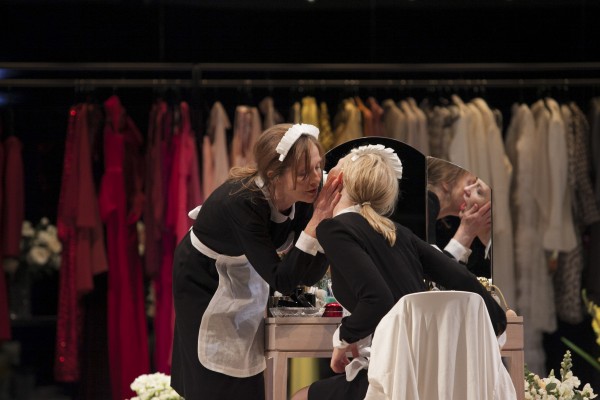
For his third stage adaptation in ten years, following 1994’s Death and the Maiden and 2011’s Carnage, Roman Polanski has created a marvelous, multilayered examination of the intricate nature of storytelling, consumed with aspects of doubling. David Ives’s Tony-nominated play, Venus in Fur, is about a cynical theater director, Thomas Novachek, who is auditioning actresses for the lead in his next production, a theatrical version of Leopold von Sacher-Masoch’s psychosexual novella Venus in Furs (which led to the term “sado-masochism”), itself a man’s retelling of his enslavement by a woman. In the film, as he is packing up and about to head home, Thomas (Matthieu Amalric) is interrupted by Vanda (Emmanuelle Seigner), a tall blond who at first appears ditzy and unprepared, practically begging him to let her audition even though she isn’t on the casting sheet, then slowly taking charge as she reveals an intimate knowledge not only of his script but of stagecraft as well. An at-first flummoxed Thomas becomes more and more intrigued as Vanda performs the role of Wanda von Dunayev and he reads the part of Severin von Kushemski, their actor-director relationship intertwining with that of the characters’ dangerous and erotic attraction.

Roman Polanski directs wife Emmanuelle Seigner in thrilling stage adaptation of Tony-winning play

Roman Polanski directs wife Emmanuelle Seigner in thrilling stage adaptation of Tony-nominated play

Ives’s English-language play, which earned Nina Arianda a Tony for Best Actress, was set in an office, but Polanski, who cowrote the screenplay with Ives, has moved this French version to an old theater (the Théâtre Récamier in Paris, rebuilt by designer Jean Rabasse) where a musical production of John Ford’s Stagecoach has recently taken place, with some of the props still onstage, including a rather phallic (and prickly) cactus. Polanski has masterfully used the machinations of cinema to expand on the play while also remaining true to its single setting. One of the world’s finest actors, Amalric, who looks more than a little like a younger Polanski, is spectacular as the pretentious Thomas, his expression-filled eyes and herky-jerky motion defining the evolution of his character’s fascination with Vanda, while Seigner, who is Polanski’s wife, is a dynamo of breathless erotic power and energy, seamlessly weaving in and out of different aspects of Vanda. Venus in Fur was shot in chronological order with one camera by cinematographer Paweł Edelman, who has photographed Polanski’s last five feature films, making it feel like the viewer is onstage, experiencing the events in real time. Alexandre Desplat’s complex, gorgeous score is a character unto itself, beginning with the outdoor establishing shot of the theater. The film also contains elements that recall such previous Polanski works as The Tenant, Bitter Moon, Tess, and The Fearless Vampire Killers, placing it firmly within his impressive canon. Polanski was handed Ives’s script at Cannes in 2012, and this screen version was then shown at Cannes for the 2013 festival, a whirlwind production that is echoed in Seigner’s performance; perhaps what’s most amazing is that it is only now finally getting its official U.S. theatrical release, beginning June 20 at the IFC Center and Lincoln Plaza.

ALEC GUINNESS 100: THE MAN IN THE WHITE SUIT

Goofy chemist Sid Stratton (Alec Guinness) is looking to revolutionize the textile industry in the Ealing classic THE MAN IN THE WHITE SUIT

THE MAN IN THE WHITE SUIT (Alexander Mackendrick, 1951)
Film Forum
209 West Houston St.
Friday, June 20, and Saturday, June 21, 2:20, 6:00, 9:45
Series continues through July 3
212-727-8110
www.filmforum.org

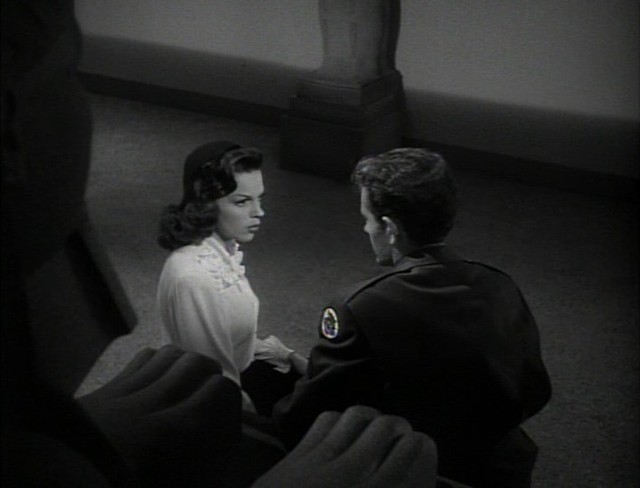
Alexander Mackendrick’s splendid 1951 Ealing comedy The Man in the White Suit is a hysterical Marxist fantasy about corporations, unions, and the working man that doesn’t feel dated in the least. Alec Guinness stars as Sidney Stratton, a brilliant scientist relegated to lower-class jobs at textile mills while he works feverishly on a secret product that he believes will revolutionize the industry — and the world. After being fired by Michael Corland (Michael Gough) at one factory, Sid goes over to Birnley’s, run by Alan Birnley (Cecil Parker, whose voiceover narration begins and ends the film). As Sid develops his groundbreaking product, he also develops a liking for Birnley’s daughter, Daphne (Joan Greenwood), who is preparing to marry Corland. Meanwhile, tough-talking union leader Bertha (Vida Hope) also takes a shine to the absentminded chemist, who soon finds himself on the run, chased by just about everyone he’s ever met, not understanding why they all are so against him. Guinness is at his goofy best as Sid, a loner obsessed with the challenge he has set for himself; his makeshift, Rube Goldberg-like chemistry sets are a riot, bubbling over with silly noises like they’re in a cartoon. But at the heart of the film lies some fascinating insight on the nature of big business that is still relevant today. Nominated for an Oscar for Best Screenplay, The Man in the White Suit is an extremely witty film, expertly directed (and cowritten) by Mackendrick, who would go on to make such other great pictures as The Ladykillers and Sweet Smell of Success. It’s easy to imagine that if someone in a textile mill today came up with a similar invention as Stratton’s, the same arguments against it would arise, suppressing progress in favor of personal interest and preservation. The Man in the White Suit is being shown June 20-21 at Film Forum in a double feature with Charles Crichton’s delightful heist comedy The Lavender Hill Mob — both in 35mm restorations — as part of “Alec Guinness 100,” celebrating Sir Alec’s centennial with screenings of more than two dozen of his films, including The Bridge on the River Kwai, The Ladykillers, Our Man in Havana, Lawrence of Arabia, The Scapegoat, The Prisoner, and the 1997 Special Edition of Star Wars Episode IV: A New Hope.

HUMAN RIGHTS WATCH FILM FESTIVAL: A QUIET INQUISITION

A QUIET INQUISITION

Dr. Carla Cerratao fights for women’s reproductive rights in Nicaragua in powerful documentary A QUIET INQUISITION

A QUIET INQUISITION (Alessandra Zeka & Holen Sabrina Kahn, 2014)
IFC Center
323 Sixth Ave. at West Third St.
Friday, June 20, 7:00
Festival runs through June 22 at the IFC Center and the Film Society of Lincoln Center
212-924-7771
www.quietinquisition.com
www.ff.hrw.org

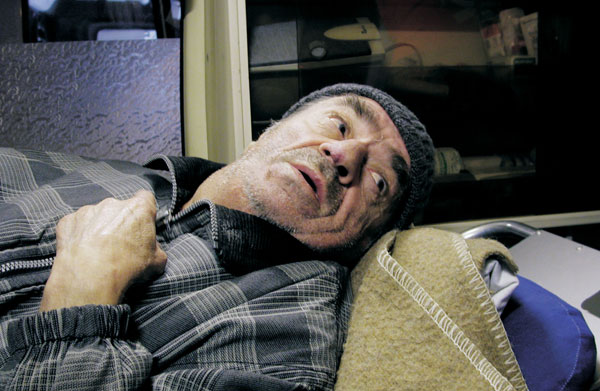
Alessandra Zeka and Holen Sabrina Kahn delve into the very real and personal impact of Nicaragua’s total ban on abortion as seen through the eyes of a doctor forced to comply with the law in the eye-opening documentary A Quiet Inquisition. In Hospital Aleman Nicaraguense, Dr. Carla Cerrato must regularly deal with patients, many of whom are teenagers, whose pregnancies could severely harm or even kill them. But since 2006, when former president Daniel Ortega of the Sandinista National Liberation Front ran for reelection in Nicaragua, all kinds of abortions are illegal, including cases involving rape, incest, and the health of the mother and fetus. The film shows Dr. Cerrato counseling pregnant girls, attempting to come up with options that can save their lives through what are known as therapeutic abortions, but she is often thwarted by her colleagues. They refuse to carry out her orders even when the live birth of the baby is considered impossible and the death of the mother a certainty, fearing their own prosecution and imprisonment. “We are at a crossroads because of a law that impedes us from inducing a pregnancy or making a determination that can prevent further complications in the mother,” says Dr. Zamora, another OBGYN at the public hospital. He later adds, “I have fear too. My wife is pregnant. If any of these complications happen to her, as a doctor my hands would be tied. But as a person I would decide to act on it differently.” While Dr. Cerrato applauds the Sandinista revolution for helping her and other women become doctors in the first place, she now blames President Ortega and the FSLN for making deals with the Catholic Church, trading votes for the rights of women to control their own bodies. As the title of the film implies, Dr. Cerrato, a calm, good-natured woman with a realistic perspective on the situation, is fighting back in a quiet way; anything louder is liable to place her career in jeopardy.

Brave women share their harrowing stories in Human Rights Watch Film Festival world premiere

Brave women share their harrowing stories in Human Rights Watch Film Festival world premiere

In fact, she’s probably taking a huge chance by appearing in the documentary at all. Presented with Cinema Tropical, A Quiet Inquisition is having its world premiere in the “Women’s Rights and Children’s Rights” section of the 2014 Human Rights Watch Film Festival, screening June 20 at 7:00 at the IFC Center and followed by a panel discussion with director, producer, and cinematographer Zeka, director, producer, and editor Kahn, and Dr. Cerrato. The twenty-second HRWFF runs through June 22 at Lincoln Center, the IFC Center, and the Times Center and comprises twenty-two films that explore such other themes as “LGBT Rights,” “Human Rights Defenders, Icons, and Villains,” “Armed Conflict and the Arab Spring,” and “Migrants’ Rights” through such works as Richie Mehta’s Siddarth, blair dorosh-walther’s Out in the Night, Edet Belzberg’s Watchers of the Sky, and Zeina Daccache’s Scheherazade’s Diary.