Who: Directors Billy Wilder, Woody Allen, Martin Ritt, Otto Preminger, Fred Zinnemann, Robert Wise, Samuel Fuller, and others
What: “Black & White ’Scope: American Cinema”
Where: BAMcinématek, BAM Rose Cinemas, 30 Lafayette Ave. between Ashland Pl. & St. Felix St., 718-636-4100
When: February 27 – March 19
Why: BAMcinématek is presenting twenty-one CinemaScope films shot in glorious black-and-white by such master cinematographers as Gordon Willis, James Wong Howe, Eugen Schüfftan, and Conrad Hall, from such classics as The Apartment, Manhattan, The Hustler, In Cold Blood, The Elephant Man, The Longest Day, and The Three Faces of Eve to such lesser-known fare as The Victors, Forty Guns, China Gate, No Down Payment — featuring Tony Randall as a used car salesman — and the unforgettable (for all the wrong reasons) Rashomom remake The Outrage, starring Paul Newman, Laurence Harvey, Claire Bloom, Edward G. Robinson, and William Shatner.
this week in film and television
CULTUREMART 2015

Sara and Reid Farrington go behind the scenes of the making of a classic in CASABLANCABOX (photo by Sara and Reid Farrington)
HERE
145 Sixth Ave. at Dominick St.
March 4-14, $15
212-352-3101
www.here.org
HERE’s annual winter performance festival, now in its fourteenth year, highlights cutting-edge works-in-progress from a wide-ranging group of artists who are either current or former participants in the HERE Artist Residency Program (HARP), which commissions hybrid presentations in order “to not only grow innovative artistic work, but also [to] give artists the awareness and skills — in areas such as audience relations, budgeting, grantwriting, and touring — they need to continue to grow their careers.” This year features a dozen multidisciplinary workshop performances, beginning March 4-5 with sound designer Christina Campanella and composer Jim Dawson’s Lighthouse 40° N, 73° W, a continuous geographic audio installation in which the audience listens in on headphones to a twenty-five-minute loop, and Sara and Reid Farrington’s CasablancaBox, in which the husband-and-wife duo combine live actors and film clips that go behind the scenes of the making of the 1942 movie; Farrington has previously reimagined such films as The Passion of Joan of Arc, Rope, and multiple versions of A Christmas Carol in his unique, mesmerizing style. On March 6-7 at 7:00, Paul Pinto’s Thomas Paine in Violence explores the American patriot during the last days of his life and the start of his afterlife, with music performed by vocalist Joan La Barbara and the ensemble Ne(x)tworks. On March 7-8 at 8:30, Sean Donovan and Sebastián Calderón Bentin turn to Alain Renais’s Last Year at Marienbad and Luis Buñuel’s The Exterminating Angel for Abbadon, in which a social gathering delves into the nature of class structure; Abbadon is on a shared bill with Amanda Szeglowski/cakeface’s Stairway to Stardom, a piece of dance theater that takes its inspiration from the public access amateur talent television show of the same name.

Hai-Ting Chinn’s SCIENCE FAIR takes viewers on a multimedia operatic journey (photo by Benjamin Heller)
On March 9-10, you can see a double feature of Hai-Ting Chinn’s multimedia opera, Science Fair, with music by Matthew Schickele and live piano by Erika Switzer, and The Emperor and the Queen’s Parisian Weekend, with music by Kamala Sankaram and a libretto by Pete McCabe, directed by HERE cofounder Tim Maner. March 10-11 pairs Matt Marks and Paul Peers’s Mata Hari, an opera-theater piece about the last days of the renowned WWI spy, with Nick Brooke’s Psychic Driving, which immerses the audience in surveillance and CIA brainwashing. From March 12 to 14, Jessica Scott’s Ship of Fools uses music, puppets, and movement to examine particular women throughout history while looking at who is in control of the future; it’s on a shared bill with Robin Frohardt’s Fitzcardboardaldo, a cinematic cardboard tribute to Werner Herzog’s Fitzcarraldo, along with The Corrugation of Dreams, an homage to Les Blank’s Burden of Dreams, about the making of the Herzog film. CULTUREMART concludes March 13-14 with HERE artistic director Kristin Marting and Robert Lyons’s Idiot, an exploration of Dostoevsky protagonist Prince Myshkin using text, video, and dance. The festival also includes a trio of post-performance talks, “Continue the Conversation,” with “Soundscapes” on March 6 after the 7:00 Lighthouse show, “Variants of Video Integration” on March 8 following the 8:30 show, and “Playing with Operatic Form” on March 10 after the 8:30 show. Tickets for all productions are $15 except for Lighthouse 40° N, 73° W, for which admission is $5; a $60 OFF-OFFten Club membership allows you to see all shows for $5 each and also comes with four tickets to be used anytime during the season in addition to four glasses of wine from the café.
FAREWELL TO HOLLYWOOD: THE LIFE AND DEATH OF REGGIE NICHOLSON

Reggie Nicholson and Henry Corra codirected documentary about Reggie’s inspirational battle with cancer
FAREWELL TO HOLLYWOOD: THE LIFE AND DEATH OF REGGIE NICHOLSON (Henry Corra & Reggie Nicholson, 2015)
Cinema Village
22 East 12th St. between University Pl. & Fifth Ave.
Opens Wednesday, February 25
212-924-3363
www.farewelltohollywood.com
www.cinemavillage.com
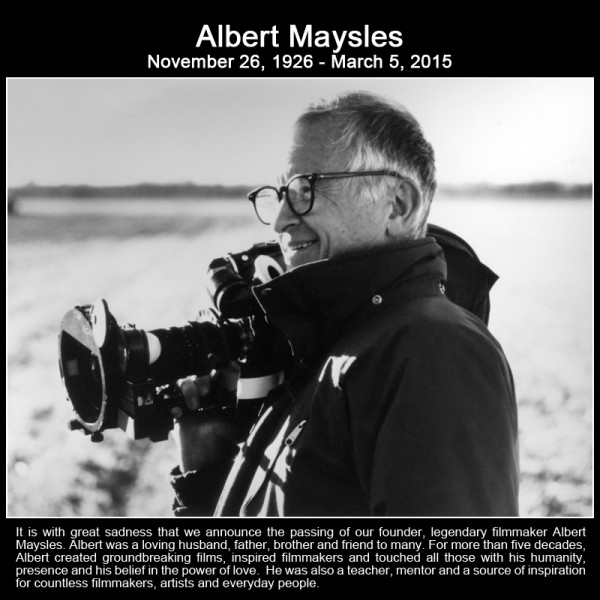
An unsettling feeling of creepiness hovers over Farewell to Hollywood, the controversial documentary codirected by filmmaker Henry Corra and teenager Regina Diane “Reggie” Nicholson, who wanted to complete one full-length work before she died of cancer. Corra, whose mentor was David Maysles — when he was twenty-two, Corra saw Grey Gardens, then went to New York and asked the Maysles brothers for a job and was hired on the spot — met Nicholson at a film festival in 2010 and was so taken by her story, he decided to collaborate with her on her dream project. Corra and Nicholson spent most of the next twenty-one months together, compiling more than four hundred hours of footage as Reggie had tests done, got into a nasty battle with her parents, and watched films that inspired her, including Apocalypse Now, The Graduate, 2001: A Space Odyssey, and, most importantly, Pulp Fiction; Reggie was particularly obsessed with Uma Thurman’s character in Quentin Tarantino’s 1994 Oscar-nominated flick. But as is his style in such previous films as George, Jack and The Disappearance of McKinley Nolan, Corra inserts himself into the story, in this case becoming Reggie’s primary caretaker as the cancer begins to ravage her body and she insists on keeping the camera running. It’s all part of what Corra calls “living cinema,” becoming involved in the lives of his subjects, not merely being an objective viewer, and it’s clear that at least some of Reggie’s often ugly battle with her parents is a result of her relationship with Corra. Although it is not sexual in any way, Corra does admit to loving Reggie, and vice versa, something that Reggie’s father finds inappropriate and leads to Corra’s banishment from the Nicholson home twice, which means he’s unable to film Reggie for extended periods of time. Much has been argued about whether Corra overstepped the ethical bounds of documentary filmmaking — he staunchly defends his approach, claiming he’s making art, not mere entertainment, and he doesn’t even like the word “documentary” — but there’s something chilling in this comment he made to Indiewire in an October 2014 interview: “I cared about [Reggie] so much and I knew she was going to die that in many ways I was no different than the mother. That’s the thing most people don’t pick up on, that me and the mother are very similar in this movie.”
There is no denying that Farewell to Hollywood depicts Reggie, who made the short Glimpse of Horizon in 2010, as a brave, bold teen who looks death square in the face and is determined to get as much out of life as she possibly can in the limited time she has. The camera loves her like it’s a member of her family. There are poignant, powerful moments throughout the film, which was produced by Lance Armstrong and his Livestrong foundation, involving Reggie, Corra, and the Nicholsons, but it’s hard not to think that Corra is responsible for much of that drama. He has cited such influences as Truman Capote’s In Cold Blood, in which the author becomes part of the story of two mass murderers; Cindy Sherman, a wildly successful photographer who has built a career out of taking pictures of herself in a multitude of costumes and situations that blur the lines between fiction and nonfiction; and David and Albert Maysles, who allowed themselves to be seen and heard in their documentaries. Corra was also likely impacted by the loss of his brother, Tom, a musician who died of cancer in 1998 at the age of forty-four. Corra has professed to be a character-based storyteller, and there are certainly well-defined, fascinating characters in Farewell to Hollywood, but since one of them is him, and his involvement appears to have had a direct impact on the life of the Nicholson family, something seems seriously amiss here. Corra, who is in his fifties, might not be manipulating the action on purpose — he clearly cares deeply about Reggie — but even the film’s U.S. theatrical release date feels like it’s all part of a master plan: Farewell to Hollywood opens on February 25 (at Cinema Village in New York City), which just happens to be Reggie’s birthday; had she lived, she would have been twenty-two.
CHARLES LAUGHTON
Who: Charles Laughton
What: Three-week retrospective
Where: Film Forum, 209 West Houston St., 212-727-8110
When: Daily through February 26
Why: We might have learned just a little too much about English stage and screen actor and director Charles Laughton from Scotty Bowers’s 2012 tell all, Full Service: My Adventures in Hollywood and the Secret Sex Lives of the Stars, so it’s probably best to keep what we know about Laughton to his legendary career, which is being celebrated at Film Forum with a wide-ranging retrospective through February 26. The series continues Monday night with E. A. Dupont’s 1929 silent Piccadilly (with live piano accompaniment by Steve Sterner), in which Laughton has a cameo as a nightclub diner, followed on Tuesday by Lewis Milestone’s Arch of Triumph, with Charles Boyer and Ingrid Bergman, and a double feature of Henry Koster’s romantic comedy It Started with Eve and Richard Wallace’s theater-set Because of Him. Wednesday pairs Robert Z. Leonard’s crime film The Bribe, which stars Laughton and Robert Taylor, Ava Gardner, and Vincent Price, with Burgess Meredith’s The Man on the Eiffel Tower, in which Laughton plays George Simenon’s Inspector Maigret. The festival concludes on Thursday with Laughton as Nero in Cecil B. DeMille’s 1932 epic The Sign of the Cross, as South Carolina senator Seabright Cooley in Otto Preminger’s Advise and Consent, Laughton’s last film, and his lone solo directorial effort, the gripping thriller The Night of the Hunter.
DRUNKTOWN’S FINEST
DRUNKTOWN’S FINEST (Sydney Freeland, 2014)
Quad Cinema
34 West 13th St.
Opens Friday, February 20
212-255-2243
www.quadcinema.com
www.drunktownsfinest.com
Award-winning film festival favorite Drunktown’s Finest is a refreshingly original look inside life on a Navajo reservation in New Mexico. “They say this land isn’t a place to live; it’s a place to leave. Then why do people stay?” asks Nizhoni Smiles (MorningStar Angeline) at the beginning of writer-director Sydney Freeland’s debut feature, which opens with a shot of a town that could be any town. The story follows three teenagers trying to improve their lot by getting off the reservation. Sick Boy (Jeremiah Bitsui), who is about to have a child with Angela Maryboy (Elizabeth Frances), is trying to stay out of trouble the weekend before joining the army. Felixia (Carmen Moore) is a transsexual model attempting to jump-start her career by appearing in a Women of the Navajo calendar. And Nizhoni decides to track down her birth family before leaving to go to college in Michigan. The lives of the three protagonists intersect in unexpected ways as outside forces — and questionable decisions — complicate their chosen paths.
Drunktown’s Finest, which boasts Robert Redford as executive producer, might deal specifically with the plight of young Native Americans, but it works because of the universality of the emotions and desires it explores. Freeland lets the stories play out at a natural pace, not forcing any of the issues it raises, which include adoption, child abuse, crime, alcoholism, violence, and gender. The three leads all offer cogent portraits of their complex characters, making their plights sympathetic, believable, and relatable. Films like Drunktown’s Finest often get bogged down in oversentimentality and heavy messages, but Freeland’s smart, subtle script lifts it well above such narrow vanity projects. More than eight years in the making, Drunktown’s Finest was shot in fifteen days and completed via a successful Kickstarter campaign. The soundtrack includes several songs by the 1960s Navajo Nation band the Wingate Valley Boys, beginning and ending with their intoxicating, powerful “Beggar to a King,” a worthy metaphor for this gentle, bittersweet film and its characters’ struggles.
THE IMITATION GAME & THE THEORY OF EVERYTHING
THE IMITATION GAME (Morten Tyldum, 2014)
In theaters now
www.theimitationgamemovie.com

THE THEORY OF EVERYTHING (James Marsh, 2014)
In theaters now
www.focusfeatures.com
This year’s heated Oscar race features a pair of fact-based British films about two of the most intelligent and important men of the last hundred years, but their life stories couldn’t be more different. The Theory of Everything follows Oxford-born theoretical physicist and cosmologist Stephen Hawking (Eddie Redmayne) as he falls in love with linguist Jane Wilde (Felicity Jones) and is stricken with motor neuron disease while at Cambridge; at the age of twenty-one he is given two years to live, but more than fifty years later he is still alive and vibrant at seventy-three, celebrated far and wide as the smartest human being on the planet. On the other hand, The Imitation Game is about London-born mathematician Alan Turing (Benedict Cumberbatch), who died in shame and obscurity in 1954 at the age of forty-one; it would be more than fifty years before his remarkable work for the British government during WWII would be revealed to the public. In both films, the protagonist is on a scientific quest; in The Imitation Game, Turing is trying to break the seemingly unbreakable code of the Nazis’ Enigma machine, while Hawking is after nothing less than a single mathematical equation that can explain the vast universe. Both films were based on recent books, The Imitation Game on Andrew Hodges’s Alan Turing: The Enigma, and The Theory of Everything on Travelling to Infinity: My Life with Stephen by Jane Hawking. Both films feature extensive scenes filmed on location where some of the action originally took place, The Imitation Game in Bletchley Park and The Theory of Everything at Cambridge.
In each film, the genius is supported by the love and friendship of a smart, beautiful woman (Jones as Wilde in Theory, Keira Knightley as Joan Clarke in Imitation), without whom he would probably have never achieved what he did. The Imitation Game plays with the truth more than The Theory of Everything, at least in part because there is much more information available about Stephen and Jane, through books, interviews, public appearances, etc., and not just because the two of them participated in the making of the film (screenwriter Graham Moore spoke extensively with Ms. Hawking, but living and dead subjects have been known to tell a fib or two about themselves). In comparison, Turing’s work was kept secret for half a century, and there is not a cadre of people still around who knew him well. At the Oscars, the films will compete for Best Actor (Cumberbatch, Redmayne), Best Original Score (Alexandre Desplat, Jóhann Jóhannsson), Best Adapted Screenplay (Moore, Anthony McCarten), and Best Picture. In addition, Jones is nominated for Best Actress, Knightley for Best Supporting Actress, and The Imitation Game is also up for Best Director (Morten Tyldum), Best Production Design (Maria Djurkovic and Tatiana Macdonald), and Best Film Editing (William Goldenberg). At the BAFTAs, The Theory of Everything and Redmayne beat out The Imitation Game and Cumberbatch for Outstanding British Film, Adapted Screenplay, and Leading Actor.

Stephen Hawking (Eddie Redmayne) makes sure to spend time with his family in THE THEORY OF EVERYTHING
Both films were made by directors who are not quite household names, and neither of whom is up for an Academy Award: James Marsh (The Theory of Everything) is an accomplished British documentarian who won an Oscar for Man on Wire and also made the little-seen thriller Shadow Dancer and the popular doc Project Nim, while Tyldum (The Imitation Game) is a Norwegian director whose previous films include the action thriller Headhunters and Buddy, about a danger-loving Oslo twentysomething. While The Theory of Everything plays out chronologically, following Stephen Hawking from his Cambridge days to the publication of his seminal 1988 book, A Brief History of Time: From the Big Bang to Black Holes and beyond, The Imitation Game is structured around the arrest of Turing for being a homosexual, telling his story to a detective (Rory Kinnear) who thinks Turing is hiding something. They’re both extremely well made, entertaining films with extraordinary lead performances and superb supporting casts, but the edge goes to The Imitation Game, which holds more surprises and mystery than the melodramatic Theory, which pulls harder at the heartstrings, though without overdoing it. Imitation is a multifaceted examination of class, society, science, gender, sexuality, and war, while Theory is a fairly straightforward romance, with science as the backdrop. Each film depicts its main character as a kind of superhero, at intellectual levels far surpassing that of ordinary men, but it’s perhaps most fascinating watching how they interact with others; Turing is deadly serious, often cold and callous, so driven that he has no time to consider others’ feelings, preferring to work alone in his designated group, while Hawking revels in the love of his wife and children and is kind and thoughtful of everyone he meets, understanding that he is just one part of an enormous universe. Regardless of which film wins more awards, it’s been both awe-inspiring and heartbreaking getting to know each man onscreen, two geniuses who changed the world but in many ways are polar opposites. But for those keeping score at home, Boyhood beat them both for Best Film at the BAFTAs.
FIXATION: PANDORA’S BOX
CABARET CINEMA: PANDORA’S BOX (DIE BÜCHSE DER PANDORA) (G. W. Pabst, 1929)
Rubin Museum of Art
150 West 17th St. at Seventh Ave.
Friday, February 20, $10, 9:30
212-620-5000
www.rmanyc.org

Upadana, or attachment is one of the three Buddhist poisons, along with aversion and ignorance. The Rubin Museum’s latest Brainwave series, “The Attachment Trap,” featuring film screenings and discussions and intimate talks that pair scientists with performers, explores the notion of the attachment trap, which it describes as “a metaphor for a core Buddhist principle: by holding tightly to external sources of happiness, we prevent ourselves from being truly free.” Running through April, the series includes Jake Gyllenhaal and neuroscientist Moran Cerf talking about “The Actor’s Dream,” writer Kevin Sessums and neuroscientist Carl Hart examining “I Left It on the Mountain,” and game designer Eric Zimmerman and neuroscientist John Krakauer attempting to answer the question “Is Life a Game?” Another key component of the Brainwave festival is the Friday-night film program, this year titled “Fixation,” consisting of movies that deal with attachment, which can also be interpreted as desire or greed. The series began, appropriately enough, with Brian De Palma’s Obsession and continues February 20 with G. W. Pabst’s 1929 silent Weimar classic, Pandora’s Box. Based on plays by Frank Wedekind, Pandora’s Box stars Kansas-born Louise Brooks as Lulu, a good-time girl who loves drinking, dancing, and the attention of men. Lulu, in a trend-setting hair bob and bangs, seemingly just can’t say no, whether it’s as the mistress of married newspaper publisher Dr. Ludwig Schön (Fritz Kortner) or her aging first patron, the father-figure Schigolch (Carl Goetz). Schön’s grown son, Alwa (Francis Lederer), and Countess Augusta Geschwitz (Alice Roberts) also have taken quite a fancy to Lulu. Even after Dr. Schön gets engaged to the well-connected socialite Charlotte Marie Adelaide von Zarnikow (Daisy D’ora), he can’t stay away from Lulu, despite knowing the harm that could bring to his reputation and his future. He helps finance and publicize a variety show that Lulu joins through trapeze artist Rodrigo Quast (Krafft-Raschig), a friend of Schigolch’s. But when Dr. Schön brings his fiancée to see the revue, jealousy takes center stage, and things starting going downhill for Lulu in myriad ways, including murder, blackmail, prison, and sex slavery.
Brooks, a former Ziegfeld dancer who also starred in Pabst’s Diary of a Lost Girl, is riveting as Lulu, a role that almost went to Marlene Dietrich, who ended up playing the lascivious Lola in Josef von Sternberg’s The Blue Angel instead, a film with similar themes. Brooks practically floats through Pandora’s Box, as nearly every character puts her up on a pedestal, desiring her in one way or another — most often, of course, sexually. But she is no mere beautiful angel whose life spirals out of control because of others, nor is she a devious devil out to destroy all in her path; however, she does make her bed and is ultimately forced to lie in it, as most clearly evidenced by her outrageously sly smile upon getting caught in flagrante backstage with Dr. Schön by his fiancée. (The revue scene is a staggering tour de force of acting and directing, with Sigfried Arno as the haggard stage manager, providing necessary comic relief.) The relationship between Dr. Schön and Lulu is reminiscent of the ill-fated romance between Charles Foster Kane (Orson Welles) and Susan Alexander (Dorothy Comingore) in Welles’s Citizen Kane, which might not be mere coincidence, as Kane coscreenwriter Herman Mankiewicz escorted an eighteen-year-old Brooks to see No, No Nanette on Broadway in 1925 and, after he became alcoholically incapacitated, Brooks ghost-wrote his New York Times review, a scene that also worked its way into Kane. More than eighty-five years after its release, Pandora’s Box is still a racy, surprising cautionary tale well ahead of its time, centered by a legendary performance by Brooks, one that is easy to get attached to; Brooks made her last onscreen appearance in the 1938 John Wayne Western Overland Stage Raiders and, after trying her hand at a number of more menial jobs, became a successful film writer, with her works collected in the well-received 1982 book Lulu in Hollywood. The 9:30 Cabaret Cinema screening of Pandora’s Box at the Rubin will be introduced by documentarian Lana Wilson (After Tiller); tickets are $10, but admission to the museum is free starting at 6:00, so get there early to check out such current exhibits as “Witness at a Crossroads: Photographer Marc Riboud in Asia” and “The All-Knowing Buddha: A Secret Guide.”