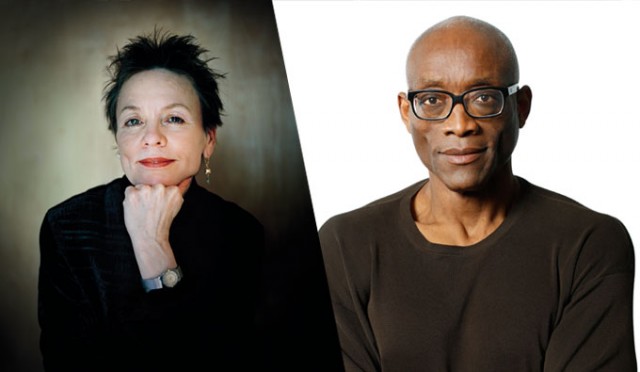
Laurie Anderson and Bill T. Jones will join forces for third annual Live Ideas festival at NYLA
New York Live Arts
219 West 19th St.
April 15-19
212-691-6500
newyorklivearts.org
In April 2013, New York Live Arts held its inaugural Live Ideas multidisciplinary festival, celebrating the life and career of Oliver Sachs through dance, music, film, theater, panel discussions, and scientific investigation, with Sachs participating in multiple events. Last year, Live Ideas paid tribute to writer James Baldwin, whom NYLA artistic director Bill T. Jones called “another multifaceted generator of and magnet for ideas.” This year, NYLA has handed the reins over to Laurie Anderson, who is curating the third Live Ideas festival, “S K Y – Force and Wisdom in America Today.” From April 15 to 19, more than two dozen programs will examine social, political, artistic, and environmental issues, taking stock of the state of the country in the twenty-first century. The free Noon-Time Talk Series consists of “Timothy Ferris: Beyond Belief”; “Arvo Pärt, Journeys in Silence,” with Anderson, Peter Bouteneff, James Jordan, and William Robin; “Marjorie Morrison: Proactive Military Mental Health,” with Marjorie Morrison, Mateo H. Romero, and Joseph Mauricio; the multimedia presentation “Vito Acconci: WORD/ACT/SIGN/DE-SIGN”; and the three-hour installation “Lou Reed: DRONES,” introduced and operated by Reed’s longtime guitar tech, Stewart Hurwood. Every evening will conclude with the free “Blue Room” DJ party either in the NYLA lobby or G Lounge right down the street, with King Britt, Drew Daniel, Glasser, Yuka C. Honda, and Jonathan Toubin and Geo Wyeth.
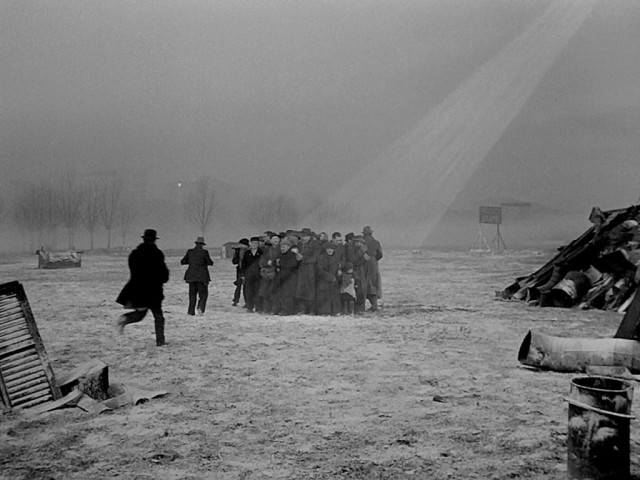
Vittorio De Sica’s MIRACLE IN MILAN will help shed some light on NYLA Live Ideas festival
Film will play an important role, with Robert Milazzo introducing Chris Marker’s seminal La Jetée; Julian Schnabel’s Before Night Falls, followed by a conversation with Anderson and Schnabel; Vittorio De Sica’s Miracle in Milan; Dorian Supin’s 24 Preludes for a Fugue, introduced by Bouteneff; and a selection of Anderson’s films, including Hidden Inside Mountains, What You Mean We?, Carmen, and excerpts from The Personal Service Announcements, with Anderson on hand to talk about the works. Among the live musical events are Eyvind Kang’s “Time Medicine,” with Kang and Anderson; John Zorn’s “Music for Piano, Strings and Percussion,” with “In the Hall of Mirrors” performed by pianist Steve Gosling, bassist Greg Cohen, and drummer Tyshawn Sorey and “CERBERUS” featuring Kinan Idnawi on oud, Erik Friedlander on cello, Cohen on bass, and Cyro Baptista on percussion; a pop-up show by the Symptoms (John Colpitts, Tony Diodore, and Anderson); a concert of chamber works by Pärt including Solfeggio, Da Pacem, Fratres, Spiegel im Spiegel, and Für Alina; and a two-part evening starting with a performance by Reverend Billy & the Stop Shopping Choir and ending with Hal Willner and Chloe Webb’s “Doing the Things We Want To,” a tribute to the late Reed and Kathy Acker.
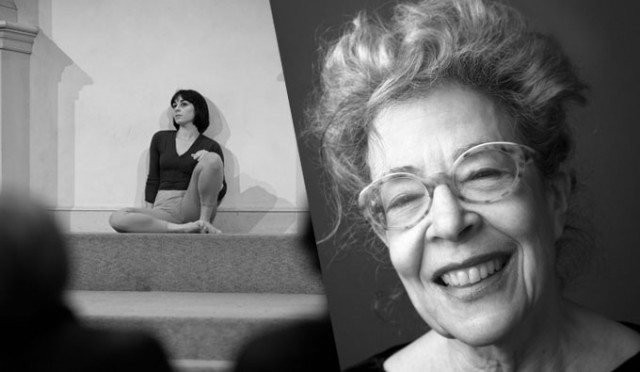
Beth Gill and Deborah Hay will present new works on April 15 at multidisciplinary NYLA festival
Dance, NYLA’s bread and butter, will be represented by New York choreographer Beth Gill’s specially commissioned Portrait Study, paired with an advance look at legendary experimental choreographer Deborah Hay and Anderson’s Figure a Sea. The former is built around short autobiographical solos by such dancers as Neal Beasley, Eleanor Hullihan, John Jasperse, Jodi Melnick, Stuart Singer, David Thomson, Meg Weeks, and Emily Wexler, set to live music by Eliot Krimsky and Ryan Seaton, with a transitioning lighting and color design by Thomas Dunn. The latter is a sneak peek at Hay and Anderson’s evening-length piece for the Cullberg Ballet, premiering in Stockholm in September. There’s a whole lot to take in at the 2015 Live Ideas festival, but Anderson and Jones will get right to the point — and explain how they came up with the name “S K Y – Force and Wisdom in America Today” — in their opening-day discussion, aptly titled “Where Are We Going?” To Jones, the sky is “a multidimensional symbol of aspiration, vastness, change, threat, and now information storage,” while Anderson will explore why we live in “a society that is deeply divided, unjust, and often toxic.” And if all of that isn’t wide ranging enough for you, on April 17, Master Ren will lead a Taijiquan martial arts demonstration, accompanied by Lou Reed’s DRONES.

 The related concepts of time and reality wind through Olivier Assayas’s beautifully poetic, melancholy Clouds of Sils Maria much like actual snakelike clouds slither through the twisting Maloja Pass in the Swiss Alps, as life imitates art and vice versa. Juliette Binoche stars as Maria Enders, a famous French actress who is on her way to Zurich to accept an award for her mentor, playwright Wilhelm Melchior, who eschews such mundane ceremonies. But while en route, Maria and her personal assistant, the extremely attentive and capable Valentine (Kristen Stewart), learn that Wilhelm has suddenly and unexpectedly passed away, and Maria considers turning back, especially when she later finds out that Henryk Wald (Hanns Zischler), an old nemesis, will be there to pay homage to Wilhelm as well, but she decides to go ahead after all. At a cocktail party, Maria meets with hot director Klaus Diesterweg (Lars Eidinger), who is preparing a new stage production of Wilhelm and Maria’s first big hit, The Maloja Snake, but this time Maria would play Helena, an older woman obsessed with ambitious eighteen-year-old Sigrid, the role she originally performed twenty years earlier, to great acclaim. Klaus is planning to cast Lindsay Lohan-like troublemaking star and walking tabloid headline Jo-Ann Ellis (Chloë Grace Moretz) as Sigrid, which does not thrill Maria as her past and present meld together in an almost dreamlike narrative punctuated by the music of Handel and cinematographer Yorick Le Saux’s gorgeous shots of vast mountain landscapes.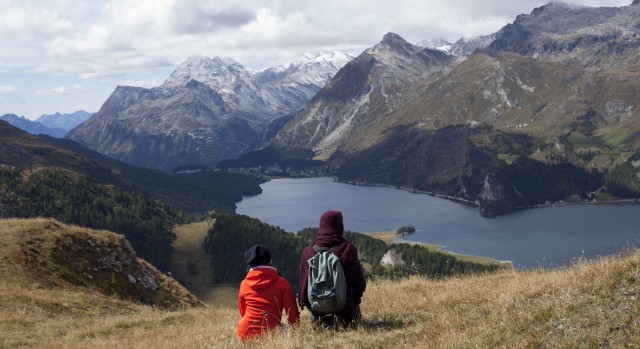
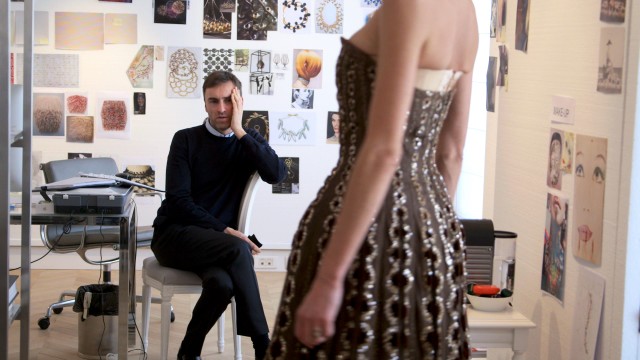
 After working on two previous fashion-related films, Diana Vreeland: The Eye Has to Travel and Valentino: The Last Emperor, Frédéric Tcheng makes his solo directorial debut with Dior and I. In April 2012, fashion designer Raf Simons was named the new creative director of Christian Dior, bringing along his right-hand man, Pieter Mulier. Tcheng goes behind the scenes to follow Simons as he prepares his first-ever haute couture collection, which is due in a mere two months. Tcheng zooms in on the Belgian designer’s working methods and general anxiety as he takes over at the legendary company, developing important relationships with Dior CEO Sidney Toledano, première atelier flou Florence Chehet, première atelier tailleur Monique Bailly, the seamstresses, the models, and other employees. Simons chooses to pay homage to Dior’s past with his new collection while attempting to rid himself of the designation of “minimalist designer.” One of his most fascinating directions is attempting to incorporate the work of artist Sterling Ruby into his designs. All the while he is haunted by the ghost of company founder and New Look creator Christian Dior, who is shown by Tcheng in archival footage accompanied by a voice-over of Omar Berrada reading from Dior’s memoirs. Dior and I is a slight but affecting race against time, as one man in the present honors the past while laying the groundwork for a bright future. Dior and I opens April 10 at Film Forum and the Film Society of Lincoln Center, with Tcheng and Berrada appearing at Film Forum for the 7:30 show April 10 and the 5:20 show April 11; Tcheng will also be at the Walter Reade Theater for a Q&A following the 7:00 show April 11.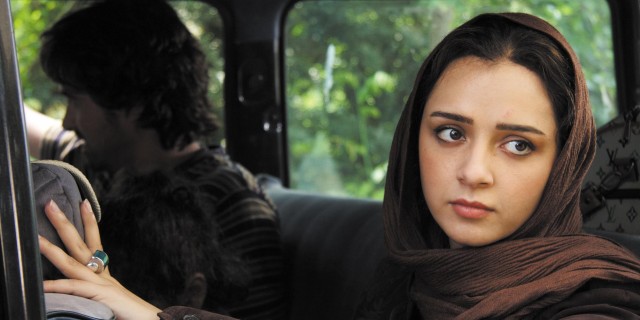
 “A bitter ending is better than an endless bitterness,” Ahmad (Shahab Hosseini) tells Elly (Taraneh Alidoosti) in Asghar Farhadi’s shattering, masterful 2009 drama, About Elly. Iranian writer-director Farhadi, whose A Separation was named Best Foreign Language Film at the 2012 Oscars — the film also earned him an Academy Award nomination for Best Original Screenplay — won the Silver Bear for Best Director at the 2009 Berlinale for About Elly, which also nabbed Best Picture at the 2009 Tribeca Film Festival. But rights issues have held up its U.S. theatrical release, depriving American audiences of a chance to see the work. Now that the film is finally opening here, beginning a two-week run at Film Forum on April 8 in a new 35mm print, the story of the film’s distribution is no longer bitter, but the searing tale itself couldn’t be more harrowingly acerbic. A group of upper-middle-class law school friends have come to a Caspian Sea villa from Tehran for a getaway weekend organized by Sepideh (Golshifteh Farahani), who has brought along Elly, her daughter’s teacher, as a potential love match for the recently divorced Ahmad, who has been living in Germany. Because of a scheduling snafu, they have to stay in a seaside house in desperate need of renovation, but the friends just go with the flow, singing and dancing and making the best of the awkward situation. But the playful atmosphere turns sour when tragedy strikes, leaving everyone to reexamine who they are.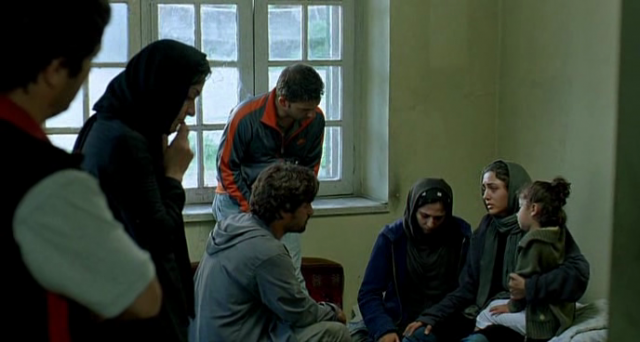


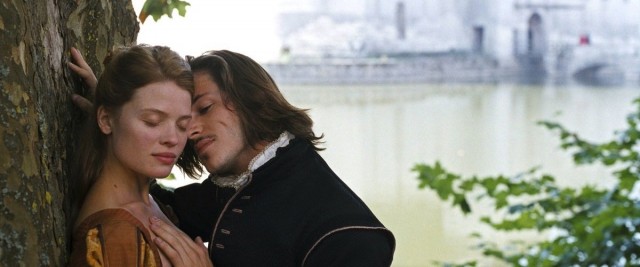
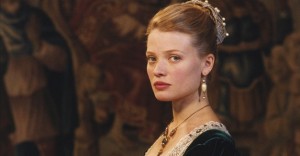
 In Bertrand Tavernier’s sweeping romantic epic, young and beautiful Marie de Mézières (Mélanie Thierry) has a big problem: It seems that every man she meets falls in love with her. Already in a passionate relationship with the heroic Henri de Guise (Gaspard Ulliel), a leader of the Catholics against the Protestant Huguenots in the French Wars of Religion of the 1560s, Marie is suddenly part of a shady deal between her father (Philippe Magnan) and the Duke de Montpensier (Michel Vuillermoz), marrying her off to the rather uninspiring though steadfast Prince Philippe de Montpensier (Grégoire Leprince-Ringuet), who warms to his bride much quicker than she to him. Returning to the battlefield, Philippe asks his mentor, the older and wiser Count de Chabannes (Lambert Wilson), to teach Marie in the ways of the court to prepare her for meeting Catherine de Medici, but even such a solid, moralistic man as Chabannes — who deserted from the army after killing a peasant family, supposedly in the name of his lord and saviour — cannot prevent himself from succumbing to the many charms of his unaware charge. And when she meets the wild and unpredictable Duke d’Anjou (Raphaël Personnaz), the king’s brother is smitten as well. But through it all, Marie, a modern woman who wants to learn to write and make her own choices, remains fiercely drawn to Henri, a forbidden love that threatens dire consequences.