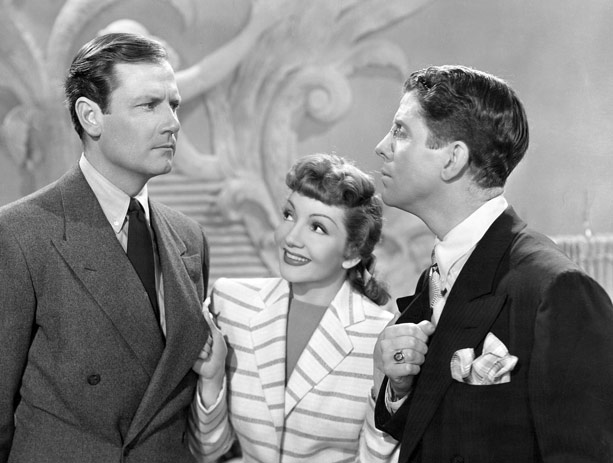
Joel McCrea, Claudette Colbert, and Rudy Vallée are caught up in a romantic triangle in Preston Sturges’s THE PALM BEACH STORY
THE PALM BEACH STORY (Preston Sturges, 1942)
Bryant Park
Sixth Ave. between 40th & 42nd Sts.
Monday, July 11, free, sunset
Festival continues Mondays through August 22
www.bryantpark.org
 Writer-director Preston Sturges was on quite a roll in the early 1940s, making a string of memorable pictures that included The Great McGinty, Christmas in July, The Lady Eve, Sullivan’s Travels, The Miracle of Morgan’s Creek, and Hail the Conquering Hero. In the midst of that amazing run is The Palm Beach Story, one of the craziest of the classic screwball comedies. Running out of money, married couple Tom (Joel McCrea) and Geraldine (Claudette Colbert) Jeffers are preparing to leave their ritzy Park Ave. apartment until a straight-talking, shriveled old wienie king (Robert Dudley) hands Gerry a wad of cash so she doesn’t have to move out. She pays off their many bills, but Tom is suspicious of how she got the money, demanding to know if any sex was involved, a rather risqué question for a 1942 Hays Code-era romantic comedy. Gerry decides that she is no good for Tom and insists on getting a divorce even though they still love each other. So she grabs a train to Florida, meeting the wacky Ale & Quail Club and John D. Hackensacker III (Rudy Vallée), a kind, soft-spoken gentleman who takes a liking to her and helps her out of a jam. Things reach a manic pace as Tom heads to Palm Beach as well, trying to save the marriage while fending off the advances of the the Princess Centimillia (Mary Astor). McCrea and Colbert make a great comic duo in, displaying a fiery sex appeal that is still hot all these years later. What’s not hot is the film’s use of black characters, who are horribly stereotyped and are even referred to as “colored” in the credits. It might have been a different time, but there aren’t a whole lot of quality movies that were that blatant about it. In addition, the shooting scene with the Ale & Quail Club goes way over the top. But when the film focuses on Tom and Gerry, caught up in their own endlessly charming game of cat and mouse, The Palm Beach Story shines. The Palm Beach Story is screening July 11 at the Bryant Park Summer Film Festival, which continues Monday nights through August 22 with such other fab flicks as Richard Donner’s The Omen, Sydney Pollack’s Three Days of the Condor, and Clint Eastwood’s High Plains Drifter.
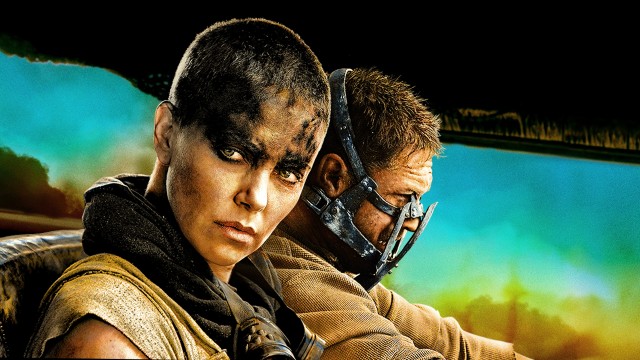
 After a thirty-year hiatus, Max Rockatansky is resurrected in the ultrafeminist Mad Max: Fury Road, but this time the lonely hero is played by Tom Hardy, following in the footsteps of Mel Gibson, who starred in 1979’s Mad Max, 1981’s The Road Warrior, and 1985’s Beyond Thunderdome. After nearly two decades of stops and starts, Mad Max creator George Miller finally completed the fourth picture in the franchise, and it’s quite possibly the best of the bunch. In a postapocalyptic world where the primary goal is simply just to survive, Max has been captured by Immortan Joe (Hugh Keays-Byrne) and turned into a blood bag for the skeletal Nux (Nicholas Hoult). But when Max encounters Imperator Furiosa (Charlize Theron) driving a big War Rig, escaping from the Citadel with five of Immortan Joe’s breeding wives — Toast the Knowing (Zoë Kravitz), Capable (Riley Keough), the Dag (Abbey Lee), Cheedo the Fragile (Courtney Eaton), and the Splendid Angharad (Rosie Huntington-Whiteley), who is pregnant — they are forced to team up if they are going to make it to the Green Place and live. Max, who still has regular flashbacks of his brutally murdered wife and child, is, in a way, forming a new family with the tough-as-nails, one-handed Furiosa, the young wives, and even Nux, as Miller (Babe, Happy Feet) and cowriters Brendan McCarthy and Nico Lathouris emphasize motherhood and milk amid the spectacular, nonstop car chases and sensational violence. As always, Miller has included a cast of lunatic fringers, including Slit (Josh Helman), Rictus Erectus (Nathan Jones), the People Eater (John Howard), the Bullet Farmer (Richard Carter), the Organic Mechanic (Angus Sampson), the Valkyrie (Megan Gale), the Keeper of the Seeds (Melissa Jaffer), and Corpus Colossus (Quentin Kenihan), along with some awesome vehicles, all caught on film with breathless glee by cinematographer John Seale. Mad Max: Fury Road blends wrought emotion with a mostly analog technical virtuosity that earned it ten Oscar nominations, winning for Best Film Editing (Margaret Sixel), Best Production Design (Colin Gibson and Lisa Thompson), Best Costume Design (Jenny Beavan), Best Makeup and Hairstyling (Lesley Vanderwalt, Elka Wardega, and Damian Martin), Best Sound Mixing (Chris Jenkins, Gregg Rudloff, and Ben Osmo), and Best Sound Editing (Mark Mangini and David White). It’s a glorious tale that, if we’re not careful, could be our destiny. Mad Max: Fury Road is screening July 6 on the Pier 63 lawn in Hudson River Park in the Hudson RiverFlicks: Big Hit Wednesdays series, which continues through August 5 with such other 2015 films as Trainwreck, The Big Short, and Creed.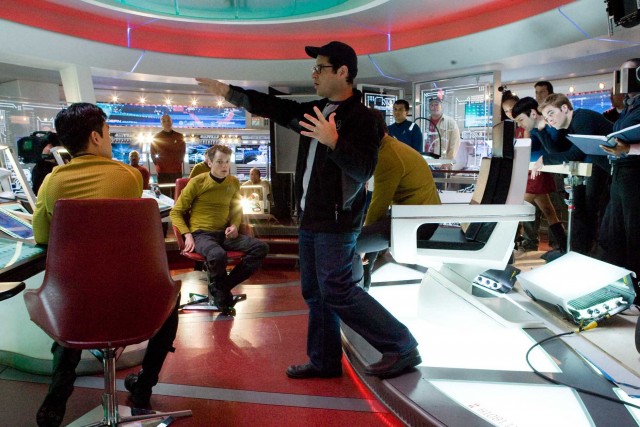

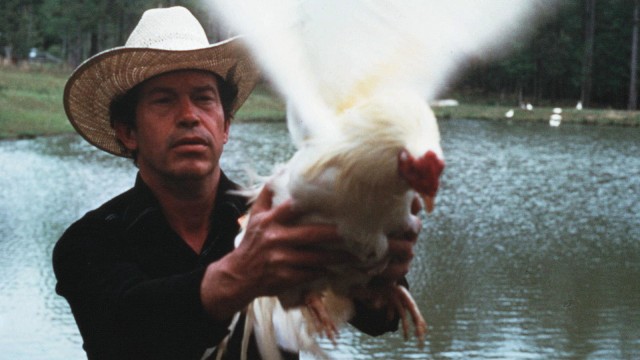
 Director Monte Hellman and star Warren Oates enter “the mystic realm of the great cock” in the 1974 cult film Cockfighter. Alternately known as Born to Kill and Gamblin’ Man, the film is set in the world of cockfighting, where Frank Mansfield (Oates) is trying to capture the Cockfighter of the Year award following a devastating loss that cost him his money, car, trailer, girlfriend, and voice — he took a vow of silence until he wins the coveted medal. Mansfield communicates with others via his own made-up sign language and by writing on a small pad; in addition, he delivers brief internal monologues in occasional voiceovers. He teams up with moneyman Omar Baradansky (Richard B. Shull) as he attempts to regain his footing in the illegal cockfighting world, taking on such challengers as Junior (Steve Railsback), Tom (Ed Begley Jr.), and archnemesis Jack Burke (Harry Dean Stanton); his drive for success is also fueled by his desire to finally marry his much-put-upon fiancée, Mary Elizabeth (Patricia Pearcy). The cast also includes Laurie Bird as Mansfield’s old girlfriend, Troy Donahue as his brother, Millie Perkins as his sister-in-law, Warren Finnerty as Sanders, Allman Brothers guitarist Dickey Betts as a masked robber, and Charles Willeford, who wrote the screenplay based on his novel, as Ed Middleton.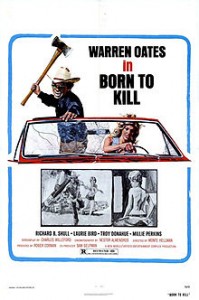
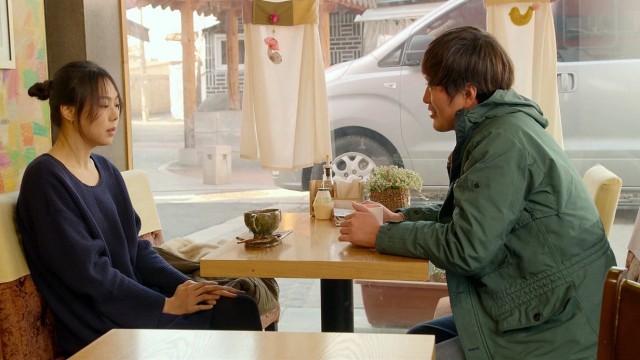
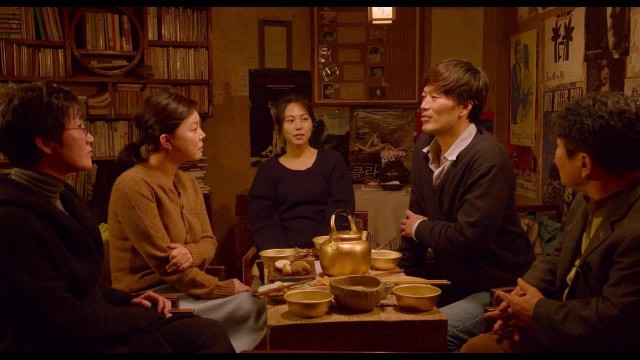
 It’s déjà vu all over again in South Korean writer-director Hong Sangsoo’s latest masterpiece, Right Now, Wrong Then. Hong’s previous films, such as Tales of Cinema,