this week in film and television

RETURN OF THE DOUBLE FEATURE!

return of the double feature

Film Forum
209 West Houston St.
Friday, August 19, through Tuesday, September 13, $14
212-727-8110
filmforum.org

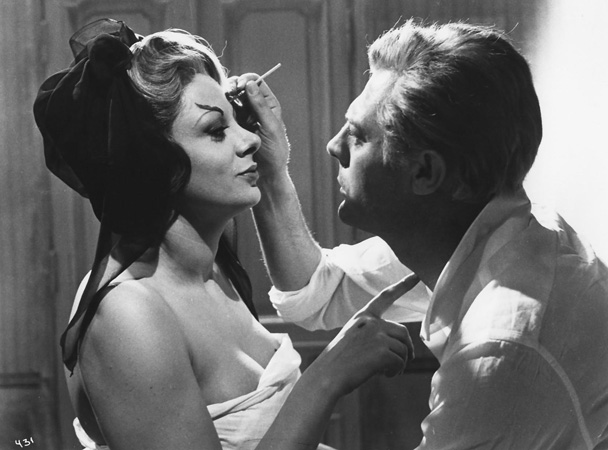
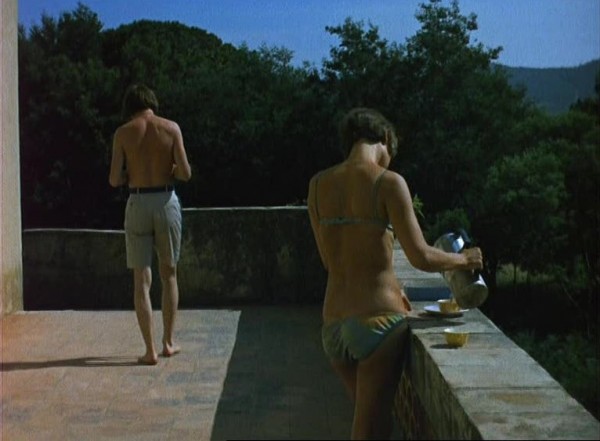
Once upon a time, in a land far, far away, you could pay one single admission and see two professional baseball games, called a double header. “Let’s play two!” Mr. Cub, Ernie Banks, famously said in July 1969. And you could stay and watch both games for one regular price, without having to clear out after the first contest. Also in that magical land of long ago, you see two movies for the price of one, known as a double feature. As Richard O’Brien sings in The Rocky Horror Picture Show, “I wanna go — oh oh oh oh / to the late night, double feature, picture show.” Film Forum, which often hosts double features, is now honoring the two-pack with “Return of the Double Feature,” twenty-six pairings of fifty-two classic movies, brought together by director, star, theme, writer, or other reason. Master programmer Bruce Goldstein gets things going with the Alfred Hitchcock / Jimmy Stewart duo of Vertigo and Rear Window, followed by Jean-Luc Godard’s Contempt and Breathless, Stanley Kubrick’s Paths of Glory and The Killing, and F. W. Murnau’s Sunrise and Nosferatu. After that, the double bills become more conceptual, such as Akira Kurosawa’s Yojimbo with Sergio Corbucci’s Django, Nicholas Ray’s In a Lonely Place with Fritz Lang’s The Big Heat, and, perhaps best of all, Hitchcock’s Psycho with Roman Polanski’s Repulsion.

psycho repulsion

You can catch Ruth Gordon in Harold and Maude and Where’s Poppa?, Orson Welles in Carol Reed’s The Third Man and his own The Lady from Shanghai, and Gene Tierney in Otto Preminger’s Laura and John Stahl’s Leave Her to Heaven. There are double features by Robert Altman, Charlie Chaplin, Terrence Malick, Alain Resnais, and Luis Buñuel; based on novels by James M. Cain and Raymond Chandler; and starring Marlon Brando, Humphrey Bogart, Toshiro Mifune, and Cary Grant. Among the other dynamic duos are Vittorio De Sica’s The Bicycle Thief with Tim Burton’s Pee Wee’s Big Adventure, Burton’s Ed Wood with Wood’s Plan 9 from Outer Space, and Hitchcock’s Dial M for Murder with André de Toth’s House of Wax, both shown in 3-D. Instead of bingeing on Netflix, you might as well just settle in for the long haul at Film Forum and take in as much of this superb master class in cinema as you can, presented two flicks at a time, just like in the good old days.

JOE DANTE AT THE MOVIES: THE BLACK CAT / A BUCKET OF BLOOD

Bela Lugosi and Boris Karloff play longtime enemies in THE BLACK CAT

Bela Lugosi and Boris Karloff play longtime enemies in Edgar Ulmer’s 1934 cult classic, THE BLACK CAT

THE BLACK CAT (Edgar G. Ulmer, 1934)
BAMcinématek, BAM Rose Cinemas
30 Lafayette Ave. between Ashland Pl. & St. Felix St.
Tuesday, August 16, 4:30 & 8:00
Series continues through August 24
718-636-4100
www.bam.org

The BAMcinématek series “Joe Dante at the Movies” consists of films directed by the New Jersey native alongside selections that influenced him, from his own Gremlins, Piranha, and The Howling to Arthur Penn’s Mickey One, Jack Arnold’s The Incredible Shrinking Man, and Douglas Hickox’s Theatre of Blood. For August 16, Dante has chosen the deliciously demented double feature of Edgar Ulmer’s 1934 hit The Black Cat and Roger Corman’s 1959 cult favorite A Bucket of Blood. The former features the first pairing of Béla “Count Dracula” Lugosi and Boris “Frankenstein’s Monster” Karloff, and it’s a doozy. Through an unfortunate series of events, newlyweds Peter (David Manners) and Joan Alison (Julie Bishop) end up at the Art Deco home of architect Hjalmar Poelzig (Karloff), built atop the site of a bloody World War I battle where thousands of people died. The Alisons were led there by Dr. Vitus Werdegast (Lugosi), who believes his wife and daughter were killed by Poelzig and has returned from a long stint in jail to exact his revenge. Dr. Werdegast describes the creepy mansion as “a masterpiece of construction built upon the ruins of the masterpiece of destruction, the masterpiece of murder,” but little does he know that it might also be a place of Satanism, necrophilia, incest, and other decadent delights. Bishop does a lot of screaming and fainting, and Egon Brecher as Dr. Werdegast’s zombielike Majordomo and Harry Cording as Poelzig’s Igor-like assistant, Thamal, don’t exactly put on an acting clinic. The story, written by novelist Paul Cain under the pseudonym Peter Ruric, does tend to meander a bit, and don’t be fooled by the title or the opening credits, as it has nothing to do with Edgar Allan Poe’s short story “The Black Cat” other than trying to capitalize on the name.

the black cat 2

But that doesn’t mean it isn’t both scary and a whole lot of fun, with a fab score by Heinz Roemheld that runs through the whole film, which was unique for its time. The Black Mass scene, with an uncredited B-list collection of all-star cameos (John Carradine, Paul Panzer, John George, Michael Mark, King Baggot, Symona Boniface, Virginia Ainsworth, Lois January, Harry Walker, Billie Burke, and Beatrice Lillie), is spectacular, as is a late fight between Poelzig and Dr. Werdegast. And just try to take your eyes off Karloff’s tremendous widow’s peak. “Ulmer’s dark masterpiece was his last studio movie, so grim that a third of it had to be reshot,” Dante explains about the film. “It’s still the creepiest and most poetic of all the early Universal horror films; certainly the finest collaboration between Karloff and Lugosi. Great classical music score, disturbing psychosexual underpinnings, and a pervasive atmosphere of evil that has latterly spawned literary works by Ramsey Campbell and Theodore Roszak.” Former set designer Ulmer would go on to make such films as The Strange Woman, Detour, Bluebeard, and The Man from Planet X; Karloff and Lugosi would team up for seven more films, including The Raven, Black Friday, and The Body Snatcher.

A BUCKET OF BLOOD

Walter Paisley (Dick Miller) shows off his debut artistic creation, “Dead Cat,” at the Yellow Door in A BUCKET OF BLOOD

A BUCKET OF BLOOD (Roger Corman, 1959)
BAMcinématek, BAM Rose Cinemas
Tuesday, August 16, 4:30 & 8:00
www.bam.org

Writer Charles B. Griffith and producer and director Roger Corman skewer — and we do mean skewer — beatnik culture, the elitist art world, and their very own horror genre in the freaky-fun satire A Bucket of Blood. Inspired by Michael Curtiz’s 1933 The Mystery of the Wax Museum and André de Toth’s 1953 3D classic House of Wax and adding more than a dash of Macbeth, Griffith and Corman tell the lurid tale of one Walter Paisley (Dick Miller), a relatively simple-minded busboy at the Yellow Door, a smoky bohemian nightclub in San Francisco, where pre-Williamsburg hipster Maxwell H. Brock (Julian Burton) recites his poetry and hobnobs with his adoring fans. “I will talk to you of art, for there is nothing else to talk about, for there is nothing else,” Brock says over the opening credits, looking directly into the camera. “Swim on, you maudlin, muddling, maddened fools, and dream that one bright and sunny night some artist will bait a hook and let you bite upon it. Bite hard, and die!” Maxwell’s bloviating words impress Walter, who repeats them to himself as he is determined that he, too, will become an artist. Back at home, Walter is trying to make a clay bust of club hostess Carla (Barboura Morris, who later appeared in The Wasp Woman and The Trip), who he has a crush on, but he is interrupted by the meows of a cat trapped in the wall. In trying to free the cat, Walter accidentally stabs it to death, then decides to cover it in clay, leaving the knife in it, and show it off at the club so he can join the prestigious ranks of the art world. (No one quite gets the irony of his having killed a cat, hipster slang for a supposed cool person.) He is indeed celebrated by Maxwell, Carla, and most of the others, except for his boss, Leonard (Antony Carbone), who is suspicious of Walter’s sudden talent but doesn’t mind making a quick buck off his employee. Also keeping a close eye on things are undercover cops Art Lacroix (Peyton Place star Ed Nelson) and Lou Raby (game show host Bert Convy, billed as “Burt” Convy), who are looking to make some drug busts. Walter’s instant success goes straight to his addled little head, so soon he is creating disturbing statues of — well, let’s just say people start going missing in the neighborhood. Walter is determined to stay in the spotlight, no longer ignored, but it’s all liable to fall apart at any moment, like so much broken clay.

bucket of blood movie poster

Shot in five days in black-and-white for $50,000 on existing sets (some of which would be used again for Griffith and Corman’s next comedy, the somewhat similarly themed Little Shop of Horrors), A Bucket of Blood suffers from the whirlwind production schedule and extremely low budget — Miller has since complained that there wasn’t enough time or money to prepare a proper finale, and he’s right — but it’s still a hoot, a playful stab at many of the genre conventions that Griffith (The Wild Angels, Eat My Dust!) and Corman (The Pit and the Pendulum, The Terror) established working for American International Pictures. This horror comedy is extremely creepy and very funny, with a superb lead performance by Miller, a distinctive, longtime character actor who would actually play men named Walter Paisley in several later films (including Joe Dante’s The Howling and Jim Wynorski’s Chopping Mall) as an homage to his triumph here. You can feel his every twisted emotion as he tries so hard to become an artist and capture Carla’s romantic attention and thereby help them and others reach immortality. Photographed by Jacques R. Marquette and featuring a Twilight Zone–like score and pace (the Rod Serling series began the same year), A Bucket of Blood well deserves its cult status as a camp classic. “The counterculture wit and wisdom of writer Charles B. Griffith, Roger Corman’s hipper-than-thou alter-ego, is in even fuller flower here than in his classic follow-up, Little Shop of Horrors, aided immeasurably by Dick Miller’s indelible performance as psychotic busboy Walter Paisley. Pretty good for five days and $50,000,” Dante says about the film, which is screening with The Black Cat on August 16 in the BAMcinématek series “Joe Dante at the Movies,” which continues through August 24, consisting of films by or that influenced Dante, including Gremlins, Cold Turkey, Innerspace, Gremlins 2: The New Batch, and, of course, The Howling.

MY KING

MY KING

Tony (Emmanuelle Bercot) and Georgio (Vincent Cassel) are in a complex relationship in Maïwenn’s MY KING

MY KING (MON ROI) (Maïwenn, 2015)
Lincoln Plaza Cinema
1886 Broadway at 63rd St.
Opens Friday, August 12
212-757-2280
www.lincolnplazacinema.com

Emmanuelle Bercot shared the Best Actress award at Cannes with Cate Blanchett and Rooney Mara for her emotional roller coaster of a performance as a woman dealing with both physical and psychological pain in the overwrought, insufferable My King. Writer-director Maïwenn (Polisse, Forgive Me) jumps back and forth between the present, in which Tony (Bercot), a lawyer, is going through extensive rehab because of a skiing accident that tore up one of her knees, and the past, when Tony first met Georgio (Vincent Cassel) at a club, kicking off a complicated codependent relationship filled with intense love and severe turmoil. Georgio is a selfish ladies’ man who enjoys staying out late, partying with his friends rather than being a responsible husband. When Tony gets pregnant, Georgio tells one of his ex-girlfriends, Agnès (real-life model Chrystèle Saint Louis Augustin, in her feature film debut), and she attempts suicide. Georgio is still very close with his ex and insists that he must take care of Agnès, driving a wedge between him and Tony that might separate them permanently. But every time their marriage appears to be doomed, Tony lets him back into her life, even though she knows that yet more heartbreak will follow. My King, which also features Louis Garrel as Tony’s extremely concerned brother and Isild Le Besco, Maïwenn’s sister, as his wife, is disjointed, and the past and present story lines feel like they’re from different films. Bercot, who starred with Maïwenn in Polisse (the two cowrote the screenplay as well), holds nothing back as Tony, who just can’t say no, while Cassel is too knowingly smarmy as Georgio, who understands just how to manipulate her to get what he wants. It’s far too frustrating watching them together, and even though that’s part of the point, it doesn’t make for a satisfying cinematic experience.

THE LOST ARCADE

THE LOST ARCADE

THE LOST ARCADE follows the story of the rise and fall of the last old-fashioned arcade in New York City

THE LOST ARCADE (Kurt Vincent, 2015)
Metrograph
7 Ludlow St. between Canal & Hester Sts.
August 12-18
212-660-0312
metrograph.com
www.arcademovie.com

New York City has seen a dramatic rise in the closing of long-beloved institutions in the twenty-first century as gentrification and rent hikes soar. When filmmaker Kurt Vincent heard rumors that the Chinatown Fair arcade game haven was on the way out, he brought his camera to the Mott St. spot to document what it meant to him and the community that has been built around it since it opened back in 1944. “After all these years, the path to the arcade was ingrained, even in dreams,” he narrates at the beginning of The Lost Arcade, describing a dream he had. “As I stood in front of the doors, I could smell the arcade. The smell was a primordial memory hidden deep in my mind, somewhere beyond time and space, and somehow, in my dream, I connected with this distant and abstract memory.” Director-producer-editor Vincent and producer-writer Irene Chin, who previously collaborated on the experimental short The Bachelorette Party, have created a love letter to Chinatown Fair, affectionately known as CF, which has seen its ups and downs over the years, including a boom during the golden age of arcades in the 1980s and a problematic drop in the 2000s as kids stayed home to play video games on their computers and televisions. Vincent speaks with Anthony Cali Jr., who practically grew up in CF; former CF employees Henry Cen, Norman Burgess, Derek Rudder, and Akuma Hokura and their boss, Sam Palmer, who bought the place after visualizing it in a dream; and Lonnie Sobel, who attempted to resurrect it after its initial closure.

Teenagers and adults went to CF to play such old-fashioned games as Pac-Man, Ski Bowl, Space Invaders, Defender, Frogger, and Centipede, marvel at the dancing, tic-tac-toe-playing chicken, and visit the so-called museum in the back. Ol’ Dirty Bastard even filmed his 1995 “Brooklyn Zoo” video there. “All my pride and my disappointment and my joy was held in that quarter,” Hokura says, describing the importance of playing arcade games, which used to cost twenty-five cents. The film also has a very cool video-game-inspired score by Gil Talmi. Much like the analog games that lined each side of the narrow CF, the film has an analog feel to it, along with a sweet-natured sentimentality for the way things used to be in an ever-changing New York City. The Lost Arcade opens at Metrograph on August 12, with Vincent and Chin participating in Q&As following the 7:00 screening on Friday night (followed by live music by Talmi and drinks in the downstairs bar) and the 8:30 show on Saturday. In conjunction with the theatrical release of the film, Metrograph is also hosting the series “Shall We Play a Game?” featuring such other game-related movies as Mortal Kombat, Tron, Existenz, The Last Starfighter, and WarGames.

DISORDER

DISORDER

Alice Kruger and Matthias Schoenaerts star in Alice Winocour’s gripping paranoid thriller, DISORDER

DISORDER (Alice Winocour, 2015)
IFC Center, 323 Sixth Ave. at West Third St., 212-924-7771
Lincoln Plaza Cinema, 1886 Broadway between 62nd & 63rd Sts., 212-757-2280
Opens Friday, August 12
www.sodapictures.com

French director Alice Winocour follows up her 2012 Cannes hit, Augustine, with the pulse-pounding, heart-racing paranoid thriller Disorder. Matthias Schoenaerts is sensational as Vincent, a role Winocour wrote specifically for him. A veteran of special forces in Afghanistan, Vincent has been sidelined back in France, diagnosed with PTSD and awaiting medical clearance for a return to the field. He is distraught and frustrated, as his identity as a soldier is his life. While waiting to hear from the doctors, he is hired by his team leader, Denis (Paul Hamy), to join a security force for a party at a French Riviera estate, known as Maryland, owned by powerful Lebanese businessman Imad Whalid (Percy Kemp). During the party, Vincent witnesses an altercation involving Whalid, cabinet minister Pierre Duroy (Philippe Haddad), and some mysterious figures. Later, when Whalid suddenly has to leave on a business trip, Vincent comes back to the estate as a one-person security force protecting Whalid’s trophy wife, Jessie (Diane Kruger), and her young son, Ali (Zaïd Errougui-Demonsant). Vincent is instantly suspicious of everything and everyone, constantly looking over his shoulder and scanning for threats ahead, which disturbs Jessie — until it appears that Vincent just may be right.

Disorder is a deep, intense cinematic experience as Winocour, cinematographer George LeChaptois, editor Julien Lacheray, and composer Gesaffelstein create a dark world filled with unexpected twists and turns. The story was inspired by real-life interviews Winocour conducted with elite soldiers, while the different techniques she employs in crafting the film were influenced by filmmakers Michelangelo Antonioni and Alfred Hitchcock and photographers Philip-Lorca diCorcia and Gregory Crewdson, resulting in a taut, gripping thriller that never lets the audience take a breath. It’s an intense psychological journey that combines various genres, incorporating horror, home invasion, action-adventure, war, and politics into something unique and seductive. Schoenaerts (The Danish Girl, A Bigger Splash) is mesmerizing as Vincent; the entire film is shot from his frenzied point of view, and he pulls it off magnificently. (To get into the role, he embodied his character 24/7, sleeping only a few hours a day to attain the proper mind-set.) Kruger (Troy, Inglourious Basterds) is alluring as Jessie, who is cautiously skeptical of Vincent’s protection, refusing to acknowledge the situation she and her family are in; the scene in which Jessie and Vincent fall asleep on couches is a tender-hearted moment in their complex relationship. Winocour effectively turns the mansion into a war zone, one that exists inside Vincent’s head as well. It’s an exquisitely made, captivating film, as sharp as a knife edge, unyielding and unrelenting every step of the way. Disorder opens August 12 at IFC Center and Lincoln Plaza, with Winocour participating in Q&As at the latter after the 7:15 show and at the former following the 8:00 screening on opening night.

ECSTATIC TRUTHS: DOCUMENTARIES BY HERZOG

Werner Herzog will discuss his life and work in BAM conversation on September 4 (photo by Robin Holland)

Werner Herzog’s unique journeys into the hearts and minds of unique characters and locations around the world is on full display in IFC Center documentary series (photo by Robin Holland)

ECSTATIC TRUTHS: DOCUMENTARIES BY HERZOG
IFC Center
323 Sixth Ave. at Third St
August 12-18
212-924-7771
www.ifccenter.com
www.wernerherzog.com

No other filmmaker has traveled the world, uncovering unique characters and exotic locations, like Werner Herzog. Born in Munich in 1942, the German writer-director has made more than sixty films across his fascinating career, including such well-regarded fiction works as The Enigma of Kaspar Hauser, Stroszek, Nosferatu the Vampyre, Fitzcarraldo, and Aguirre, the Wrath of God, deeply psychological tales told in boldly original ways. But it’s his nonfiction films that take center stage in the superb IFC Center series “Ecstatic Truths: Documentaries by Herzog.” From August 12 to 18, IFC will screen twenty of Herzog’s docs, many as part of double features. “Every time you make a film you should be prepared to descend into Hell and wrestle it from the claws of the Devil himself,” the German New Wave master warns in the 2014 book Werner Herzog — A Guide for the Perplexed: Conversations with Paul Cronin. In his documentaries, Herzog, who narrates most of them, goes to both Heaven and Hell and beyond while displaying his wry sense of humor. (Over the last few years, he has voiced characters on The Boondocks, The Simpsons, Metalocalypse and American Dad! in addition to making a hysterical cameo on Parks and Recreation.

The series is being held in conjunction with the August 19 release of his latest film, Lo and Behold, Reveries of the Connected World, in which he explores virtual reality. The series kicks off August 12 with 1984’s Ballad of the Little Soldier and 1976’s How Much Wood Would a Woodchuck Chuck, followed by such other seldom-shown flicks as 1993’s Bells from the Deep with 1989’s Herdsmen of the Sun, 1985’s The Dark Glow of the Mountains with 1974’s The Great Ecstasy of Woodcarver Steiner, and 1981’s God’s Angry Man and Huie’s Sermon in addition to some of the more well known films critiqued below. A Lo and Behold poster signed by Herzog will be given away at the opening night 7:30 screening on August 12 of 1971’s Fata Morgana. “The problem isn’t coming up with ideas, it is how to contain the invasion,” he tells Cronin. “My ideas are like uninvited guests. They don’t knock on the door; they climb in through the windows like burglars who show up in the middle of the night and make a racket in the kitchen as they raid the fridge. I don’t sit and ponder which one I should deal with first. The one to be wrestled to the floor before all others is the one coming at me with the most vehemence. I have, over the years, developed methods to deal with the invaders as quickly and efficiently as possible, though the burglars never stop coming.” Herzog’s remarkable films keep coming as well, and IFC Center is now offering a chance to see many rarities on the big screen in this weeklong series named after one of twelve declarations he wrote for the Walker Art Center in 1999: “There are deeper strata of truth in cinema, and there is such a thing as poetic, ecstatic truth. It is mysterious and elusive, and can be reached only through fabrication and imagination and stylization.”

Werner Herzog goes spelunking in 3-D in exciting documentary

CAVE OF FORGOTTEN DREAMS IN 3-D (Werner Herzog, 2010)
Friday, August 12, 10:45, 12:45, 3:00, 5:15, 9:30, and Saturday, August 13, 12:45 pm
www.wernerherzog.com

An adventurer as much as a filmmaker, German director Werner Herzog has headed into the Amazon in Fitzcarraldo (1982), burning Kuwaiti oil fields in Lessons of Darkness (1992), and Antarctica in Encounters at the End of the World (2008). In his 2010 documentary Cave of Forgotten Dreams, he goes where few have ever gone before. In December 1994, speleologists Jean-Marie Chauvet, Éliette Brunel, and Christian Hillaire discovered the Chauvet-Pont-d’Arc Cave in France, a vast series of chambers filled with remarkable paintings and engravings as well as animal bones, including the skulls of the extinct cave bear. The works were painted onto and carved into the walls, not limited to flat surfaces but around formations that jut out into the cavern. Dating back more than thirty thousand years, they are the oldest cave paintings ever found, well preserved through crystallization over the centuries and now by the intense and careful protection of the French government. Only a handful of scientists have been given access to the cave, until the spring of 2009, when Herzog, who has been entranced by cave paintings since he was twelve years old, was allowed to bring in a shoestring crew using specially devised equipment to film the space over the course of six four-hour sessions. The four-person crew — including Herzog manning the lights and his longtime cinematographer, Peter Zeitlinger, behind the 3-D camera — were not allowed to touch anything and had to stay on a narrow metal walkway that winds through the cave. They were accompanied by a team of specialists on the rare public journey: handprint expert Dominique Baffier, cave bear researcher Michel Philippe, the husband and wife team of Gilles Tosello and Carole Fritz, who map out the social connection between art and archaeology, Jean Clottes, the former director of the Chauvet Cave Research Project, and current director Jean-Michel Geneste. In true Herzog style, he also speaks with a master perfumer and two prehistoric flute archaeologists. Herzog’s decision to use 3-D — for what he says will be the only time in his career — was a stroke of genius, allowing viewers to feel like they’re walking through the cave with him, nearly able to reach out and touch the remarkable drawings, engravings, and skeletons. Herzog’s narration does get too dreamy at times, veering off on philosophical tangents before he adds a cool but silly coda, but, as always, he adds his trademark humor and charm.

HAPPY PEOPLE explores the fascinating world of Siberian hunters living in virtual solitude year-round

HAPPY PEOPLE explores the fascinating world of Siberian hunters living in virtual solitude year-round

HAPPY PEOPLE: A YEAR IN THE TAIGA (Dmitry Vasyukov & Werner Herzog, 2010)
Saturday, August 13, 10:45 am, and Wednesday, August 17, 10:45, 12:45, 3:00, 5:15, 9:30
www.musicboxfilms.com

In Happy People: A Year in the Taiga, Werner Herzog and codirector Dmitry Vasyukov follow Russian fur trapper Gennady Soloviev and others as they set their traps and capture their prey, living a solitary existence away from friends and family, but that is exactly how they like it. They do things the old-fashioned way, using the tools and methods of their fathers and their fathers before that, getting by with their hands, their ingenuity, and their brute strength, along with the help of their ever-faithful dogs. Soloviev, who first came to Siberia under the communist regime, decided to stay, doing his part to support the local economy while continuing the Muzhik traditions. He speaks openly and honestly about his daily existence, getting emotional when talking about the bonds he forms with his dogs, and one in particular. The footage was shot several years ago by Vasyukov, and Herzog came upon it quite accidentally, seeing it when paying a surprise visit to a friend. He got in touch with Vasyukov, who allowed Herzog to edit the footage, add a musical score by Klaus Badelt, and write his own English-language narration, which he delivers with great admiration, often getting philosophical about what is being shown onscreen. Unfortunately, the film does not have quite the visual vibrancy of Herzog’s original films, usually shot by cinematographer Peter Zeitlinger, and Herzog’s words lack the personal touch that has made such works as Grizzly Man and My Best Fiend, among many others, so magical. Still, Happy People is a fascinating look at a little-known group of men who live a very different kind of life in the twenty-first century. “You don’t need to pity us; we are proud,” Soloviev told Vasyukov upon learning that Herzog wanted to repurpose the footage. Happy People in no way pities these men, instead celebrating their adherence to the old ways and honoring their intimate connections to nature.

Werner Herzog speaks with Death Row inmate Michael Perry in INTO THE ABYSS

INTO THE ABYSS: A TALE OF DEATH, A TALE OF LIFE (Werner Herzog, 2011)
Sunday, August 14, 12:45, and Tuesday, August 16, 10:45, 12:45, 3:00, 5:15, 9:30
www.wernerherzog.com/films-by.html

Upon meeting convicted murderer Michael James Perry on Death Row eight days before the twenty-eight-year-old was going to be executed by the state of Texas, master filmmaker Werner Herzog tells him, “I have the feeling that destiny, in a way, has dealt you a very bad deck of cards. It does not exonerate you, and when I talk to you, it doesn’t necessarily mean that I have to like you, but I respect you, and you are a human being, and I think human beings should not be executed.” After explaining his personal view on capital punishment, Herzog then lets the rest of the compelling documentary Into the Abyss: A Tale of Death, a Tale of Life play out like a police procedural as he investigates how and why two teenage boys murdered three people in October 2001. Herzog opens the film by speaking with Death House chaplain Rev. Richard Lopez in a potter’s field graveyard, then follows that with four sections that detail the crime, the community in which it occurred, and the family members on both sides of the law affected by the grisly, senseless murders. Herzog divides the film into four primary chapters — “The Crime,” “The Dark Side of Conroe,” “Time and Emptiness,” and “A Glimmer of Hope” — as he talks with the often smiling Perry and his cohort, Jason Aaron Burkett; Lt. Damon Hall, who shares the specific aspects of the murders of Sandra Stotler, her seventeen-year-old son, Adam, and Adam’s friend Jeremy Richardson, supplemented by original crime-scene video; Charles Richardson, Jeremy’s older brother; Lisa Stotler-Balloun, Adam’s sister, who has seen more than her fair share of loss; Melyssa Thompson-Burkett, who fell in love with Burkett after he was incarcerated; Delbert Burkett, Jason’s stepfather, who is also behind bars; and Captain Fred Allen, who oversaw executions in the Huntsville prison. Herzog asks penetrating but not leading questions that get the subjects to talk openly and honestly about the crime and its aftermath and their lives in general, many of which seem trapped in a vicious cycle of violence, jail, poor education, and other endless hardships. Into the Abyss is a powerful film that, because of Herzog’s extremely sensitive handling of an extremely controversial topic, is not nearly as polemical or political as it could have been.

Timothy Treadwell learns a rather painful lesson about living with bears in GRIZZLY MAN

Timothy Treadwell learns a rather painful lesson about living with bears in GRIZZLY MAN

GRIZZLY MAN (Werner Herzog, 2005)
Sunday, August 14, 10:45 & 9:30, and Thursday, August 18, 10:45, 12:45, 3:00, 5:15
www.grizzlypeople.com

For thirteen straight summers, Timothy Treadwell ventured into the wilds of Katmai National Park in Alaska, where he lived among grizzly bears. For the last five of those years, he brought along a video camera and detailed his life with them and his battle to protect the bears (all of which he named) from poachers. “I have no idea if there’s a God, but if there’s a God, God would be very, very pleased with me,” Treadwell says into his camera in Werner Herzog’s brilliant documentary Grizzly Man, “because he can just watch me, how much I love them, how much I adore them, how respectful I am of them, how I am one of them. . . . Be warned: I will die for these animals, I will die for these animals, I will die for these animals. Thank you so much for letting me do this. Thank you so much to these animals for giving me a life. I had no life. Now I have a life.” In October 2003, Treadwell and his girlfriend, Amie Huguenard, were brutally killed and eaten by one of the bears. Herzog, who knows a little something about filming in treacherous locations (Fitzcarraldo, Little Dieter Needs to Fly, Aguirre, the Wrath of God), made Grizzly Man from more than one hundred hours of tape, supplementing that with interviews with Treadwell’s friends and family. They all talk about a much-loved but troubled man who was desperate to be famous. His life with the bears got him onto television with Rosie O’Donnell and David Letterman, but it also got him killed, which some people think was what he deserved for crossing the line and thinking he could survive living with grizzlies. But Herzog shows him to be a thoughtful, compassionate man who just might have found his true purpose in life. (To find out more about Treadwell, check out The Grizzly Man Diaries here.). Although the film, which features a gorgeous score by Richard Thompson, won or was nominated for numerous awards (including editing, directing, and best documentary), it was curiously shut out at the Oscars.

MOVIES UNDER THE STARS: THE INCREDIBLES

THE INCREDIBLES will be shown August 11 in Francis Lewis Park as part of free Movies Under the Stars series

THE INCREDIBLES (Brad Bird, 2004)
Francis Lewis Park
Third Ave. between Parsons Blvd. & 147th St.
Thursday, August 11, free, 8:00
www.nycgovparks.org
www.disney.go.com

The Incredibles, which nabbed the Best Animated Feature Oscar, is yet more fun from Pixar, John Lasseter’s remarkably creative studio that previously brought us Toy Story, A Bug’s Life, Monsters Inc., and Finding Nemo. After the crime-fighting family the Incredibles are sued into early retirement and given a new identity in harmless suburbia, Bob/Mr. Incredible (Craig T. Nelson) can’t stop protecting the world from evildoers, sneaking away from his suspicious wife, Helen/Elastigirl (Holly Hunter), to work with Lucius/Frozone (Samuel L. Jackson) in defeating evil. But he meets more than he bargained for in Syndrome (Jason Lee), a piece of his past resurrected to destroy him. Other recognizable voices include Wallace Shawn as Gilbert Huph, writer Sarah Vowell as Violet, John Ratzenberger as Underminer, and Elizabeth Peña as Mirage; writer/director Brad Bird (The Iron Giant) voices fashion designer Edna ‘E’ Mode. Pixar fans will also want to check out the exhibition “Pixar: The Design of Story” at the Cooper Hewitt through September 11. The Incredibles is being shown for free on August 11 in Francis Lewis Park as part of the Movies Under the Stars series, consisting of outdoor film screenings in smaller parks all over the city, including Barbershop: The Next Cut in Linden Park on August 10, Drumline in Brownsville Playground on August 12, Coraline in De Witt Clinton Park on August 13, The Land Before Time in Lawrence Playground in Flushing Meadows Corona Park on August 14, and Finding Nemo at the Buddy Monument in Forest Park on August 15.