this week in film and television

THE RUINS OF LIFTA: WHERE THE HOLOCAUST AND NAKBA MEET

THE RUINS OF LIFTA

Menachem Daum and Yacoub Odeh discuss a different aspect of the Israeli-Palestinian conflict in THE RUINS OF LIFTA

THE RUINS OF LIFTA: WHERE THE HOLOCAUST AND NAKBA MEET (Menachem Daum & Oren Rudavsky, 2016)
Lincoln Plaza Cinema
1886 Broadway at 63rd St.
Opens Friday, September 23
212-757-2280
www.lincolnplazacinema.com
www.firstrunfeatures.com

Menachem Daum and Oren Rudavsky’s The Ruins of Lifta: Where the Holocaust and Nakba Meet is built on a faulty premise, but the film still manages to be a rather provocative and intriguing documentary. In their previous collaboration, Hiding and Seeking: Faith and Tolerance after the Holocaust, Rudavsky and Daum examined Daum’s relationship with his parents, Polish Jews who survived the Holocaust and taught Daum to distrust all non-Jews. Their latest film takes viewers to Lifta, the historic but now crumbling Palestinian village at the western entrance to Jerusalem that was abandoned during the 1948 war and has never been resettled by Palestinians or taken over by Israelis. A recent plan calls for it to be razed in order to make way for luxury villas. “Its ruins bear witness to the history of the Israeli-Palestinian conflict,” Daum, an Orthodox Jew, says about the village. “The story told by Lifta’s ruins challenges the narrative that I, the son of Holocaust survivors, believed in for most of my life.” Daum meets with members of the Coalition to Save Lifta, a small group of Jews and Palestinians, including cofounder Daphna Golan, Ilan Shatyer, and Yacoub Odeh. Daum also speaks with historians Benny Morris and Hillel Cohen and Palestinian lawyer Sami Arshid, who offer different perspectives on the conflict.

The mistake Daum makes is drawing parallels between Odeh, who was expelled along with the rest of the Palestinians in 1948, and Holocaust survivor Dasha Rittenberg, creating a false equivalency between the Nazis’ Final Solution that murdered six million Jews and the Nakba, the exile of the Palestinians. “The Holocaust and Nakba narratives are not exclusive. I do not have to choose between them,” Daum says as he attempts to bring the outspoken and angry Odeh and the calmer, soft-spoken Rittenberg together, as if their rapprochement might signal the possibility of a larger peace between the Jews and the Palestinians. But it is clear early on that Odeh is never going to be satisfied, which serves as a microcosm of any potential agreements about land and self-rule in Jerusalem. In his previous film, Colliding Dreams, made with Joseph Dorman, Rudavsky (A Life Apart: Hasidism in America) examined Zionism and Palestine’s history, specifically how Palestine did not belong to the British to give to the Jews when other people were already living there. In his director’s statement, Rudavsky explains, “We all need to throw Hail Mary passes on the subject of peace in Israel and this is our Hail Mary pass. If we don’t try — each and every one of us — to understand each other — then the future may truly be hopeless.” Although it might be a misguided pass — and one named after a Catholic prayer — in a game that seems to never end, The Ruins of Lifta still raises some important questions and is likely, at numerous moments, to stoke viewers’ ire.

THE LOVERS AND THE DESPOT

THE LOVERS AND THE DESPOT

Kim Jong-il, Choi Eun-hee, and Shin Sang-ok form a unique cinematic triumvirate in THE LOVERS AND THE DESPOT

THE LOVERS AND THE DESPOT (Rob Cannan & Ross Adam, 2016)
Lincoln Plaza Cinema, 1886 Broadway at 63rd St., 212-757-2280
Landmark Sunshine Cinema, 143 East Houston St. between First & Second Aves., 212-330-8182
Opens Friday, September 23
www.magpictures.com

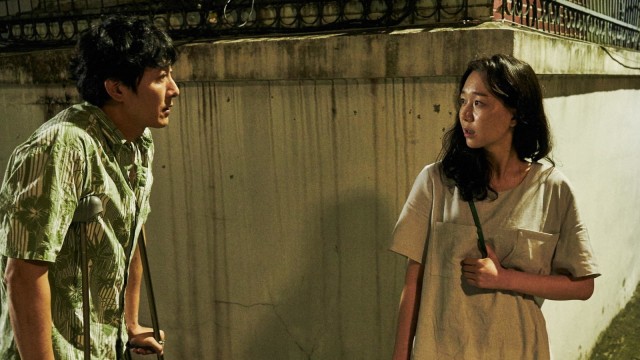
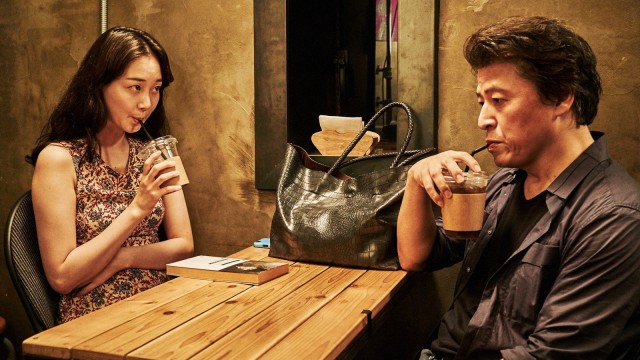
In 1978, desperate to become an important international film producer, Kim Jong-il, son of North Korean supreme leader Kim Il-sung, kidnapped popular South Korean actress Choi Eun-hee and her ex-husband, director Shin Sang-ok. For the next several years, they made seventeen pictures together in totalitarian North Korea. Kim gave them complete artistic freedom while also manipulating them, trying to inject the films with propaganda that was favorable to North Korea while denigrating South Korea. “Let’s show the West what we are capable of,” Kim explains to Shin. This incredible story is told in the superb and exciting documentary The Lovers and the Despot, which plays out like a gripping thriller in the style of Argo, and it’s all true — although questions still abound all these years later. Together, Choi and Shin had made such award-winning films as A Flower in Hell, The Houseguest and My Mother, and Red Scarf. After their abduction, they experienced a kind of love-hate relationship with Kim, who became supreme leader in 1994. “I thought they were going to kill me,” Choi, now eighty-nine, says in the film. But she also notes, “It was one of the happiest times of my life.” The main controversy has always centered around whether Shin and Choi willingly became part of Kim’s propaganda machine or were merely just trying to stay alive, making the movies even as they plotted escape attempts. Shin and Choi secretly tape recorded hours of conversations between the two men, who appear to develop a real friendship. “In a way, we really hit it off. When he meets me, he leaves his guards outside. He completely adores me. There’s no way I can betray him,” Shin says on the tapes. But later he adds, “Whatever it takes I have to get out of here.”

In their first feature-length collaboration, directors Rob Cannan (Three Miles North of Molkom) and Ross Adam play amazing segments from the utterly fascinating tapes, which, as Shin notes, “ultimately . . . will be the only evidence.” They also speak with classified U.S. intelligence officer Michael Yi, U.S. State Department official David Straub, South Korean writer-director Lee Jang-ho, film critic Pierre Rissient, former Kim Jong-il court poet Jang Jin-sung, and Choi and Shin’s children, offering numerous perspectives of this remarkable tale. The film also features clips from such Shin projects as Homeless Wanderer and Runaway, archival home movies and photographs, and footage of North Korean propaganda films and carefully choreographed public gatherings. Composer Nathan Halpern, who has scored such other documentaries as Rich Hill, Hooligan Sparrow, and The Witness, keeps the mood tense and unnerving as Choi and Shin’s fate plays out. The Lovers and the Despot is an utterly captivating film about the love of movies and the immense power they hold over us, as well as a chilling look inside the mind of a brutal dictator.

SEED: THE UNTOLD STORY

SEED

Taggart Siegel and Jon Betz stress the need for seed in activist documentary

SEED: THE UNTOLD STORY (Taggart Siegel & Jon Betz, 2016)
Cinema Village
22 East 12th St. between University Pl. & Fifth Ave.
Opens Friday, September 23
212-529-6799
www.cinemavillage.com
www.seedthemovie.com

“We’re fooling with Mother Nature,” Montana organic wheat farmer and U.S. senator Jon Tester says in Seed: The Untold Story, a crunchy activist documentary opening September 23 at Cinema Village. Produced, directed, and edited by Jon Betz and Taggart Siegel, the film focuses on how ninety-four percent of vegetable seed varieties have disappeared over the last hundred years and how farming communities around the world are now trying to save and protect seeds while battling the government and such chemical companies as Monsanto. The facts are staggering; the number of varieties of cabbage has gone from 544 to 28, beets 288 to 17, cauliflower 158 to 9, artichokes 34 to 2, and asparagus 46 to 1. Betz and Siegel, who previously collaborated on Queen of the Sun: What Are the Bees Telling Us?, travel from India, Mexico, and Namibia to Hawaii, New Mexico, and Washington, DC, among other places, meeting with Native Americans, Native Hawaiians, and organic farmers who talk about the importance of the relationship between people and the land and how seeds, and corn in particular, are an intrinsic part of so many cultures. “Seeds are so crafty. There is a power . . . to me it’s magic. It’s a life force so strong,” anthropologist Jane Goodall says. “Corn ignited the sacred connection we have with seeds,” Mohawk Rowen White of Sierra Seeds explains. Bill McDorman of the Rocky Mountain Seed Alliance and Native Seeds/SEARCH compares a seed bank to Fort Knox, Will Bonsall of the Scatterseed Project says that bean and seed collections are like jewelry stores, while environmental lawyer and author Claire Hope Cummings proclaims, “Hybrid corn was the atom bomb of agriculture.” Also discussing the need for biodiversity and respect for nature’s bounty are Hopi Nation leader Leigh Kuwanwisiwma, ethnobotanist Gary Paul Nabhan, Center for Food Safety lawyers Andrew Kimball and George Kimbrell, Winona LaDuke of the White Earth Land Recovery Project, Kauai councilman Gary Hooser, an emotional Emigdio Ballon of Tesuque Pueblo, and Native Hawaiian and teacher Malia Chun, who calls what the chemical companies are doing “a disgrace to our culture.”

SEED

“I’ve always been dazzled by diversity,” Will Bonsall of the Scatterseed Project says in SEED

But as bleak as things might look — climate change continues while Monsanto keeps patenting seeds, suing so they don’t have to reveal what pesticides they use in experimental farming, and fighting legislation requiring labeling of genetically modified food products — the battle is far from over. “We will refuse to obey laws that force us to accept GMOs and patents,” says the ever-hopeful and brightly positive physicist, activist, and author Dr. Vandana Shiva, adding, “We need to protect the diversity, integrity, and freedom of life, give seed its own freedom so that we as humans can have our freedom.” The film is beautifully photographed by Siegel, with gorgeous shots of nature in almost every frame, aside from those that feature, um, corny animation. And Betz and Siegel make no bones about their message; this is a film that is meant to stir viewers to action, and it’s hard not to want to do something to get involved after watching it. Betz and Siegel will be at Cinema Village for Q&As following the 5:10 (with Stephen Ritz of Green Bronx Machine), 7:10, and 9:20 screenings on September 23 and 24; other special guests include Alex Beauchamp of Food and Water Watch on September 26 at 7:10, Clara Parks of the Mid-Atlantic Regional Seed Bank and Heather Liljengren of the Greenbelt Native Plant Center on September 27 at 7:10, and Carol Durst-Wertheim of the New York Women’s Culinary Alliance on September 29 at 7:10.

BAD REPUTATION — SPOTLIGHT ON KRISTEN STEWART: ADVENTURELAND

Jesse Eisenberg and Kristen Stewart are in the mood for some summer fun in ADVENTURELAND

Jesse Eisenberg and Kristen Stewart are in the mood for some summer fun in ADVENTURELAND

ADVENTURELAND (Greg Mottola, 2009)
BAMcinématek, BAM Rose Cinemas
30 Lafayette Ave. between Ashland Pl. & St. Felix St.
Saturday, September 24, 2:00 & 7:00, and Sunday, September 25, 4:40 & 9:40
Series runs September 23-27
718-636-4100
www.bam.org
adventurelandthefilm.com

When we were kids, it was always a treat when our parents packed us in the car and took us to Adventureland, a small amusement park in Farmingdale, Long Island. It wasn’t quite the same treat for writer-director Greg Mottola, who documents one summer he spent working as a carny there in the sweet coming-of-age comedy Adventureland, an underappreciated gem from last decade. Jesse Eisenberg stars as Mottola’s alter ego, James Brennan, a college grad in 1987 who is planning on traveling through Europe before starting grad school at Columbia — until his parents take a serious financial hit, forcing him to spend the summer working at the local amusement park in Pittsburgh called Adventureland. (Mottola had wanted to shoot the film in the actual Long Island location but found that the current state of Adventureland was too upscale compared to the one he remembers, so he found a more suitable cinematic park.) James is a hyperintellectual virgin who is waiting for true love, and he thinks he might have found it in fellow carny Em Lewin (Kristen Stewart). However, he doesn’t know that Em is also a booty call for the older Mike Connell (Ryan Reynolds), the hot maintenance man whose legendary claim to fame is that he once jammed with Lou Reed. Meanwhile, the amusement park’s hot-to-trot Lisa P. (Margarita Levieva) has returned, and she might be considering trying out a nice guy like James instead of her usual tough dudes.

Bill Hader and Kristen Wiig sort of run things at low-rent amusement park

Bill Hader and Kristen Wiig sort of run things at low-rent amusement park

Adventureland is a very funny, emotionally honest look at growing up faster than one imagined, filled with believable characters and situations in a genre that is often wrought with hyperbole. (Mottola is another member of Judd Apatow’s inner circle, having directed episodes of the underrated Undeclared and directed and cowrote, with Seth Rogen, the overrated Superbad; prior to that, he wrote and directed the overrated 1999 indie hit The Daytrippers.) Eisenberg (The Squid and the Whale, The Social Network) and Stewart (Into the Wild, Twilight) are magnetic together, conveying their parts with heartfelt emotion; although Eisenberg is seven years older than Stewart in real life — she was born in 1990, after the film takes place — Stewart displays an intelligence beyond her years. The excellent supporting cast features SNLers Bill Hader and Kristen Wiig as the park’s crazy owners; Freaks & Geeks’ Martin Starr as James’s best friend, the Russian-lit-obsessed, pipe-smoking Joel; and Matt Bush as Frigo, who never misses a chance to punch James in the nuts. Mottola sets his compelling story to an awesome soundtrack that includes killer tunes by the Replacements, Husker Du, Big Star, the Cure, Judas Priest, and plenty of Lou Reed and the Velvet Underground (as well as a Foreigner tribute band and Falco’s “Rock Me Amadeus”). Adventureland is screening September 24 & 25 in the BAMcinématek series “Bad Reputation: Spotlight on Kristen Stewart,” a five-day, five-film tribute to the L.A.-born actress who, at the age of twenty-six, has already appeared in nearly three dozen films. The mini-festival also includes David Fincher’s Panic Room, Catherine Hardwicke’s Twilight, Floria Sigismondi’s The Runaways (in which Stewart plays Joan Jett!), and Olivier Assayas’s The Clouds of Sils Maria, for which she won a French César Award for Best Supporting Actress

THE MASTER — PHILIP SEYMOUR HOFFMAN: CAPOTE / SYNECDOCHE, NEW YORK

Philip Seymour Hoffman won an Oscar for his portrayal of Truman Capote

Philip Seymour Hoffman won an Oscar for his intense portrayal of Truman Capote

CAPOTE (Bennett Miller, 2005)
Museum of the Moving Image
35th Ave. at 36th St., Astoria
Friday, September 23, $12, 7:00
Series continues through October 2
718-777-6800
www.movingimage.us
www.sonyclassics.com

In November 1959, Richard Hickock (Mark Pellegrino) and Perry Smith (Clifton Collins Jr.) brutally murdered a Kansas family. After reading a small piece about the killings in the New York Times, New Yorker writer Truman Capote (Philip Seymour Hoffman) sets out with his research assistant, Harper “Nell” Lee (Catherine Keener), to cover the story from a unique angle, which soon becomes the workings of the classic nonfiction novel In Cold Blood. Capote tells police chief Alvin Dewey (Chris Cooper) right off the bat that he cares only about the story, not what happens to the killers, which does not endear him to the local force. But when the murderers are captured, Capote begins a dangerous relationship with Smith, who comes to think of the writer as a true friend, while Capote gets caught up deeper than he ever thought possible. Based on the exhaustive biography by Gerald Clarke, Capote is a slow-moving character study featuring excellent acting and some interesting surprises, even for those who thought they knew a lot about the party-loving chronicler of high society and high living. Hoffman, who died from a drug overdose in 2014 at the age of forty-six, earned an Oscar for portraying the socialite author, who was played the following year by Toby Jones in Douglas McGrath’s Infamous, which was based on a book by George Plimpton. Capote, which was also nominated for Best Picture, Best Director (Bennett Miller), Best Supporting Actress (Keener), and Best Adapted Screenplay (Dan Futterman), is screening on September 23 in the Museum of the Moving Image series “Philip Seymour Hoffman: The Master,” a sixteen-film tribute to Hoffman, a native New Yorker who left us well before his time. The series continues through October 2 with such Hoffman films as John Patrick Shanley’s Doubt (introduced by Shanley), Todd Solondz’s Happiness, Paul Thomas Anderson’s Magnolia, and Anthony Minghella’s The Talented Mr. Ripley.

Philip Seymour Hoffman doesn’t quite understand what’s happening to him in SYNECDOCHE, NEW YORK

SYNECDOCHE, NEW YORK (Charlie Kaufman, 2008)
Museum of the Moving Image
35th Ave. at 36th St., Astoria
Sunday, September 25, $12, 4:00
718-777-6800
www.movingimage.us
www.sonyclassics.com

In films such as Being John Malkovich (Spike Jonze, 1999), Adaptation. (Spike Jonze, 2002), Confessions of a Dangerous Mind (George Clooney, 2002), and Eternal Sunshine of the Spotless Mind (Michel Gondry, 2004), writer Charlie Kaufman has created bizarre, compelling alternate views of reality that adventurous moviegoers have embraced, even if they didn’t understand everything they saw. Well, Kaufman has done it again, challenging audiences with his directorial debut, the very strange but mesmerizing Synecdoche, New York. Philip Seymour Hoffman stars as the bedraggled Caden Cotard, a local theater director in Schenectady mounting an inventive production of Death of a Salesman. Just as the show is opening, his wife, avant-garde artist Adele Lack (Catherine Keener), decides to take an extended break in Europe with their four-year-old daughter, Olive (Sadie Goldstein), and Adele’s kooky assistant, Maria (Jennifer Jason Leigh). As Caden starts coming down with a series of unexplainable health problems (his last name, by the way — Cotard — is linked with a neurological syndrome in which a person believes they are dead or dying or do not even exist), he wanders in and out of offbeat personal and professional relationships with box-office girl Hazel (a nearly unrecognizable Samantha Morton), his play’s lead actress, Claire Keen (Michelle Williams), his therapist, Madeleine Gravis (Hope Davis), and Sammy (Tom Noonan), a man who has been secretly following him for years. After winning a MacArthur Genius Grant, Caden begins his grandest production yet, a massive retelling of his life story, resulting in radical shifts between fantasy and reality that will have you laughing as you continually scratch your head, hoping to stimulate your brain in order to figure out just what the heck is happening on-screen. Evoking such films as Federico Fellini’s and City of Women, Woody Allen’s Stardust Memories, and Ingmar Bergman’s Wild Strawberries as well as the labyrinthine tales of Argentine writers Jorge Luis Borges and Julio Cortazar, Synecdoche, New York is the kind of work that is likely to become a cult classic over the years, requiring multiple viewings to help understand it all. The film is screening September 25 at the Museum of the Moving Image, with the elusive Charlie Kaufman on hand to talk about working with Hoffman. Four years after the film was released, Hoffman starred in Mike Nichols’s Broadway version of Death of a Salesman, the show his character is putting together in Synecdoche, New York.

CROSSING THE LINE 2016

THE SHOW MUST GO ON

Jérôme Bel’s THE SHOW MUST GO ON will go on at the Joyce as part of FIAF’s tenth annual Crossing the Line festival

French Institute Alliance Française and other locations
Florence Gould Hall, 55 East 59th St. between Madison & Park Aves.
FIAF Gallery, 22 East 60th St. between Madison & Park Aves.
September 22 – November 3, free – $55
212-355-6160
crossingthelinefestival.org
www.fiaf.org

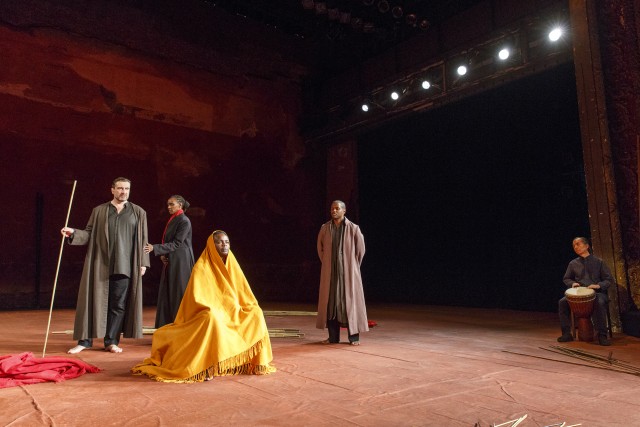
We can’t help but get excited for FIAF’s annual multidisciplinary fall festival, Crossing the Line, now celebrating its tenth anniversary. Every summer, we eagerly await the advance announcement of what they’ll be presenting, then scour the lineup for the most unusual events to make sure we see them. This year is another stellar collection of cutting-edge international dance and theater, beginning September 22 and 24 with screenings of concluding episodes seven, eight, and nine of Nature Theater of Oklahoma’s epic Life and Times at Anthology Film Archives ($11), along with a Thursday night party in FIAF’s Florence Gould Hall ($10) that begins with a screening of the eighth chapter of Kristin Worrall’s rather ordinary life, with the artists themselves serving up PB&Js. The festival features a special focus on French choreographer Jérôme Bel, who will be involved in four programs, beginning October 17 (free with RSVP) with a screening of his short biographical film on Paris Opera dancer Véronique Doisneau, followed by a discussion with Bel and Ana Janevski. Bel’s award-winning The Show Must Go On will go on at the Joyce October 20-22 ($36-$46), with Bel hanging around for a Curtain Chat after the 2:00 show on October 22. Bel will present the New York premiere of his controversial eponymous 1995 signature work at the Kitchen October 27-29 ($20) while also moving over to the Museum of Modern Art October 27-31 (free with museum admission) for Artist’s Choice: MoMA Dance Company, a site-specific piece for MoMA’s Marron Atrium that will be performed by members of the MoMA staff.

Tenth annual Crossing the Line festival features special focus on breakdance world champion Anne Nguyen, including AUTARCIE (….): A SEARCH FOR SELF-SUFFICIENCY

Tenth annual Crossing the Line festival features special focus on breakdance world champion Anne Nguyen, including U.S. premiere of AUTARCIE (….): A SEARCH FOR SELF-SUFFICIENCY

Breakdance world champion Anne Nguyen is making her U.S. debut with a pair of works: the free Graphic Cyphers will take place September 23 at Roberto Clemente Plaza in the Bronx at 2:00 and in Times Square September 25 at 2:30 and 4:30, while Autarcie (….): a search for self-sufficiency has its American debut September 29 to October 1 ($20) at Gibney Dance. “I seek to reconcile the peculiarities of hip-hop with demanding theatrical performance to question the place of human beings in the modern-day world,” Nguyen says; you can hear more from her at the October 1 artist talk “Towards Cultural Equity: The Artist’s Perspective” (free with RSVP) with fellow panelists David Thomson, Mohamed El Khatib, and Rokafella, moderated by George Emilio Sanchez. The UK’s Forced Entertainment, which is “interested in confusion as well as laughter,” will likely dish out a healthy portion of both at the New York premiere of Tomorrow’s Parties in Florence Gould Hall September 28 and 30 and October 1 ($20). From September 30 to October 2 ($35-$55), Venice Biennale lifetime achievement award winner Romeo Castellucci will deliver the one-man show Julius Caesar. Spared Parts, making the most of Federal Hall’s marble columns. This past June, dancer-choreographer Maria Hassabi gave an informal preview of her latest work, Staged, on the High Line; she will now bring the final piece down to the Kitchen, below the High Line, where it will be performed by Simon Courchel, Jessie Gold, Hristoula Harakas, and Oisín Monaghan October 4-8 ($20).

Romeo Castellucci

Romeo Castellucci will make his New York City debut channeling Julius Caesar at Federal Hall

On October 6-8 and 13-15 ($35), drag fabulist Dickie Beau will conjure up Marilyn Monroe, Judy Garland, and Richard Meryman at Abrons Arts Center for Blackouts. [Ed. note: All performances of Blackouts have been canceled because of unexpected travel circumstances.] Also on October 13-15 ($20), Lora Juodkaite and Annie Hanaeur will perform the U.S. premiere of Rachid Ouramdane’s Tordre (Wrought) at Baryshnikov Arts Center; CTL veteran Ouramdane will take part in the October 15 artist talk “Towards Cultural Equity: The Institutional Perspective” (free with RSVP) with keynote speaker Patrick Weil, panelists Firoz Ladak and Zeyba Rahman, and moderator Thomas Lax. On October 25 (free with RSVP), Aaron Landsman will host Perfect City, in which a group of young people from the Lower East Side will gather at Abrons Arts Center and discuss what the future holds in store for them, particularly in their neighborhood. The festival ends on November 3 with My Barbarian’s Post-Party Dream State Caucus at the New Museum (free with RSVP), held in conjunction with the exhibition “The Audience Is Always Right.” Throughout the festival, you can check out Mathieu Bernard-Reymond’s “Transform” art exhibit in the FIAF Gallery, and Tim Etchells’s multichannel video installation “Eyes Looking” will be projected at 11:59 each night in Times Square as October’s Midnight Moment.

BEYOND THE INGÉNUE: À NOS AMOURS

À NOS AMOURS

Sandrine Bonnaire makes a stunning debut as a sexually active teen in Maurice Pialat’s À NOS AMOURS

CINÉSALON: À NOS AMOURS (Maurice Pialat, 1983)
French Institute Alliance Française, Florence Gould Hall
55 East 59th St. between Madison & Park Aves.
Tuesday, September 20, $14, 4:00
Series continues Tuesdays through October 25
212-355-6100
www.fiaf.org

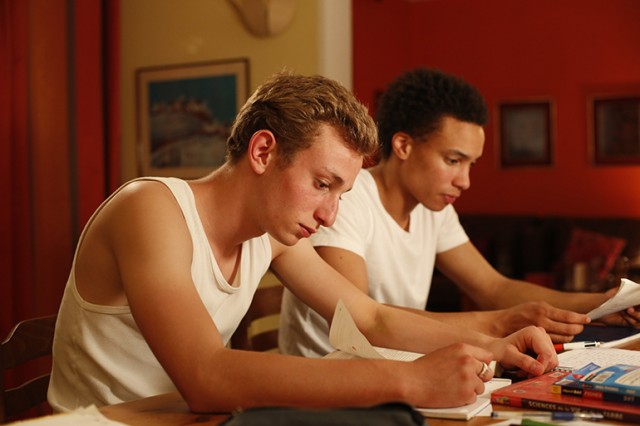
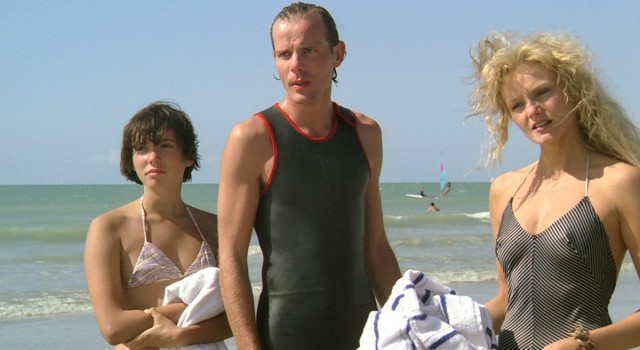
Sandrine Bonnaire won the César for Most Promising Actress in her film debut, Maurice Pialat’s À nos amours, and she has more than fulfilled that promise in her still-vibrant thirty-plus-year career. Bonnaire stars as fifteen-year-old Suzanne, who suddenly becomes sexually promiscuous one summer. “‘Don’t you think one can die of love?’” she asks, rehearsing for a camp play. “‘You told me you loved me. What kind of a world is this?’” As Suzanne flits about from lover to lover, her family begins to notice a change in her and is not very happy about it. Her mother (Evelyne Ker) and father (Pialat) are on the verge of a breakup, and her creepy brother, Robert (Dominique Besnehard), doesn’t really get any of it; all three seem emotionally stunted, able only to express their feelings about Suzanne’s behavior by striking her physically. Suzanne is a decidedly contemporary Western European ingénue; the film casts no aspersions on her and does not judge her actions, even if her mother and Robert do. Bonnaire was around the same age as her character when she made the film, which contains significant nudity and bed scenes if not graphic depictions of sex; the film would likely have been wildly controversial if made in Hollywood with a fifteen-year-old American actress. Suzanne’s father, a furrier who has left his wife for another woman, is sad that she has lost one of her dimples, a sign of her maturing; when she was a baby, he wanted to protect her from kidnapping, but now he knows and accepts that he no longer has control over her life. Suzanne enjoys the sex she is having but is obviously seeking something more; but Pialat, the director of the film and who also plays the fictional father, never delves too deeply into her psyche, refusing to provide any easy answers or simplistic resolutions for this complex coming-of-age story.

À NOS AMOURS

Suzanne (Sandrine Bonnaire) has a complicated relationship with her father (cowriter-director Maurice Pialat) in À NOS AMOURS

It’s not even clear how much time passes between scenes and boyfriends, whose names essentially become interchangeable. Pialat wrote the incisive script with Arlette Langmann, Claude Berri’s sister; Pialat and Langmann previously collaborated on 1980’s Loulou, in which Isabelle Huppert plays a young wife who undergoes a sexual reawakening. Bonnaire, who would go on to make such films as Pialat’s Under the Son of Satan and Police, Patrice Leconte’s Monsieur Hire, Claude Chabrol’s La Cérémonie, and Régis Wargnier’s Est-Ouest, earning another six César nominations and one more win (for Agnès Varda’s Vagabond), is extraordinary in her first film. Cinematographer Jacques Loiseleux falls in love with her eyes, following them as they wander, linger, and focus with an intelligence far beyond her years, and you will too. À nos amours is screening at 4:00 on September 20 in the FIAF CinéSalon series “Beyond the Ingénue,” which continues Tuesday nights through October 25 with such other films as Céline Sciamma’s Water Lilies Éric Rohmer’s Pauline at the Beach, and Jacques Rozier’s Adieu Philippine.