French legend Agnès Varda will discuss her life and career as a visual artist at FIAF
French Institute Alliance Française, Florence Gould Hall
55 East 59th St. between Madison & Park Aves.
Tuesday, February 28, $30, 7:30
Series continues Tuesday nights through March 21
212-355-6100 fiaf.org
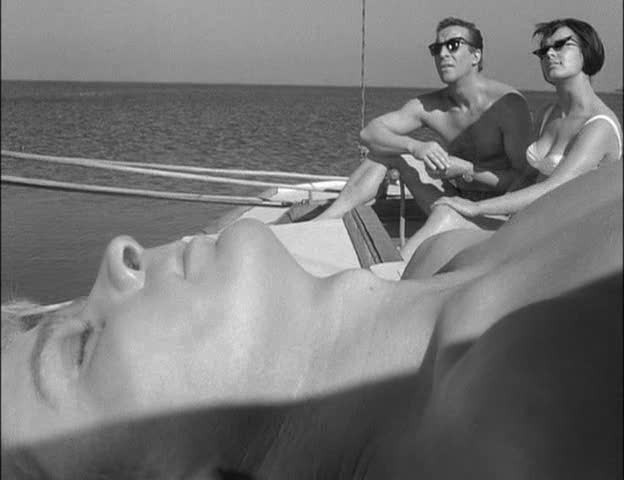
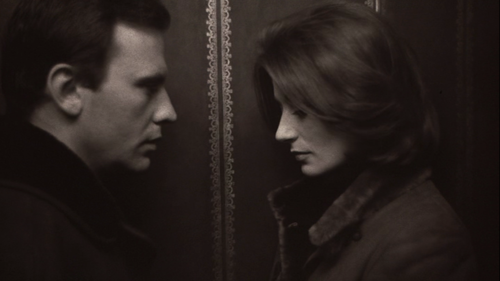
Over the years, FIAF has shown many films by Nouvelle Vague master Agnès Varda, the celebrated auteur behind such classics as Vagabond, Cléo from 5 to 7, The Gleaners and I, Jacquot de Nantes, and The Beaches of Agnès. Now the French Institute Alliance Française is bringing Varda herself to Florence Gould Hall for the special talk “Agnès Varda: Visual Artist,” taking place on February 28 at 7:30, moderated by art dealer Olivier Renaud-Clément. The Belgium-born, France-based Varda, who was married to Jacques Demy for nearly thirty years, will be focusing not only on her film career but her upcoming gallery show at Blum & Poe, which runs March 2 to April 15. The discussion also kicks off FIAF’s CinéSalon series “Agnès Varda: Life as Art,” which consists of Varda’s Daguerréotypes on March 7, with the 7:30 screening followed by a talk with Varda and curator Laurence Kardish, Jacqot de Nantes on March 14, and Lola on March 21. This is a very special chance to see the remarkable eighty-eight-year-old Varda, so get your tickets now.
SPEED SISTERS follows first all-woman racecar team in Middle East
SPEED SISTERS (Amber Fares, 2016)
Cinema Village
22 East 12th St. between University Pl. & Fifth Ave.
Opens Friday, February 10
212-529-6799 www.cinemavillage.com speedsisters.tv
Documentarians are always in search of unusual stories, and producer-director Amber Fares has found a real winner in Speed Sisters. The Lebanese Canadian cofounder of SocDoc Studios heads to the Middle East to share the tale of five brave and ambitious Palestinians who have formed the region’s first all-women racecar driving team. Noor Dauod, Marah Zahalka, Betty Saadeh, Mona Ali, and captain Maysoon Jayyusi defy gender stereotypes by participating in professional races driving heavily modified regular cars. Competing against men, they roar around makeshift tracks in Ramallah, Jenin, Jericho, and other locations, racing against the clock to put up the fastest time as they follow complicated courses with very specific rules. The film is photographed by Fares and Lucy Martens (Out of the Ashes, Voices from Inside: Israelis Speak) and edited by Rabab Haj Yahya (Bed and Breakfast, Beyond Blue and Gray) for maximum impact, putting viewers right in the middle of the exciting action. Rather than being shunned by their patriarchal society, the women are cheered on by fans and their male colleagues, led by Palestinian Motor Sport and Motorcycle Federation founder Khaled Qaddoura, as well as most, though not all, of their family members. Each of the women feels the need for speed, but they also have different motivations. “I don’t race for the trophies; I do it for the release,” Mona explains, while Noor says, “In the car, everything I need to feel is there. The car completes me.”
Marah Zahalka gets ready for action in Amber Fares’s high-octane SPEED SISTERS
The five women discuss their hopes and dreams in addition to their fears, often concerned for their safety as they go through Israeli checkpoints monitored by armed military guards; at one point, Betty gets hit in the lower back by a tear-gas canister, leaving a scary bruise, a sharp contrast to scenes in which she carefully applies nail polish and puts on lipstick right before a race. Fares doesn’t delve too deeply into Mideast politics, but she doesn’t let it take a backseat either; the powderkeg that is the never-ending battle over settlements in the West Bank and the ongoing troubled relationship between Israel and Palestine is ever present, always bubbling under the surface, as the women burn rubber and the soundtrack pulsates with songs by Palestinian indie bands. “How much will we let the occupation affect our lives?” Marah says. “What are we supposed to do, stop living?” Speed Sisters opens February 10 at Cinema Village, with Fares and producer Jessica Devaney (My Neighbourhood, Home Front) participating in Q&As following the 7:15 screenings February 10, 11, and 12.
Controversial activist and author Angela Davis shares her views on civil rights in compelling Oscar-nominated documentary
13th (Ava DuVernay, 2016)
IFC Center
323 Sixth Ave. at West Third St.
February 8-16, 12:30 pm
212-924-7771 www.avaduvernay.com www.ifccenter.com
Nominated for an Oscar for Best Documentary, Ava DuVernay’s devastating 13th is back for an encore engagement at IFC Center. DuVernay’s follow-up to the Oscar-nominated Selma, her feature debut about the 1965 voting rights march from Selma to Montgomery, examines the history of institutional racism from slavery to today, focusing on the phrase of the 13th Amendment that says, “except as a punishment for crime.” Using archival footage, animation, music, and new interviews, DuVernay traces the criminalization of African Americans beginning with the passage of the amendment in 1865. “There’s really no understanding of our American political culture without race at the center of it,” Harvard professor Khalil G. Muhammad says. The film explores the 150-year demonization of blacks as the government built a fear-based narrative that led to the frightening imbalance in the incarceration of African Americans that has escalated dramatically since the 1970s. Among the issues that are covered are mandatory minimum sentencing, the wealth gap, the crack epidemic, the Southern Strategy, the Three Strikes law, the KKK, the Central Park Five, the 1994 crime bill, white privilege, Nancy Reagan’s Just Say No program, Willie Horton, prison labor, the Civil Rights Act, and the ongoing cultural depiction of blacks as wild animals that need to be caged. DuVernay has assembled a wide-ranging collection of experts who share their views, including Harvard professor Henry Louis Gates Jr., Maryland state senator and ALEC member Michael Hough, educator and author Michelle Alexander, UConn professor Jelani Cobb, UC Santa Cruz professor emerita Angela Davis, former American Conservative Union chairman David Keene, Grandview University professor Kevin Gannon, Dream Corps founder and president Van Jones, American Conservative Union board member Grover Norquist, and formerly incarcerated activists Shaka Senghor, Pat Nolan, Cory Greene, and Craig DeRoche in addition to such politicians as David Dinkins, Charles B. Rangel, Cory Booker, and former Speaker of the House and presidential candidate Newt Gingrich. “The objective reality is that virtually no one who is white understands the challenge of being black in America,” Gingrich explains.
Cinematographers Hans Charles and Kira Kelly photograph most of the speakers in front of brick walls and windows, as if confined from the outside world, except for Davis, who is in a cavernous abandoned space. Editor Spencer Averick, who also cowrote the film with DuVernay, interweaves compelling footage of such presidents as Lyndon Johnson, Richard Nixon, Ronald Reagan, George H. W. Bush, and Bill Clinton alongside staggering statistics, scenes from D. W. Griffith’s The Birth of a Nation, bold graphics, songs by Nina Simone, Killer Mike, Public Enemy, dead prez, Nas, the Roots, Usher, and soundtrack composer Jason Moran, and news clips to show the progression of the mass incarceration dilemma since the passage of the 13th Amendment, which reads in full: “Neither slavery nor involuntary servitude, except as a punishment for crime whereof the party shall have been duly convicted, shall exist within the United States, or any place subject to their jurisdiction.” It’s a terrifying and sad legacy of America, the supposed “land of the free,” and one that isn’t getting much better, even after eight years under the country’s first black president. A Netflix original, DuVernay’s film is filled with surprising connections and fascinating insight that should embarrass anyone who believes that we are living in some kind of postracial society in which racism is going away. It’s not an easy film to watch, but it is a film that needs to be seen.
Meiko Kaji reprises her role as an avenging angel-demon in LADY SNOWBLOOD: LOVE SONG WITH VENGEANCE
LADY SNOWBLOOD: LOVE SONG OF VENGEANCE (修羅雪姫 怨み恋歌) (SHURAYUKIHIME URAMI RENKA) (Toshiya Fujita, 1974)
Japan Society
333 East 47th St. at First Ave.
Saturday, February 11, 4:30
Series runs February 10-12
212-715-1258 www.japansociety.org
Japan Society prepares for Valentine’s Day with the awesome weekend series “Cruel Beauty: A Romantic Weekend with Meiko Kaji,” paying tribute to the legendary genre actress and pop singer, who will turn seventy in March, by screening five of her films February 10-12. “Japanese movie stars don’t get much more iconic than actress Meiko Kaji,” guest curator Marc Walkow writes in a program note. “She remains an inimitable presence in Japanese cinema, and an icon who continues to inspire filmmakers and audiences around the world.” The series gets under way Friday night with the international premiere of Kinji Fukasaku’s 1975 three-part yakuza film New Battle without Honor and Humanity: The Boss’s Head and also includes Teruo Ishii’s Blind Woman’s Curse, Shunya Ito’s Female Prisoner Scorpion: Beast Stable, and Yasuharu Hasebe’s Stray Cat Rock: Sex Hunter, works that show off Kaji’s skills in contemporary and historical action movies. One of her most intense roles is Lady Snowblood, based on the manga by Kazuo Koike (Lone Wolf and Cub) and illustrator Kazuo Kamimura. Japan Society is screening the second film in the duology, 1974’s Lady Snowblood: Love Song of Vengeance, on February 11 at 4:30. In the first film, set during the Meiji Period of the late nineteenth century, Yuki Kashima is born in prison, her dying mother declaring her to be an asura demon who will avenge the murder of her father and brother and the mother’s rape. The cinematography pays tribute to its manga roots, with impressively composed shots that one can almost see on the page, the pacing between wide-angle and closeup echoing the rhythm of panels and frames. In the second film, Yuki, known as Lady Snowblood, has become a coldhearted master assassin who kills virtually without emotion. Hired by Seishiro Kikui (Shin Kishida) to recover an important document, she poses as a maid to infiltrate the home of anarchist Ransui Tokunaga (Juzo Itami) but soon finds herself in the middle of a conspiracy and coverup that could bring down the corrupt government following the Russo-Japanese War. Allying herself with Ransui’s hot brother, Shusuke (Yoshio Harada), she wields her sword with skillful abandon, leaving an ever-growing pile of bodies in her wake.
The sequel, a kind of Eastern spaghetti Western, is not nearly as focused as the original, with inexplicable plot twists (especially the inconsistent use of guns), but the violence is extreme and beautiful; blood doesn’t just gusht out of Yuki’s victims but sizzles on the soundtrack. In the opening scene, Lady Snowblood is ambushed at a cemetery as she mourns her mentor; after dispatching everyone, she coolly drinks from the pond where one dead man’s blood has spilled, the taste of vengeance sweet indeed. The film features brutal torture and a propensity for stabbing eyes, as if pounding into our heads that justice is blind. The villains also are spreading the plague, as various people’s faces and bodies become grotesque and deteriorate, referencing the effects of the nuclear bombs dropped on Hiroshima and Nagasaki. (Pay close attention to the final blood splatter.) Although not nearly as good as its predecessor, Lady Snowblood: Love Song of Vengeance is still a must-see, particularly for the formidable Kaji, an avenging angel-demon and preying tiger who served as the direct inspiration for Black Mamba (Uma Thurman) in Quentin Tarantino’s Kill Bill Vol. I (and she even sings some of the songs). All of the films in the Japan Society series are sequels or follow-ups, but don’t let that scare you off. “In the world of Japanese genre filmmaking — samurai and yakuza films, exploitation movies, horror films — sequels were very rarely linked to each other by a continuing storyline,” Walkow explains. “Viewers needn’t be worried if they haven’t seen the original entries; all the films stand on their own.”
Tim Sutton explores the shadowy underbelly of America in DARK NIGHT
DARK NIGHT (Tim Sutton, 2016)
Alamo Drafthouse Downtown Brooklyn
445 Albee Square West
Opens Friday, February 3
718-513-2547 drafthouse.com/nyc
There’s an ominous cloud hanging over Tim Sutton’s deeply poetic Dark Night, a grim, gripping journey into the dark night of America’s soul. The title of Sutton’s third film, following Pavilion and Memphis, also references Christopher Nolan’s 2012 Batman movie, The Dark Knight Rises, for reasons that become apparent about halfway through. Dark Night opens with a close-up of a young woman’s disbelieving eyes, red, white, and blue lights flashing across her face; the camera then pulls back as the woman, wearing an American flag top, lowers her head, taking stock of an unrevealed tragedy. For the next eighty-five minutes, Sutton goes back to the beginning of this fateful day, following the lives of a small group of men, women, and children in a suburban Florida community as they go about their usual business. They play on computers, put on makeup, pet animals, and head over to the mall. One concerned mother and her detached son speak with an off-screen interviewer as if searching for reasons in the aftermath of a horrific event, but in this case it hasn’t happened yet. In many of the vignettes, there is little or no dialogue, as the characters, all nonprofessional actors mostly found on the streets of Sarasota, speak with their actions, particularly when several of the males, including a military vet and a teen with dazzling blue eyes, load firearms. In this Blue Velvet-like town, danger lurks just below the surface.
A cast of nonprofessional actors play realistic characters facing tragedy in DARK NIGHT
Dark Night is photographed by French cinematographer Hélène Louvart (Pina, The Beaches of Agnès) in a documentary style, with fly-on-the-wall shots occasionally broken up by stunning aerial views of perfectly trimmed green lawns and cookie-cutter rooftops that look like video-game targets, static shots of light poles as if they are living creatures, and a striking scene of a woman walking along the outdoor hallway of one of Florida’s ubiquitous motel-like apartment complexes. Canadian singer-songwriter Maica Armata’s (Caro Diaro, MaicaMia) score features five haunting songs, including “Om,” “Oh Well,” and a gloomy, reimagined version of the old standard “You Are My Sunshine,” her ethereal vocals utterly frightening. Evoking such indie works as Larry Clark’s Kids, Gus van Sant’s Elephant, Lance Hammer’s Ballast, and Harmony Korine’s Gummo, the Brooklyn-based Sutton paces the unsettling film with a delicate, disquieting subtlety, the community overwhelmed by an unspoken ennui that’s representative of the dissatisfaction and disconnection being felt all across the country. He might not offer any answers, but he asks many of the right questions, giving the riveting tale an uncomfortable, beguiling immediacy. Dark Night opens February 3 at the Alamo Drafthouse in downtown Brooklyn, with Sutton participating in Q&As following the 6:30 screenings on Friday, Saturday, and Sunday.
Brooklyn Museum
200 Eastern Parkway at Washington St.
Saturday, February 4, free, 5:00 – 11:00
212-864-5400 www.brooklynmuseum.org
The Brooklyn Museum continues its 2017 First Saturdays theme, “A Year of Yes: Reimagining Feminism at the Brooklyn Museum,” on February 4 with a focus on the exhibitions “I See Myself in You: Selections from the Collection” and Beverly Buchanan — Ruins and Rituals.” There will be live performances by Courtnee Roze, OSHUN, Leikeli47, and Everyday People (DJs mOma, Rich Knight, and Lola Chung, hosted by Saada Ahmed and Chef Roblé Ali); a tour of “Beverly Buchanan — Ruins and Rituals” led by curator and artist Park McArthur; an interactive performance inspired by the graphic novel The Other Side of Wall Street by Black Gotham Experience (William Ellis, Adrian Franks, Kamau Ware, and Cliff Washington) with DJ GoodWill; excerpts from SHE’s multimedia choreoplay by Jinah Parker, followed by a discussion with the dancers and Kevin Powell; a hands-on art workshop in which participants can make miniature homes inspired by “Beverly Buchanan — Ruins and Rituals”; a screening of Fit the Description, followed by a community talk with retired detective Clifton Hollingsworth Jr., founder of 100 Blacks in Law Enforcement Who Care, and U.S. Air Force veteran and composer and producer Malik Abdul-Rahmaan; pop-up gallery talks on African diaspora artists and revolutionaries, hosted by teen apprentices; a community resource fair with booths from Cultural Row Block Association on Eastern Parkway (CuRBA), Brooklyn Navy Yard, Black Youth Project 100, NYC Books Through Bars, the Safe OUTside the System Collective from the Audre Lorde Project, and others; a book club discussion about Audre Lorde’s Sister Outsider facilitated by Glory Edim and Jessica Lynne; a kids corner with drumming and storytelling by Garifuna artist James Lovell; and screenings of A Nick in Time and American Falls, part of Bé Garrett’s Legacy Projects, followed by a Q&A with members of the casts; In addition, you can check out such exhibits as “Iggy Pop Life Class by Jeremy Deller,” “The Dinner Party by Judy Chicago,” “Life, Death, and Transformation in the Americas,” “Marilyn Minter: Pretty/Dirty,” and “Infinite Blue.”
The Hanson Brothers revel in some good old-time hockey fun in SLAP SHOT
SLAP SHOT (George Roy Hill, 1977)
Metrograph
7 Ludlow St. between Canal & Hester Sts.
Friday, February 3, 1:30 & 7:30
212-660-0312 metrograph.com www.hansonbrothers.net
One of the best sports films ever made, Slap Shot is a riotously bloody look at minor-league hockey. Paul Newman — who declared this one of his favorite pictures — stars as Reggie Dunlop, an aging loser serving as player-coach of the Charlestown Chiefs and trying to keep his marriage going with Francine (Jennifer Warren). When the general manager (Strother Martin) tells him that the team is being shut down at the end of the season, Dunlop decides to send it off with a bang. Lying to his team that if the Chiefs fill the seats and start winning they will move to Florida, he incorporates a different style of play into their game, led by the brutal, vicious, and utterly hilarious Hanson brothers (real-life brothers Jeff and Steve Carlson and their Johnstown Jets teammate Dave Hanson), who never met an opponent they wouldn’t punch, trip, slash, spear, or slam face-first into the boards well after the whistle. Even Dunlop gets in on the fun, throwing his share of right hands. The only player not participating in the hijinks is Ned Braden (Michael Ontkean), who believes in sportsmanship and a more gentlemanly game of skill and beauty, not exactly what men like Ogie Oglethorpe (minor-league player Ned Dowd, whose sister, Nancy, wrote the book that the movie is based on, inspired by the real-life antics of the Johnstown Jets) and Tim “Dr. Hook” McCracken (Paul D’Amato) have in mind. You don’t have to be a hockey fan to love Slap Shot, which is really, when it comes right down to it, just a little film about the trials and tribulations of everyday life. Look for cameos by Paul Dooley, M. Emmett Walsh, Melinda Dillon, Nancy Dowd as Andrea, and actual hockey players Bruce Boudreau, Jean Tétreault, Connie Madigan, Cliff Thompson, and Joe Nolan, among others. Slap Shot is screening February 3 in the Metrograph series “Universal in the 70’s: Part One,” a tribute to the decade when the studio took advantage of the growing independent-cinema movement; the two-week, eighteen-film festival continues through February 7 with such other gems as Clint Eastwood’s awesome High Plains Drifter, Alfred Hitchcock’s Family Plot, Jeremy Kagan’s The Big Fix, and Don Siegel’s underseen Charley Varrick.